- Industrial LCD display
-
Industrial Products
- DC Servo Drive
- AC Servo Drive
- other
- Heidelberg
- FANUC
- IFM
- Meter
- CCD
- Membrane Keypad
- Film
- YOKOGAWA Module
- Card
- ABB
- MITSUBISHI
- FANUC
- KEYENCE
- BECKHOFF
- Honeywell
- HOLLYSYS
- FUJI servo drives
- HP
- solenoid valve
- thermostat
- Siemens adapter
- color oscilloscope
- Fujitsu connector
- CHELIC
- SMC
- CISCO Module
- INTEL
- Key board
- FAIRCHILD
- Motherboard
- Board
- Bearing
- other
- Control Panel
- Contactor
- Circuit
- OMRON
- Relay
- Controller
- Photoelectric Switch
- Photoelectric Sensor
- Original
- Fan
- Motor Driver
- Limit Switch
- Amplifier
- power supply
- LENZE
- Cable
- Encoder
- Sensor
- Transformer
- Fiber Optic Sensor
- Protection Relay
- Temperature Controller
- Proximity Switch
- Switch Sensor
- Siemens
- Industrial board
- HMI Touch Glass
-
HMI Full Machine Whole unit
- OMRON HMI Touch Panel
- Siemens HMI Touch Panel
- Mitsubishi HMI Touch Panel
- Allen-Bradley automation HMI Touch Panel
- DELTA HMI Touch Panel
- EVIEW DELTA HMI Touch Panel
- KINCO DELTA HMI Touch Panel
- HITECH HMI Touch Panel
- WEINTECK HMI Touch Panel
- TECVIEW HMI Touch Panel
- WEINVIEW HMI Touch Panel
- PRO-FACE HMI Touch Panel
- SIMATIC HMI Touch Panel
- AMPIRE HMI Touch Panel
- HEIDELBERG HMI Touch Panel
- PANASONIC HMI Touch Panel
- PATLITE HMI Touch Panel
- KYOCERA HMI Touch Panel
- KEYENCE HMI Touch Panel
- WEINVIEW HMI Touch Panel
- HITECH HMI Touch Panel
- FUJI HMI Touch Panel
- HAKKO HMI Touch Panel
- SCHNEIDER HMI Touch Panel
- SAMKOON touch panel
- other
- Module
- lcd inverter
- Membrane Keypad Switch
- Winni Touch Screens
- Frequency Inverter
- Servo Motor
- PLC


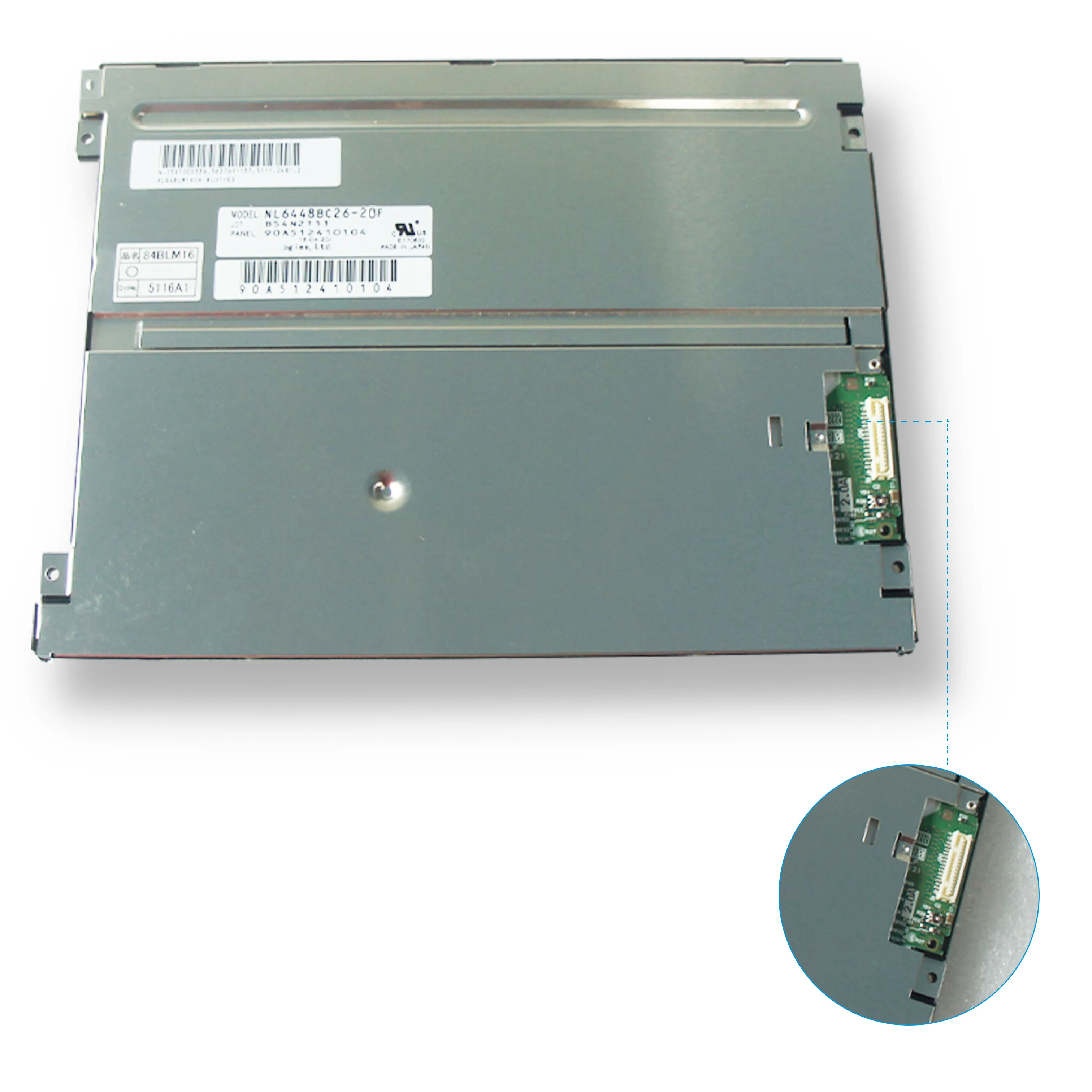

G213UAN01.0 New AUO 21.3-inch 1600×1200 LCD display
In an era dominated by 4K and 8K consumer displays, the industrial and medical sectors often operate on a different set of priorities: reliability, color accuracy, and specific aspect ratios. The AUO G213UAN01.0 stands as a testament to this niche, offering a 21.3-inch diagonal with a native resolution of 1600×1200 (UXGA). This specific specification set is not a relic of the past but a calculated choice for applications where pixel density and aspect ratio directly impact workflow efficiency and diagnostic precision. While larger, wider screens are ubiquitous in general computing, the 4:3 aspect ratio of the G213UAN01.0 provides a taller vertical workspace, minimizing the need for excessive scrolling in document-heavy tasks. This article dives deep into the technical architecture, application-specific advantages, and the strategic value of integrating this specific AUO panel into modern systems. We will explore why this model remains a critical component for engineers and procurement specialists constructing high-stakes display solutions, moving beyond superficial specifications to analyze its true operational DNA.
The choice of a 21.3-inch diagonal married to a 1600×1200 resolution is a deliberate engineering decision. This combination yields a pixel density of approximately 94 PPI (pixels per inch), which strikes a critical balance between sharpness and text size. For applications like medical imaging (specifically PACS – Picture Archiving and Communication Systems) and financial trading, legibility without scaling is paramount. The 4:3 aspect ratio offers approximately 25% more vertical pixels compared to a widescreen 1920×1080 display of a similar diagonal.
This extra vertical real estate allows radiologists to view a full chest X-ray or a series of CT slices without constant panning. Similarly, financial analysts can display more rows of complex spreadsheet data. The G213UAN01.0’s format is not about cinematic immersion; it is about maximizing functional screen area for data-dense, vertical-oriented content. From a hardware perspective, this often implies a unique backlight unit design optimized for uniformity across the entire panel, a crucial factor for color-critical work where brightness variations at the edges can lead to misinterpretation of data or image anomalies.
Evaluating the AUO G213UAN01.0 requires a close look at its optical characteristics, which are tailored for prolonged use in controlled environments. Typical specifications for this model include a brightness level of around 300 cd/m² and a contrast ratio of 1000:1. While these numbers may seem standard, the critical differentiator lies in the panel’s viewing angle technology. Utilizing IPS (In-Plane Switching) technology, it achieves 178° viewing angles both horizontally and vertically.
This wide-angle performance ensures that color shift and gamma deviation are minimized when the display is viewed from off-center positions, which is common in collaborative review sessions in a hospital reading room or a trading floor. Furthermore, the panel’s color gamut typically covers the sRGB standard with high fidelity, often with factory calibration to a delta E of less than 3. This level of color precision is essential for distinguishing subtle contrast variations in grayscale medical images or for identifying nuanced trend lines in financial charts. Unlike consumer monitors that prioritize peak brightness for HDR, the G213UAN01.0 focuses on stability and linearity across its brightness range, ensuring that the lowest gray levels remain distinguishable from pure black.
A deep understanding of the G213UAN01.0’s electrical interface is crucial for system integration. This model typically utilizes a LVDS (Low-Voltage Differential Signaling) interface, specifically a 2-channel, 8-bit configuration. This is a mature, highly reliable standard for industrial displays, but it presents distinct challenges for modern GPU connectivity. Most current-generation graphics cards have phased out native LVDS outputs in favor of DisplayPort or HDMI.
Consequently, successful integration often requires a timing controller (TCON) board or an LVDS-to-eDP/HDMI converter. When selecting a converter, engineers must verify the pixel clock rate compatibility. The G213UAN01.0 requires a specific clock speed to handle the 1600×1200 resolution at a target refresh rate of 60Hz. Using an incompatible board can result in flickering, line noise, or a failure to display the native resolution. Additionally, the power supply requirements are specific; the panel usually requires a 12V backlight supply and a 3.3V logic supply, necessitating a dedicated power management circuit. Ignoring these technical nuances can lead to premature backlight failure or intermittent signal loss, compromising the reliability that the panel is designed to deliver.
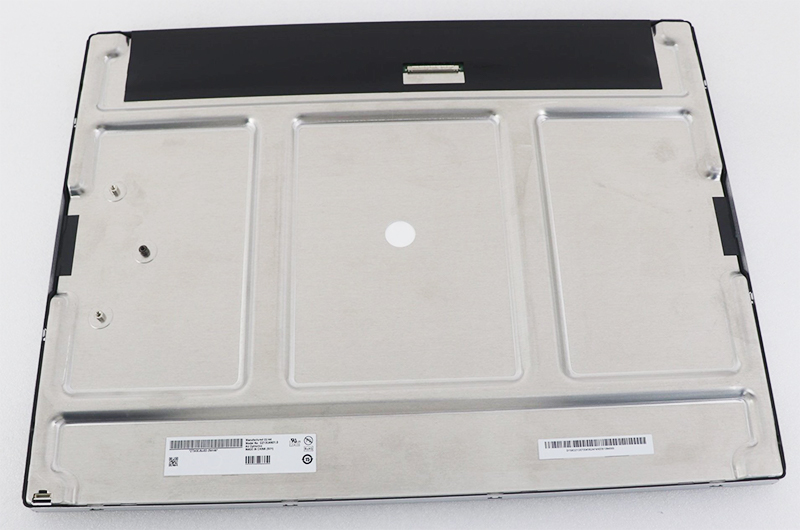
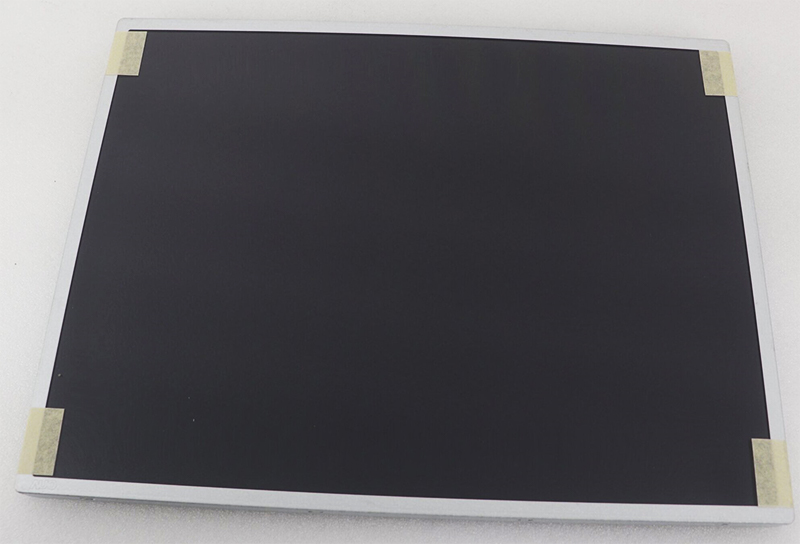
One of the most overlooked aspects of professional-grade displays is their thermal design. The AUO G213UAN01.0 is built for 24/7 continuous operation, a requirement for security monitoring, medical patient vitals, and industrial process control. Its construction includes a robust metallic chassis or back frame that acts as a heat sink. Efficient heat dissipation is critical because the CCFL or LED backlight units (depending on the specific variant) generate heat that, if trapped, can accelerate LCD degradation and cause image retention or hotspot formation.
Users must ensure adequate ventilation behind the monitor when integrating this panel into a custom enclosure. Operating temperatures are typically rated from 0°C to 50°C, but long-term reliability is best achieved at lower thermal loads. An often-cited benefit of this specific AUO model is its low defect rate and uniform backlight aging. Unlike consumer panels that may show noticeable dimming after 20,000 hours, the G213UAN01.0 is often rated for a lifespan of 50,000 hours to half-brightness, making it a cost-effective solution over a 5–7 year deployment cycle. For mission-critical systems, this longevity directly translates to lower total cost of ownership (TCO) due to reduced replacement frequency and downtime.
The true value of the G213UAN01.0 crystallizes in specific vertical markets. In medical imaging, this panel is frequently used as a secondary diagnostic monitor or for primary interpretation of modalities like MRI and ultrasound. The 1600×1200 resolution aligns perfectly with the DICOM (Digital Imaging and Communications in Medicine) grayscale standard display function (GSDF). Its ability to maintain color and gamma stability over time is non-negotiable for accurate diagnosis. The matte anti-glare surface, typical for this model, reduces reflections from overhead surgical or examination lights.
In the financial sector, the 4:3 aspect ratio is prized for portfolio management and trading platforms. A trader can tile multiple windows (e.g., watchlists, charts, order books) without the wasted horizontal space that widescreen formats impose. The consistent brightness and flicker-free operation reduce eye strain during 12-hour shifts. Furthermore, the low input lag, optimized for static content rendering, ensures that numbers update crisply without motion blur. Security control rooms also benefit from the high pixel density for viewing multiple CCTV feeds simultaneously without compression artifacts. The G213UAN01.0 is effectively a purpose-built instrument for environments where accuracy and endurance outweigh cinematic performance.
Q: Is the AUO G213UAN01.0 an LED or CCFL backlit panel?
A: While older variants were CCFL, most current production runs of this model utilize an LED backlight, offering lower power consumption and a thinner profile.
Q: What is the exact physical dimension of the active display area?
A: The active area is 432.0 mm (H) x 324.0 mm (V), confirming the exact 4:3 aspect ratio.
Q: Can this display be used outdoors in direct sunlight?
A: No. With a typical brightness of 300 cd/m², it is unsuitable for direct sunlight. It is designed for indoor, controlled ambient lighting.
Q: What is the meaning of "UAN01.0" in the model number?
A: It designates the specific generation and revision of the panel's hardware, including the backlight unit and interface layout. It is not interchangeable with "UAN01.1" without checking design specs.
Q: Does this panel support touch functionality?
A: The base model is an open-cell or standard LCD without touch. Aftermarket touch sensors (e.g., capacitive or resistive) can be laminated, but this requires specialized manufacturing.
Q: What is the typical power consumption of this display?
A: The total power draw is typically around 20-25 watts, depending on the backlight brightness setting.
Q: Is the G213UAN01.0 compatible with standard HDMI cables directly?
A: No. It is an LVDS panel and requires a controller board to convert HDMI or DisplayPort signals to LVDS.
Q: What is the response time of this panel?
A: Response time is typically rated at 25 ms (Tr+Tf), which is slow by gaming standards but perfectly adequate for static image rendering and video playback at 60Hz.
Q: How can I prevent image retention (burn-in) on this panel?
A: Use a screensaver or pixel-shifting software when static elements are displayed for hours. This panel has good resistance but is not immune.
Q: What is the warranty standard for this AUO industrial panel?
A: AUO typically offers a 3-year warranty from the date of manufacture, but this varies by distributor. Verify with your supplier.
Conclusion: A Strategic Choice for Precision-Driven Environments
The AUO G213UAN01.0 is far more than a legacy display; it is a deliberately engineered solution for environments where data density, color integrity, and operational longevity are the primary metrics of success. While the consumer market chases higher refresh rates and wider color spaces for entertainment, this panel excels in the unglamorous but vital world of diagnostics, trading, and control. Its 4:3 UXGA format remains the gold standard for vertical content, offering a productivity advantage that widescreen variants cannot replicate. For procurement specialists and system integrators, the key takeaway is the importance of proper interfacing and thermal management. When correctly deployed with a compatible video controller and adequate ventilation, the G213UAN01.0 provides a reliable, cost-effective foundation for a high-stakes display system that will perform consistently for years. It is a component that prioritizes substance over specifications, a true professional’s tool in a digital landscape of fleeting consumer trends.