- Industrial LCD display
-
Industrial Products
- DC Servo Drive
- AC Servo Drive
- other
- Heidelberg
- FANUC
- IFM
- Meter
- CCD
- Membrane Keypad
- Film
- YOKOGAWA Module
- Card
- ABB
- MITSUBISHI
- FANUC
- KEYENCE
- BECKHOFF
- Honeywell
- HOLLYSYS
- FUJI servo drives
- HP
- solenoid valve
- thermostat
- Siemens adapter
- color oscilloscope
- Fujitsu connector
- CHELIC
- SMC
- CISCO Module
- INTEL
- Key board
- FAIRCHILD
- Motherboard
- Board
- Bearing
- other
- Control Panel
- Contactor
- Circuit
- OMRON
- Relay
- Controller
- Photoelectric Switch
- Photoelectric Sensor
- Original
- Fan
- Motor Driver
- Limit Switch
- Amplifier
- power supply
- LENZE
- Cable
- Encoder
- Sensor
- Transformer
- Fiber Optic Sensor
- Protection Relay
- Temperature Controller
- Proximity Switch
- Switch Sensor
- Siemens
- Industrial board
- HMI Touch Glass
-
HMI Full Machine Whole unit
- OMRON HMI Touch Panel
- Siemens HMI Touch Panel
- Mitsubishi HMI Touch Panel
- Allen-Bradley automation HMI Touch Panel
- DELTA HMI Touch Panel
- EVIEW DELTA HMI Touch Panel
- KINCO DELTA HMI Touch Panel
- HITECH HMI Touch Panel
- WEINTECK HMI Touch Panel
- TECVIEW HMI Touch Panel
- WEINVIEW HMI Touch Panel
- PRO-FACE HMI Touch Panel
- SIMATIC HMI Touch Panel
- AMPIRE HMI Touch Panel
- HEIDELBERG HMI Touch Panel
- PANASONIC HMI Touch Panel
- PATLITE HMI Touch Panel
- KYOCERA HMI Touch Panel
- KEYENCE HMI Touch Panel
- WEINVIEW HMI Touch Panel
- HITECH HMI Touch Panel
- FUJI HMI Touch Panel
- HAKKO HMI Touch Panel
- SCHNEIDER HMI Touch Panel
- SAMKOON touch panel
- other
- Module
- lcd inverter
- Membrane Keypad Switch
- Winni Touch Screens
- Frequency Inverter
- Servo Motor
- PLC



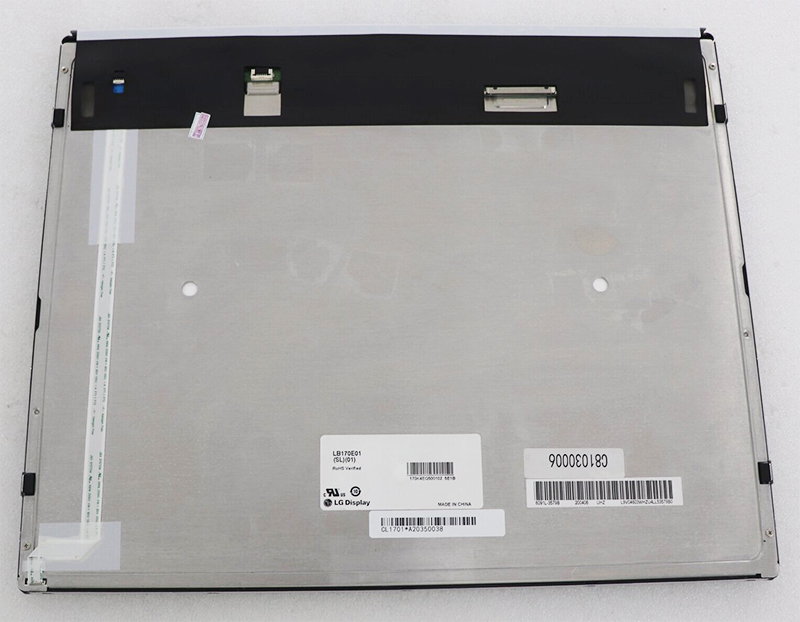
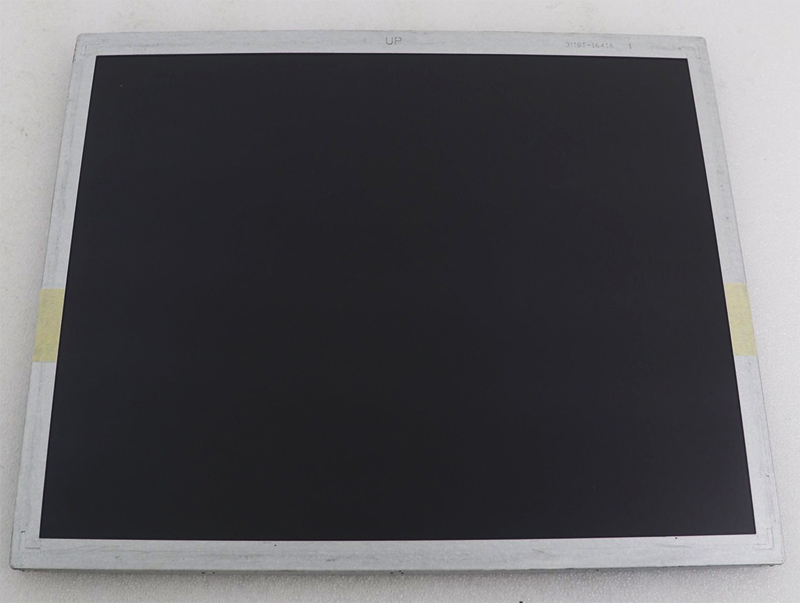
LB170E01-SL01 New and Original LG 17inch lcd display
In the competitive landscape of industrial and medical electronics, the reliability of core components often dictates the lifespan and performance of the entire system. Among these critical components, the display serves as the primary human-machine interface. The LB170E01-SL01, a new and original 17-inch LG LCD display, represents more than just a replacement part; it is a benchmark for durability and optical clarity in demanding environments. This article delves deep into the technical architecture, application-specific advantages, and market positioning of this specific LG model. We will explore why choosing a newer version of a legacy size remains a strategic decision for engineers and procurement specialists, addressing common misconceptions about obsolescence and compatibility. By examining signal integrity, power management, and visual performance metrics, this analysis provides a roadmap for integrators who need to balance cost with long-term operational reliability.
The LB170E01-SL01 is not a standard commercial television panel; it is an industrial-grade a-Si TFT-LCD (amorphous silicon thin-film transistor liquid crystal display). This distinction is crucial for understanding its build quality. The panel utilizes a classic TN (Twisted Nematic) technology, which, while often overshadowed by IPS in consumer products, offers superior response times and lower power consumption in static, high-brightness applications. The architecture includes a LVDS (Low-Voltage Differential Signaling) interface, a standard for industrial long-distance signal transmission with high noise immunity. This allows the panel to maintain signal integrity in environments with significant electromagnetic interference, such as factory floors or medical imaging equipment. The resolution is typically 1280 x 1024 (SXGA), providing a standard 5:4 aspect ratio. This square-like format is preferred over widescreen for applications where vertical screen real estate is critical, such as viewing patient waveforms or industrial control lists. The backlight system employs a CCFL (Cold Cathode Fluorescent Lamp), a mature and robust technology. While newer LEDs are more energy-efficient, this CCFL design offers a specific color spectrum that many legacy optical inspection systems are calibrated to read accurately, making the SL01 a direct drop-in for existing machinery.
Moving beyond the internal logic, the physical properties of the LB170E01-SL01 dictate its installation requirements. The panel features a typical brightness of 300 cd/m² and a contrast ratio of 1000:1. These figures are not mere specifications; they ensure readability under ambient lighting conditions common in control rooms and laboratories. The viewing angles are a significant consideration: 70/70/60/75 degrees (L/R/U/D). This asymmetric viewing cone is typical for TN panels and means the display is optimized for a single, fixed user position directly in front of the screen. For system integrators, this requires careful mechanical design to ensure the panel is mounted at the correct human ergonomic height. The dot pitch of 0.264 mm provides a sharp image suitable for reading small text and fine lines in schematic diagrams. The physical dimensions, including the specialized mounting ears and bezel design, conform to a specific industry footprint. Technicians must verify the cut-out size in the target enclosure, as the SL01's frame is designed for rigid mounting with screws, not adhesive or spring clips. Its weight, typically around 2.3 kg, requires robust industrial brackets to prevent vibration fatigue over time.
One of the most overlooked aspects of industrial LCDs is their power budget and thermal profile. The LB170E01-SL01 operates on a 12V DC input for the backlight driver and a separate 3.3V or 5V for the logic board. The total power consumption is typically around 35 to 40 Watts. This relatively low draw for a 17-inch screen makes it suitable for integration into systems with strict power supply limitations, such as those found in portable test equipment or marine navigation units. However, the thermal management of the CCFL backlight is critical. The inverter, which converts the DC input to high-voltage AC for the lamp, generates heat. The design of the SL01 includes specific ventilation paths on the back chassis. Placing the panel in a sealed enclosure without an independent cooling channel can lead to a 15-20% reduction in lamp life. The panel's operating temperature range is typically 0°C to 50°C, with a storage range of -20°C to 60°C. For engineers designing for cold storage or desert environments, these limits cannot be ignored. Proper thermal paste application between the driver ICs and the aluminum chassis is recommended during installation to ensure longevity.
The intelligence of the LB170E01-SL01 lies in its integrated Timing Controller (TCON). This component interprets the LVDS signal from the host processor and translates it into the specific gate and source driver signals for the LCD matrix. The SL01 is designed for a single-channel LVDS data format, supporting 6-bit or 8-bit color depth. For most industrial applications, 8-bit color (16.7 million colors) is sufficient for graphical user interfaces and video feeds. However, the specific timing parameters—such as the horizontal blanking interval and vertical front porch—must be validated in the system's BIOS or FPGA code. A mismatch in timing can cause image tearing or a black screen. The panel supports a standard refresh rate of 60Hz. While higher rates are available on newer models, the 60Hz ensures stable data recovery without over-taxing the host processor's video bus. The LVDS interface itself is a differential signal pair, which requires careful PCB layout in the connecting cable. Using non-shielded ribbon cables longer than 30cm can introduce signal jitter, causing intermittent flickering. The SL01 expects a specific pin-out configuration, which is documented in the LG datasheet and must be followed precisely.
The specific characteristics of this panel make it an ideal candidate for three primary vertical markets. The first is medical patient monitoring. The 5:4 aspect ratio perfectly fits the layout of vital signs waveforms (ECG, SpO2, blood pressure). The high brightness and contrast allow nurses and doctors to view data from a distance. The second vertical is industrial automation (HMI). In a factory setting, the TN panel's fast response time prevents motion blur when scrolling through programmable logic controller (PLC) data or machine status logs. The CCFL backlight is also less susceptible to the low-frequency flicker that can occur with poorly designed LED PWM dimming in vibrating environments. The third significant application is gaming and amusement machines. The LB170E01-SL01's specific mounting dimensions and reliability under continuous 24/7 operation make it a standard choice for slot machines and video lottery terminals (VLTs). In this use case, the panel's robust power management prevents overheating in stacked, poorly ventilated cabinets. Because LG has ceased mass production of this model, sourcing new, original units ensures that the capacitors and driver ICs have not aged on a shelf, providing a fresh lifespan for the machine.
When considering the LB170E01-SL01, the procurement specification of "New and Original" is not just a marketing term; it is a technical necessity. The LCD panel industry suffers from the problem of "counterfeit" or "refurbished" units being sold as new. A refurbished panel may have had its CCFL lamp replaced with a non-OEM component, altering the color temperature and reducing brightness by up to 30%. A new, original SL01 comes directly from LG's authorized distribution channel. The LC (Liquid Crystal) fluid inside the panel has a finite chemical lifespan. An old panel that has been stored for years may have developed "mura" (uneven brightness) or "browning" around the edges. Original stock guarantees the chemical integrity of the LC material. Furthermore, the backlight inverter is a high-voltage component. A new unit ensures the transformer windings are not corroded. For organizations managing critical infrastructure, the cost of downtime for replacing a failed refurbished panel often exceeds the premium price of a new original part. Verifying the "P/O Number" and "Version Number" (e.g., Rev.01) is essential to match the exact mechanical and electrical requirements of the legacy system.
What is the lifespan of the CCFL backlight in the LB170E01-SL01?
Typically 50,000 hours to half-brightness under controlled temperatures (25°C).
Can I convert this panel to use an LED backlight?
It is possible but not recommended. It requires a custom LED driver and can create uneven brightness (hot spots).
Is this panel compatible with all standard LVDS signals?
No. It requires a specific single-channel, 8-bit LVDS signal at 60Hz. Always check the pin assignment.
What is the specific resolution of the LB170E01-SL01?
The standard resolution is 1280 x 1024 pixels (SXGA).
Does this panel support touch screen functionality?
No, it is a bare LCD panel. A separate touch overlay must be added by the integrator.
How do I distinguish a genuine new panel from a used one?
Check for the original LG shipping label, vacuum-sealed packaging, and a clean, non-scuffed rear chassis. No scratches around the mounting holes.
What are the typical symptoms of a failing timing controller (TCON)?
Lines on the screen, incorrect colors (posterization), or the image locking up after a few minutes.
Can I use this panel outdoors in direct sunlight?
Not effectively. The 300 cd/m² brightness will be washed out. A high-brightness version is needed for sunlight. This panel is ideal for indoor use.
What happens if I use the wrong voltage on the backlight driver?
It will either not light up (low voltage) or it will blow the inverter fuse or damage the transformer (high voltage).
Is this panel still in production by LG?
No. It is a discontinued model. The "New and Original" supply is from surplus or backup inventory stock.
Conclusion
The LB170E01-SL01 stands as a testament to engineering for longevity in a disposable age. Its robust CCFL backlight, precise TN matrix, and reliable LVDS interface make it a cornerstone for industries where failure is not an option. While the market has moved toward thinner, LED-lit panels, the SL01 holds critical value for legacy system support and specific optical calibration requirements. For the engineer or procurement manager, understanding the nuance between a simple "LCD screen" and a specific "Industrial Grade LG Panel" is the difference between a system that runs for a decade and one that requires constant maintenance. When sourcing this unit, prioritize traceability and warranty. The decision to invest in this panel is a decision to maintain operational continuity and visual accuracy. In a world of rapid technological change, sometimes the smartest innovation is choosing the most proven component, and the LB170E01-SL01 remains a proven, reliable workhorse for serious applications.