- Industrial LCD display
-
Industrial Products
- DC Servo Drive
- AC Servo Drive
- other
- Heidelberg
- FANUC
- IFM
- Meter
- CCD
- Membrane Keypad
- Film
- YOKOGAWA Module
- Card
- ABB
- MITSUBISHI
- FANUC
- KEYENCE
- BECKHOFF
- Honeywell
- HOLLYSYS
- FUJI servo drives
- HP
- solenoid valve
- thermostat
- Siemens adapter
- color oscilloscope
- Fujitsu connector
- CHELIC
- SMC
- CISCO Module
- INTEL
- Key board
- FAIRCHILD
- Motherboard
- Board
- Bearing
- other
- Control Panel
- Contactor
- Circuit
- OMRON
- Relay
- Controller
- Photoelectric Switch
- Photoelectric Sensor
- Original
- Fan
- Motor Driver
- Limit Switch
- Amplifier
- power supply
- LENZE
- Cable
- Encoder
- Sensor
- Transformer
- Fiber Optic Sensor
- Protection Relay
- Temperature Controller
- Proximity Switch
- Switch Sensor
- Siemens
- Industrial board
- HMI Touch Glass
-
HMI Full Machine Whole unit
- OMRON HMI Touch Panel
- Siemens HMI Touch Panel
- Mitsubishi HMI Touch Panel
- Allen-Bradley automation HMI Touch Panel
- DELTA HMI Touch Panel
- EVIEW DELTA HMI Touch Panel
- KINCO DELTA HMI Touch Panel
- HITECH HMI Touch Panel
- WEINTECK HMI Touch Panel
- TECVIEW HMI Touch Panel
- WEINVIEW HMI Touch Panel
- PRO-FACE HMI Touch Panel
- SIMATIC HMI Touch Panel
- AMPIRE HMI Touch Panel
- HEIDELBERG HMI Touch Panel
- PANASONIC HMI Touch Panel
- PATLITE HMI Touch Panel
- KYOCERA HMI Touch Panel
- KEYENCE HMI Touch Panel
- WEINVIEW HMI Touch Panel
- HITECH HMI Touch Panel
- FUJI HMI Touch Panel
- HAKKO HMI Touch Panel
- SCHNEIDER HMI Touch Panel
- SAMKOON touch panel
- other
- Module
- lcd inverter
- Membrane Keypad Switch
- Winni Touch Screens
- Frequency Inverter
- Servo Motor
- PLC


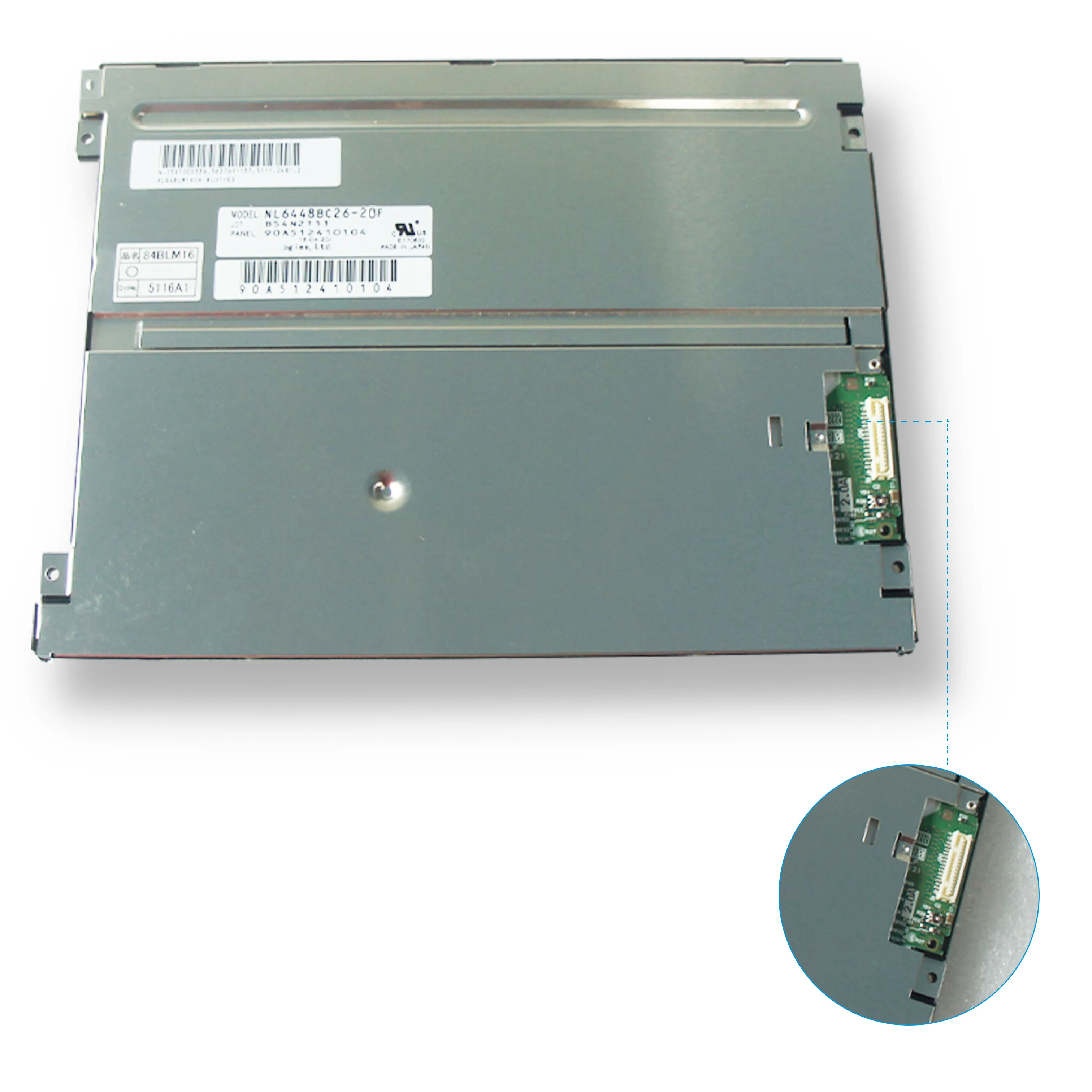

19.0 inch 1280*1024 G190ETN01.0 LCD PANEL FOR AUO
In the rapidly evolving landscape of display technology, the humble 19.0-inch LCD panel often finds itself overshadowed by the glittering allure of 4K and OLED consumer screens. However, for the backbone of global industry—from medical imaging suites to factory floor control rooms—the 19.0-inch 1280x1024 resolution remains a non-negotiable standard of reliability. This article delves deep into the G190ETN01.0, a specific model manufactured by AU Optronics (AUO), a titan in the display industry. We will move beyond the basic specifications to analyze why this particular panel has become a cornerstone for high-stakes environments. We will explore its architectural design, the critical role of its interface, its performance under duress, and its market positioning. This is not merely a review of a part number; it is an examination of a design philosophy that prioritizes stability, readability, and longevity over flashy consumer trends. For engineers, procurement specialists, and system integrators, understanding the G190ETN01.0 is essential for making informed decisions about equipment that must operate flawlessly for years.
The G190ETN01.0 is not a standard desktop monitor; it is an industrial-grade TFT (Thin Film Transistor) LCD module designed for embedded applications. Its core architecture is built around an a-Si TFT active matrix, a proven technology that offers superior stability compared to newer, less mature alternatives. The 1280x1024 resolution (SXGA) is a deliberate choice, offering a 5:4 aspect ratio that is highly compatible with legacy industrial software and provides a taller vertical workspace than widescreen alternatives—a critical factor for reading data sheets or patient vitals.
The panel utilizes a LVDS (Low-Voltage Differential Signaling) interface, specifically a 2-channel, 8-bit setup. This is the industry standard for industrial reliability, allowing for long cable runs and reduced electromagnetic interference. The "01.0" revision indicates a mature, stable production run, free from the teething issues of newer revisions. Physically, its dimensions and mounting hole patterns adhere to strict flat panel display standards, ensuring drop-in compatibility with existing chassis designs. The module delivers a brightness of typically 350 cd/m², a contrast ratio of 1000:1, and a viewing angle of 85/85/80/80 (L/R/U/D) thanks to its TN (Twisted Nematic) technology, which, while not perfect for color-critical work, offers exceptional response times for industrial automation.
In a world dominated by 16:9 and 16:10 displays, the persistence of the 5:4 aspect ratio demands explanation. For the G190ETN01.0, this is not a relic but a strategic feature. Information density is the key driver. Software for medical PACS (Picture Archiving and Communication Systems), industrial HMI (Human-Machine Interfaces), and point-of-sale systems was largely developed during the 4:3 and 5:4 eras. Porting these complex GUI layouts to a widescreen format often results in wasted horizontal space or distorted aspect ratios, forcing developers into costly software rewrites.
Furthermore, the 1280x1024 resolution at 19 inches provides a comfortable pixel-per-inch (PPI) density of approximately 86 PPI. This is a sweet spot for readability. Text is large enough to be read from a distance without scaling, and UI elements are of a usable size for touch interfaces (where applicable). The native resolution also ensures that legacy video sources, such as CCTV feeds or older diagnostic equipment, are mapped without interpolation artifacts. For an industrial buyer, choosing the G190ETN01.0 is a decision to ensure backward compatibility and user interface consistency across a fleet of machinery, reducing training costs and operational errors.
What truly separates the G190ETN01.0 from a consumer monitor is its operating envelope. This AUO panel is engineered to function reliably across a temperature range of 0°C to 50°C (operating) and storage from -20°C to 60°C. More importantly, it incorporates a robust thermal design that prevents image retention and color shift under continuous, 24/7 operation—a scenario that would quickly degrade consumer-grade LCD panels. The backlight is an LED array, which, while not as highly efficient as modern edge-lit designs, offers superior luminance uniformity and a more predictable lifespan (usually rated 50,000 hours to half-brightness).
Optically, the panel features an anti-glare (AG) surface treatment, typically 3H hard coating. This is critical in brightly lit factory floors or hospital operating rooms to minimize distracting reflections. Mechanically, the panel is housed in a rigid metal frame designed for secure VESA mounting and to withstand the vibration and shock common in mobile equipment or industrial machinery. The connector for the LVDS cable is also physically locked, a small but vital detail that prevents accidental disconnection during maintenance. This resilience ensures that the display remains a transparent, reliable window into the systems it serves.
The G190ETN01.0's connection to the outside world is handled by a standard 30-pin LVDS connector. While simple in concept, the integrity of this interface is paramount. The panel supports 8-bit color depth, allowing for up to 16.7 million colors. For many applications, this is sufficient; the focus is on grayscale performance in monochrome medical images or crisp, clear blue-and-white trends on a factory chart. The panel’s signal timing controller (TCON) is integrated, simplifying the system integrator’s design work.
Power requirements are equally robust. It operates on a single 5V or 3.3V logic voltage (depending on the specific revision) and a higher voltage for the LED backlight (typically 12V). This split rail design allows for efficient power management and isolation of the backlight circuit, a safety feature for medical environments. The power consumption is mercifully consistent, typically sitting in the 15-20W range. This predictability allows engineers to design power supplies with exact confidence, avoiding the peak load nightmares associated with modern variable-backlight consumer panels. For a device that may run 10-15 years, predictable power draw is a form of mechanical integrity.
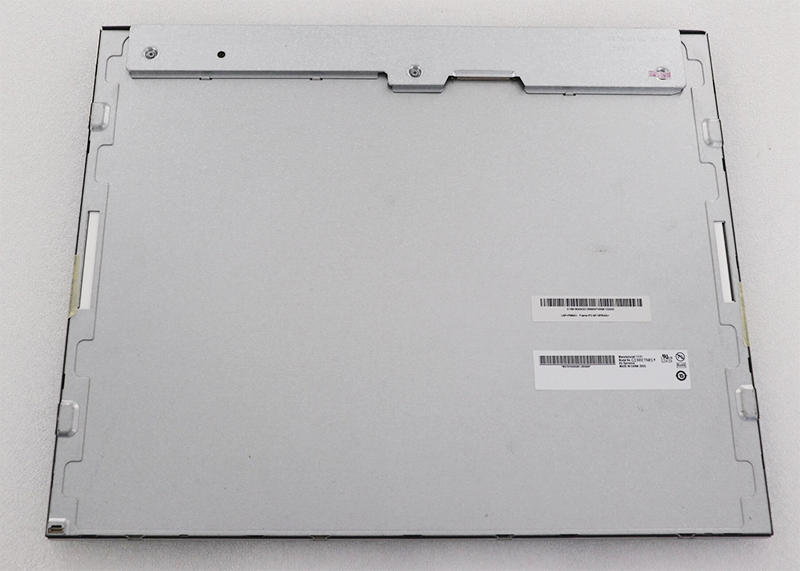
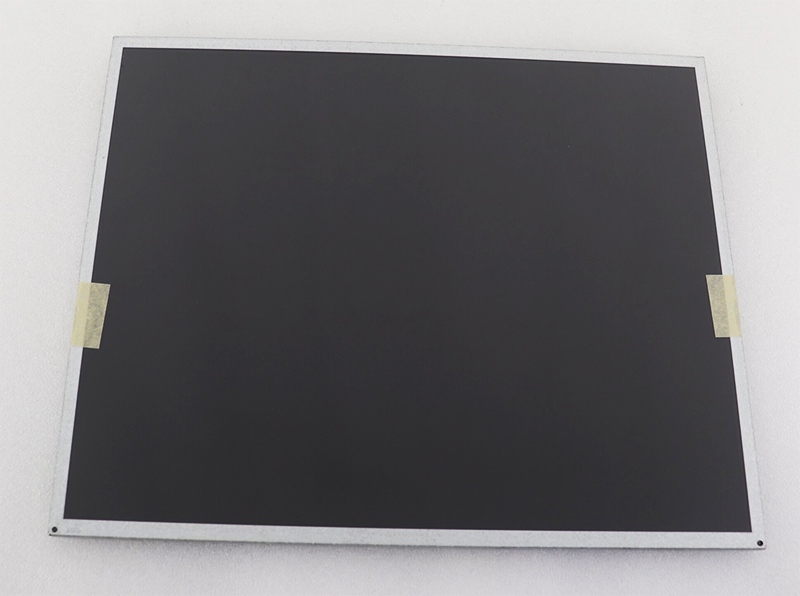
Integrating the G190ETN01.0 requires a clear understanding of its market niche. It is not a low-cost commodity panel. Its primary competition comes from other industrial stalwarts like NEC, Sharp, and IDTech. However, AUO's strength lies in volume production and consistent quality control. The panel is often found in: - Medical Monitors: For ultrasound, patient monitoring, and surgical workstations. - Factory Automation: As the primary HMI for PLCs and CNCs. - Kiosks and ATMs: Due to its durable structure and anti-glare properties. - Gaming/Slot Machines: Where reliability under constant vibration and harsh lighting is mandatory. When selecting this panel, critical factors include verifying the exact backlight type (LED vs. CCFL, though CCFL is now obsolete), confirming the operating temperature range for the specific environment, and ensuring the interface is compatible with the chosen graphics controller. The availability of a touchscreen overlay (resistive or capacitive) is often a separate but related requirement. This panel typically serves as the core component of a larger system, not a standalone consumer good.
FAQS
What is the exact resolution of the G190ETN01.0?
It is 1280 x 1024 pixels, commonly referred to as SXGA resolution.
What interface does this panel use?
It utilizes a standard 30-pin LVDS (Low-Voltage Differential Signaling) interface, typically 2-channel, 8-bit.
Is this panel suitable for outdoor use?
Not directly. Its 350 cd/m² brightness is standard for indoor industrial use. Direct sunlight readability would require a high-brightness version (typically 1000+ cd/m²) which this base model does not offer.
What is the expected lifespan of the LED backlight?
The LED backlight is typically rated for 50,000 hours to half-brightness, which translates to over 5.5 years of 24/7 operation.
Can this panel be touched?
Not by default. It is a bare LCD module. It is commonly integrated with a touchscreen overlay (resistive, capacitive, or IR) by a system integrator.
What is the aspect ratio of a 1280x1024 display?
It is a 5:4 aspect ratio, which is squarer than the common 16:9 widescreen format.
Is the G190ETN01.0 compatible with Raspberry Pi or Arduino?
Not directly. It requires an LVDS driver board for most development boards. It is designed for use with embedded controllers that have a native LVDS output.
What type of backlight does this panel use?
It uses an array of LEDs (Light Emitting Diodes), considered the modern, reliable standard, replacing older CCFL fluorescent tubes.
What is its operating temperature range?
The standard specification is 0°C to +50°C operating, with storage from -20°C to +60°C.
Where can I buy a replacement or sample?
Distributors like Digi-Key, Mouser, or specialized industrial panel suppliers (e.g., Display Elektronik, Winstar) are the primary sources. Check for minimum order quantities.
Conclusion: The Quiet Workhorse of the Digital World
The AUO G190ETN01.0 19.0-inch 1280x1024 LCD panel represents a triumph of functional engineering over consumer fashion. It is a testament to the fact that high performance is not always defined by pixel count or contrast ratio, but by reliability, interface compatibility, and operational predictability. As we have explored, its 5:4 aspect ratio is not a flaw but a feature for legacy software, its TN technology provides the speed required for industrial triggers, and its robust construction ensures years of service in harsh environments. For any professional tasked with selecting a display for a medical, industrial, or commercial kiosk system, the G190ETN01.0 offers a proven, low-risk pathway. It is not the flashiest panel on the market, but it is the one that will work, consistently and without fail, when the system needs it most. In a world of disposable technology, it embodies a welcome philosophy of enduring, purposeful design.