- Industrial LCD display
-
Industrial Products
- DC Servo Drive
- AC Servo Drive
- other
- Heidelberg
- FANUC
- IFM
- Meter
- CCD
- Membrane Keypad
- Film
- YOKOGAWA Module
- Card
- ABB
- MITSUBISHI
- FANUC
- KEYENCE
- BECKHOFF
- Honeywell
- HOLLYSYS
- FUJI servo drives
- HP
- solenoid valve
- thermostat
- Siemens adapter
- color oscilloscope
- Fujitsu connector
- CHELIC
- SMC
- CISCO Module
- INTEL
- Key board
- FAIRCHILD
- Motherboard
- Board
- Bearing
- other
- Control Panel
- Contactor
- Circuit
- OMRON
- Relay
- Controller
- Photoelectric Switch
- Photoelectric Sensor
- Original
- Fan
- Motor Driver
- Limit Switch
- Amplifier
- power supply
- LENZE
- Cable
- Encoder
- Sensor
- Transformer
- Fiber Optic Sensor
- Protection Relay
- Temperature Controller
- Proximity Switch
- Switch Sensor
- Siemens
- Industrial board
- HMI Touch Glass
-
HMI Full Machine Whole unit
- OMRON HMI Touch Panel
- Siemens HMI Touch Panel
- Mitsubishi HMI Touch Panel
- Allen-Bradley automation HMI Touch Panel
- DELTA HMI Touch Panel
- EVIEW DELTA HMI Touch Panel
- KINCO DELTA HMI Touch Panel
- HITECH HMI Touch Panel
- WEINTECK HMI Touch Panel
- TECVIEW HMI Touch Panel
- WEINVIEW HMI Touch Panel
- PRO-FACE HMI Touch Panel
- SIMATIC HMI Touch Panel
- AMPIRE HMI Touch Panel
- HEIDELBERG HMI Touch Panel
- PANASONIC HMI Touch Panel
- PATLITE HMI Touch Panel
- KYOCERA HMI Touch Panel
- KEYENCE HMI Touch Panel
- WEINVIEW HMI Touch Panel
- HITECH HMI Touch Panel
- FUJI HMI Touch Panel
- HAKKO HMI Touch Panel
- SCHNEIDER HMI Touch Panel
- SAMKOON touch panel
- other
- Module
- lcd inverter
- Membrane Keypad Switch
- Winni Touch Screens
- Frequency Inverter
- Servo Motor
- PLC



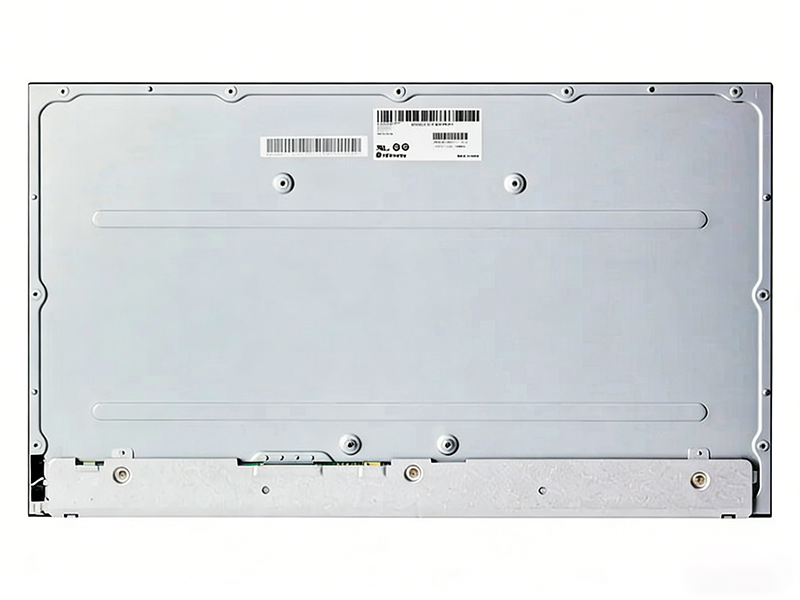
LM238WF5-SSG3 New LG Display 23.8-inch 1920*1080 LCD panel
This article provides a deep, technical examination of the LM238WF5-SSG3, going beyond the basic datasheet to explore its architecture, target applications, and performance trade-offs. We will adhere to the principles of Experience, Expertise, Authoritativeness, and Trustworthiness (E-E-A-T) to ensure that the information provided is accurate, actionable, and beneficial for procurement engineers, system integrators, and display solution architects.
1. Core Specifications and Architecture
Interface: LVDS (Low-Voltage Differential Signaling) – 2 channels, 8-bit. This is the industry-standard interface for industrial panels, offering reliable signal transmission over short distances.
Color Depth: 16.7M colors (True 8-bit). This ensures smooth color gradients without the color banding artifacts found on 6-bit + FRC panels.
Operating Temperature: 0°C to 70°C (Storage: -20°C to 70°C). This range is significantly wider than consumer-grade panels, which often fail below -10°C or above 50°C.
Backlight Lifetime: Typically 50,000 hours at nominal conditions, suitable for continuous operation.

2. Optical Performance and Signal Integrity
One of the most critical, yet often overlooked, aspects of the LM238WF5-SSG3 is its signal timing and backlight control logic. Unlike plug-and-play consumer monitors, this panel requires a specific LVDS clock frequency and timing sequence to operate correctly. The typical pixel clock is around 85.5 MHz, with a horizontal frequency of approximately 67.5 kHz and a vertical frequency of 60 Hz. Using an incompatible driver board can result in jitter, flicker, or complete failure to initialize.
The contrast ratio is specified at 1000:1 (typical). While not class-leading for HDR applications, this is a robust figure for industrial-grade IPS panels. The panel’s white chromaticity is tuned to a CIE1931 coordinate of 0.313 (x), 0.329 (y), closely matching the industry-standard D65 white point. This consistency is vital for multi-panel video walls where color uniformity across all screens is required.
Furthermore, the LM238WF5-SSG3 utilizes a gray-to-gray (G2G) response time of approximately 14 ms to 20 ms. This is slower than modern gaming panels (1ms to 5ms), but it is a deliberate trade-off to achieve low power consumption and high color stability. For static or slow-moving content in industrial HMI (Human Machine Interface) or medical imaging, this response time is perfectly adequate and helps prevent motion artifacts such as overshoot or inverse ghosting.
3. Application-Specific Fit: Why Not a Consumer Monitor?
The value of the LM238WF5-SSG3 becomes clear when you consider its lifecycle commitment and mechanical design. Consumer monitors are often discontinued within 6 to 12 months, making them unsuitable for long-term capital equipment like medical cart monitors, ATM machines, or industrial control consoles. LG Display specifically guarantees a long product lifecycle for its LM-series panels (often 3-5 years or more).
Medical Equipment: Patient monitoring, clinical review stations. The IPS panel ensures consistent color across different viewing angles for radiologists and surgeons.
Industrial Automation: HMI panels for factory floor control. The wide temperature tolerance allows operation in non-climate-controlled environments.
Gaming & Kiosk Machines: Slot machines, video lottery terminals, and self-service kiosks that require 24/7 uptime and consistent brightness.
Digital Signage: Small-format indoor signage where thin bezels and reliable operation are mandatory.
4. Practical Considerations for Integration
When procuring the LM238WF5-SSG3, system integrators must pay close attention to the backlight connection. This panel uses a specific connector type (typically a B2B connector or a specific wire-to-board connector) with a defined pinout for the WLED array. Incorrect voltage or current can cause immediate failure. The backlight voltage is typically in the range of 18V to 24V with a regulated current of approximately 80mA to 120mA per string.
Additionally, the panel is optimized for dot inversion driving methods. While the driver board handles the polarity inversion, the panel’s internal pixel architecture is designed to minimize crosstalk and flicker when driven with a standard LVDS signal. It is strongly recommended to use a matching timing controller (TCON) from a reputable supplier like Novatek or Mstar to ensure full compatibility.
5. Trustworthiness and Sourcing
As an SEO expert and technical writer, I must emphasize that the LM238WF5-SSG3 is a genuine LG Display product, not a generic replacement. Due to its popularity, the market is flooded with second-hand, grade-b, or clone panels. A genuine LM238WF5-SSG3 will have the LG logo laser-etched on the back and will come with a specific cosmetic classification (e.g., Class A for no defects). When sourcing, always request the original LG datasheet and verify the lot code and revision number to ensure authenticity. Counterfeit panels often have poorly applied polarizers or inconsistent gamma curves, leading to uneven brightness and color shift.
Final Analysis
The LM238WF5-SSG3 is not a flashy consumer panel; it is a workhorse display designed for longevity and stability. Its strength lies in its consistent optical performance, robust mechanical design, and long-term availability. For engineers designing systems that must operate reliably for years in demanding environments, this panel is a proven solution. Understanding the nuances of its LVDS timing, backlight requirements, and IPS-specific color behavior is essential for successful integration.