- Industrial LCD display
-
Industrial Products
- DC Servo Drive
- AC Servo Drive
- other
- Heidelberg
- FANUC
- IFM
- Meter
- CCD
- Membrane Keypad
- Film
- YOKOGAWA Module
- Card
- ABB
- MITSUBISHI
- FANUC
- KEYENCE
- BECKHOFF
- Honeywell
- HOLLYSYS
- FUJI servo drives
- HP
- solenoid valve
- thermostat
- Siemens adapter
- color oscilloscope
- Fujitsu connector
- CHELIC
- SMC
- CISCO Module
- INTEL
- Key board
- FAIRCHILD
- Motherboard
- Board
- Bearing
- other
- Control Panel
- Contactor
- Circuit
- OMRON
- Relay
- Controller
- Photoelectric Switch
- Photoelectric Sensor
- Original
- Fan
- Motor Driver
- Limit Switch
- Amplifier
- power supply
- LENZE
- Cable
- Encoder
- Sensor
- Transformer
- Fiber Optic Sensor
- Protection Relay
- Temperature Controller
- Proximity Switch
- Switch Sensor
- Siemens
- Industrial board
- HMI Touch Glass
-
HMI Full Machine Whole unit
- OMRON HMI Touch Panel
- Siemens HMI Touch Panel
- Mitsubishi HMI Touch Panel
- Allen-Bradley automation HMI Touch Panel
- DELTA HMI Touch Panel
- EVIEW DELTA HMI Touch Panel
- KINCO DELTA HMI Touch Panel
- HITECH HMI Touch Panel
- WEINTECK HMI Touch Panel
- TECVIEW HMI Touch Panel
- WEINVIEW HMI Touch Panel
- PRO-FACE HMI Touch Panel
- SIMATIC HMI Touch Panel
- AMPIRE HMI Touch Panel
- HEIDELBERG HMI Touch Panel
- PANASONIC HMI Touch Panel
- PATLITE HMI Touch Panel
- KYOCERA HMI Touch Panel
- KEYENCE HMI Touch Panel
- WEINVIEW HMI Touch Panel
- HITECH HMI Touch Panel
- FUJI HMI Touch Panel
- HAKKO HMI Touch Panel
- SCHNEIDER HMI Touch Panel
- SAMKOON touch panel
- other
- Module
- lcd inverter
- Membrane Keypad Switch
- Winni Touch Screens
- Frequency Inverter
- Servo Motor
- PLC


[Industry In-Depth] Breaking the Cyclical Mold: Global Display Giants Pivot Toward Optoelectronic Fusion and Advanced Packaging
Following a brutal wave of price wars in flexible OLEDs and structural swings across the traditional panel cycle, the global semiconductor display industry is undergoing a profound paradigm shift. Recent strategic moves by market leaders indicate future competitiveness no longer hinges purely on manufacturing capacity. Instead, the sector is pivoting toward high-value growth tracks built around glass-based advanced packaging, perovskite photovoltaics, and AI-enabled optoelectronic fusion.
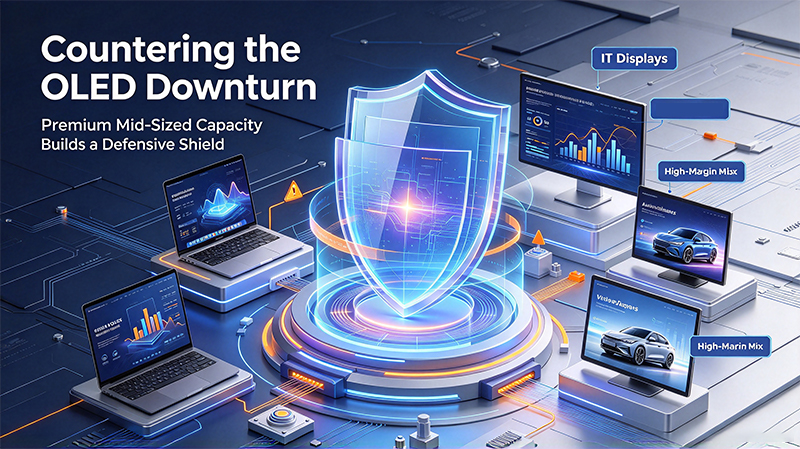
I. Countering the OLED Downturn: Premium Mid-Sized Capacity Builds a Defensive Shield
In the second half of 2026, the global flexible OLED market entered a challenging phase marked by synchronized volume and price declines, squeezing manufacturers’ gross margins. To escape commoditization pressure from low-end capacity, leading tier-one players are reallocating resources toward high-margin, high-barrier mid-sized segments including laptops, tablets and automotive displays. According to recent supply chain updates, among the world’s first high-generation AMOLED lines dedicated to IT applications have entered mass production and delivery this year. Industry analysts note that as these advanced lines ramp capacity and refine yields, lean operations and product-mix optimization will serve as core levers to preserve corporate cash flow amid the ongoing industry shakeout.
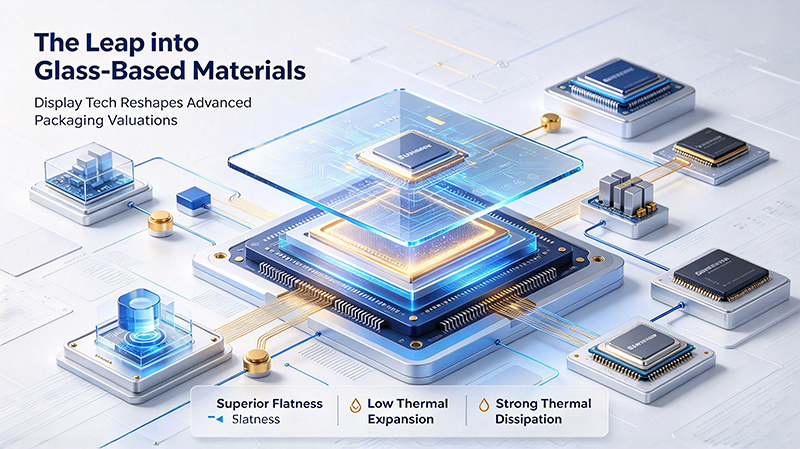
II. The Leap into "Glass-Based" Materials: Display Tech Reshapes Advanced Packaging Valuations
Beyond conventional display panels, a sizable incremental market built on core display competencies is emerging: glass-based advanced packaging substrates. Recently, display leaders and upstream material players upgraded joint innovation frameworks to accelerate end-to-end collaborative R&D. Thanks to superior flatness, low thermal expansion coefficient and good thermal dissipation performance, glass is increasingly viewed as a promising substrate candidate for advanced packaging of high-performance AI chips and optical interconnects. This reshapes valuation logic for display firms, shifting from the classic “cyclical panel narrative” toward a semiconductor-style growth story centered on advanced packaging.
III. Scenario Proliferation: "Display of Things" Evolves into Optoelectronic Fusion
At recent global innovation forums, industry leaders teamed up with computing and materials heavyweights to roll out cross-industry initiatives advancing optoelectronic fusion for the Internet of Things. This signals a new era where display technologies integrate seamlessly with artificial intelligence. A stream of supply-chain technology prototypes has been unveiled: Mirrored creaseless flexible screen prototypes capable of sustaining tens of thousands of folds even under extreme sub-zero conditions. Hundred-inch-class ultra-large Micro LED displays with module thickness of only a few millimeters and exceptional peak brightness. Breakthrough glass-based perovskite photovoltaic modules for clean energy, which have passed rigorous international reliability certifications at prototype stage.
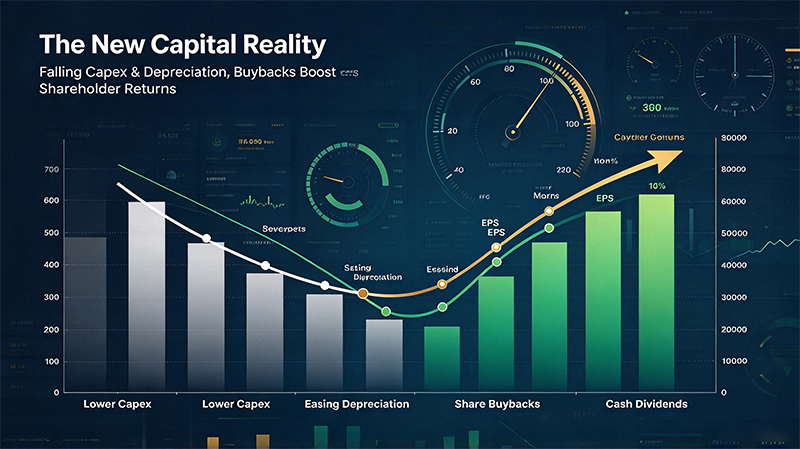
IV. The New Capital Reality: Falling Capex & Depreciation, Buybacks Boost Shareholder Returns
From a financial standpoint, many industry observers believe the display sector is approaching an inflection point, as depreciation burdens and capital expenditures trend lower simultaneously. The heavy investment phase for flagship core production lines is winding down, easing amortization pressure and unlocking potential profit elasticity. Parallel to this capital structure shift, firms have adopted active capital management policies. Major listed players have rolled out share buyback and cancellation programs to reduce registered capital, lift EPS and sustain robust cash dividend commitments. Separately, controlling shareholders have implemented large-scale equity top-ups in hundreds of millions of US dollars.
[Conclusion]
2026 marks a boundary-crossing year for the global display sector. As glass substrates evolve beyond simple display panels into an emerging foundational platform for solar cells, chip packaging and optical interconnect, semiconductor display players are gradually shedding their old reputation as capital-heavy, cyclical businesses, mapping out a blueprint for more resilient, high-quality growth.