- Industrie-LCD-Display
-
Industrial Products
- DC Servo Drive
- AC Servo Drive
- other
- Heidelberg
- FANUC
- IFM
- Meter
- CCD
- Membrane Keypad
- Film
- YOKOGAWA
- Card
- ABB
- MITSUBISHI
- FANUC
- KEYENCE
- BECKHOFF
- Honeywell
- HOLLYSYS
- FUJI servo drives
- HP
- solenoid valve
- thermostat
- Siemens adapter
- color oscilloscope
- Fujitsu connector
- CHELIC
- SMC
- CISCO
- INTEL
- Key board
- FAIRCHILD
- Der Aufsichtsrat
- Board
- Bearing
- other
- Control Panel
- Contactor
- Circuit
- Omron
- Relais.
- Der controller
- Optoelektronische schalter
- Optoelektronische sensoren
- Original
- Fan
- Motortreiber
- Endschalter
- Verstärker
- power supply
- LENZE
- Cable
- Encoder
- Sensor
- Transformator
- Fiber Optic Sensor
- Schutzrelais
- Temperaturregler
- Näherungsschalter
- Switch Sensor
- Siemens
- PCB
- HMI Touch-Glas
-
HMI-Vollautomat Ganze Einheit
- OMRON HMI Touch Panel
- Siemens HMI Touch Panel
- Mitsubishi HMI Touch Panel
- Allen-Bradley Automatisierung HMI Touch
- DELTA HMI Touch Panel
- EVIEW DELTA HMI Touch Panel
- KINCO DELTA HMI Touch Panel
- HITECH HMI Touch Panel
- WEINTECK HMI Touch Panel
- TECVIEW HMI Touch Panel
- WEINVIEW HMI Touch Panel
- PRO-FACE HMI Touch Panel
- SIMATIC HMI Touch Panel
- AMPIRE HMI Touch Panel
- HEIDELBERG HMI Touch Panel
- PANASONIC HMI Touch Panel
- PATLITE HMI Touch Panel
- KYOCERA HMI Touch Panel
- KEYENCE HMI Touch Panel
- WEINVIEW HMI Touch Panel
- HITECH HMI Touch Panel
- FUJI HMI Touch Panel
- HAKKO HMI Touch Panel
- SCHNEIDER HMI Touch Panel
- SAMKOON touch panel
- andere
- Module
- LCD Wechselrichter
- Membran Tastenfeld Schalter
- Winni Touch Screens
- Frequenzumrichter
- Servo Motor
- PLC



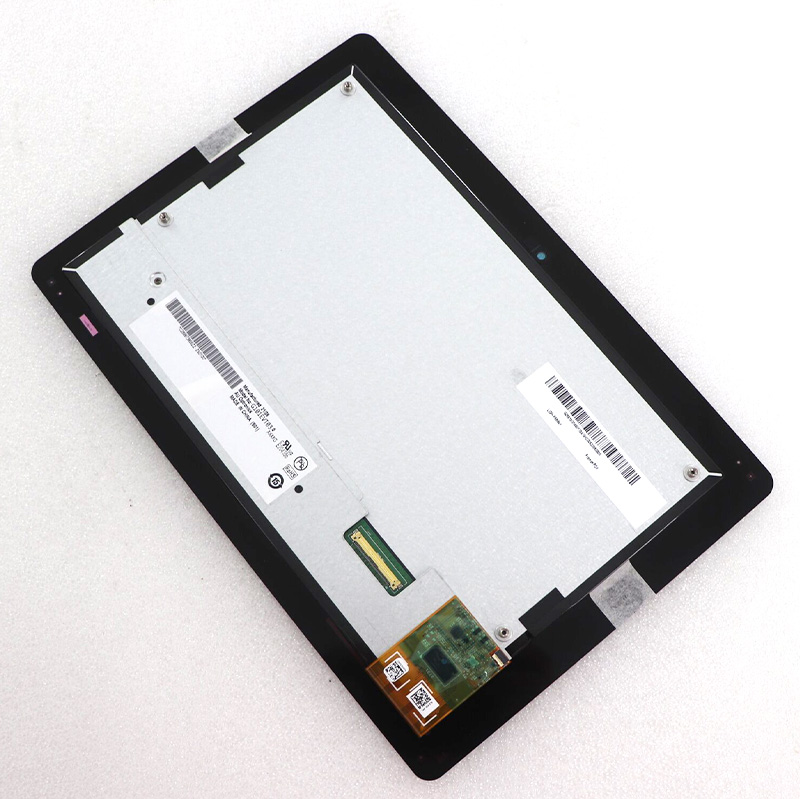
G101EVT03.0 AUO 10.1 inch 1280*800 TFT-LCD PANEL
In the intricate world of industrial and embedded display solutions, the choice of a panel is a critical engineering decision that impacts performance, reliability, and user experience. Among the myriad of options, the G101EVT03.0 from AUO (AU Optronics) stands out as a prominent and highly specified component. This 10.1-inch TFT-LCD module represents a convergence of mature technology and refined design, tailored for applications where clarity, durability, and consistent performance are non-negotiable.
This article delves into a comprehensive technical and application-oriented analysis of the AUO G101EVT03.0 panel. We will move beyond basic datasheet parameters to explore its underlying technology, dissect its key performance characteristics, and understand its ideal use-case scenarios. Furthermore, we will examine its integration requirements, compare its position in the current market landscape, and project its relevance in the face of evolving display technologies. Our goal is to provide engineers, procurement specialists, and product developers with the depth of insight needed to evaluate this panel not just as a component, but as a strategic element in their system design.
Core Technology and Architecture of the G101EVT03.0
At its heart, the G101EVT03.0 is a Twisted Nematic (TN) type TFT-LCD panel with a resolution of 1280 x 800 pixels (WXGA). This 16:10 aspect ratio offers a balanced workspace, historically favored in industrial and medical devices for displaying more vertical information compared to wider 16:9 screens. The TN technology is a well-established workhorse, known for its fast response times—a crucial factor in reducing motion blur for dynamic content or touch interactions.
The module employs an LVDS (Low-Voltage Differential Signaling) interface, a robust and noise-resistant standard that has been the backbone of industrial display connectivity for years. This choice ensures reliable data transmission over longer cable lengths within a device chassis, minimizing signal integrity issues. The panel features a standard RGB stripe pixel arrangement and typically utilizes a CCFL or LED backlight system (with the LED version being more common in modern iterations for its longevity and lower power consumption). Understanding this architectural foundation is key to appreciating its performance envelope and compatibility constraints.
Detailed Performance Characteristics and Specifications
The panel's specifications paint a picture of a component built for demanding environments. The 1280x800 resolution on a 10.1-inch diagonal yields a pixel density of approximately 149 PPI, providing sharp text and detailed graphics suitable for control interfaces and diagnostic equipment. Brightness levels typically range from 300 to 500 nits, ensuring adequate visibility in moderately lit industrial settings.
Critical parameters include a wide operating temperature range (often from -20°C to 70°C), which is essential for applications subject to thermal variance. The contrast ratio, viewing angles (which are more limited on TN technology compared to IPS), and color gamut coverage (usually around 45-50% NTSC) define its visual performance. It is vital to note that while color fidelity may not match high-end consumer displays, the G101EVT03.0 excels in reliability, longevity, and stable performance over its entire operational life, which are paramount in its target sectors.
Primary Application Domains and Use Cases
The G101EVT03.0 is not designed for consumer entertainment; its DNA is industrial. Its most significant applications are found in sectors where failure is not an option. In Industrial Human-Machine Interfaces (HMIs), it serves as the primary touchpoint for controlling machinery, monitoring processes, and visualizing data on factory floors.
Similarly, in the medical device field, it can be found in diagnostic equipment, patient monitoring systems, and portable medical carts, where clear data presentation and consistent operation are critical. Other key domains include:
Transportation & Fleet Management: In-vehicle infotainment and control systems for buses, trains, or heavy machinery.
Point-of-Sale (POS) & Kiosk Systems: For retail and self-service terminals requiring durable, always-on displays.
Test & Measurement Equipment: Providing a reliable visual interface for oscilloscopes, signal analyzers, and other precision instruments.
Integration Considerations and Interface Requirements
Successfully integrating the G101EVT03.0 into a product requires careful planning. The LVDS interface necessitates a compatible controller board or a system-on-chip (SoC) with an LVDS transmitter. Designers must account for the correct voltage levels, signal timing, and connector pinout as per the panel's datasheet.
Power sequencing is another critical factor; improper power-up/down sequences can damage the panel. Furthermore, mechanical integration must consider the panel's outline dimensions, bezel size, and mounting holes. If utilizing the touchscreen variant (typically a projected capacitive or resistive overlay), the touch controller integration and driver software add another layer of complexity. Addressing electromagnetic compatibility (EMC) early in the design, often aided by the panel's inherent metal frame and shielding, is essential for passing regulatory certifications.
Market Context and Competing Alternatives
In today's market, the G101EVT03.0 exists alongside newer technologies like In-Plane Switching (IPS) panels, which offer superior viewing angles and color reproduction. However, its value proposition remains strong in its niche. It competes directly with other 10.1-inch WXGA modules from manufacturers like Innolux, BOE, and LG Display.
Its advantages often lie in cost-effectiveness, proven long-term supply stability (a major concern for industrial product lifecycles), and a vast ecosystem of compatible driver boards and accessories. When evaluating alternatives, engineers must weigh factors such as viewing angle requirements, cost sensitivity, supply chain security, and the necessity for ultra-wide temperature ranges. For many legacy system upgrades or new designs where extreme color accuracy is secondary to robustness, the G101EVT03.0 remains a compelling and low-risk choice.
Future Outlook and Technological Evolution
The display industry is relentlessly driven toward higher resolutions, lower power consumption, and flexible form factors. While the G101EVT03.0 represents a mature technology node, its evolution is aligned with industrial needs. Future iterations or direct replacements may see a shift to LED backlighting with local dimming for better contrast, transition to more advanced interfaces like eDP (Embedded DisplayPort), or the adoption of slim-border designs for seamless multi-panel installations.
The core demand for reliable, sunlight-readable, and ruggedized 10.1-inch displays will persist. The legacy of panels like the G101EVT03.0 will influence future designs, ensuring that new technologies incorporate the same emphasis on durability and operational stability. Its "future" may less about radical specification jumps and more about incremental improvements in efficiency, supply chain resilience, and seamless backward compatibility for the vast installed base of equipment that depends on this form factor and interface standard.
FAQs
Q10: What might be a modern alternative to this panel?A10: Modern alternatives might include 10.1-inch IPS panels with eDP interfaces for better viewing angles and simpler integration, though potentially at a higher cost.
Conclusion
The AUO G101EVT03.0 10.1-inch LCD panel exemplifies a specialized component engineered for performance beyond the consumer sphere. Its value lies not in headline-grabbing specs, but in its proven reliability, robust interface, and suitability for challenging operational environments. Through its TN technology, LVDS interface, and wide-temperature design, it addresses the core needs of industrial, medical, and commercial applications where consistency trumps novelty.
For product developers, choosing this panel is a strategic decision that balances technical requirements with lifecycle and supply chain considerations. While newer display technologies continue to advance, the legacy and ongoing relevance of workhorses like the G101EVT03.0 underscore a fundamental truth in industrial design: the right tool for the job is often the one that performs unfailingly, day in and day out. It remains a testament to the enduring need for specialized, ruggedized components in an increasingly connected and automated world.