- Industrie-LCD-Display
-
Industrial Products
- DC Servo Drive
- AC Servo Drive
- other
- Heidelberg
- FANUC
- IFM
- Meter
- CCD
- Membrane Keypad
- Film
- YOKOGAWA
- Card
- ABB
- MITSUBISHI
- FANUC
- KEYENCE
- BECKHOFF
- Honeywell
- HOLLYSYS
- FUJI servo drives
- HP
- solenoid valve
- thermostat
- Siemens adapter
- color oscilloscope
- Fujitsu connector
- CHELIC
- SMC
- CISCO
- INTEL
- Key board
- FAIRCHILD
- Der Aufsichtsrat
- Board
- Bearing
- other
- Control Panel
- Contactor
- Circuit
- Omron
- Relais.
- Der controller
- Optoelektronische schalter
- Optoelektronische sensoren
- Original
- Fan
- Motortreiber
- Endschalter
- Verstärker
- power supply
- LENZE
- Cable
- Encoder
- Sensor
- Transformator
- Fiber Optic Sensor
- Schutzrelais
- Temperaturregler
- Näherungsschalter
- Switch Sensor
- Siemens
- PCB
- HMI Touch-Glas
-
HMI-Vollautomat Ganze Einheit
- OMRON HMI Touch Panel
- Siemens HMI Touch Panel
- Mitsubishi HMI Touch Panel
- Allen-Bradley Automatisierung HMI Touch
- DELTA HMI Touch Panel
- EVIEW DELTA HMI Touch Panel
- KINCO DELTA HMI Touch Panel
- HITECH HMI Touch Panel
- WEINTECK HMI Touch Panel
- TECVIEW HMI Touch Panel
- WEINVIEW HMI Touch Panel
- PRO-FACE HMI Touch Panel
- SIMATIC HMI Touch Panel
- AMPIRE HMI Touch Panel
- HEIDELBERG HMI Touch Panel
- PANASONIC HMI Touch Panel
- PATLITE HMI Touch Panel
- KYOCERA HMI Touch Panel
- KEYENCE HMI Touch Panel
- WEINVIEW HMI Touch Panel
- HITECH HMI Touch Panel
- FUJI HMI Touch Panel
- HAKKO HMI Touch Panel
- SCHNEIDER HMI Touch Panel
- SAMKOON touch panel
- andere
- Module
- LCD Wechselrichter
- Membran Tastenfeld Schalter
- Winni Touch Screens
- Frequenzumrichter
- Servo Motor
- PLC


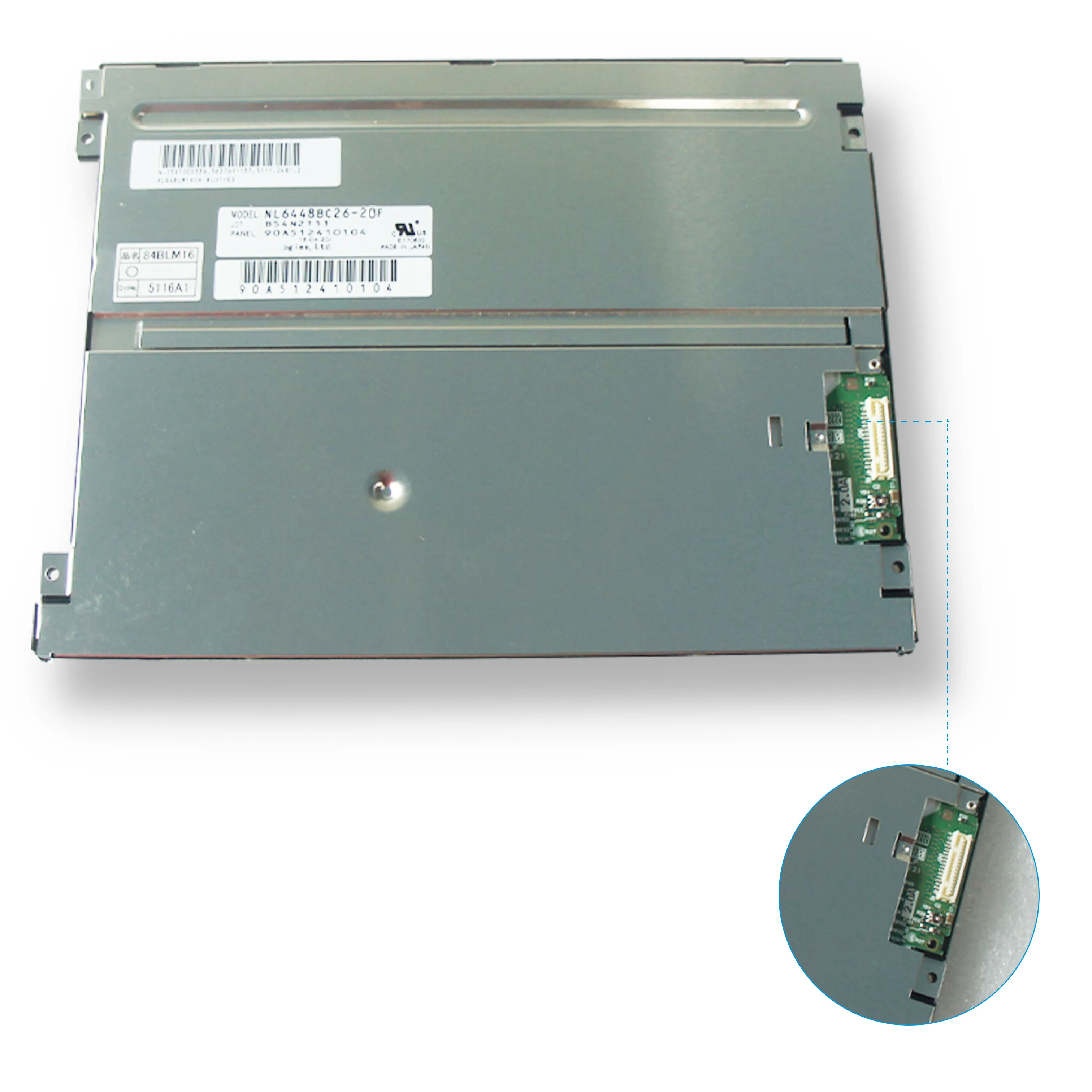

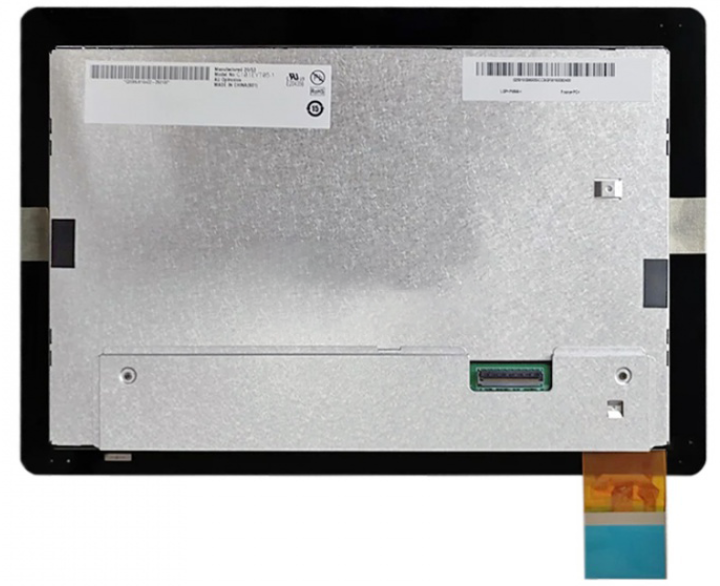
G101EVT05.1 AUO 10.1inch 1280*800 LCD DISPLAY
In the intricate world of electronic components, the display panel often serves as the critical interface between user and machine, defining the clarity, responsiveness, and overall experience of a device. Among the myriad of options available to engineers and product designers, the G101EVT05.1 from AUO (AU Optronics) stands out as a meticulously engineered solution for applications demanding a balance of performance and reliability. This 10.1-inch LCD module, with its 1280 x 800 pixel resolution, represents a specific and potent configuration in the landscape of mid-sized displays.
This article delves into a comprehensive technical and application-focused analysis of the AUO G101EVT05.1 display. We will move beyond basic specifications to explore its underlying technology, the tangible benefits of its key features, and the practical considerations for its integration. Our goal is to provide OEMs, hardware developers, and technology procurement specialists with a deep, actionable understanding of where and how this display module can serve as the optimal visual engine for their next-generation products, from industrial HMIs to advanced portable medical devices.
Decoding the Specification: WXGA in a 10.1-Inch Form Factor
The model number G101EVT05.1 itself is a data sheet. "G101" typically denotes a 10.1-inch diagonal screen size. The core of its visual performance lies in the 1280 (horizontal) x 800 (vertical) pixel array, known as WXGA (Wide Extended Graphics Array). This 16:10 aspect ratio offers a distinct advantage over the more common 16:9 format for many professional and industrial applications. The slightly taller screen provides additional vertical real estate, beneficial for viewing documents, coding interfaces, or displaying complex control panels without excessive scrolling.
With a pixel density of approximately 149 PPI (Pixels Per Inch), this module strikes a careful balance. It delivers sharp, legible text and detailed graphics suitable for arm's-length viewing, without imposing the excessive power and processing demands associated with ultra-high-density "Retina" displays. This makes it an efficient choice for embedded systems where performance-per-watt is crucial. The specification sets the foundation for a display designed for usability and clarity in controlled or mobile environments.
AUO's AAS Technology: Enhancing Viewing Performance
A key differentiator for the G101EVT05.1 is AUO's implementation of AAS (Advanced Axial Symmetry) technology. This is not merely a marketing term but a specific optical design philosophy for the LCD's internal structure. Traditional TN (Twisted Nematic) or even some IPS (In-Plane Switching) panels can suffer from significant color shift, contrast reduction, and gamma distortion when viewed from angles, particularly vertically.
AAS technology optimizes the alignment of liquid crystal molecules and the optical film stack. The result is a substantial improvement in viewing angle performance, often achieving wide viewing angles (e.g., 85/85/85/85 degrees at contrast ratio >10) with minimal color inversion or washout. For applications like point-of-sale systems, automotive dashboards, or shared industrial consoles where the screen may be viewed from non-ideal angles, this technology ensures consistent color and contrast, preserving information integrity and user experience.
Interface and Control: The LVDS Connection Standard
The G101EVT05.1 utilizes an LVDS (Low-Voltage Differential Signaling) interface, a long-established and robust standard in the display industry. LVDS is prized for its reliability, noise immunity, and ability to transmit high-speed data over longer cable lengths compared to parallel RGB interfaces. This makes it exceptionally suitable for environments with potential electromagnetic interference, such as factory floors or medical equipment.
Integration involves connecting the display's LVDS receiver to a compatible transmitter on the host system's mainboard (often an SoC or graphics controller). Designers must ensure signal integrity through proper PCB layout and cabling. The module's onboard timing controller (TCON) manages the LVDS data stream, converting it into signals that drive the rows and columns of the LCD matrix. This standardized interface simplifies the design-in process, offering a stable and predictable pathway for visual data.
Optical Characteristics: Brightness, Contrast, and Color Gamut
Beyond resolution and viewing angles, the optical characteristics define the display's visual impact. The G101EVT05.1 typically offers a brightness specification in the range of 300 to 500 nits (candelas per square meter). This level of luminance is sufficient for indoor use under bright lighting and can be adequate for some outdoor applications when paired with optical bonding to reduce glare.
A high static contrast ratio (e.g., 800:1 or 1000:1) ensures deep blacks and bright whites, contributing to perceived image depth and clarity. The color gamut, often covering 60-70% of the NTSC standard, indicates its ability to reproduce a specific range of colors. For this module, the gamut is tailored for accurate representation of data, graphics, and user interface elements rather than for premium media consumption, aligning perfectly with its target applications in instrumentation, logistics, and control systems.
Typical Applications and Industry Use Cases
Industrial Human-Machine Interfaces (HMIs): Used in PLC control panels, factory automation dashboards, and test equipment, where wide viewing angles and clear visibility in various lighting conditions are paramount.
Transportation & Automotive: Integrated into fleet management systems, rear-seat entertainment, or digital instrument clusters for commercial vehicles.
Medical & Healthcare: Found in portable diagnostic devices, patient monitoring equipment, and surgical tools where consistent visual feedback is critical.
Point-of-Sale (POS) & Kiosks: Powers self-service terminals, retail checkout systems, and information kiosks that require reliable, long-hour operation.
Design-In Considerations and Compatibility
Successfully integrating the G101EVT05.1 requires attention to several practical factors. Mechanical compatibility is first: designers must account for its exact outline dimensions, bezel size, and mounting hole positions. The power supply must deliver stable voltage (typically 3.3V or 5V for logic and a higher voltage for the backlight) with sufficient current capacity, especially for the LED backlight unit.
Thermal management is crucial for longevity and performance stability. While LED backlights are efficient, prolonged operation in enclosed spaces can generate heat. Adequate ventilation or passive heatsinking may be necessary. Furthermore, designers must source a compatible LVDS controller board or ensure their host processor has an LVDS output that matches the display's pin assignment and data mapping. Finally, considering optical bonding (laminating a glass cover directly to the LCD) can enhance durability, reduce glare, and improve sunlight readability for harsh environments.
FAQs: AUO G101EVT05.1 Display Module
Q10: Where can I find the detailed datasheet and pinout diagram?A10: The official technical datasheet and application notes should be sourced directly from AU Optronics (AUO) or from authorized distributors and component suppliers.
Conclusion
The AUO G101EVT05.1 10.1-inch WXGA display module exemplifies a purpose-driven component engineered for reliability and performance in demanding environments. Its value proposition lies not in being the highest-resolution or most colorful panel available, but in its balanced and robust combination of specifications: the productive 16:10 WXGA resolution, the stability offered by LVDS interface, and the consistent visual performance guaranteed by AAS viewing angle technology.
For product developers navigating the selection process, this display presents a compelling solution for a wide spectrum of industrial, commercial, and medical applications. Success hinges on a thorough understanding of its integration requirements—from power and thermal design to mechanical fit and signal compatibility. By leveraging its strengths and accounting for its design-in parameters, engineers can effectively harness this display to create devices that are not only functional but also offer a superior and reliable user interface, ultimately contributing to the success and durability of the end product.