- Industrie-LCD-Display
-
Industrial Products
- DC Servo Drive
- AC Servo Drive
- other
- Heidelberg
- FANUC
- IFM
- Meter
- CCD
- Membrane Keypad
- Film
- YOKOGAWA
- Card
- ABB
- MITSUBISHI
- FANUC
- KEYENCE
- BECKHOFF
- Honeywell
- HOLLYSYS
- FUJI servo drives
- HP
- solenoid valve
- thermostat
- Siemens adapter
- color oscilloscope
- Fujitsu connector
- CHELIC
- SMC
- CISCO
- INTEL
- Key board
- FAIRCHILD
- Der Aufsichtsrat
- Board
- Bearing
- other
- Control Panel
- Contactor
- Circuit
- Omron
- Relais.
- Der controller
- Optoelektronische schalter
- Optoelektronische sensoren
- Original
- Fan
- Motortreiber
- Endschalter
- Verstärker
- power supply
- LENZE
- Cable
- Encoder
- Sensor
- Transformator
- Fiber Optic Sensor
- Schutzrelais
- Temperaturregler
- Näherungsschalter
- Switch Sensor
- Siemens
- PCB
- HMI Touch-Glas
-
HMI-Vollautomat Ganze Einheit
- OMRON HMI Touch Panel
- Siemens HMI Touch Panel
- Mitsubishi HMI Touch Panel
- Allen-Bradley Automatisierung HMI Touch
- DELTA HMI Touch Panel
- EVIEW DELTA HMI Touch Panel
- KINCO DELTA HMI Touch Panel
- HITECH HMI Touch Panel
- WEINTECK HMI Touch Panel
- TECVIEW HMI Touch Panel
- WEINVIEW HMI Touch Panel
- PRO-FACE HMI Touch Panel
- SIMATIC HMI Touch Panel
- AMPIRE HMI Touch Panel
- HEIDELBERG HMI Touch Panel
- PANASONIC HMI Touch Panel
- PATLITE HMI Touch Panel
- KYOCERA HMI Touch Panel
- KEYENCE HMI Touch Panel
- WEINVIEW HMI Touch Panel
- HITECH HMI Touch Panel
- FUJI HMI Touch Panel
- HAKKO HMI Touch Panel
- SCHNEIDER HMI Touch Panel
- SAMKOON touch panel
- andere
- Module
- LCD Wechselrichter
- Membran Tastenfeld Schalter
- Winni Touch Screens
- Frequenzumrichter
- Servo Motor
- PLC


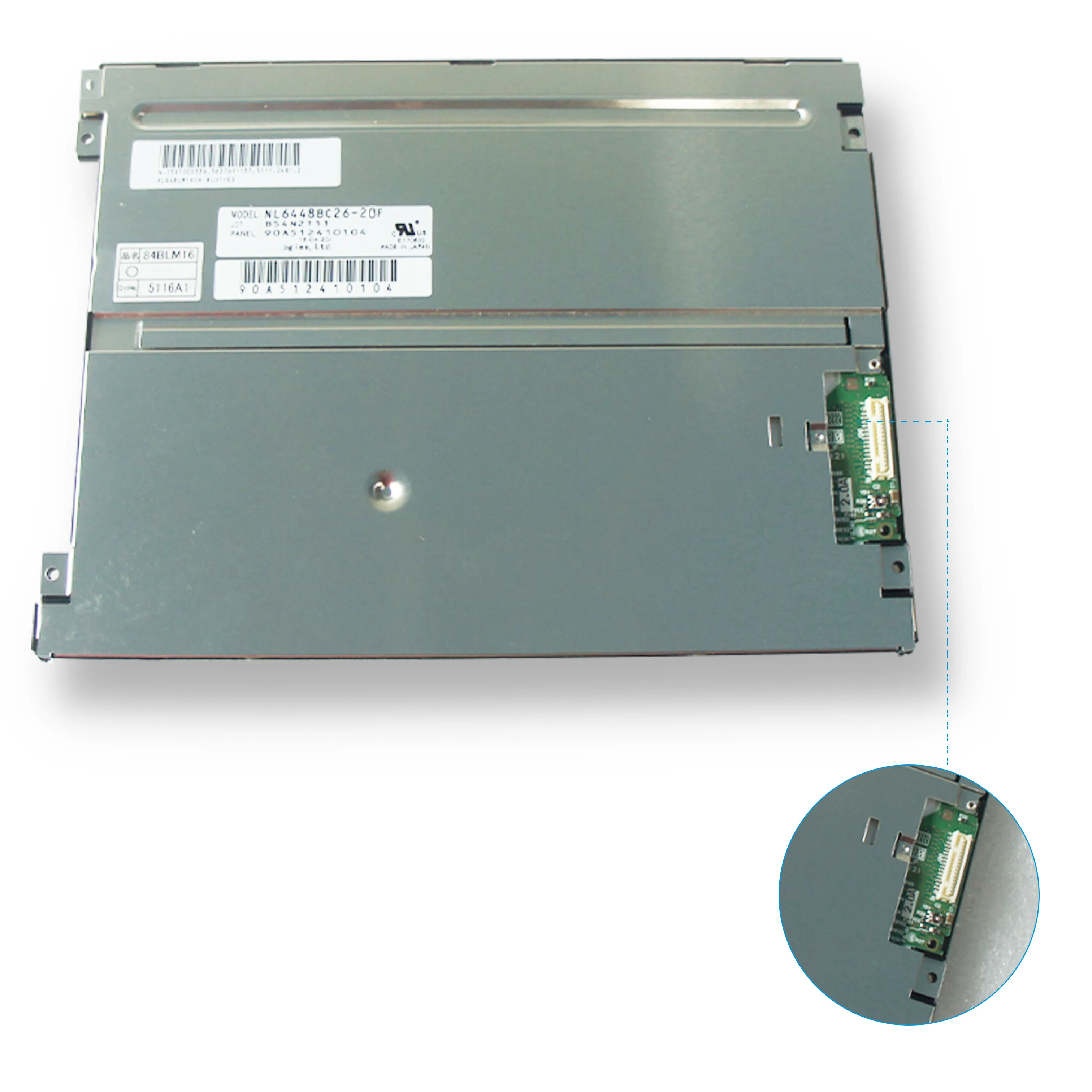

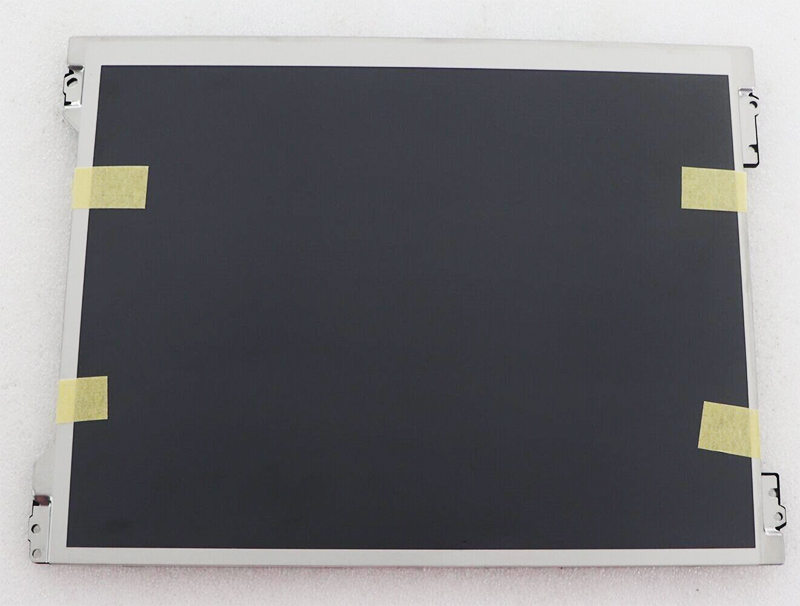
G121XN01 V0 12.1 inch AUO 1024*768 a-Si TFT-LCD Panel
In the intricate world of display technology, where specifications often blur into a sea of numbers, the G121XN01 V0 panel stands out as a definitive solution for a specific class of industrial and embedded applications. This 12.1-inch display module, manufactured by AU Optronics (AUO), is not designed for the vibrant demands of consumer entertainment but rather for environments where reliability, longevity, and readability under challenging conditions are paramount. Built on amorphous Silicon (a-Si) TFT-LCD technology, it delivers a resolution of 1024 x 768 pixels—the classic XGA format.
This article delves deep into the architecture, performance, and strategic application of the G121XN01 V0. We will move beyond basic datasheet parameters to explore why this panel remains a persistent choice in sectors like industrial automation, medical devices, point-of-sale systems, and transportation. By examining its optical characteristics, mechanical robustness, interface logic, and supply chain considerations, we provide a comprehensive resource for engineers, procurement specialists, and product developers seeking a durable and dependable display core for their mission-critical projects.
Core Architecture and a-Si TFT Technology
The foundation of the G121XN01 V0 is its amorphous Silicon (a-Si) Thin-Film Transistor (TFT) backplane. This mature and highly optimized technology is the workhorse of the industrial display world. Unlike more advanced but sometimes less stable technologies like Low-Temperature Polycrystalline Silicon (LTPS), a-Si offers an exceptional balance of performance, manufacturing yield, and cost-effectiveness for this screen size and resolution.
The 1024 x 768 (XGA) resolution on a 12.1-inch diagonal results in a pixel pitch of approximately 0.246mm, yielding a pixel density near 106 PPI. While this is modest by smartphone standards, it is ideal for its intended use: displaying clear text, schematic diagrams, control interfaces, and data readouts without unnecessary graphical overhead. The a-Si matrix ensures stable driving characteristics over a wide temperature range and a long operational lifespan, crucial for systems that cannot afford display failure.
Optical Performance and Readability
Optical performance is where the G121XN01 V0 is meticulously tuned for functionality. It typically features a standard brightness level (e.g., 300-400 nits) sufficient for indoor and controlled lighting. High-brightness options are often available for sunlit environments. The contrast ratio, a key factor for legibility, is engineered to provide sharp differentiation between foreground and background elements.
Perhaps more critically, the viewing angle is optimized, often using Twisted Nematic (TN) or Advanced-TN technology. While offering slightly narrower viewing cones compared to IPS panels, this choice provides faster response times and superior contrast when viewed directly—the primary use case for most embedded systems. The panel is also designed with durability in mind, often featuring a robust surface treatment (hard coating) to resist scratches and abrasion common in industrial settings.
Mechanical Design and Interface Integration
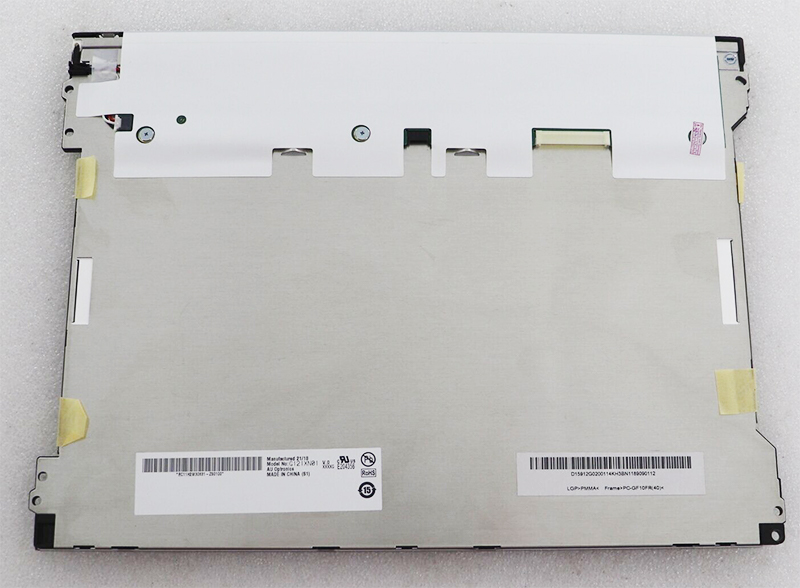
The panel is not merely a glass assembly; it is a complete module. The G121XN01 V0 comes with a standardized mechanical outline, including precise mounting hole positions, to facilitate seamless integration into chassis and enclosures. Its thickness and bezel dimensions are critical data for mechanical engineers during the product design phase.
Electrically, it integrates a LVDS (Low-Voltage Differential Signaling) interface. LVDS remains the dominant standard for industrial panels due to its robustness, noise immunity, and ability to transmit high-speed data over longer distances within a device compared to other interfaces. The module includes a built-in driver board that accepts the LVDS signal and power input, significantly simplifying the design effort for the system integrator. Understanding the pinout, voltage requirements (typically 3.3V or 5V for logic and a higher voltage for the backlight), and timing parameters is essential for a successful implementation.
The Backlight Unit and Longevity Considerations
The light source is a pivotal, yet often overlooked, component. The G121XN01 V0 utilizes an LED backlight unit (BLU). LED backlights have superseded CCFL due to their instant-on capability, lower power consumption, mercury-free composition, and longer life. The lifespan of the backlight, often rated for 50,000 hours or more under specific conditions, is a major contributor to the module's overall reliability.
However, longevity is not guaranteed by default. It is heavily influenced by thermal management. Excessive heat is the primary enemy of both the LEDs and the LCD fluid. Proper heat sinking and ensuring adequate airflow within the end product are non-negotiable design criteria to achieve the rated lifespan. Designers must also consider the backlight's uniform brightness across the entire screen area, a parameter strictly controlled in quality modules.
Strategic Application Sectors
The specific combination of features makes the G121XN01 V0 a strategic choice for several key vertical markets. In industrial automation and HMI, it serves as the primary interface for machine control, resistant to electrical noise and continuous operation. Medical devices, particularly diagnostic and monitoring equipment, benefit from its reliability and stable performance.
The point-of-sale (POS) and kiosk industry values its durability for public touch (often with an added touchscreen overlay) and consistent performance. In transportation and logistics, such as vehicle telematics or forklift displays, its ability to withstand vibration and a broader temperature range is crucial. It is also found in specialized test and measurement equipment where functional clarity trumps high-resolution glamour.
Supply Chain and Lifecycle Management
For product developers, selecting a display module extends beyond technical specs to supply chain viability. The G121XN01 V0, as a mature product from a major manufacturer like AUO, typically offers stable long-term availability. This is a critical factor for industrial products with lifecycles spanning 5-10 years or more, where a display change can necessitate costly re-certification or redesign.
Engaging with authorized distributors or module integrators is essential. They provide not only the panel but also vital support: compliance documentation (RoHS, REACH), lifecycle forecasts, and potential guidance on second-source or compatible alternatives. Planning for end-of-life (EOL) notifications and managing last-time buys are integral parts of using such components in long-term deployments.
FAQs
Q10: How do I manage the end-of-life (EOL) for this component?A10: Work closely with your distributor for lifecycle forecasts. Plan for EOL notifications and consider last-time buys or pre-qualifying a compatible alternative module early.
Conclusion
The AUO G121XN01 V0 12.1-inch XGA panel exemplifies the principle that in specialized engineering, the optimal component is not always the one with the highest specifications, but the one that most reliably and efficiently meets the precise demands of the application. Its enduring relevance is a testament to a well-calibrated design: robust a-Si TFT technology, functional XGA resolution, reliable LVDS interface, and a solid mechanical form factor.
For developers building systems where failure is not an option, this display module provides a foundation of trust. It bridges the gap between the digital interface and the physical world in harsh environments. Ultimately, understanding its deep technical attributes and supply chain dynamics empowers teams to make informed decisions, ensuring their products deliver not just cutting-edge features, but unwavering performance for years to come.