- Industrie-LCD-Display
-
Industrial Products
- DC Servo Drive
- AC Servo Drive
- other
- Heidelberg
- FANUC
- IFM
- Meter
- CCD
- Membrane Keypad
- Film
- YOKOGAWA
- Card
- ABB
- MITSUBISHI
- FANUC
- KEYENCE
- BECKHOFF
- Honeywell
- HOLLYSYS
- FUJI servo drives
- HP
- solenoid valve
- thermostat
- Siemens adapter
- color oscilloscope
- Fujitsu connector
- CHELIC
- SMC
- CISCO
- INTEL
- Key board
- FAIRCHILD
- Der Aufsichtsrat
- Board
- Bearing
- other
- Control Panel
- Contactor
- Circuit
- Omron
- Relais.
- Der controller
- Optoelektronische schalter
- Optoelektronische sensoren
- Original
- Fan
- Motortreiber
- Endschalter
- Verstärker
- power supply
- LENZE
- Cable
- Encoder
- Sensor
- Transformator
- Fiber Optic Sensor
- Schutzrelais
- Temperaturregler
- Näherungsschalter
- Switch Sensor
- Siemens
- PCB
- HMI Touch-Glas
-
HMI-Vollautomat Ganze Einheit
- OMRON HMI Touch Panel
- Siemens HMI Touch Panel
- Mitsubishi HMI Touch Panel
- Allen-Bradley Automatisierung HMI Touch
- DELTA HMI Touch Panel
- EVIEW DELTA HMI Touch Panel
- KINCO DELTA HMI Touch Panel
- HITECH HMI Touch Panel
- WEINTECK HMI Touch Panel
- TECVIEW HMI Touch Panel
- WEINVIEW HMI Touch Panel
- PRO-FACE HMI Touch Panel
- SIMATIC HMI Touch Panel
- AMPIRE HMI Touch Panel
- HEIDELBERG HMI Touch Panel
- PANASONIC HMI Touch Panel
- PATLITE HMI Touch Panel
- KYOCERA HMI Touch Panel
- KEYENCE HMI Touch Panel
- WEINVIEW HMI Touch Panel
- HITECH HMI Touch Panel
- FUJI HMI Touch Panel
- HAKKO HMI Touch Panel
- SCHNEIDER HMI Touch Panel
- SAMKOON touch panel
- andere
- Module
- LCD Wechselrichter
- Membran Tastenfeld Schalter
- Winni Touch Screens
- Frequenzumrichter
- Servo Motor
- PLC




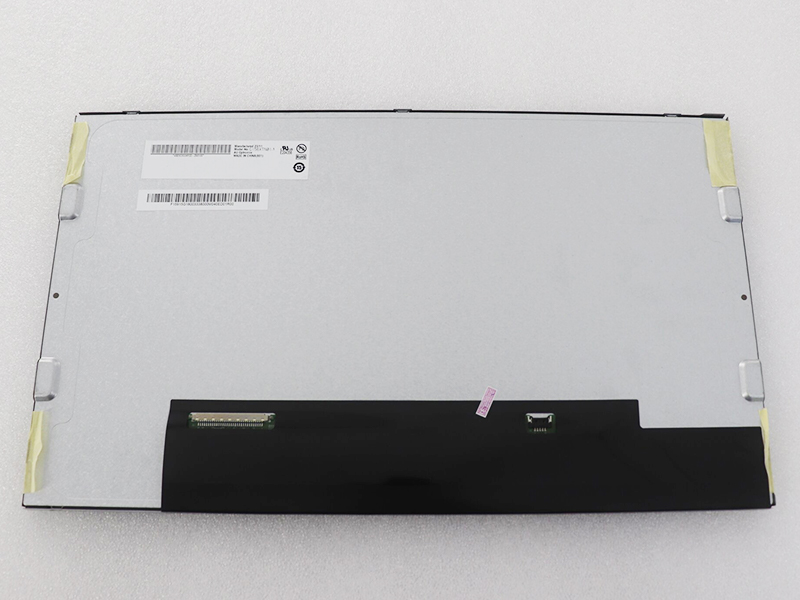
G156XTN01.1 AUO 15.6" 1366*768 LCD PANEL
In the intricate world of display technology, where 4K and OLED often dominate the headlines, there exists a class of components that form the unsung backbone of countless devices. The G156XTN01.1, a 15.6-inch LCD panel manufactured by AU Optronics (AUO), is a quintessential example. This specific model, with its 1366 x 768 (HD) resolution, represents a critical piece of industrial and commercial hardware. While it may not boast the specs of a premium consumer laptop screen, its significance lies in its reliability, cost-effectiveness, and targeted application.
This article delves into a comprehensive analysis of the AUO G156XTN01.1 panel. We will move beyond basic datasheet parameters to explore its technical architecture, understand its ideal use cases, and evaluate its performance characteristics within that context. For procurement specialists, device manufacturers, and technical repair professionals, a deep understanding of this panel's nuances is essential for making informed sourcing decisions, ensuring compatibility, and maintaining the lifecycle of the equipment it powers.
Technical Specifications and Panel Architecture
The G156XTN01.1 is built on a Twisted Nematic (TN) film technology. This mature and cost-efficient LCD method offers fast response times, which is a key characteristic. The panel features a native resolution of 1366 x 768 (HD), with a pixel pitch of approximately 0.252mm x 0.252mm. Its aspect ratio is the standard 16:9 widescreen format. The module typically operates on a single-channel LVDS (Low-Voltage Differential Signaling) interface, a common standard for interfacing displays in embedded and industrial systems.
Critical optical specs include a brightness level usually around 200-250 nits, a contrast ratio in the range of 500:1 to 700:1, and color depth support for 262K colors (6-bit + FRC). The backlight system often employs WLED (White LED) edge-lighting, providing a long lifespan and relatively low power consumption. Understanding this architecture is fundamental, as it directly dictates the panel's performance profile—its strengths in speed and affordability, and its limitations in viewing angles and color fidelity compared to IPS or VA alternatives.

Target Applications and Market Niche
This panel is not designed for high-end consumer notebooks or creative workstations. Its value proposition shines in specific, often demanding environments. The primary application is in industrial computing, such as Human-Machine Interface (HMI) terminals, point-of-sale (POS) systems, kiosks, and manufacturing control panels. In these settings, absolute color accuracy is less critical than durability, consistent operation over long hours, and stable performance across a wide temperature range.
Furthermore, it finds extensive use in commercial and entry-level laptop refurbishment markets. It serves as a direct replacement panel for countless business-class and educational laptops manufactured in the late 2000s and early 2010s that originally shipped with HD resolution screens. Its role is to provide a reliable, functionally identical component for repair and maintenance, extending the usable life of existing hardware—a crucial consideration for sustainability and cost management in enterprise IT.
Performance Analysis: Strengths and Limitations
Evaluating the G156XTN01.1 requires a context-aware lens. Its foremost strength is its fast response time, minimizing motion blur for basic graphical interfaces—a benefit in industrial scrolling or cursor movement. Its power efficiency is another asset, crucial for always-on devices. The simplicity of its LVDS interface ensures broad compatibility with a range of controller boards.
However, its limitations are inherent to its TN technology. The most notable are the restricted viewing angles, particularly on the vertical axis, where color and contrast shift significantly when viewed from above or below. The color gamut is narrow, covering only a basic portion of the sRGB spectrum, making it unsuitable for any color-sensitive work. The HD resolution, by modern standards, offers limited screen real estate and pixel density. These are not flaws but defining parameters that make it fit-for-purpose in its intended niche.
Compatibility and Replacement Considerations
For technicians and integrators, ensuring compatibility is paramount. The G156XTN01.1 is defined by a combination of factors: its physical dimensions, mounting hole positions, connector type (typically 30-pin or 40-pin LVDS), and pinout configuration. A critical step is verifying the interface protocol and voltage requirements match the host device's LCD controller. Simply matching size and resolution is insufficient.
When sourcing a replacement, one must also confirm the exact compatible panel number. Variations like G156XTN01.0 or G156XTN01.2 might have subtle differences in brightness, connector placement, or firmware that can lead to a non-functional installation. Consulting detailed pinout diagrams and, when possible, cross-reference lists from reputable suppliers is essential to avoid costly mismatches and ensure a seamless swap.
Sourcing, Logistics, and Supply Chain Dynamics
The G156XTN01.1 exists within a complex global supply chain for aftermarket and industrial components. As a panel that is often discontinued for new consumer devices, it is primarily available through specialized distributors, B2B electronic component platforms, and refurbishment parts warehouses. Availability can fluctuate, leading to price volatility based on remaining stock levels and lot quantities.
Procurement professionals must navigate this landscape by vetting supplier authenticity to avoid counterfeit or "compatible" panels of inferior quality. Key considerations include securing panels with matching A-grade quality (no dead pixels, uniform backlight), understanding lead times, and evaluating warranty terms. Building relationships with reliable suppliers who specialize in AUO panels becomes a strategic advantage for businesses reliant on maintaining legacy systems.
The Role in Legacy System Sustainability
Perhaps the most profound aspect of panels like the G156XTN01.1 is their contribution to circular economy principles in technology. In an era of rapid obsolescence, the availability of such precise replacement parts allows organizations to repair rather than replace entire systems. This reduces electronic waste, conserves resources, and offers significant cost savings.
By enabling the repair of industrial HMIs, commercial laptops, and kiosks, this panel helps sustain critical infrastructure and business operations that do not necessarily require the latest display technology but demand proven reliability. Its continued production and availability, therefore, are not just a matter of convenience but an important factor in the responsible lifecycle management of electronic assets across multiple industries.
Frequently Asked Questions (FAQs)
Q1: What is the primary use of the G156XTN01.1 panel?
A1: It's primarily used in industrial applications (HMIs, POS systems, kiosks) and as a replacement screen for older business/educational laptops with 15.6" HD displays.
Q2: What does "TN" in the panel type mean?
A2: TN stands for Twisted Nematic, a type of LCD technology known for fast response times but narrower viewing angles compared to IPS panels.
Q3: Is this a Full HD (1920x1080) panel?
A3: No, its native resolution is 1366 x 768 pixels, which is standard HD (sometimes called HD+ or WXGA).
Q4: What is the most common interface for this panel?
A4: It typically uses a single-channel LVDS (Low-Voltage Differential Signaling) interface, often with a 30-pin or 40-pin connector.
Q5: Can I use this panel to upgrade my laptop's screen?
A5: No, it's a like-for-like replacement. It does not offer an upgrade in resolution or technology from other 15.6" HD TN panels.
Q6: How do I ensure a replacement G156XTN01.1 is compatible with my device?
A6: You must verify the exact connector type, pinout, interface protocol, and physical dimensions against your original panel or device schematics.
Q7: What are the main drawbacks of this panel?
A7: Its main limitations are narrow viewing angles (especially vertical), limited color gamut, and lower pixel density compared to modern FHD or higher-resolution displays.
Q8: Where can I source this panel reliably?
A8: Look for specialized electronic component distributors, B2B marketplaces, and reputable suppliers focusing on AUO panels and industrial display modules.
Q9: What does "A-grade" mean when purchasing this panel?
A9: A-grade signifies the highest quality bin, with no dead or stuck pixels and a uniform backlight with minimal light bleed.
Q10: Why is this panel still relevant today?
A10: It remains crucial for maintaining and repairing a vast installed base of industrial equipment and legacy laptops, supporting sustainability and cost-effective operations.
Conclusion
The AUO G156XTN01.1 15.6-inch HD panel is a testament to the enduring importance of fit-for-purpose technology. While it will not win awards for visual spectacle, its value is measured in reliability, compatibility, and cost-efficiency within its defined ecosystem. For the industries and repair networks that depend on it, this panel is not an outdated component but a vital, active part of the global technological infrastructure.
Understanding its technical profile, ideal applications, and sourcing landscape empowers professionals to make smarter decisions. In a world increasingly focused on sustainability, the role of such components in extending product lifecycles cannot be overstated. The G156XTN01.1, therefore, is more than just a collection of glass and circuits; it is a key enabler of operational continuity and responsible resource management in the digital age.