- Industrie-LCD-Display
-
Industrial Products
- DC Servo Drive
- AC Servo Drive
- other
- Heidelberg
- FANUC
- IFM
- Meter
- CCD
- Membrane Keypad
- Film
- YOKOGAWA
- Card
- ABB
- MITSUBISHI
- FANUC
- KEYENCE
- BECKHOFF
- Honeywell
- HOLLYSYS
- FUJI servo drives
- HP
- solenoid valve
- thermostat
- Siemens adapter
- color oscilloscope
- Fujitsu connector
- CHELIC
- SMC
- CISCO
- INTEL
- Key board
- FAIRCHILD
- Der Aufsichtsrat
- Board
- Bearing
- other
- Control Panel
- Contactor
- Circuit
- Omron
- Relais.
- Der controller
- Optoelektronische schalter
- Optoelektronische sensoren
- Original
- Fan
- Motortreiber
- Endschalter
- Verstärker
- power supply
- LENZE
- Cable
- Encoder
- Sensor
- Transformator
- Fiber Optic Sensor
- Schutzrelais
- Temperaturregler
- Näherungsschalter
- Switch Sensor
- Siemens
- PCB
- HMI Touch-Glas
-
HMI-Vollautomat Ganze Einheit
- OMRON HMI Touch Panel
- Siemens HMI Touch Panel
- Mitsubishi HMI Touch Panel
- Allen-Bradley Automatisierung HMI Touch
- DELTA HMI Touch Panel
- EVIEW DELTA HMI Touch Panel
- KINCO DELTA HMI Touch Panel
- HITECH HMI Touch Panel
- WEINTECK HMI Touch Panel
- TECVIEW HMI Touch Panel
- WEINVIEW HMI Touch Panel
- PRO-FACE HMI Touch Panel
- SIMATIC HMI Touch Panel
- AMPIRE HMI Touch Panel
- HEIDELBERG HMI Touch Panel
- PANASONIC HMI Touch Panel
- PATLITE HMI Touch Panel
- KYOCERA HMI Touch Panel
- KEYENCE HMI Touch Panel
- WEINVIEW HMI Touch Panel
- HITECH HMI Touch Panel
- FUJI HMI Touch Panel
- HAKKO HMI Touch Panel
- SCHNEIDER HMI Touch Panel
- SAMKOON touch panel
- andere
- Module
- LCD Wechselrichter
- Membran Tastenfeld Schalter
- Winni Touch Screens
- Frequenzumrichter
- Servo Motor
- PLC


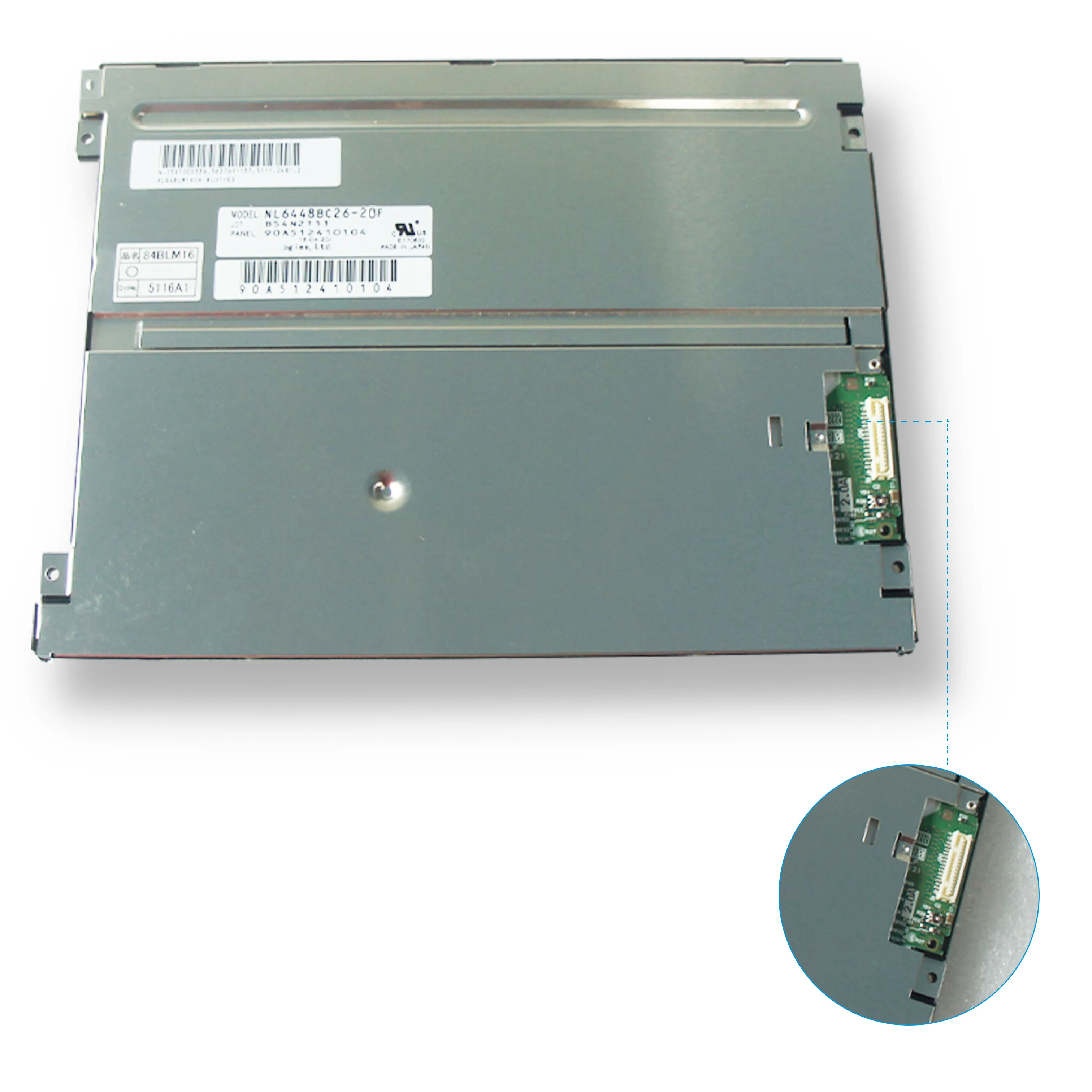

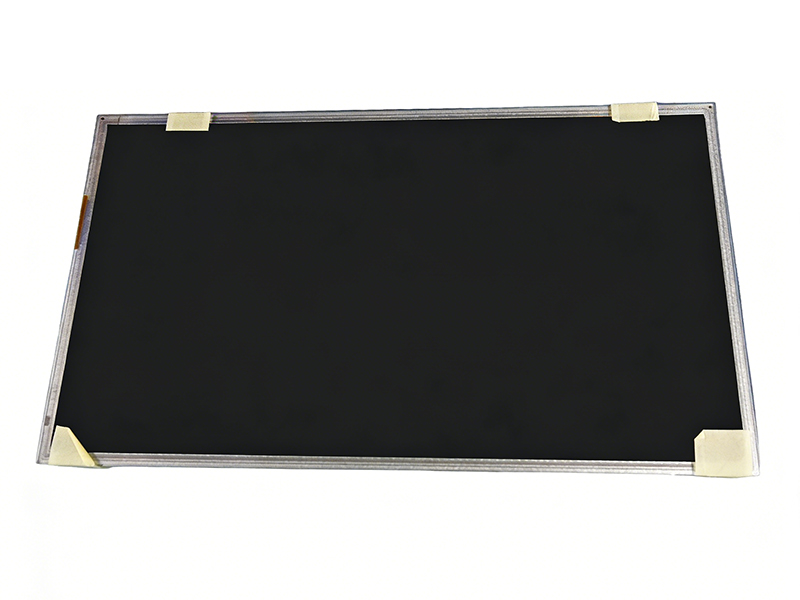
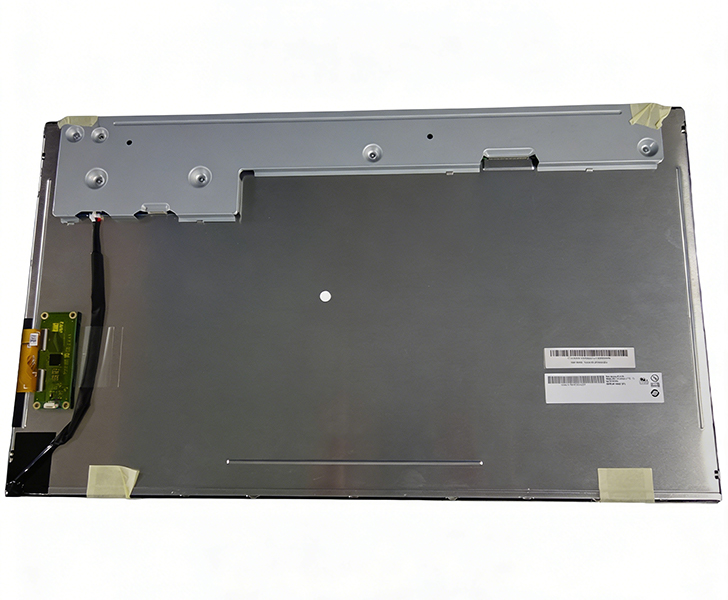
G240HVT01.0 New AUO 24.0inch 1920*1080 LCD display
The AUO G240HVT01.0 represents a significant milestone in the evolution of 24-inch LCD technology. As a specialized model from one of the world's leading display manufacturers, this panel is not just another off-the-shelf monitor component. It is engineered for demanding environments where reliability, optical precision, and long-term availability are non-negotiable. In an era dominated by consumer-grade screens optimized for cost, the G240HVT01.0 carves a niche for itself in industrial automation, medical imaging, and high-traffic digital signage.
This article will dissect the technical architecture, performance characteristics, and strategic advantages of the G240HVT01.0. We will explore why the 1920x1080 Full HD resolution remains the golden standard for specific sectors, how AUO's proprietary technologies enhance visibility in harsh lighting, and what makes this particular model a preferred choice for system integrators. From its backlight design to signal interface compatibility, we will move beyond basic specifications to provide a functional understanding of how this display operates within complex systems. Whether you are an engineer evaluating components or a procurement specialist assessing lifecycle costs, this deep dive will equip you with actionable insights.
The AUO G240HVT01.0 is fundamentally a a-Si TFT-LCD (Amorphous Silicon Thin Film Transistor Liquid Crystal Display). While many consumer panels have shifted to more complex oxide semiconductor technologies, a-Si remains a workhorse for industrial applications due to its proven stability and lower production costs. The panel uses a standard TN (Twisted Nematic) mode, which is critical for its principal advantage: ultra-fast response times. With a typical response time of 3.5 ms (Gray to Gray), this display eliminates motion blur in rapidly changing data—a vital feature for real-time monitoring in control rooms or production lines.
The resolution of 1920 x 1080 pixels yields a pixel density of approximately 92 PPI (Pixels Per Inch). This is intentionally moderate. In industrial settings, smaller text or ultra-high density (like 4K) often requires scaling, which can introduce software incompatibility or readability issues. The G240HVT01.0’s pixel architecture is designed for a 0.2745 mm x 0.2745 mm pixel pitch, ensuring sharp, legible characters at standard viewing distances of 50-70 cm. The module supports 16.7 million colors (8-bit), providing sufficient gradient accuracy for complex data visualization and graphical user interfaces without the overhead of 10-bit processing.
One of the standout features of this model is its high luminance capability. The G240HVT01.0 is specified with a typical brightness of 1000 cd/m² (nits), which is more than double that of a standard desktop monitor. This is not a cosmetic feature; it is a functional necessity. In environments with uncontrolled ambient light—such as factory floors with overhead LEDs or retail spaces with large windows—a 250 cd/m² consumer screen would wash out completely. The high brightness ensures that critical data remains legible even under direct sunlight when properly installed with an optical bonding treatment.
Contrast ratio, rated at 1000:1 (typically), is managed via AUO’s advanced light control film technology. This ensures deep blacks and vibrant whites, crucial for distinguishing between different data fields or background elements. However, the inherent limitation of TN technology remains: narrow viewing angles. At a horizontal viewing angle of ±85 degrees and a vertical angle of ±80 degrees (CR>10), color shift and contrast inversion become noticeable when viewed from extreme angles. This is a trade-off for the fast response time and high brightness. For single-operator workstations or fixed-angle kiosks, this limitation is negligible. For multi-viewer environments, it requires careful physical mounting.
The backlight unit of the G240HVT01.0 utilizes a WLED (White Light Emitting Diode) array. This is a significant upgrade from older CCFL (Cold Cathode Fluorescent Lamp) technologies. The LED system provides instant-on capability, superior dimming control, and most importantly, extended operational life. AUO rates the LED backlight with a typical lifetime of 50,000 hours (at a specific brightness and temperature). For a 24/7 operation, this translates to roughly 5.7 years of continuous use before the backlight drops to 50% of its original brightness.
This model also implements an external driver board design. The LED driver circuitry is not integrated into the panel itself, allowing system integrators to customize the power supply and dimming interface (PWM or analog) according to their specific thermal and electrical design constraints. The power consumption is commendable, drawing approximately 18.5W for the entire module at maximum brightness. For applications requiring even lower power, the interface supports LVDS (Low-Voltage Differential Signaling) with a 2-channel, 8-bit configuration, running at a 148.5 MHz clock rate. This standard interface ensures compatibility with a wide range of existing embedded controllers and single-board computers.
From a physical integration perspective, the G240HVT01.0 is a module without a touch screen. It is provided as a bare panel with a standard VESA mount (100 x 100 mm) option, making it easy to install into custom enclosures or existing monitor chassis. The outline dimensions are meticulously controlled: 533.2 mm (W) x 312.0 mm (H) x 10.7 mm (D). This slim profile (just over 1 cm thick) is critical for modern kiosk designs where internal space is at a premium. The active display area measures 531.36 mm x 298.89 mm.
The panel uses a standard 30-pin LVDS connector (JAE FI-SE series or equivalent) and requires a single +5V DC power supply for the logic board. The absence of an integrated power supply gives experienced integrators the freedom to select a medical-grade or industrial-grade external power source. A critical mechanical consideration is the operating temperature range. The G240HVT01.0 is specified for 0°C to +70°C ambient temperature and a storage range of -20°C to +80°C. This extended temperature tolerance separates it from consumer monitors, which often fail below 5°C. For outdoor or unventilated indoor installations, this thermal resilience is a key purchasing criterion.
The G240HVT01.0 is strategically positioned in the industrial display market, competing directly with panels from Innolux, BOE, and LG Display. Its value proposition rests on three pillars: availability, reliability, and performance stability. Unlike consumer panels that are redesigned every 12-18 months, AUO guarantees production for this model for a minimum of 3-5 years, often longer. This long product lifecycle is invaluable for companies producing medical devices, ATM machines, or factory equipment that require certifications and validation that cannot be repeated every year.
Furthermore, the high brightness variant (1000 nits) commands a premium price compared to standard 250-400 nits panels. However, for system integrators, this premium is offset by reduced warranty claims and lower total cost of ownership (TCO). The panel’s ability to maintain consistent color and brightness over thousands of hours means fewer field service calls. It also supports advanced aging compensation algorithms, which can be implemented in the external driver board to extend its useful life further. Selecting the G240HVT01.0 is a decision to prioritize operational reliability over initial procurement cost.
Is the G240HVT01.0 a direct replacement for the G240HVT01.0 V.1 or V.2?
Yes, but verify the exact backlight current spec. Later versions may have slightly different driver requirements.
Can this panel be used outdoors in direct sunlight?
Yes, with optical bonding to a touch screen and an anti-glare coating. At 1000 nits, it is readable but not perfectly clear without bonding.
What is the interface type for this LCD?
It uses a standard 30-pin, 2-channel, 8-bit LVDS interface.
Does the module include an inverter or LED driver board?
No. This is a bare panel. You must provide an external LED driver board.
Is the touch screen included?
No. The G240HVT01.0 is a display module only. You must add a separate touch overlay.
What is the typical power consumption at maximum brightness?
Approximately 18.5W for the entire module.
What is the viewing angle for this TN panel?
Horizontal: ±85 degrees. Vertical: ±80 degrees (contrast ratio > 10).
Is this panel compatible with standard HDMI or VGA signals?
Not directly. You require an LVDS-to-HDMI or LVDS-to-VGA controller board.
What is the recommended operating temperature?
0°C to +70°C ambient.
How long is the LED backlight lifetime?
50,000 hours typical (until backlight brightness decays to 50% of the original level).
Conclusion: The Right Tool for Critical Visualization Tasks
The AUO G240HVT01.0 is not a display for casual use. It is an engineered component designed for systems where cost of failure far outweighs the cost of the component itself. We have examined its reliance on mature a-Si technology, its purposeful high brightness (1000 cd/m²), and its extended lifecycle support—all of which make it a benchmark in the 24-inch industrial display sector. While its TN panel limits viewing angles, this is a calculated trade-off that delivers superior response times and reliability in demanding thermal conditions.
For system architects, the decision to specify the G240HVT01.0 is a vote for predictability. You are choosing a panel with known electrical characteristics, a standard mechanical footprint, and a long-term supply commitment from AUO. It eliminates the volatility of consumer product cycles. When your application requires a 1920x1080 panel that works reliably for years in a harsh environment, such as a factory control terminal or a public information kiosk, this display remains a highly recommended, professional-grade choice.