- Industrie-LCD-Display
-
Industrial Products
- DC Servo Drive
- AC Servo Drive
- other
- Heidelberg
- FANUC
- IFM
- Meter
- CCD
- Membrane Keypad
- Film
- YOKOGAWA
- Card
- ABB
- MITSUBISHI
- FANUC
- KEYENCE
- BECKHOFF
- Honeywell
- HOLLYSYS
- FUJI servo drives
- HP
- solenoid valve
- thermostat
- Siemens adapter
- color oscilloscope
- Fujitsu connector
- CHELIC
- SMC
- CISCO
- INTEL
- Key board
- FAIRCHILD
- Der Aufsichtsrat
- Board
- Bearing
- other
- Control Panel
- Contactor
- Circuit
- Omron
- Relais.
- Der controller
- Optoelektronische schalter
- Optoelektronische sensoren
- Original
- Fan
- Motortreiber
- Endschalter
- Verstärker
- power supply
- LENZE
- Cable
- Encoder
- Sensor
- Transformator
- Fiber Optic Sensor
- Schutzrelais
- Temperaturregler
- Näherungsschalter
- Switch Sensor
- Siemens
- PCB
- HMI Touch-Glas
-
HMI-Vollautomat Ganze Einheit
- OMRON HMI Touch Panel
- Siemens HMI Touch Panel
- Mitsubishi HMI Touch Panel
- Allen-Bradley Automatisierung HMI Touch
- DELTA HMI Touch Panel
- EVIEW DELTA HMI Touch Panel
- KINCO DELTA HMI Touch Panel
- HITECH HMI Touch Panel
- WEINTECK HMI Touch Panel
- TECVIEW HMI Touch Panel
- WEINVIEW HMI Touch Panel
- PRO-FACE HMI Touch Panel
- SIMATIC HMI Touch Panel
- AMPIRE HMI Touch Panel
- HEIDELBERG HMI Touch Panel
- PANASONIC HMI Touch Panel
- PATLITE HMI Touch Panel
- KYOCERA HMI Touch Panel
- KEYENCE HMI Touch Panel
- WEINVIEW HMI Touch Panel
- HITECH HMI Touch Panel
- FUJI HMI Touch Panel
- HAKKO HMI Touch Panel
- SCHNEIDER HMI Touch Panel
- SAMKOON touch panel
- andere
- Module
- LCD Wechselrichter
- Membran Tastenfeld Schalter
- Winni Touch Screens
- Frequenzumrichter
- Servo Motor
- PLC


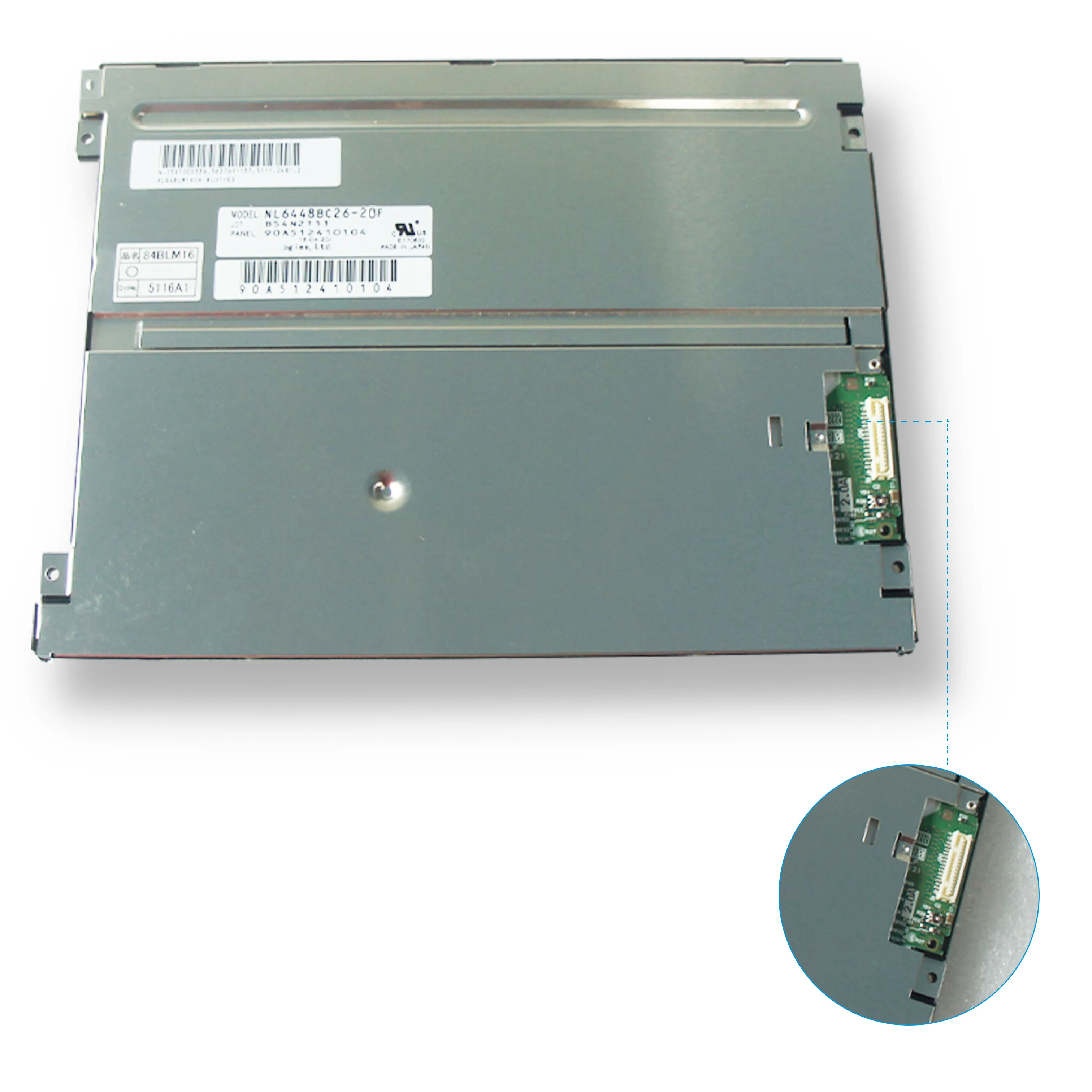

G240HVT01.2 Original AUO 24.0inch 1920*1080 LCD display
In the realm of industrial automation, medical diagnostics, and high-stakes control room environments, the display is not merely an accessory; it is the critical interface between human decision-making and machine performance. The G240HVT01.2 Original AUO 24.0inch 1920*1080 LCD display represents a specific tier of technology designed for applications where standard consumer monitors fail. This article delves into the technical architecture and operational niche of this particular panel. We will explore its origin as an AU Optronics (AUO) product, dissect its key specifications, and analyze why the "Original" designation is paramount for replacement and system integrity. Beyond the surface-level resolution and size, this piece will investigate the panel's optical characteristics, interface requirements, and thermal management considerations. The goal is to provide a comprehensive technical brief for engineers, procurement specialists, and system integrators who require more than a simple part number—they require a deep understanding of the component's role in mission-critical systems.
AU Optronics (AUO) is a titan in the global display manufacturing landscape, particularly revered for its robust industrial and medical-grade panels. Unlike consumer brands that prioritize aesthetic slimness and cost reduction, AUO focuses on longevity, consistent luminance, and wide operating temperature ranges. The G240HVT01.2 is a testament to this philosophy. The choice of a 24.0-inch diagonal is strategic. It offers a substantial viewing area suitable for multi-window applications without becoming physically unwieldy for a rack-mount or embedded console. This size, coupled with a 1920x1080 resolution (Full HD), achieves a pixel density that balances clarity with the necessity for larger font rendering in high-stress environments where operators view the screen from a distance of 60-80 cm. The "Original" designation confirms it is a first-party AUO product, ensuring strict adherence to the original Bill of Materials (BOM), which is crucial for maintaining compliance certifications (e.g., UL, FCC) in regulated industries.


The performance of the G240HVT01.2 is defined by its optical engineering. A key specification for this panel is its vertical alignment (VA) technology, or potentially a specialized TN variant optimized for industrial use. VA technology provides a superior static contrast ratio, typically exceeding 3000:1, which is critical for reading text and distinguishing subtle variations in grayscale for medical imaging or financial data. The active area boasts a luminance level often spec'd at 350-400 cd/m², a deliberate choice. This is significantly brighter than a standard office monitor (typically 250 cd/m²), allowing the display to remain legible under bright ambient lighting found in factory floors or operating theaters. Furthermore, the viewing angles, particularly the vertical (80°/80°) and horizontal (85°/85°) ranges, are engineered for consistency. This prevents color shift and gamma distortion when operators are not positioned perfectly perpendicular to the screen, a frequent reality in collaborative workstations or multi-monitor arrays.
A common pitfall for engineers seeking a replacement display is assuming a standard HDMI or DisplayPort will suffice. The G240HVT01.2 typically interfaces via a LVDS (Low-Voltage Differential Signaling) interface, often a 30-pin or 51-pin connector. This is a fundamental difference from modern consumer panels. LVDS is a legacy but exceptionally robust standard for industrial applications, offering excellent noise immunity over longer cable runs inside a machine enclosure. The panel requires specific timing controllers (TCON) on the system motherboard to drive it correctly. When sourcing an "Original" AUO panel, one must verify the exact connector type, pin assignment, and required voltage (often 3.3V or 12V for the backlight). Using a generic substitute with incorrect signal timing can result in image artifacts, flickering, or immediate failure of the TCON. Therefore, the interface is a critical lockout for compatibility, reinforcing the necessity of the exact G240HVT01.2 model for field replacements.
Reliability in an industrial context is synonymous with thermal management. The G240HVT01.2 is engineered for continuous 24/7 operation. Its backlight unit, typically based on high-efficiency LED arrays, is designed to dissipate heat through a specific metal backplate or chassis attachment points. Operating temperature ranges for this class of display often span from 0°C to +50°C or even +60°C ambient. The mechanical design includes robust mounting brackets with standard VESA hole patterns (typically 100x100mm), but the exact screw depth and thread length are critical to avoid damaging the thin bezel or applying pressure to the LCD glass. The unit's depth is also a factor; it is thicker than a consumer display to accommodate the power supply board for the backlight and the interface board. This physical robustness prevents mechanical failure due to vibration common in transportation or manufacturing line equipment.
Understanding the "where" is as important as the "what." The G240HVT01.2 is predominantly found in medical patient monitoring systems, where high contrast and precise grayscale reproduction are non-negotiable. It is also the backbone of industrial HMIs (Human-Machine Interfaces) in CNC machinery and robotics control panels, where operators rely on the display for hours to monitor complex processes. Furthermore, it serves in gaming and amusement machines, where the 24-inch size and fast response time (often 5ms or less) provide a competitive edge. The panel’s wide color gamut, while not Adobe RGB level, provides sufficient color saturation for wayfinding kiosks and digital signage. Its 1920x1080 resolution is the sweet spot for rendering high-accuracy digital maps and CAD drawings in portable test equipment. In each of these environments, the panel is not a luxury; it is a core operational component whose failure directly halts production or patient care.
Q1: Can I use a standard 24-inch monitor instead of the G240HVT01.2?
A: No. Standard monitors use different interfaces (HDMI/DP) and lack the LVDS interface, industrial temperature range, and mechanical rigidity required. Substitution will cause system incompatibility and potential failure.
Q2: What is the exact resolution and size?
A: It is a 24.0-inch diagonal display with a native resolution of 1920x1080 (Full HD). The active area is approximately 531.36mm x 298.89mm.
Q3: Is the G240HVT01.2 a touch screen?
A: No. This is a standard open-frame LCD panel. It is designed to be integrated with a separate touch overlay system (resistive or capacitive) if required.
Q4: What is the typical lifespan of this display?
A: AUO rates the backlight LED lifespan at 30,000 to 50,000 hours under normal temperature conditions (25°C). This translates to roughly 3-5 years of continuous 24/7 operation.
Q5: Does the panel support VESA mounting?
A: Yes, it typically supports a standard 100x100mm VESA pattern for secure mounting to arms or enclosures.
Q6: What is the operating voltage for the backlight?
A: The backlight unit usually requires a specific DC input, often 12V or 24V depending on the exact variant. Always verify the datasheet from your original display.
Q7: Is there a difference between "Original" and "Compatible"?
A: Yes. "Original" AUO panels are manufactured by AUO with certified components. "Compatible" or "Generic" displays may use non-standard drivers or LEDs, leading to lower brightness, color inaccuracies, and shorter lifespan.
Q8: What connector type does the G240HVT01.2 use?
A: It uses a 30-pin or 51-pin LVDS connector. The exact pinout must be matched precisely to the system controller board.
Q9: Can this display be used in outdoor applications?
A: Not directly. Its luminance of ~400 cd/m² is insufficient for direct sunlight. It would require a high-brightness upgrade or a polarizer adjustment for outdoor use.
Q10: How do I ensure I am buying the correct replacement?
A: Cross-reference your original display's model number (e.g., G240HVT01.2, Rev. Cx) and verify it against the AUO datasheet. Check the connector type, backlight voltage, and physical dimensions before ordering.
Conclusion: The Value of Precision in a Commodity World
The G240HVT01.2 Original AUO 24.0inch 1920*1080 LCD display stands as a paragon of purpose-built engineering. While the consumer market chases ever higher resolutions and refresh rates, the industrial world prioritizes stability, longevity, and environmental resilience. This article has illuminated that the true value of this panel lies not in its 1920x1080 resolution—a standard figure—but in the how and why behind its construction: the LVDS interface for signal integrity, the VA technology for exceptional contrast, and the thermal design for continuous operation. For the engineer or decision-maker, choosing an "Original" AUO panel is an investment in operational uptime. It is a calculated decision to minimize the risk of failure in systems where downtime costs far exceed the price of a single component. In essence, the G240HVT01.2 is a quiet workhorse, proving that genuine quality is most visible when it is least expected to fail.