- Industrie-LCD-Display
-
Industrial Products
- DC Servo Drive
- AC Servo Drive
- other
- Heidelberg
- FANUC
- IFM
- Meter
- CCD
- Membrane Keypad
- Film
- YOKOGAWA
- Card
- ABB
- MITSUBISHI
- FANUC
- KEYENCE
- BECKHOFF
- Honeywell
- HOLLYSYS
- FUJI servo drives
- HP
- solenoid valve
- thermostat
- Siemens adapter
- color oscilloscope
- Fujitsu connector
- CHELIC
- SMC
- CISCO
- INTEL
- Key board
- FAIRCHILD
- Der Aufsichtsrat
- Board
- Bearing
- other
- Control Panel
- Contactor
- Circuit
- Omron
- Relais.
- Der controller
- Optoelektronische schalter
- Optoelektronische sensoren
- Original
- Fan
- Motortreiber
- Endschalter
- Verstärker
- power supply
- LENZE
- Cable
- Encoder
- Sensor
- Transformator
- Fiber Optic Sensor
- Schutzrelais
- Temperaturregler
- Näherungsschalter
- Switch Sensor
- Siemens
- PCB
- HMI Touch-Glas
-
HMI-Vollautomat Ganze Einheit
- OMRON HMI Touch Panel
- Siemens HMI Touch Panel
- Mitsubishi HMI Touch Panel
- Allen-Bradley Automatisierung HMI Touch
- DELTA HMI Touch Panel
- EVIEW DELTA HMI Touch Panel
- KINCO DELTA HMI Touch Panel
- HITECH HMI Touch Panel
- WEINTECK HMI Touch Panel
- TECVIEW HMI Touch Panel
- WEINVIEW HMI Touch Panel
- PRO-FACE HMI Touch Panel
- SIMATIC HMI Touch Panel
- AMPIRE HMI Touch Panel
- HEIDELBERG HMI Touch Panel
- PANASONIC HMI Touch Panel
- PATLITE HMI Touch Panel
- KYOCERA HMI Touch Panel
- KEYENCE HMI Touch Panel
- WEINVIEW HMI Touch Panel
- HITECH HMI Touch Panel
- FUJI HMI Touch Panel
- HAKKO HMI Touch Panel
- SCHNEIDER HMI Touch Panel
- SAMKOON touch panel
- andere
- Module
- LCD Wechselrichter
- Membran Tastenfeld Schalter
- Winni Touch Screens
- Frequenzumrichter
- Servo Motor
- PLC


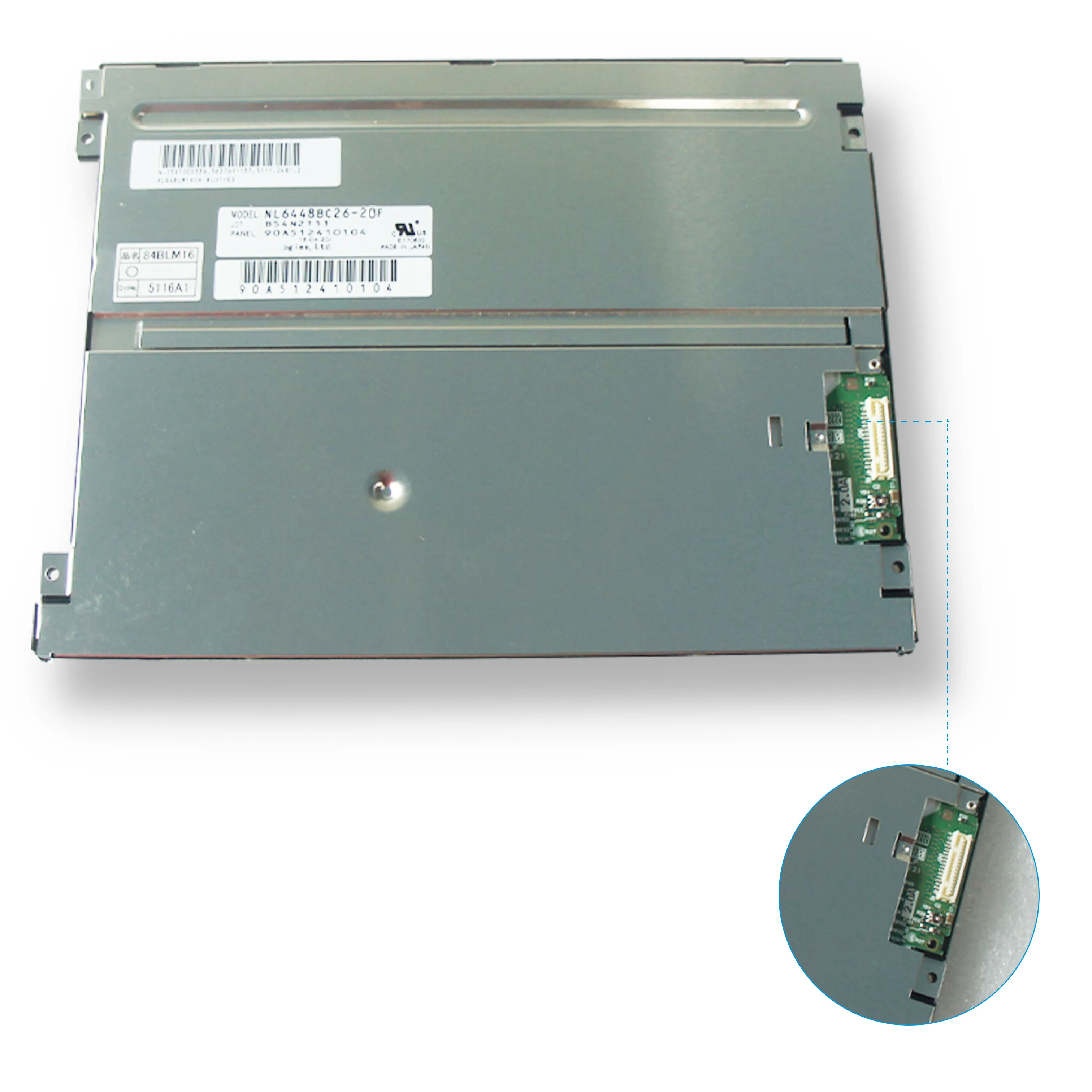

12.1"800*600 LB121S03-TL04 LCD PANEL FOR LG PHILIPS
The LB121S03-TL04 is not just another LCD panel; it is a testament to the engineering precision that defined the early era of high-reliability flat-panel displays. Manufactured by the now-defunct joint venture LG.Philips LCD, this 12.1-inch panel, operating at the classic 800x600 SVGA resolution, has carved out a niche for itself in the industrial, medical, and embedded systems markets. While modern displays chase ultra-high resolutions and thin bezels, the LB121S03-TL04 represents a different priority: stability, longevity, and consistent optical performance in demanding environments.
This article delves deep into the technical architecture, application logic, and enduring relevance of this specific model. Rather than merely listing specifications, we will explore why this particular 800x600 panel remains a standard in legacy equipment upgrades, how its TFT-LCD structure supports harsh operating conditions, and what factors engineers must consider when sourcing or replacing it. For professionals in automation, medical imaging, and point-of-sale systems, understanding the nuances of the LB121S03-TL04 is crucial for making informed procurement and maintenance decisions.
In a world dominated by Full HD and 4K displays, the 800×600 (SVGA) resolution of the LB121S03-TL04 might appear outdated. However, in the context of industrial control systems and medical equipment, this resolution offers distinct advantages. At a 12.1-inch diagonal, the pixel density of approximately 82 PPI provides an optimal viewing distance for human-machine interface (HMI) operations. Characters and icons appear large enough to be read at arm’s length, reducing operator eye strain over long shifts.
Furthermore, many legacy SCADA systems and proprietary medical software were originally designed for SVGA output. Using a native 800×600 panel ensures pixel-for-pixel mapping without the scaling artifacts that occur when a lower-resolution signal is stretched across a higher-resolution panel. The LB121S03-TL04 eliminates the need for costly software reconfiguration or external scaling hardware. This backwards compatibility is a primary reason why this panel remains in active demand, even as the same physical size has moved to higher resolutions in consumer products.
The LB121S03-TL04 is built on Twisted Nematic (TN) technology, a choice that informs its optical characteristics. While TN panels are often criticized for narrow viewing angles compared to IPS, they excel in response time and power efficiency. For this specific model, LG.Philips optimized the liquid crystal alignment to deliver a typical brightness of 400 cd/m² and a contrast ratio of 500:1. These figures are robust for indoor industrial environments where ambient lighting is controlled.
Its viewing angle specification—typically 60/60/40/60 degrees (left/right/up/down)—is adequate for single-user or fixed-mount applications. In a medical cart or an industrial panel PC, the display is not meant to be viewed from oblique angles; it is designed for direct interaction. The panel also incorporates an anti-glare surface treatment with a hardness rating of 3H, which is critical for touchscreen overlays. The matte finish reduces reflections from overhead lighting, a common pain point in factory floors. This deliberate optical design balances clarity with durability, making the LB121S03-TL04 a practical choice rather than a display for multimedia consumption.
A key differentiator of the LB121S03-TL04 is its use of a Single-channel 6-bit LVDS interface. Low-Voltage Differential Signaling (LVDS) is the backbone of high-speed data transmission in industrial displays. Unlike older TTL interfaces, LVDS minimizes electromagnetic interference (EMI) and allows for longer cable runs—an essential feature when the display is separated from the control board by several inches inside a sealed enclosure.
The 20-pin connector configuration (typically a JAE or compatible pinout) carries both the RGB data signals and the necessary control signals. It supports a native color depth of 262,144 colors (6-bit per channel). This is perfectly sufficient for displaying charts, waveforms, and industrial control graphics. The LVDS interface also simplifies system integration. Designers can use standard LVDS cables and transmitters, reducing the need for custom wiring. Understanding this interface is critical for anyone attempting a drop-in replacement: a mismatch in pinout or signal type can lead to a blank screen or, worse, damage to the panel's timing controller.
Physically, the LB121S03-TL04 is designed for rigid mounting. It measures 279.0 mm (W) x 209.0 mm (H) x 8.0 mm (D) (excluding optional backlight inverter), with an active area of 246.0 mm x 184.5 mm. The panel uses a metal frame for structural integrity, which is essential for applications subject to vibration, such as in-vehicle computing or heavy machinery. Four mounting holes on the sides allow for secure attachment to a chassis, preventing movement that could stress the glass substrate.
Thermal management is another area where this panel shines. Its CCFL (Cold Cathode Fluorescent Lamp) backlight system, while less efficient than modern LED, is designed to operate reliably across a temperature range of 0°C to 60°C (storage: -20°C to 70°C). The CCFL lamps themselves generate heat, but the panel's design allows for natural convection cooling via the metal bezel. For upgraded installations, many integrators replace the CCFL with an LED backlight conversion kit, which reduces power consumption from ~8W to ~4W and extends the effective lifespan. This mechanical and thermal robustness makes the LB121S03-TL04 a candidate for long-life applications where the display is expected to run 24/7 for years.
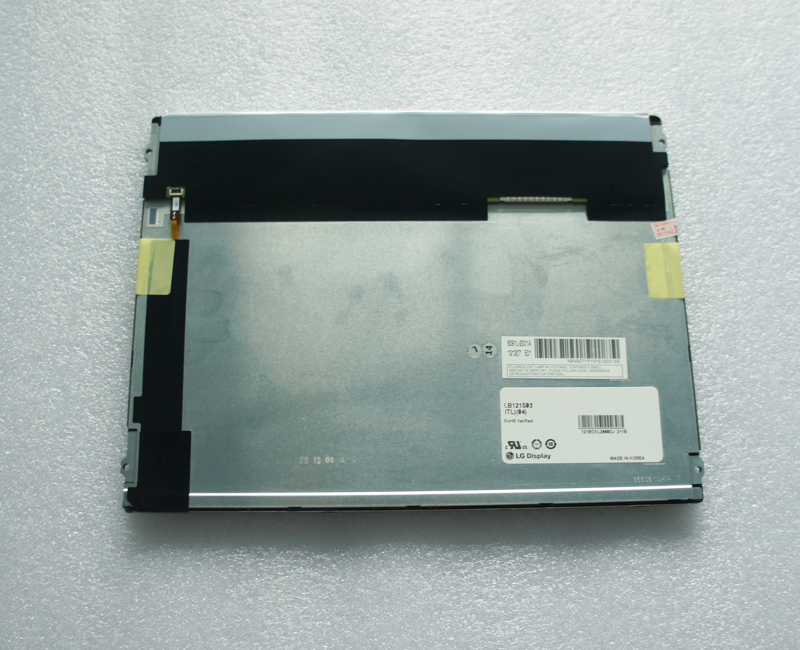
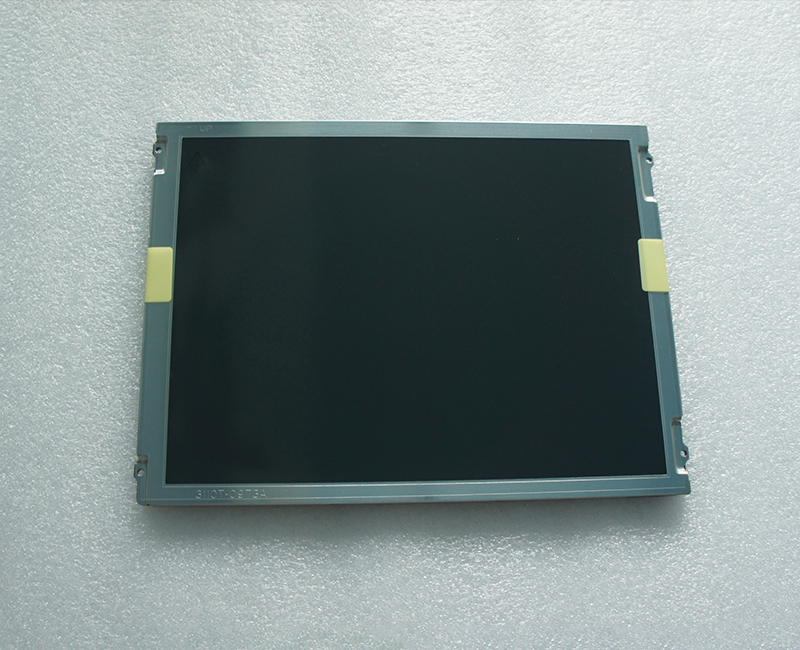
The LB121S03-TL04 is now a discontinued product line from LG.Philips (which was fully acquired by LG Display). This status creates a unique sourcing challenge. Original stock is limited, and what remains in the supply chain is largely "New Old Stock" (NOS) from specialized distributors or surplus electronics dealers. Prices fluctuate based on availability, and buyers must be cautious of counterfeit or refurbished units presented as new.
For system integrators facing an end-of-life situation, the strategy is threefold. First, conduct a compatibility audit of the exact LVDS pinout, physical bracket dimensions, and voltage requirements (typically 5V for the logic board and ~600V for the CCFL inverter). Second, consider functional equivalents from other manufacturers, such as the NEC NL8060BC21-01 or the Samsung LTM12C275, which share similar mechanical and electrical characteristics. Finally, plan for a full panel upgrade to a modern 12.1-inch LED-backlit panel with an integrated converter board that mimics the old CCFL interface. While this requires more engineering effort, it future-proofs the equipment. Understanding the obsolescence cycle of the LB121S03-TL04 is not just about buying a part; it's about managing risk for mission-critical systems.
Q: Is the LB121S03-TL04 compatible with a Raspberry Pi?
A: Not directly. The panel uses LVDS, while a Raspberry Pi primarily outputs HDMI or DSI. You would need an LVDS-to-HDMI bridge controller board (typically found on generic 12.1-inch LCD driver kits).
Q: Can I replace the CCFL backlight with LED in this panel?
A: Yes, it is possible. Aftermarket LED conversion kits are available that replace the CCFL tube and inverter. However, the diffuser sheets and light guide need to be carefully re-assembled to avoid light bleed or uneven brightness.
Q: What is the typical lifespan of the CCFL backlight on the LB121S03-TL04?
A: Typically, the half-life of the CCFL (brightness dropping to 50%) is around 30,000 to 50,000 hours, depending on operating temperature and inverter drive current.
Q: What is the pinout of the 20-pin LVDS connector?
A: The standard pinout follows the LG.Philips convention: pins 1-4 are ground, pins 5-10 are data pairs (RX0+, RX0-, etc.), and pins 11-15 are clock and data. You should always verify using the official datasheet (available from panelook.com or similar databases).
Q: Is this panel suitable for outdoor use?
A: No. With a brightness of 400 cd/m² and no high-brightness backlight, it is easily washed out by direct sunlight. It is strictly an indoor panel.
Q: Can I use the LB121S03-TL04 for a video wall application?
A: Unlikely. The bezel is relatively thick (approx. 15mm on each side), which creates large gaps between panels. It is not designed for tiling.
Q: What is the weight of this LCD panel?
A: The approximate weight is 385 grams (for the panel only, excluding the backlight inverter board).
Q: How do I test if a used LB121S03-TL04 is working?
A: You need a 12V power source, a compatible LVDS driver board (such as an RTD2660 or TSUMV56RU-based board), and an LVDS cable. Connect the driver to a video source via VGA or HDMI.
Q: What are the common failure modes?
A: The most common failures are CCFL tube failure (dimness or pinkish tint) and failure of the CCFL inverter. Driver board failures are less common. Physical damage to the glass substrate also occurs frequently in rugged environments.
Q: Is the LB121S03-TL04 a touch screen?
A: No, it is a bare LCD panel. However, its surface is designed for easy integration with a resistive or analog capacitive touchscreen overlay.
Conclusion: The Enduring Value of a Legacy Workhorse