- Industrial LCD display
-
Industrial Products
- DC Servo Drive
- AC Servo Drive
- other
- Heidelberg
- FANUC
- IFM
- Meter
- CCD
- Membrane Keypad
- Film
- YOKOGAWA Module
- Card
- ABB
- MITSUBISHI
- FANUC
- KEYENCE
- BECKHOFF
- Honeywell
- HOLLYSYS
- FUJI servo drives
- HP
- solenoid valve
- thermostat
- Siemens adapter
- color oscilloscope
- Fujitsu connector
- CHELIC
- SMC
- CISCO Module
- INTEL
- Key board
- FAIRCHILD
- Motherboard
- Board
- Bearing
- other
- Control Panel
- Contactor
- Circuit
- OMRON
- Relay
- Controller
- Photoelectric Switch
- Photoelectric Sensor
- Original
- Fan
- Motor Driver
- Limit Switch
- Amplifier
- power supply
- LENZE
- Cable
- Encoder
- Sensor
- Transformer
- Fiber Optic Sensor
- Protection Relay
- Temperature Controller
- Proximity Switch
- Switch Sensor
- Siemens
- Industrial board
- HMI Touch Glass
-
HMI Full Machine Whole unit
- OMRON HMI Touch Panel
- Siemens HMI Touch Panel
- Mitsubishi HMI Touch Panel
- Allen-Bradley automation HMI Touch Panel
- DELTA HMI Touch Panel
- EVIEW DELTA HMI Touch Panel
- KINCO DELTA HMI Touch Panel
- HITECH HMI Touch Panel
- WEINTECK HMI Touch Panel
- TECVIEW HMI Touch Panel
- WEINVIEW HMI Touch Panel
- PRO-FACE HMI Touch Panel
- SIMATIC HMI Touch Panel
- AMPIRE HMI Touch Panel
- HEIDELBERG HMI Touch Panel
- PANASONIC HMI Touch Panel
- PATLITE HMI Touch Panel
- KYOCERA HMI Touch Panel
- KEYENCE HMI Touch Panel
- WEINVIEW HMI Touch Panel
- HITECH HMI Touch Panel
- FUJI HMI Touch Panel
- HAKKO HMI Touch Panel
- SCHNEIDER HMI Touch Panel
- SAMKOON touch panel
- other
- Module
- lcd inverter
- Membrane Keypad Switch
- Winni Touch Screens
- Frequency Inverter
- Servo Motor
- PLC


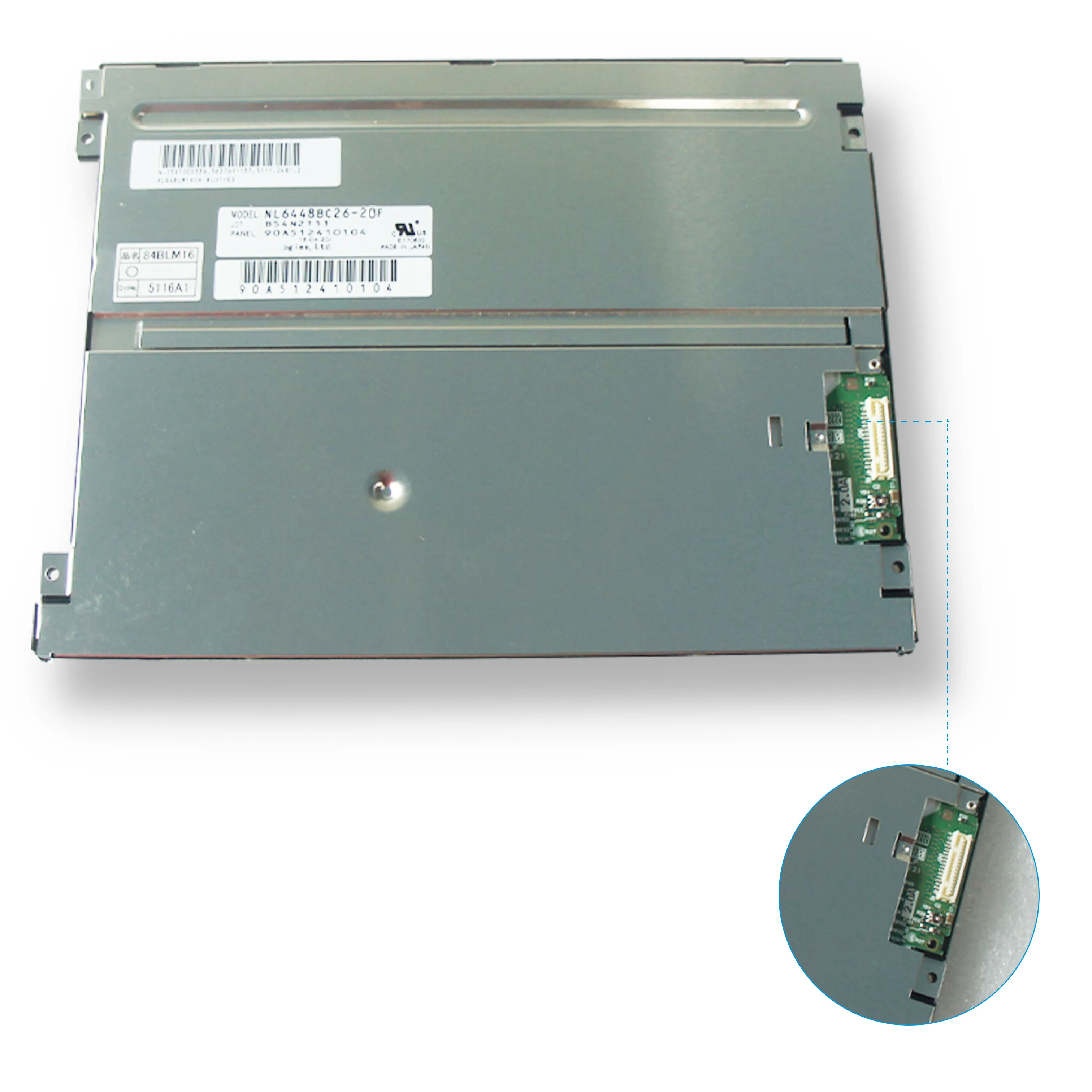

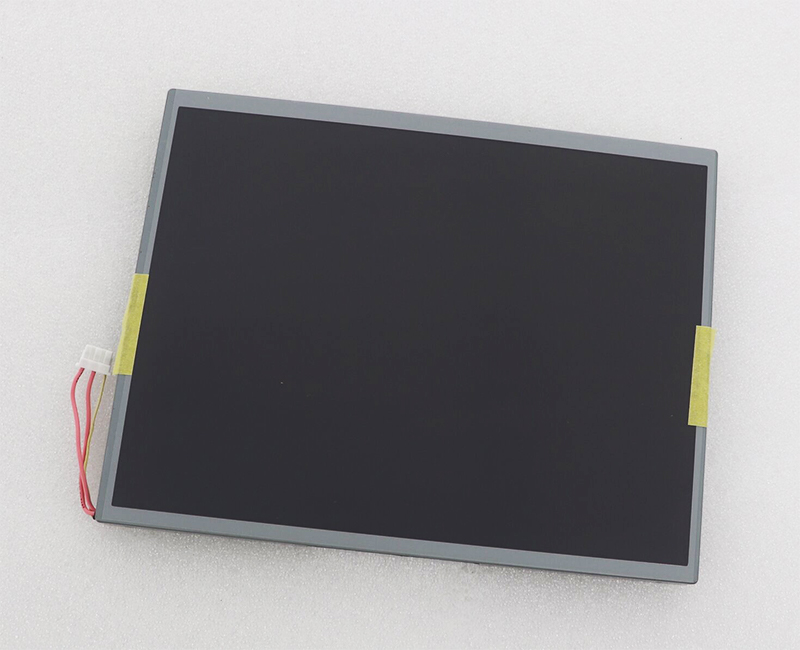
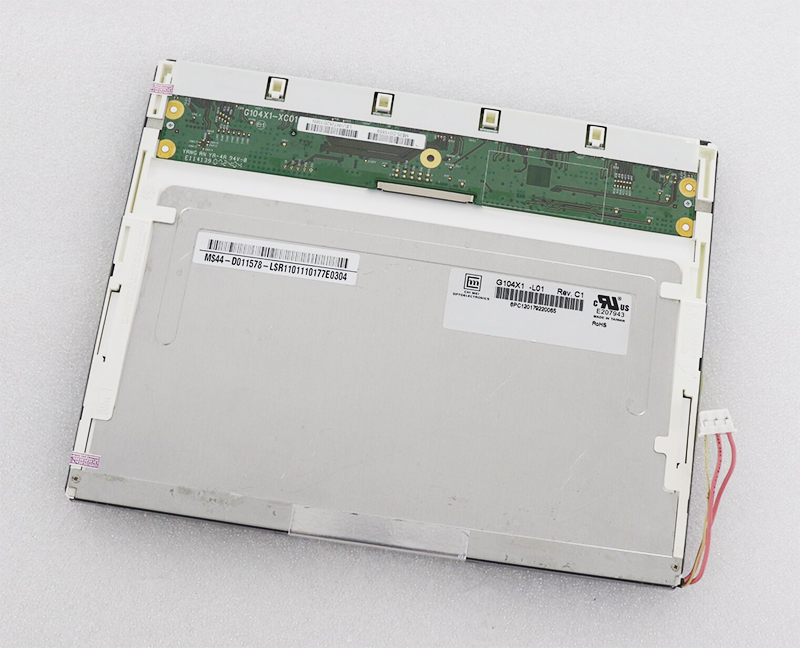
30 pins LVDS 10.4 inch 1024*768 lcd display modules G104X1-L01
In the intricate world of industrial and embedded display solutions, the precise specifications of a panel often tell the story of its intended application and capabilities. The 30-pin LVDS 10.4-inch 1024x768 LCD display module, specifically the model G104X1-L01, represents a classic and enduring standard in this landscape. This module is not merely a screen; it is a carefully engineered component designed for reliability, clarity, and integration into systems where performance under demanding conditions is non-negotiable.
This article delves into a comprehensive analysis of the G104X1-L01. We will move beyond basic datasheet parameters to explore the significance of its 30-pin LVDS interface, the enduring relevance of its XGA resolution, and the specific niches where its 10.4-inch form factor excels. From its fundamental electrical characteristics to its practical application environments and key considerations for integration, this deep dive aims to provide engineers, procurement specialists, and technology integrators with the nuanced understanding necessary to evaluate and deploy this proven display solution effectively.
Understanding the LVDS Interface and 30-Pin Configuration
The backbone of the G104X1-L01's communication is its 30-pin Low-Voltage Differential Signaling (LVDS) interface. LVDS is a critical technology for display modules, utilizing a differential data transmission method. This means it sends data as the voltage difference between two complementary wires, rather than a single wire referenced to ground. This architecture provides exceptional noise immunity, which is paramount in environments with electromagnetic interference from motors, power supplies, or other digital circuitry.
The specific 30-pin configuration on this module is a standardized footprint that carries not only the LVDS data pairs (for RGB signals, clock, and control) but also the essential power supplies and backlight driving connections. This all-in-one connector simplifies cabling and interface board design. Understanding the pinout—which pins correspond to data channels, power (VCC), ground (GND), and backlight power (typically labeled as LED+ and LED-)—is the first crucial step for successful integration, ensuring stable signal integrity and preventing potential damage during prototyping and installation.
Decoding the Visual Specifications: XGA Resolution on a 10.4-Inch Canvas
At the heart of the user experience are the visual specs: a 10.4-inch diagonal active area with a native resolution of 1024 x 768 pixels, known as XGA (Extended Graphics Array). This 4:3 aspect ratio is a hallmark of industrial and legacy systems. While wider formats dominate consumer markets, the square-ish 4:3 ratio offers superior vertical space for viewing documents, diagnostic interfaces, control system dashboards, and legacy software GUIs that were designed for this standard.
The 1024x768 resolution on a 10.4-inch screen results in a pixel pitch of approximately 0.21mm, yielding a pixel density near 123 PPI (Pixels Per Inch). This provides a balance between sharpness and cost-effectiveness for viewing distances typical in kiosks, medical devices, or factory floor equipment. The image is clear and legible without the premium cost associated with high-PPI displays, making it a pragmatically optimal choice for B2B and industrial applications where functional clarity trumps ultra-high definition.
Electrical and Optical Characteristics Deep Dive
Integrating a display requires a thorough understanding of its electrical and optical parameters. The G104X1-L01 typically operates on a 3.3V power supply for its logic and driver circuitry, while the backlight unit often requires a higher voltage, such as 12V or 24V, depending on the LED configuration. Confirming these values from the official datasheet is essential for designing the correct power delivery network.
Optically, key specifications include brightness (often in the range of 300-500 nits for indoor industrial use), contrast ratio (which affects depth perception and readability), and viewing angles (typically listed as CR≥10, e.g., 80/80/80/80). These angles define how the image quality holds up when viewed from the sides, top, or bottom. For an interactive kiosk or a shared monitoring station, wide viewing angles are critical. Additionally, the color gamut (often 70% NTSC or similar) defines the range of colors the panel can reproduce, which is sufficient for most non-consumer, data-centric applications.
Typical Application Environments and Use Cases
The G104X1-L01 is not designed for consumer laptops or tablets. Its robustness and specification profile target specific vertical markets. A primary application is in industrial human-machine interfaces (HMIs) and control panels for manufacturing machinery, where its 4:3 ratio is ideal for stacking data points and controls vertically. It is also prevalent in medical monitoring equipment, such as patient vital signs monitors or diagnostic devices, where reliability and clear data presentation are literal matters of life and death.
Other common use cases include point-of-sale (POS) systems in retail and hospitality, transportation information displays, and test and measurement instrumentation. In these environments, the module must withstand long operating hours, potential temperature fluctuations, and consistent mechanical stress from touch or public use. The G104X1-L01, through its mature design and industrial-grade components, is built to deliver consistent performance across these demanding operational lifetimes.
Critical Considerations for System Integration
Successfully embedding the G104X1-L01 into a product involves several technical considerations. First is the need for an LVDS transmitter chip on the host system's main board (like a CPU or FPGA module). This chip converts parallel RGB signals into the serial LVDS stream the display understands. Second, backlight driving must be addressed; a constant-current LED driver circuit is necessary to ensure uniform brightness and long LED lifespan.
Mechanically, integrators must account for the module's exact outline dimensions, bezel size, and mounting hole positions. Thermal management is also subtle but important; ensuring adequate ventilation around the module, especially near the backlight drivers, prevents overheating and premature failure. Finally, the electromagnetic compatibility (EMC) of the entire system can be influenced by the display cabling; using shielded cables and proper grounding practices as recommended in the panel's design guide is crucial for passing regulatory certifications.
Comparing to Newer Technologies and Long-Term Viability
In an era of ultra-HD OLEDs, one might question the relevance of a 1024x768 LVDS panel. The answer lies in total cost of ownership, supply chain stability, and system compatibility. The G104X1-L01 and its kin are mature products with proven reliability and widely available controller IC support. For upgrading or maintaining existing equipment, a drop-in compatible replacement is invaluable, avoiding costly software and hardware redesigns.
While newer interfaces like eDP (Embedded DisplayPort) offer higher bandwidth, they also require newer graphics controllers. For many industrial applications, XGA resolution is perfectly adequate, and the robust, noise-resistant nature of LVDS remains a significant advantage in electrically noisy environments. Therefore, the long-term viability of this module is secured not by being the most advanced, but by being the most appropriate and reliable solution for a vast ecosystem of legacy and current-generation industrial systems.
FAQs: G104X1-L01 10.4" LCD Module
Q10: What does the "L01" in the model number signify?A: The suffix (L01) usually indicates a specific revision, backlight type (e.g., LED), or variant within the G104X1 product family. Details are model-specific.
Conclusion
The 30-pin LVDS 10.4-inch G104X1-L01 LCD module exemplifies a technology that thrives on proven performance rather than fleeting trends. Its value proposition is built on a foundation of robust signal integrity through LVDS, functional clarity via its XGA resolution on a practical 4:3 screen, and exceptional reliability in demanding operational environments. As we have explored, its applications are deeply rooted in industrial, medical, and commercial systems where continuity, durability, and cost-effective maintenance are paramount.
For engineers and integrators, a deep understanding of this module's interface, specifications, and integration requirements is key to leveraging its strengths. In a world constantly chasing the next pixel, the G104X1-L01 stands as a reminder that in critical applications, the right tool for the job is often the one that does its job flawlessly, year after year. It remains a cornerstone component in the embedded display world, bridging legacy systems and modern industrial design with unwavering competence.