- Industrial LCD display
-
Industrial Products
- DC Servo Drive
- AC Servo Drive
- other
- Heidelberg
- FANUC
- IFM
- Meter
- CCD
- Membrane Keypad
- Film
- YOKOGAWA Module
- Card
- ABB
- MITSUBISHI
- FANUC
- KEYENCE
- BECKHOFF
- Honeywell
- HOLLYSYS
- FUJI servo drives
- HP
- solenoid valve
- thermostat
- Siemens adapter
- color oscilloscope
- Fujitsu connector
- CHELIC
- SMC
- CISCO Module
- INTEL
- Key board
- FAIRCHILD
- Motherboard
- Board
- Bearing
- other
- Control Panel
- Contactor
- Circuit
- OMRON
- Relay
- Controller
- Photoelectric Switch
- Photoelectric Sensor
- Original
- Fan
- Motor Driver
- Limit Switch
- Amplifier
- power supply
- LENZE
- Cable
- Encoder
- Sensor
- Transformer
- Fiber Optic Sensor
- Protection Relay
- Temperature Controller
- Proximity Switch
- Switch Sensor
- Siemens
- Industrial board
- HMI Touch Glass
-
HMI Full Machine Whole unit
- OMRON HMI Touch Panel
- Siemens HMI Touch Panel
- Mitsubishi HMI Touch Panel
- Allen-Bradley automation HMI Touch Panel
- DELTA HMI Touch Panel
- EVIEW DELTA HMI Touch Panel
- KINCO DELTA HMI Touch Panel
- HITECH HMI Touch Panel
- WEINTECK HMI Touch Panel
- TECVIEW HMI Touch Panel
- WEINVIEW HMI Touch Panel
- PRO-FACE HMI Touch Panel
- SIMATIC HMI Touch Panel
- AMPIRE HMI Touch Panel
- HEIDELBERG HMI Touch Panel
- PANASONIC HMI Touch Panel
- PATLITE HMI Touch Panel
- KYOCERA HMI Touch Panel
- KEYENCE HMI Touch Panel
- WEINVIEW HMI Touch Panel
- HITECH HMI Touch Panel
- FUJI HMI Touch Panel
- HAKKO HMI Touch Panel
- SCHNEIDER HMI Touch Panel
- SAMKOON touch panel
- other
- Module
- lcd inverter
- Membrane Keypad Switch
- Winni Touch Screens
- Frequency Inverter
- Servo Motor
- PLC


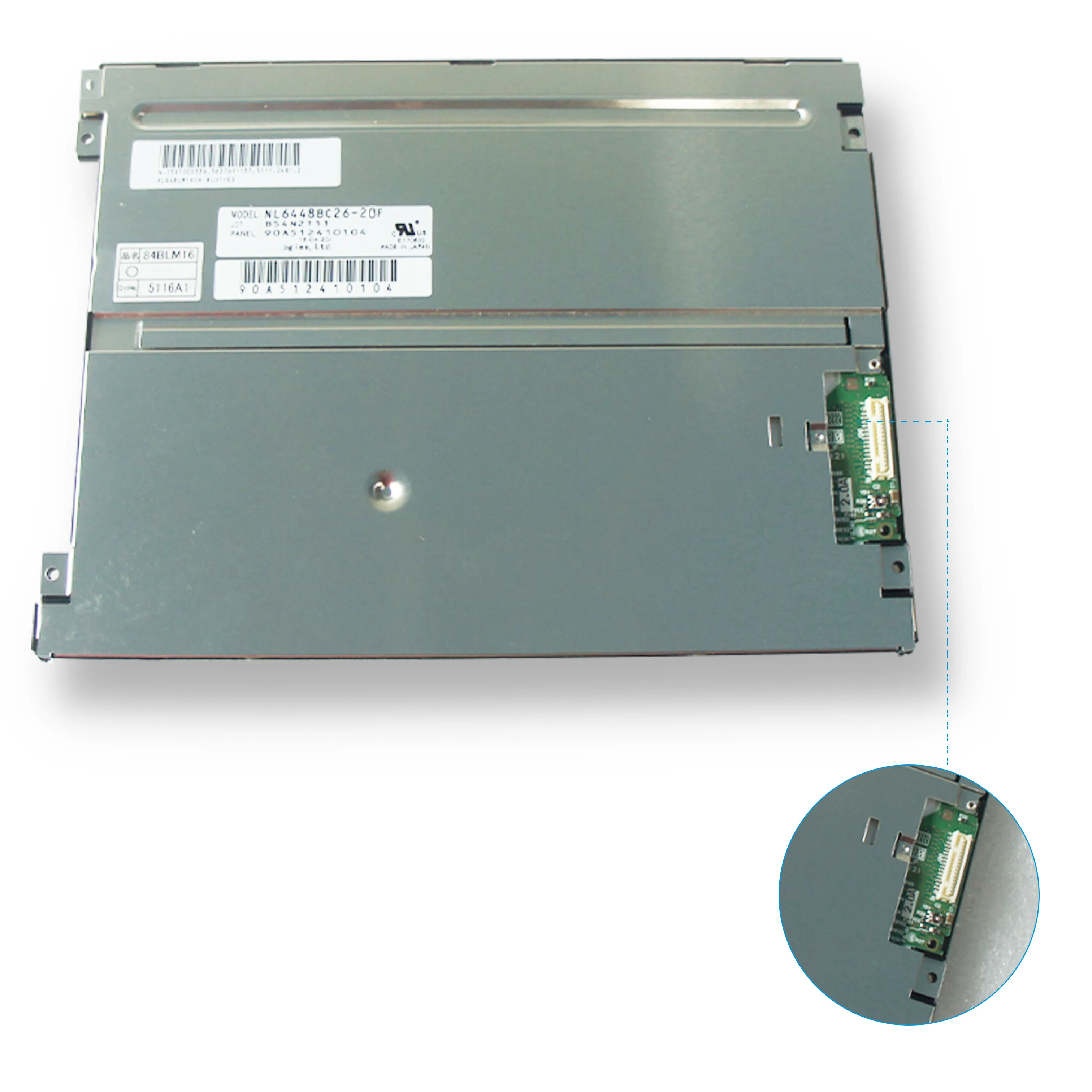

5.5" 320*240 FSTN-LCD for SII G242CX5R1AC
In the realm of industrial electronics, the display is often the silent workhorse—a critical interface that must deliver clarity, durability, and consistency under demanding conditions. The 5.5" 320x240 FSTN-LCD designed specifically for the SII G242CX5R1AC module is far more than a mere screen; it is a testament to engineering specificity. This article delves deep into the technical architecture, operational advantages, and strategic applications of this particular liquid crystal display. Unlike consumer-grade panels that prioritize high refresh rates and vivid color gamuts, this FSTN (Film Compensated Super Twisted Nematic) display is optimized for high contrast, wide viewing angles, and low power consumption in static and semi-static information scenarios. We will explore why the 320x240 QVGA resolution remains a staple in the industrial sector, how the FSTN technology mitigates the shortcomings of traditional STN displays, and the critical role it plays in the SII G242CX5R1AC controller ecosystem. This analysis is tailored for engineers, procurement specialists, and system integrators who require more than superficial specs, focusing instead on reliability and real-world performance.
To understand the value of this display, one must first dissect its foundational technology. FSTN stands for Film Compensated Super Twisted Nematic, an evolution of standard STN displays. Traditional STN suffers from a inherent color shift, often appearing green or blue. The FSTN adds a retardation film that compensates for these optical birefringence anomalies, resulting in a true black-and-white display with significantly higher contrast. For the 5.5" diagonal, this is crucial; the film eliminates the rainbow effect that plagues cheaper STN panels.
The 320x240 resolution, commonly known as QVGA, is a strategic choice for this form factor. At a 5.5" size, this yields a pixel density that is moderate but highly functional. The primary benefit is readability. Large pixels allow text and basic graphics to remain sharp without requiring complex anti-aliasing. The 4:3 aspect ratio is ideal for text-heavy interfaces, control panels, and data logging screens where spatial consistency is more important than cinematic immersion. Furthermore, the passive matrix nature of FSTN means that driving 76,800 pixels is efficient. It requires less processing power from the SII controller to manage the row and column drivers, leading to lower EMI (Electromagnetic Interference) and a simpler PCB layout for the host device.
The display does not function in isolation; it is intrinsically tied to the SII G242CX5R1AC controller. This specific IC (Integrated Circuit) from Seiko Instruments Inc. (SII) is a specialized display driver designed to handle the multiplexing rates required by a 240-row FSTN panel. The synergy between the glass and the controller dictates the final performance. The G242CX5R1AC manages the timing of the row and column signals, ensuring that the high duty cycle (often 1/240 or similar) does not cause ghosting or flickering.
A critical feature is the built-in temperature compensation circuit. FSTN fluids have a narrow operating range regarding viscosity; in cold environments, the liquid crystal response time slows dramatically. The SII controller adjusts the supply voltage based on the temperature to maintain consistent contrast. Without this, the display would wash out or become extremely slow outside of room temperature. The controller also supports multiple waveform drive modes. This allows the engineer to tune the bias ratio and frame frequency to balance power consumption against refresh rate. For the 5.5" panel, this is vital because the larger glass area inherently has higher capacitance, requiring careful signal management to avoid voltage sag across the rows.
Visual performance for this FSTN display is defined by three pillars: contrast, viewing angle, and backlight homogeneity. The contrast ratio of a well-tuned FSTN module can exceed 20:1 in standard ambient lighting, which is remarkable for a passive matrix. This is achieved by the "normally white" or "normally black" configuration (often yellow-green or gray background). The film compensates for the twist angle of the liquid crystals (typically 240°), creating a sharp transition between on and off states. This makes the display highly legible in direct sunlight, a key requirement for outdoor industrial or medical equipment.
Regarding viewing angle, FSTN provides a superior 6 o’clock or 12 o’clock orientation preference. Unlike TN displays which have a very narrow vertical sweet spot, FSTN offers a more balanced cone of vision, typically ±40° horizontally and ±30° vertically. This is adequate for a single operator viewing the screen head-on but is less suited for wide-angle sharing. The backlight is equally critical. Most variants of this module use a single LED edge-lit light guide. The challenge with a 5.5" screen is uniformity. High-quality modules incorporate diffuser films to prevent hot spots near the LED. The choice of backlight color (white, yellow-green, or amber) significantly impacts perceived contrast; yellow-green is often preferred for optimal human eye sensitivity and Powerbook legacy standards.
The industrial context dictates that this display must survive conditions that would destroy consumer screens. The 5.5" FSTN module for the SII controller is typically constructed with a robust FPC (Flexible Printed Circuit) and a metal bezel. The operating temperature range is a primary concern; standard variants operate from -20°C to +70°C, with storage up to +80°C. This requires careful selection of the liquid crystal mixture and the polarizer adhesives.
Humidity and condensation are silent killers. FSTN displays are susceptible to polarizer degradation in high humidity. High-reliability versions feature anti-UV polarizers that prevent yellowing and delamination over years of use. Another critical factor is vibration resistance. The glass cell gap (typically 5-7 microns) must be maintained; if the module flexes, the gap changes, causing optical interference patterns. Therefore, the mechanical mounting of the module is as important as the electrical design. The G242CX5R1AC controller also includes features to reduce static electricity damage (ESD), with built-in zener diodes on the data lines to protect the delicate CMOS driver circuitry from voltage spikes common in factory environments.


Understanding the application is key to utilizing this display effectively. The 5.5" 320x240 FSTN is not for a smartphone; it is a staple in point-of-sale (POS) systems, medical patient monitors, industrial PLC interfaces, and barcode scanners. Its primary advantage is legibility in high ambient light. In a factory, bright overhead lighting often washes out transmissive TFT displays, but a reflective or transflective FSTN remains readable without needing maximum backlight, saving power.
For implementation, engineers must pay attention to the VLCD (LCD Drive Voltage). The SII controller requires an external charge pump circuit to generate the high voltage (often 15V-20V) needed to drive the passive matrix. Noise on this rail directly translates to visible crosstalk on the screen. Using low-ESR capacitors near the VOUT pin is non-negotiable. Furthermore, the interface is usually parallel (8-bit 6800 or 8080 mode). This simplifies the microcontroller interface but can be a bottleneck if long cable runs are needed. For high-noise environments, twisted-pair ribbon cables or even FPC shielding is recommended. Finally, contrast adjustment is not a simple resistor; it requires a negative voltage (VEE) that is temperature-compensated by the SII controller, so a simple potentiometer is often replaced by a digital potentiometer controlled by the main CPU.
1. What does FSTN stand for?
Film Compensated Super Twisted Nematic, an LCD technology that uses a retardation film to improve contrast and eliminate color shift.
2. Is this display compatible with any microcontroller?
Yes, if the microcontroller has an 8-bit parallel interface (6800 or 8080 mode) and can generate the necessary control signals for the SII G242CX5R1AC driver.
3. What is the typical voltage requirement for this LCD?
The logic voltage is usually 3.3V or 5V, but the LCD drive voltage (VLCD) needs to be between 15V and 20V, generated by a charge pump.
4. Can this display be used in direct sunlight?
Yes, especially if a transflective polarizer is used. FSTN technology offers excellent readability in bright ambient conditions.
5. What is the response time of the 5.5" FSTN?
Typical rise times are 150ms to 300ms, making it unsuitable for video but acceptable for static text and slow data updates.
6. How do I adjust the contrast?
Adjust the voltage on the VEE pin. A digital potentiometer controlled by the MCU is recommended for temperature compensation.
7. Is it possible to get this display in an OLED-like black background?
Yes, a "negative" FSTN mode exists where the background is black and the segments are white, but this requires a different polarizer stack.
8. What is the lifespan of the LED backlight?
Typically 50,000 hours to 100,000 hours, depending on the drive current.
9. Can I drive this display with SPI?
Not directly. The primary interface is parallel. You would need an external SPI-to-Parallel bridge chip to use SPI.
10. Why is the viewing angle called "6 o'clock"?
It means the best viewing angle is when looking \up\ from the bottom edge of the screen, akin to a clock face.
Conclusion: A Calculated Choice for Enduring Performance
The 5.5" 320x240 FSTN-LCD for the SII G242CX5R1AC is a specialized component that exemplifies the trade-offs between performance, power, and durability. It is not a display for high-speed animation or vibrant colors, but rather a master of clarity and reliability in static or slow-update environments. Its strength lies in its optical simplicity and robust engineering. For the system designer, the key takeaway is the critical importance of the synergy between the controller and the glass. The success of a product depends not only on purchasing a high-quality panel but also on implementing the voltage supply, temperature compensation, and mechanical mounting with precision. If the target application requires a readable, power-efficient, and long-lasting interface for industrial, medical, or POS use, this FSTN combination remains a highly defensible, cost-effective choice. It proves that sometimes, the best technology is not the newest, but the most perfectly adapted to its function.