- Industrial LCD display
-
Industrial Products
- DC Servo Drive
- AC Servo Drive
- other
- Heidelberg
- FANUC
- IFM
- Meter
- CCD
- Membrane Keypad
- Film
- YOKOGAWA Module
- Card
- ABB
- MITSUBISHI
- FANUC
- KEYENCE
- BECKHOFF
- Honeywell
- HOLLYSYS
- FUJI servo drives
- HP
- solenoid valve
- thermostat
- Siemens adapter
- color oscilloscope
- Fujitsu connector
- CHELIC
- SMC
- CISCO Module
- INTEL
- Key board
- FAIRCHILD
- Motherboard
- Board
- Bearing
- other
- Control Panel
- Contactor
- Circuit
- OMRON
- Relay
- Controller
- Photoelectric Switch
- Photoelectric Sensor
- Original
- Fan
- Motor Driver
- Limit Switch
- Amplifier
- power supply
- LENZE
- Cable
- Encoder
- Sensor
- Transformer
- Fiber Optic Sensor
- Protection Relay
- Temperature Controller
- Proximity Switch
- Switch Sensor
- Siemens
- Industrial board
- HMI Touch Glass
-
HMI Full Machine Whole unit
- OMRON HMI Touch Panel
- Siemens HMI Touch Panel
- Mitsubishi HMI Touch Panel
- Allen-Bradley automation HMI Touch Panel
- DELTA HMI Touch Panel
- EVIEW DELTA HMI Touch Panel
- KINCO DELTA HMI Touch Panel
- HITECH HMI Touch Panel
- WEINTECK HMI Touch Panel
- TECVIEW HMI Touch Panel
- WEINVIEW HMI Touch Panel
- PRO-FACE HMI Touch Panel
- SIMATIC HMI Touch Panel
- AMPIRE HMI Touch Panel
- HEIDELBERG HMI Touch Panel
- PANASONIC HMI Touch Panel
- PATLITE HMI Touch Panel
- KYOCERA HMI Touch Panel
- KEYENCE HMI Touch Panel
- WEINVIEW HMI Touch Panel
- HITECH HMI Touch Panel
- FUJI HMI Touch Panel
- HAKKO HMI Touch Panel
- SCHNEIDER HMI Touch Panel
- SAMKOON touch panel
- other
- Module
- lcd inverter
- Membrane Keypad Switch
- Winni Touch Screens
- Frequency Inverter
- Servo Motor
- PLC


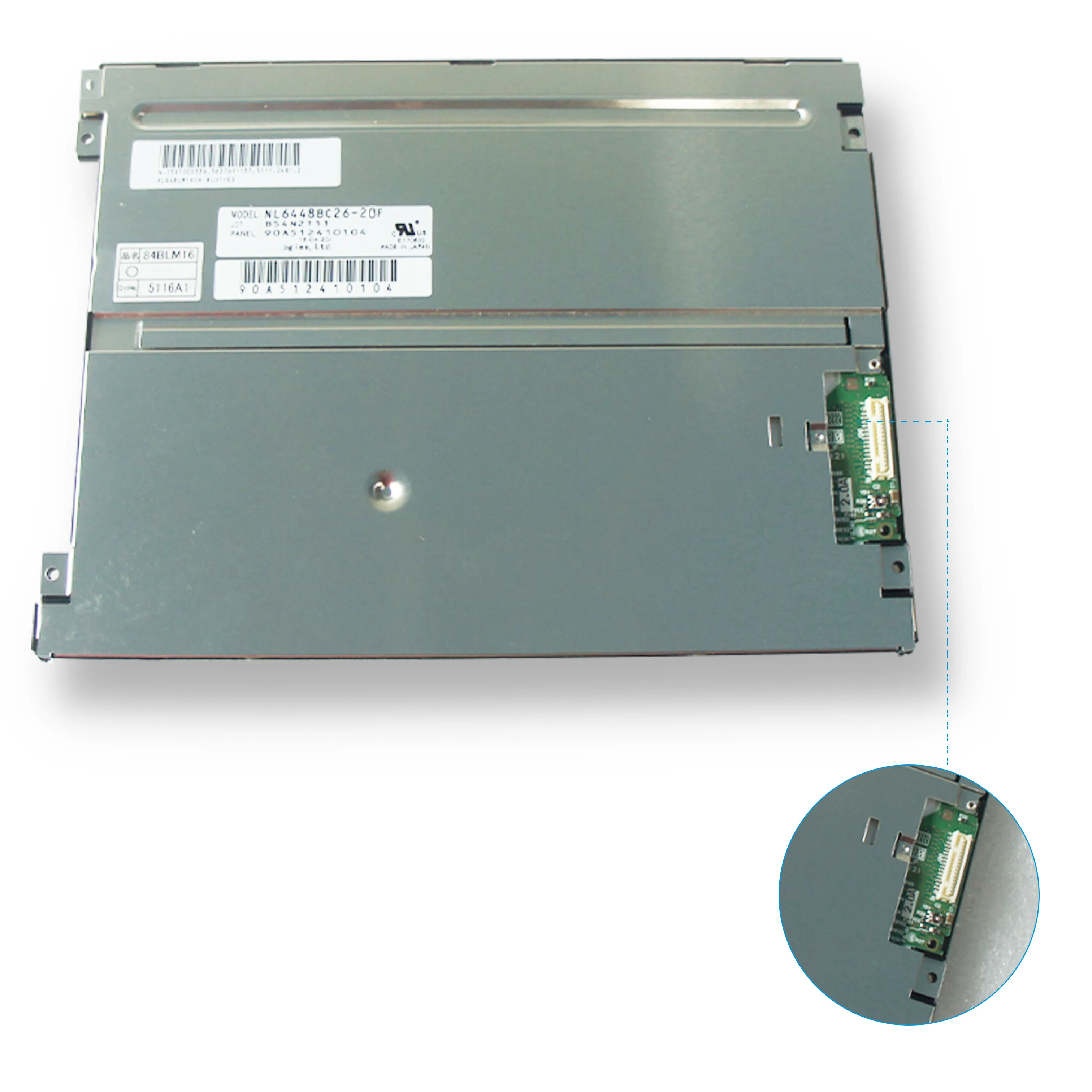

5.7inch 320*240 STN-LCD for Kyocera KG057QV1CA-G03
The landscape of industrial displays is often dominated by the latest TFT-LCD and AMOLED technologies. However, a significant portion of critical equipment—from medical ventilators to outdoor kiosks—still relies on a robust, time-tested alternative: the STN-LCD. This article provides a comprehensive deep-dive into one such specific component: the Kyocera KG057QV1CA-G03. This is a 5.7-inch, 320x240 pixel resolution, monochrome or color STN (Super Twisted Nematic) liquid crystal display module. At first glance, its specifications (QVGA resolution, passive matrix technology) may seem dated. Yet, this display possesses unique characteristics—ultra-wide viewing angles in specific orientations, exceptional sunlight readability, and extreme durability—that make it irreplaceable in many industrial contexts. We aim to move beyond a simple datasheet listing. This analysis will explore the technology behind the panel, its critical performance metrics, its power and interface architecture, its optimal application domains, and its relevance in the era of high-resolution graphics. Understanding this component is key for engineers and procurement specialists selecting a reliable, long-lifecycle display for rugged environments where modern TFTs may fail.
To appreciate the KG057QV1CA-G03, one must understand Super Twisted Nematic (STN) technology. Unlike standard TN (Twisted Nematic) LCDs that twist light approximately 90 degrees, STN technology twists the liquid crystal molecules between 180 and 270 degrees. This sharper twist allows for a steeper electro-optical response curve. The primary advantage for a display like the KG057QV1CA-G03 is significantly improved contrast and a wider viewing angle compared to basic TN displays. This specific module likely utilizes a DSTN (Double Super Twisted Nematic) or CSTN (Color Super Twisted Nematic) variant to enhance color reproduction and reduce ghosting. The "Double" layer eliminates the greenish or bluish tint often associated with standard STN, producing a more neutral black-and-white or stable color image. The major trade-off inherent to STN technology is slower response time, making it unsuitable for high-frame-rate video. However, for static or slowly changing data—like text, gauges, and waveforms—this limitation is irrelevant. The passive matrix nature of STN means it lacks the thin-film transistors (TFTs) found in active matrix displays. This drastically reduces manufacturing cost for the given resolution and, critically, improves its optical performance in direct sunlight due to a naturally higher aperture ratio. For the Kyocera KG057QV1CA-G03, this passive matrix structure is a feature, not a flaw, enabling its use in high-ambient-light conditions where active matrix screens struggle.
The resolution of 320x240 pixels, commonly referred to as QVGA (Quarter VGA), and the 5.7-inch diagonal size are not arbitrary choices; they represent a carefully balanced engineering standard. In the industrial display world, the 5.7-inch form factor is a legacy standard that fits perfectly into standardized panel cutouts for 19-inch rack-mount equipment, medical device enclosures, and many PLC (Programmable Logic Controller) human-machine interfaces (HMIs). Upgrading to a different size would require costly mechanical retooling. At 320x240, the pixel density is roughly 70 PPI (Pixels Per Inch). While low by smartphone standards, this density is ideal for industrial readability. Text at typical font sizes (e.g., 8-12pt) remains crisp and legible at standard viewing distances of 40-60 cm. The chunky pixels are easier to drive with a simple micro-controller, reducing system cost. Furthermore, the 4:3 aspect ratio (derived from 320/240) is perfectly suited for displaying medical waveforms (e.g., ECG or respiratory graphs), CNC machining data, or process control diagrams. A widescreen 16:9 format, in contrast, would waste precious panel real estate and introduce alignment issues. Therefore, the QVGA resolution on the KG057QV1CA-G03 is a pragmatic choice, maximizing clarity for text and graphs while maintaining compatibility with decades of existing hardware and software interfaces. It is a demonstration of form following function in the most literal sense.
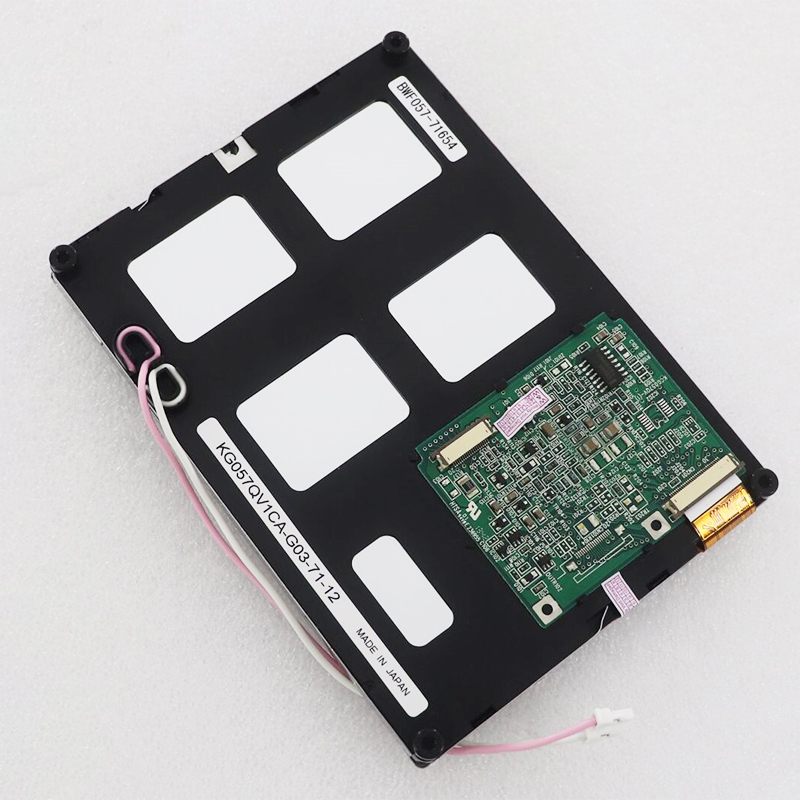
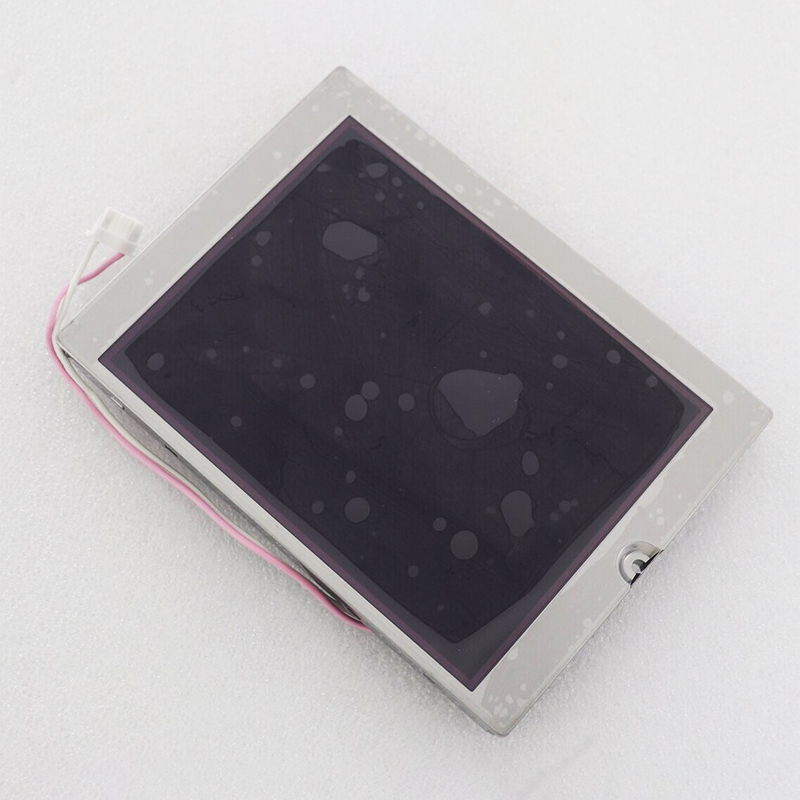
When evaluating the Kyocera KG057QV1CA-G03, its optical performance is the primary value driver. Three metrics stand out: contrast ratio, viewing direction, and ambient light handling. While a standard TFT-LCD might boast a 500:1 or 1000:1 contrast ratio in a dark room, its performance collapses under direct sunlight. Conversely, this STN module, particularly in a yellow-green (or black/white) mode, operates on a different principle. It achieves its contrast through polarization rather than a backlight competing with ambient light. The result is a display that becomes more readable as ambient light increases. The contrast ratio, while modest in absolute terms (often 10:1 to 25:1), is highly consistent across a wide luminance range. The viewing angle is another critical point. STN panels have a "preferred viewing angle" (usually 6 o'clock or 12 o'clock). The KG057QV1CA-G03 is likely optimized for a 6 o'clock viewing direction, meaning the image is clearest when viewed from below the panel's perpendicular axis. This is perfect for a panel mounted in a vertical console where the operator is looking slightly upward. The vertical viewing angle range (e.g., 60° top, 40° bottom) is often wider than a typical TN panel. Furthermore, the lack of a diffuser film (common in TFT backlights) and the inherent simplicity of the STN stack up structure provide for superior legibility in harsh glare. For applications like gas pumps, forklift terminals, or outdoor diagnostic equipment, this sunlight readability is a non-negotiable feature that justifies the use of an "older" technology.
From a system integration perspective, the Kyocera KG057QV1CA-G03 is a low-power, low-complexity solution. The passive matrix architecture requires significantly less power than an equivalent active matrix TFT panel driving the same number of pixels. A typical TFT backlight consumes the majority of the system power. For an STN panel, the LCD drive itself is a low-current operation, often requiring only a few tens of milliamps at 5V or 3.3V. The module uses a standard parallel interface, typically an 8-bit or 16-bit data bus, which is directly compatible with a vast range of microcontrollers (e.g., ARM Cortex-M, Renesas RL78, Microchip PIC32) and FPGAs. This eliminates the need for costly video processors or LVDS transmitters required by modern LCDs. The driver IC architecture is designed for simplicity; there is no frame buffer management like in a TFT controller. The host microcontroller directly drives the row and column electrodes. This direct control is a double-edged sword: it reduces system latency for simple tasks but demands careful timing from the host. The backlight unit itself is usually a single CCFL (Cold Cathode Fluorescent Lamp) or an array of high-brightness LEDs. For the KG057QV1CA-G03, we often see a rugged, pre-assembled backlight that can be driven by a simple inverter or an LED driver IC. This combination of low power, simple interface, and robust driver support makes it an ideal choice for battery-powered portable instruments or equipment with limited power budgets, where a complex TFT would drain the system.
The Kyocera KG057QV1CA-G03 is not a general-purpose display; it is a vertical-market workhorse. Its specific characteristics map directly onto three primary application domains. First: Medical Patient Monitoring. In ECG monitors, ventilators, and infusion pumps, the display must show slow-moving waveforms and numeric data with high contrast. The 4:3 ratio is perfect, and the slow response time of STN is irrelevant. The critical factor is reliability and readability during a power failure or in brightly lit OR suites. Second: Industrial HMIs and PLCs. In factory automation, a controller needs a viewable screen under dust, oil, and strong overhead lighting. The ruggedized, static-image-friendly nature of the KG057QV1CA-G03 makes it ideal for displaying machine status, error codes, and simple menus. The standard 5.7-inch size is a drop-in replacement for legacy KX-series displays. Third: Outdoor Kiosks and Gas Pumps. This is the display's true proving ground. Direct sunlight is the enemy of backlit TFTs. The STN panel's reflective characteristics mean it is most readable in the sun. For outdoor payment terminals or automotive diagnostic devices, the KG057QV1CA-G03 provides a clear, highly legible interface even under the harshest solar glare, ensuring transaction accuracy and user confidence. Furthermore, its extended temperature range (often -20°C to +70°C) is crucial for these environments, where a standard consumer-grade display would freeze or overheat.
FAQs: Addressing Key Queries on the Kyocera KG057QV1CA-G03
Is the KG057QV1CA-G03 a color or monochrome display?
It can be either. The "CA" model typically refers to a color CSTN variant, but it is also common to find monochrome (yellow-green or white/gray) versions with similar mechanics. Check the specific part number suffix.
What is the lifespan of the backlight in this unit?
The CCFL backlight typically has a lifespan of 20,000 to 50,000 hours. The LED backlight versions can achieve 50,000 to 100,000 hours to half-brightness.
Can I drive this display with an Arduino or Raspberry Pi?
Yes, but it requires more care. The 8-bit parallel interface is bit-bangable on an Arduino, but slow. A Raspberry Pi with an HAT or direct GPIO is feasible. Use a level shifter for 5V logic.
What does QVGA mean?
QVGA stands for Quarter VGA. VGA is 640x480. QVGA is exactly a quarter of that: 320x240 pixels.
Why is the viewing angle so narrow on one side?
This is an inherent property of STN technology. It is optimized for a specific viewing direction (usually 6 o'clock or 12 o'clock) to maximize contrast for the intended operator position.
Is a touch panel available for this display?
Yes. Kyocera frequently offered this module pre-equipped with a 4-wire or 5-wire resistive touch panel. These are durable for gloved-hand use but not multi-touch.
What is the typical power consumption?
The LCD controller itself uses under 50mA at 5V. The backlight (CCFL or LED) accounts for the bulk of power, typically 200-400mA. Total power is under 2.5W.
Can it operate in freezing temperatures?
Yes, the operating temperature range is generally -20°C to +70°C. The STN fluid remains stable and responsive in cold environments better than many TFTs.
Is this display available in new production?
While originally designed in the 1990s, it is often available as a "mature" product or through aftermarket suppliers like Kyocera's industrial display division or distributors like DigiKey/Mouser for legacy support.
What are the common failure modes?
The most common failure is dark banding or a completely dead backlight. CCFL inverters are a common failure point. The LCD glass itself is very robust.
Conclusion: The Enduring Value of a Purpose-Built Workhorse
The Kyocera KG057QV1CA-G03 is a testament to the principle that technology does not need to be cutting-edge to be indispensable. While its 320x240 resolution and STN technology might seem like artifacts of a bygone era, they represent a highly optimized solution for a very specific set of industrial and medical challenges. This article has dissected the display from its core physics to its real-world applications, revealing a product built for longevity, reliability, and performance under duress. Its true value lies not in pixel density or color gamut, but in its exceptional sunlight readability, low power consumption, and straightforward system integration. For any engineer tasked with building a product that must work for decades in a harsh environment—from a factory floor to an operating room—the KG057QV1CA-G03 remains a deeply relevant and often superior choice compared to a fragile, high-resolution TFT. It is a perfect example of how a well-designed, mature technology can outlast and outperform its flashier successors in the applications that truly matter. When the brief is ruggedness over resolution, the Kyocera KG057QV1CA-G03 delivers.