- Industrial LCD display
-
Industrial Products
- DC Servo Drive
- AC Servo Drive
- other
- Heidelberg
- FANUC
- IFM
- Meter
- CCD
- Membrane Keypad
- Film
- YOKOGAWA Module
- Card
- ABB
- MITSUBISHI
- FANUC
- KEYENCE
- BECKHOFF
- Honeywell
- HOLLYSYS
- FUJI servo drives
- HP
- solenoid valve
- thermostat
- Siemens adapter
- color oscilloscope
- Fujitsu connector
- CHELIC
- SMC
- CISCO Module
- INTEL
- Key board
- FAIRCHILD
- Motherboard
- Board
- Bearing
- other
- Control Panel
- Contactor
- Circuit
- OMRON
- Relay
- Controller
- Photoelectric Switch
- Photoelectric Sensor
- Original
- Fan
- Motor Driver
- Limit Switch
- Amplifier
- power supply
- LENZE
- Cable
- Encoder
- Sensor
- Transformer
- Fiber Optic Sensor
- Protection Relay
- Temperature Controller
- Proximity Switch
- Switch Sensor
- Siemens
- Industrial board
- HMI Touch Glass
-
HMI Full Machine Whole unit
- OMRON HMI Touch Panel
- Siemens HMI Touch Panel
- Mitsubishi HMI Touch Panel
- Allen-Bradley automation HMI Touch Panel
- DELTA HMI Touch Panel
- EVIEW DELTA HMI Touch Panel
- KINCO DELTA HMI Touch Panel
- HITECH HMI Touch Panel
- WEINTECK HMI Touch Panel
- TECVIEW HMI Touch Panel
- WEINVIEW HMI Touch Panel
- PRO-FACE HMI Touch Panel
- SIMATIC HMI Touch Panel
- AMPIRE HMI Touch Panel
- HEIDELBERG HMI Touch Panel
- PANASONIC HMI Touch Panel
- PATLITE HMI Touch Panel
- KYOCERA HMI Touch Panel
- KEYENCE HMI Touch Panel
- WEINVIEW HMI Touch Panel
- HITECH HMI Touch Panel
- FUJI HMI Touch Panel
- HAKKO HMI Touch Panel
- SCHNEIDER HMI Touch Panel
- SAMKOON touch panel
- other
- Module
- lcd inverter
- Membrane Keypad Switch
- Winni Touch Screens
- Frequency Inverter
- Servo Motor
- PLC


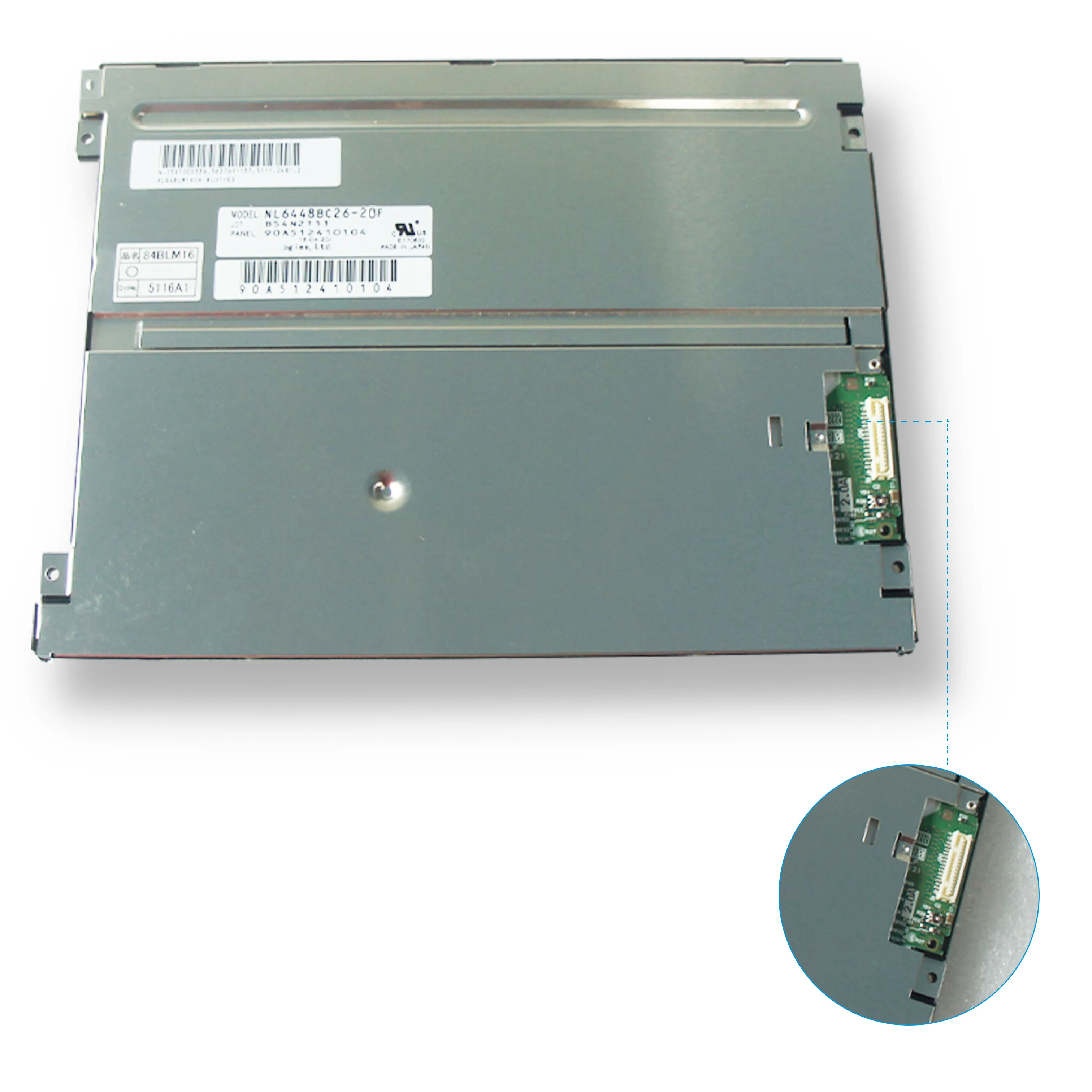

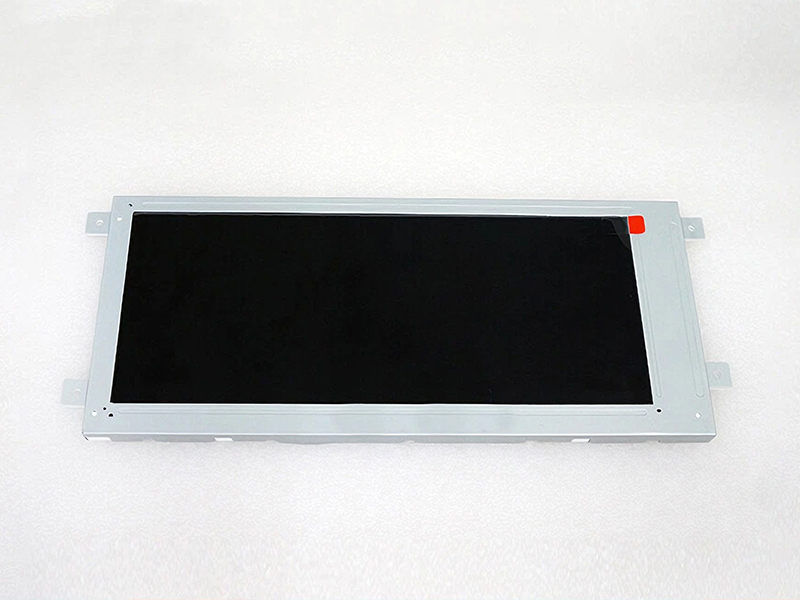
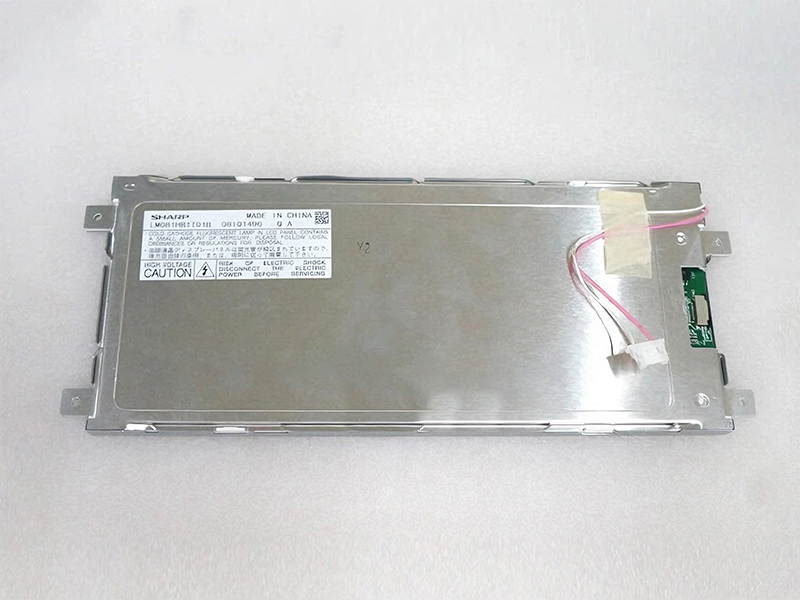
8.1"640*240 LM081HB1T01B LCD PANEL FOR SHARP
8.1” 640x240 LM081HB1T01B LCD Panel: A Technical Deep Dive for Sharp Applications
This article provides an in-depth analysis of the LM081HB1T01B, covering its display technology, interface specifications, mechanical constraints, and real-world application considerations. The goal is to equip engineers, procurement specialists, and system integrators with the authoritative knowledge required to handle this panel effectively.
1. Display Technology and Resolution Rationale
Extreme durability: STN displays are less susceptible to pixel failure from vibration or temperature shock compared to TFTs.
Wide operating temperature range: Often specified for -20°C to +70°C, making them suitable for outdoor or factory floor environments.
Legacy compatibility: Many CNC machines, medical devices, and avionics systems from the 1990s and early 2000s were designed around STN interfaces.
The 640x240 resolution is a non-standard aspect ratio of 8:3, which is wider than typical 4:3 displays. This format is ideal for displaying real-time data charts, status bars, and split-screen information without scrolling. Each pixel is individually addressable, allowing for crisp representation of text and simple graphics, but the panel lacks gray-scale capabilities inherent to TFTs.
2. Interface and Signal Requirements
Data interface: Normally a 40-pin flat flex cable (FFC) with 0.5mm or 0.8mm pitch.
Logic voltage: Typically 3.3V or 5.0V logic levels, not CMOS 5V tolerant on all pins—check the specific datasheet revision.
Backlight: A CCFL (Cold Cathode Fluorescent Lamp) with a starting voltage of approximately 600-800VAC and a running current of 5-8mA. Do not connect directly to DC power. A dedicated CCFL inverter is mandatory.
3. Mechanical and Optical Properties
Active area: Approximately 162.0 mm x 61.0 mm.
Outer dimensions: Roughly 187.0 mm x 88.0 mm, with a thickness of 8.0-10.0 mm (including PCB).
Mounting: Four or six mounting holes on the metal bezel. The bezel is not electrically grounded—require external grounding for EMC compliance.
Viewing angle: STN panels have a narrow viewing cone. This panel is optimized for a 6 o'clock viewing direction (looking slightly upward). Specular reflection is high; an anti-glare film is highly recommended for bright environments.
4. Application Scenarios and Upgrade Considerations
Legacy system repair: Replacing a failed screen in a textile loom, labeling machine, or laboratory analyzer.Action: Verify that the replacement panel’s firmware version matches the original. Sharp issued several revisions with subtle timing differences.
Retrofit with a modern driver: Converting an old machine to use a Raspberry Pi or Arduino.Action: You must use a dedicated STN-to-HDMI bridge chip (e.g., RA8876 or STM32-based custom solution) that emulates the parallel interface. Standard HDMI converters will not work.
Spare parts inventory: Stocking for extended warranty support.Action: Store the panel in an antistatic bag, away from strong magnetic fields and temperature above 50°C. The CCFL backlight has a half-life of roughly 10,000-20,000 hours; after that, brightness degrades by 50%.
5. Supply Chain and Alternatives
Condition grade: Look for “New Old Stock” (NOS) with original factory packaging. Avoid “pulled” units from disassembled equipment unless the screen is guaranteed functional.
Compatibility with inverters: The panel’s CCFL connector is a 2-pin JST or Molex type. Ensure your inverter has a matching connector and dimming control (0-5V analog or PWM).
Direct drop-in replacements are rare. If unavailable, you may need to consider a modern TFT upgrade. This requires redesigning the bezel, updating the microcontroller code to output parallel RGB data, and adjusting power supply voltages. A common upgrade path is to a 7-inch or 8-inch LVDS TFT with a resolution of 1024x600 or 800x480, but this is not a trivial task and may require a complete system board replacement.
6. Conclusion
The Sharp LM081HB1T01B is a robust, specialized component for specific industrial and legacy applications. Its STN technology, CCFL backlight, and parallel interface demand respect for its limitations and requirements. By understanding its electrical, mechanical, and optical constraints, professionals can achieve reliable integration or replacement. Always consult the manufacturer’s datasheet for the exact revision of your unit and exercise caution with high-voltage CCFL circuits. This display is a testament to the era of durable, purpose-built industrial screens—and handling it correctly ensures that the equipment it powers continues to function for years to come.