- Industrial LCD display
-
Industrial Products
- DC Servo Drive
- AC Servo Drive
- other
- Heidelberg
- FANUC
- IFM
- Meter
- CCD
- Membrane Keypad
- Film
- YOKOGAWA Module
- Card
- ABB
- MITSUBISHI
- FANUC
- KEYENCE
- BECKHOFF
- Honeywell
- HOLLYSYS
- FUJI servo drives
- HP
- solenoid valve
- thermostat
- Siemens adapter
- color oscilloscope
- Fujitsu connector
- CHELIC
- SMC
- CISCO Module
- INTEL
- Key board
- FAIRCHILD
- Motherboard
- Board
- Bearing
- other
- Control Panel
- Contactor
- Circuit
- OMRON
- Relay
- Controller
- Photoelectric Switch
- Photoelectric Sensor
- Original
- Fan
- Motor Driver
- Limit Switch
- Amplifier
- power supply
- LENZE
- Cable
- Encoder
- Sensor
- Transformer
- Fiber Optic Sensor
- Protection Relay
- Temperature Controller
- Proximity Switch
- Switch Sensor
- Siemens
- Industrial board
- HMI Touch Glass
-
HMI Full Machine Whole unit
- OMRON HMI Touch Panel
- Siemens HMI Touch Panel
- Mitsubishi HMI Touch Panel
- Allen-Bradley automation HMI Touch Panel
- DELTA HMI Touch Panel
- EVIEW DELTA HMI Touch Panel
- KINCO DELTA HMI Touch Panel
- HITECH HMI Touch Panel
- WEINTECK HMI Touch Panel
- TECVIEW HMI Touch Panel
- WEINVIEW HMI Touch Panel
- PRO-FACE HMI Touch Panel
- SIMATIC HMI Touch Panel
- AMPIRE HMI Touch Panel
- HEIDELBERG HMI Touch Panel
- PANASONIC HMI Touch Panel
- PATLITE HMI Touch Panel
- KYOCERA HMI Touch Panel
- KEYENCE HMI Touch Panel
- WEINVIEW HMI Touch Panel
- HITECH HMI Touch Panel
- FUJI HMI Touch Panel
- HAKKO HMI Touch Panel
- SCHNEIDER HMI Touch Panel
- SAMKOON touch panel
- other
- Module
- lcd inverter
- Membrane Keypad Switch
- Winni Touch Screens
- Frequency Inverter
- Servo Motor
- PLC


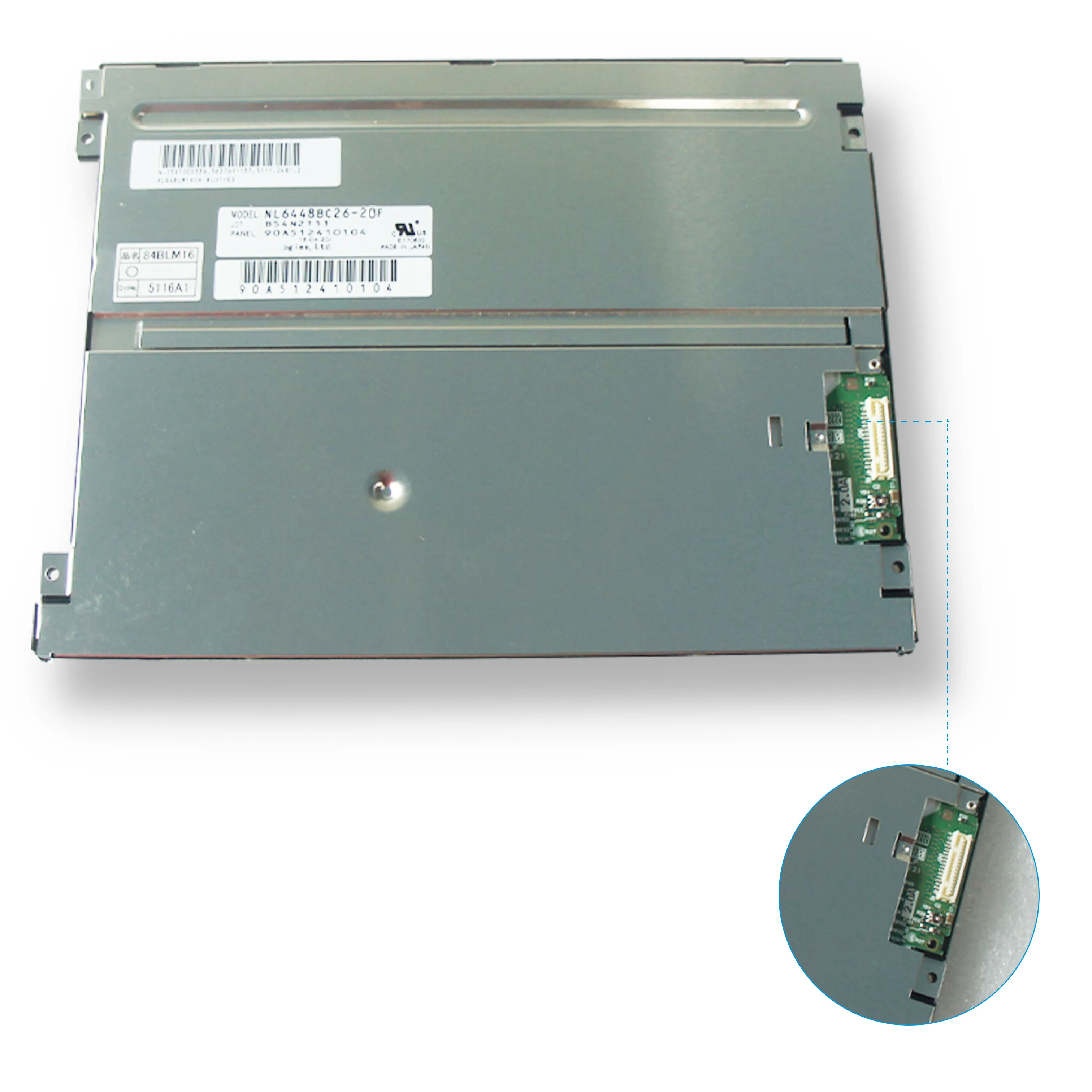

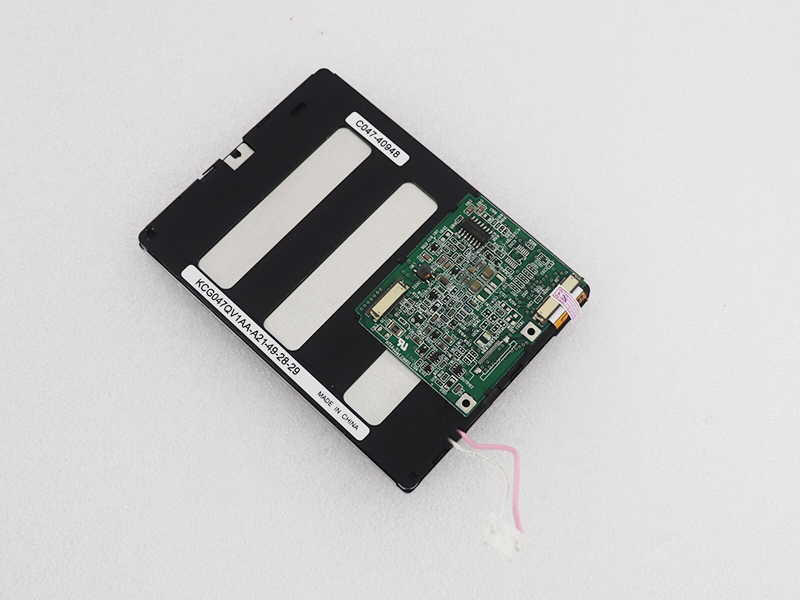
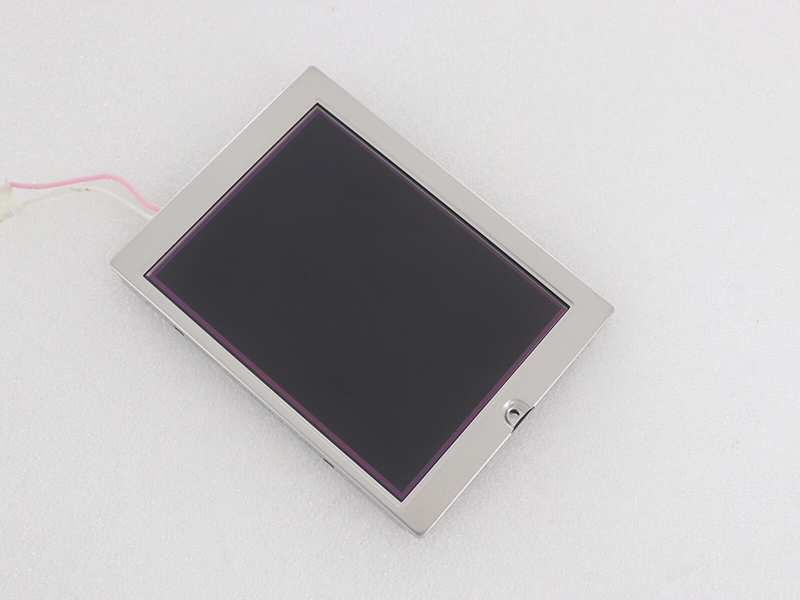
a-Si STN-LCD Panel 4.7" 320*240 for Kyocera KCG047QV1AA-A21
In the landscape of industrial display technology, specific components often operate behind the scenes, driving critical applications in medical devices, avionics, and rugged instrumentation. The Kyocera KCG047QV1AA-A21, a 4.7-inch a-Si STN-LCD panel with a 320*240 resolution, represents a fascinating intersection of mature technology and niche reliability. While modern consumer electronics have largely shifted to high-resolution TFT and AMOLED displays, the domain of industrial and embedded systems still relies on the inherent advantages of Super Twisted Nematic (STN) technology. This article delves deep into the architecture, operational characteristics, and application-specific value of this particular panel. We will explore why a "low-resolution" display remains relevant in high-stakes environments, how the amorphous silicon (a-Si) process influences its performance, and the critical considerations for engineers and procurement specialists seeking replacement or design-in solutions. The KCG047QV1AA-A21 is not merely an outdated screen; it is a carefully engineered component optimized for longevity, contrast, and predictable performance under challenging conditions.
At the heart of the Kyocera KCG047QV1AA-A21 lies a specific variant of passive matrix LCD technology. The term a-Si stands for amorphous silicon, which is the semiconductor material used to fabricate the thin-film transistors (TFTs) that control individual pixels. However, unlike active matrix TFT-LCDs where each pixel has its own transistor, STN-LCDs are passive matrix displays. The a-Si material in this context is used to create the row and column drivers and the complex electrode structures within the glass substrate. The "Super Twisted Nematic" (STN) effect is crucial here. It utilizes a higher twist angle of the liquid crystal molecules—typically 240 to 270 degrees—compared to the 90-degree twist in standard TN panels. This increased twist angle significantly improves the slope of the electro-optical response curve, allowing for a higher multiplexing ratio. For a 320*240 resolution QVGA panel, this means 240 rows must be addressed sequentially. The sharp threshold voltage characteristic of STN ensures that rows can be addressed without significant crosstalk, maintaining acceptable contrast. The trade-off is slower response times and a narrower viewing angle compared to active matrix technologies, but the benefit is substantially lower power consumption and a simpler, more robust manufacturing process. This makes a-Si STN panels ideal for applications where update rates are low but reliability and low power are paramount.
The physical dimensions and optical specifications of the KCG047QV1AA-A21 are meticulously tailored for specific use cases. A 4.7-inch diagonal with a native resolution of 320x240 pixels (QVGA) yields a pixel density of approximately 85 pixels per inch (PPI). While this appears coarse by smartphone standards, it is perfectly adequate for displaying alphanumeric data, waveforms, and simple graphical user interfaces at typical viewing distances in an industrial panel or diagnostic device. The aspect ratio is 4:3, which is standard for many legacy and industrial software architectures. One of the defining characteristics of this STN panel is its color or monochrome variant. Depending on the specific backlight and polarizer configuration, typical Kyocera STN panels in this series offer a yellow-green or blue-mode display, often with a 1/4 VGA duty cycle. The contrast ratio, while lower than TFT (typically ranging from 10:1 to 25:1 for STN), is highly dependent on viewing angle and temperature. The display is optimized for an operating temperature range of -20°C to +70°C, making it suitable for outdoor or industrial environments. The viewing cone is often specified as 6 o'clock or 12 o'clock, meaning optimal contrast is achieved when looking from a specific angle relative to the panel surface. This is a critical consideration for engineers designing the user interface layout. The backlight is typically a CCFL (Cold Cathode Fluorescent Lamp) or an LED edge-lit solution, with brightness around 200–350 cd/m², sufficient for indoor use but requiring careful bezel design to mitigate glare in high-ambient-light conditions.
Integrating the KCG047QV1AA-A21 into a system requires a thorough understanding of its electrical interface. This panel typically employs a parallel interface, often an 8-bit or 16-bit data bus, coupled with standard control signals such as HSYNC, VSYNC, DOTCLK, and Display Enable. The specific pinout and timing requirements are documented in the Kyocera datasheet, which is essential reading for any hardware engineer. The interface does not include a built-in frame buffer; the display controller (often a dedicated IC like the Epson S1D13700 or a custom ASIC) must continuously refresh the screen by cycling through all 240 rows. This imposes a significant burden on the host microcontroller or FPGA. The driver ICs are typically chip-on-glass (COG) or chip-on-flex (COF), which miniaturizes the module but requires careful handling during assembly. For legacy replacements, a common challenge is the voltage requirements. STN panels require multiple voltage levels for row and column drivers (often +5V, +10V, and -10V), which must be generated by an external DC-DC converter. Power management is critical; the panel's current consumption can be as low as 10-30mA in standby, but the driver circuitry may draw 50-150mA during active operation. Designers must also account for the display's response time which can be 150-300ms for rise and fall, meaning fast-moving images will exhibit significant blurring. This is not a flaw but a characteristic of the technology, perfectly acceptable for static or slow-update applications.
The persistence of the Kyocera KCG047QV1AA-A21 in the market is a testament to its suitability for specialized industrial applications. Its primary strength is in medical equipment, such as portable patient monitors and diagnostic tools, where the ability to display vital signs with high readability under varying light conditions is more important than video playback. The low power consumption and wide operating temperature range make it an excellent choice for hand-held test equipment, gas detectors, and weather stations. Another critical sector is retrofit and replacement for legacy systems. A large installed base of machinery in manufacturing, printing, and aerospace from the 1990s and 2000s used these exact panels. When a display fails, replacing it with a TFT alternative often requires a complete UI software rewrite due to different interface timings, backlight voltage, and aspect ratios. The KCG047QV1AA-A21 provides a drop-in replacement solution that preserves the original system's functionality. Furthermore, in military and avionics, sunlight readability via reflective or transflective polarizers is often achievable, reducing the need for high-power backlights. The technology's inherent immunity to image sticking (ghost images) compared to early TFTs is also a distinct advantage. For these reasons, Kyocera continues to manufacture and support this panel line, ensuring long-term supply for critical infrastructure.
For procurement and reliability engineers, the KCG047QV1AA-A21 presents a unique set of considerations. Kyocera, as a Tier-1 Japanese manufacturer, subjects its STN panels to rigorous quality control, often achieving a Mean Time Between Failures (MTBF) exceeding 50,000 hours at 25°C. This translates to roughly 5.7 years of continuous operation. The key failure modes are backlight degradation (particularly with CCFL) and driver IC bond failure due to thermal cycling. The amorphous silicon layer itself is stable over time, but the liquid crystal fluid can degrade if exposed to UV light or extreme temperatures outside its specification. Managing obsolescence is a critical aspect. While the panel is still in production, designers should consider a Lifecycle Extension Strategy. This involves maintaining stock of critical components (driver ICs, backlights) or establishing a Last Time Buy (LTB) contract with Kyocera. A significant challenge is that modern interface ICs (e.g., for HDMI or LVDS) are not natively compatible with this parallel interface. If a system needs a TFT upgrade, it requires a complex conversion board that includes a frame buffer and timing generator. From a reliability standpoint, the passive matrix architecture offers a failure mode advantage: if one row driver fails, it typically results in a single horizontal line loss rather than a massive block of dead pixels seen in active matrix panels. This graceful degradation is highly valued in safety-critical applications.
When sourcing the Kyocera KCG047QV1AA-A21, whether for a new design or a repair, attention to detail is paramount. The exact part number often includes suffixes that denote the backlight type (e.g., -A21 for a specific LED variant), polarizer type (transmissive, transflective, reflective), and touch panel option. Counterfeit modules are a real risk in the open market; sourcing directly from Kyocera or an authorized distributor is strongly recommended. For new designs, the question must be asked: Is STN the right choice? If the requirement is for a simple, text-heavy, or waveform-display application where low power consumption is non-negotiable and video is irrelevant, this panel is an excellent candidate. However, if the application demands high-definition graphics, fast response, or a wide viewing angle for multiple users, a TFT-LCD is necessary. A modern alternative might be a 4.3" or 5.0" TFT with an integrated controller but this often requires a complete hardware and software redesign. Key specifications to verify in the datasheet include the multiplexing ratio (1/240), operating voltage range (typically +3.0 to +5.5V for logic), and viewing direction. Engineers should also request a copy of the Optical Data Report which details the precise gamma curves and contrast ratios across the viewing cone. Finally, always check the RoHS compliance and REACH statements. The KCG047QV1AA-A21 remains a viable, reliable, and well-supported component for the right application, but its adoption requires a clear understanding of its technical boundaries.
1. Q: What is the main difference between STN and TFT display technology?
A: TFT (Thin-Film Transistor) is active matrix, offering faster response, higher contrast, and wider viewing angles. STN (Super Twisted Nematic) is passive matrix, which is slower, has lower contrast but consumes significantly less power and is more robust for simple displays.
2. Q: Is the Kyocera KCG047QV1AA-A21 a color or monochrome display?
A: It is typically a monochrome display, available in yellow-green or blue-mode (white/blue) variants. The color is determined by the polarizer and backlight. It does not display thousands of colors like a TFT.
3. Q: What is the typical lifespan (MTBF) of this panel?
A: Kyocera specifies an MTBF of 50,000 hours at 25°C. The backlight (especially CCFL) is the first component to degrade; LED backlights last longer, often exceeding 100,000 hours.
4. Q: What are the typical voltage requirements for this panel?
A: It requires a logic voltage (typically 3.3V or 5V) and multiple driver voltages, often including +10V and -10V generated by a DC-DC converter. The exact requirements are in the datasheet.
5. Q: Can I replace a broken KCG047QV1AA-A21 with a modern TFT panel?
A: Not directly. The interface (parallel) and timing are completely different. A TFT upgrade requires a custom interface board with a frame buffer and likely a software driver change.
6. Q: What is the viewing angle of this STN panel?
A: It has a narrow viewing cone, typically optimized for a 6 o'clock or 12 o'clock direction. The contrast ratio drops significantly when viewed from the side. It is not a multi-user display.
7. Q: Is this panel suitable for outdoor use?
A: It can be, if a transflective (partially reflective) polarizer is used. Without it, the CCFL/LED backlight is too dim for direct sunlight. The wide temperature range (-20 to +70°C) is suitable for outdoor enclosures.
8. Q: How do I drive this display from a microcontroller?
A: You need a host controller with a parallel bus (8-bit or 16-bit) and enough memory to store a 320x240 frame buffer. Dedicated graphics controllers like the Epson S1D13700 are commonly used.
9. Q: What does the "CG047QV1AA" part number mean?
A: CG often denotes "Color Graphics" (though it's monochrome in this context), 047 is the diagonal size (4.7"), QV is QVGA resolution (320x240), and 1AA is a Kyocera internal code. The "-A21" specifies the exact backlight and polarizer configuration.
10. Q: What are common failure modes for this panel?
A: Backlight failure (CCFL flicker or dimming), driver IC or chip-on-glass bond failure due to mechanical stress or thermal cycling, and occasionally row/column line shorts.
Conclusion: The Enduring Value of Purpose-Built Technology
The Kyocera KCG047QV1AA-A21 stands as a compelling example of how a technology that is decades old can remain a first-choice solution for specific, demanding environments. It is not a display for a modern smartphone, nor is it intended to be. Its value lies in its measured performance: a reliable, low-power, robust panel designed to display critical information predictably over a long operational life. For engineers managing legacy systems, it offers a known-quantity replacement path. For designers of new industrial, medical, or instrumentation products, it presents a valid alternative to the complexity and power consumption of modern TFTs. The decision to use this panel should be based on a clear assessment of application needs—prioritizing data readability over graphics richness, low power over fast response, and field reliability over consumer aesthetics. In an era obsessed with the latest display innovations, the humble a-Si STN-LCD reminds us that engineering excellence is not about chasing specifications, but about matching a component to its purpose with precision and foresight. For those applications, the KCG047QV1AA-A21 is not just a part; it is a solution.