- Industrial LCD display
-
Industrial Products
- DC Servo Drive
- AC Servo Drive
- other
- Heidelberg
- FANUC
- IFM
- Meter
- CCD
- Membrane Keypad
- Film
- YOKOGAWA Module
- Card
- ABB
- MITSUBISHI
- FANUC
- KEYENCE
- BECKHOFF
- Honeywell
- HOLLYSYS
- FUJI servo drives
- HP
- solenoid valve
- thermostat
- Siemens adapter
- color oscilloscope
- Fujitsu connector
- CHELIC
- SMC
- CISCO Module
- INTEL
- Key board
- FAIRCHILD
- Motherboard
- Board
- Bearing
- other
- Control Panel
- Contactor
- Circuit
- OMRON
- Relay
- Controller
- Photoelectric Switch
- Photoelectric Sensor
- Original
- Fan
- Motor Driver
- Limit Switch
- Amplifier
- power supply
- LENZE
- Cable
- Encoder
- Sensor
- Transformer
- Fiber Optic Sensor
- Protection Relay
- Temperature Controller
- Proximity Switch
- Switch Sensor
- Siemens
- Industrial board
- HMI Touch Glass
-
HMI Full Machine Whole unit
- OMRON HMI Touch Panel
- Siemens HMI Touch Panel
- Mitsubishi HMI Touch Panel
- Allen-Bradley automation HMI Touch Panel
- DELTA HMI Touch Panel
- EVIEW DELTA HMI Touch Panel
- KINCO DELTA HMI Touch Panel
- HITECH HMI Touch Panel
- WEINTECK HMI Touch Panel
- TECVIEW HMI Touch Panel
- WEINVIEW HMI Touch Panel
- PRO-FACE HMI Touch Panel
- SIMATIC HMI Touch Panel
- AMPIRE HMI Touch Panel
- HEIDELBERG HMI Touch Panel
- PANASONIC HMI Touch Panel
- PATLITE HMI Touch Panel
- KYOCERA HMI Touch Panel
- KEYENCE HMI Touch Panel
- WEINVIEW HMI Touch Panel
- HITECH HMI Touch Panel
- FUJI HMI Touch Panel
- HAKKO HMI Touch Panel
- SCHNEIDER HMI Touch Panel
- SAMKOON touch panel
- other
- Module
- lcd inverter
- Membrane Keypad Switch
- Winni Touch Screens
- Frequency Inverter
- Servo Motor
- PLC


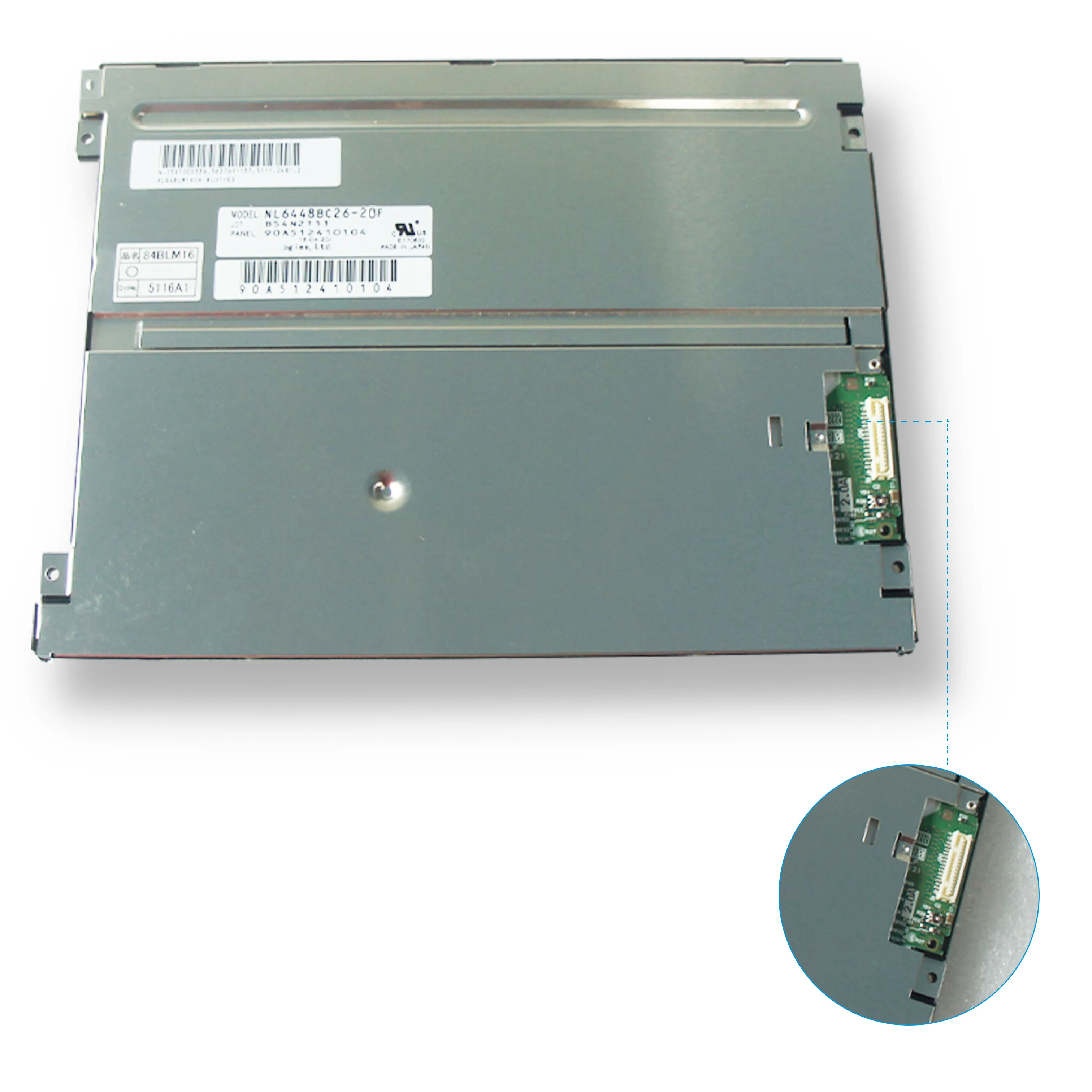

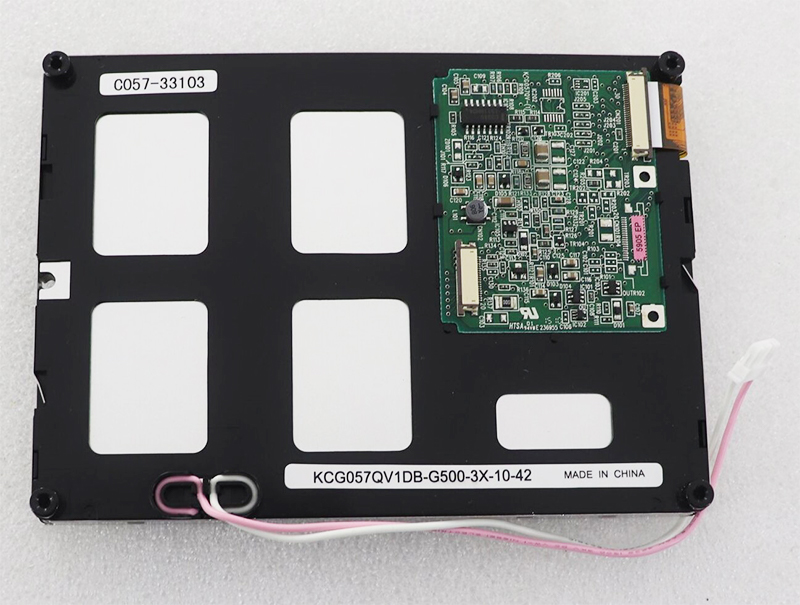
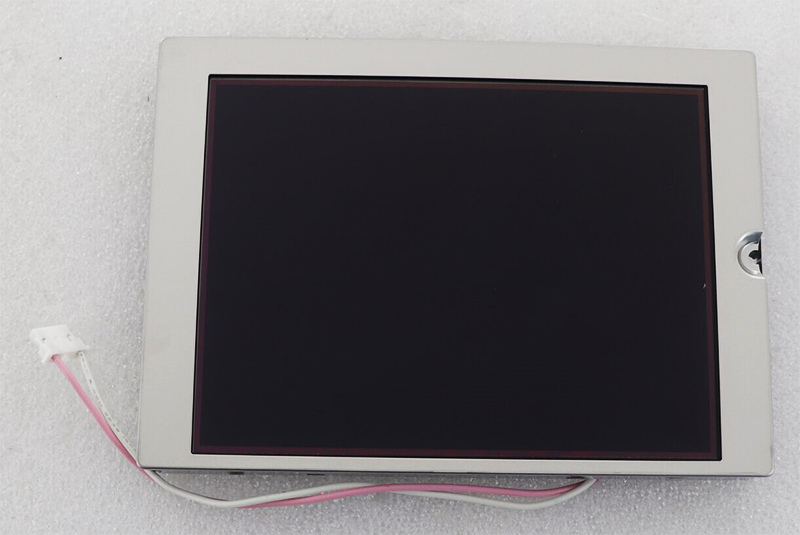
a-Si TFT-LCD Panel KCG057QV1DB-G500 5.7"
In the competitive landscape of industrial display technology, the a-Si TFT-LCD Panel KCG057QV1DB-G500 5.7" stands as a paragon of reliability and functional precision. While consumer electronics often chase higher resolutions and flexible form factors, the industrial sector demands robustness, consistent performance under varied environmental stress, and long-term availability. This specific panel, manufactured by Kyocera (formerly Optrex), is a quintessential component in mission-critical applications ranging from medical ventilators to heavy machinery HMI (Human-Machine Interfaces).
This article provides a deep, technical exploration of the KCG057QV1DB-G500. We will dissect its architecture, focusing on the amorphous silicon (a-Si) backplane technology that defines its cost-efficiency and stability. We will analyze its optical characteristics, interface specifications, and the demanding environmental standards it meets. Beyond the datasheet, we will evaluate its role in modern system design, including supply chain considerations and replacement strategies. The goal is to equip engineers, procurement specialists, and system integrators with the actionable knowledge required to deploy this component effectively.
At the heart of the KCG057QV1DB-G500 lies an amorphous Silicon (a-Si) thin-film transistor (TFT) backplane. Unlike Low-Temperature Polycrystalline Silicon (LTPS) or Oxide TFTs, a-Si is a mature, well-understood technology. Its primary advantage in this context is extremely low leakage current when the transistor is in the off-state. While a-Si TFTs have lower electron mobility—meaning they cannot switch as fast as LTPS—this is irrelevant for an industrial display operating at standard 60Hz refresh rates.
The key benefit is uniformity. A-Si deposition processes are highly consistent across large glass substrates, resulting in fewer pixel defects. Furthermore, a-Si panels exhibit superior performance over temperature extremes. They do not suffer from the threshold voltage shifts that can plague Oxide TFTs in high-temperature environments. For a 5.7" panel used in a factory floor control unit or a diagnostic medical device, this thermal stability is non-negotiable. The technology also allows for a simpler, more cost-effective manufacturing process, ensuring the KCG057QV1DB-G500 can be produced with high yield rates, which directly contributes to its long product lifecycle—a critical factor for industrial equipment certification and maintenance schedules.
The KCG057QV1DB-G500 is not merely a standard transmissive LCD; it is engineered for high brightness. With a typical luminance of 600 cd/m², this panel significantly outperforms generic consumer-grade displays. This high brightness is achieved through a combination of a high-efficiency LED backlight and an optimized light guide plate. The backlight typically consists of a string of long-life white LEDs, designed for uptime exceeding 70,000 hours.
To achieve true sunlight readability, the panel requires optical bonding—a process where a touch panel or cover glass is laminated to the module using a transparent adhesive. This eliminates the air gap, reducing surface reflections from 15-18% down to under 1%. The native TN (Twisted Nematic) technology of the panel offers fast response times (typically under 10ms) but has narrower viewing angles. However, in many industrial applications (e.g., an ATM kiosk or a medical pump), the view is head-on, making TN's cost and speed advantages ideal. The polarizers are specifically selected to enhance contrast ratios in high-ambient-light conditions, ensuring that data is legible even when the sun is directly behind the operator.
The KCG057QV1DB-G500 utilizes a 6-bit LVDS (Low-Voltage Differential Signaling) interface. This is the industry standard for small- to medium-sized industrial panels, offering high noise immunity over long cable runs—a crucial factor in electrically noisy industrial environments. The panel supports a single-channel LVDS link. System designers must match the pinout of their graphics controller exactly to the panel's specific defined pattern in the datasheet.
The resolution is QVGA (320 x 240 pixels). While this may seem low compared to modern smartphones, it is a deliberate design choice. In a 5.7" diagonal, this yields a pixel pitch that is large enough to be easily readable from a distance and highly tolerant of dust or minor display damage. The 4:3 aspect ratio is perfectly suited to list-based interfaces (patient data, machine parameters) or PLC ladder logic views. The panel does not require an external timing controller (TCON) in many cases, as the LVDS receiver and TCON are integrated into the driver ICs on the panel's PCB. This simplifies system integration, reduces BOM cost, and lowers the risk of signal integrity issues.
This panel is built to withstand the harshest environments. It operates across a broad temperature range, typically from -20°C to +70°C. This allows its use in outdoor equipment exposed to freezing conditions or inside a hot, unventilated electrical cabinet. The storage temperature range is even wider, accommodating global logistics.
Mechanically, the module is robust. It is mounted using a metal bezel that provides structural rigidity and heat dissipation. The LED backlight is designed for constant current driving to prevent flicker and extend lifespan. The panel also features a mounting flange on the sides, allowing for secure attachment to the chassis of the final product, which prevents vibration-induced damage. The careful internal packaging prevents dust ingress during operation. The panel's form factor adheres to industry-standard cutouts, making it a drop-in replacement for many older Optrex or Kyocera models, which significantly reduces the engineering cost of product lifecycle upgrades.
One of the most valuable attributes of the KCG057QV1DB-G500 is its long-term availability. Kyocera explicitly designs these panels for a 5 to 7-year active production lifecycle, with an additional 5-year after-sales support commitment. This is a stark contrast to high-volume consumer panels which may be discontinued within 18 months. For an FDA-approved medical device or a safety-certified industrial controller, requalifying a new display is a monumental expense. The stable supply chain of this panel mitigates that risk.
System integrators should, however, be aware of last-time buy (LTB) opportunities and stockpile critical quantities if the panel enters its end-of-life notification phase. Additionally, the use of the a-Si technology means panel specs (e.g., exact CIE color coordinates) may drift slightly between production lots, but remain within the defined tolerances. Using the panel's model number revision code (e.g., G500, G510) ensures you are sourcing the most current, fully qualified version. It is also compatible with many mechanical modifications, such as adding a custom optical bonding or a resistive touch screen, without requiring a complete redesign of the display driver board.
In a market with 5.7" panels from AUO, Tianma, and Innolux, the KCG057QV1DB-G500 differentiates itself through exacting quality standards. Kyocera's factory yields are among the highest in the industry, leading to fewer dead pixels and line defects. While a Tianma equivalent might be cheaper, the Kyocera panel is selected for applications where zero failure is the goal. The viewing angle is a key differentiator: the TN panel has very poor vertical and horizontal angles compared to an IPS panel from a competitor. However, the response time of the Kyocera TN panel is faster than most comparable IPS panels in this form factor, making it superior for displaying rapidly changing data without ghosting.
The power consumption is optimized, drawing approximately 4-5 watts for the backlight and about 0.5 watts for the logic, making it suitable for battery-backed or low-power embedded systems. Ultimately, the choice for an KCG057QV1DB-G500 is a choice for predictable performance. You are paying a premium for a guaranteed consistency that allows your product to pass compliance testing (UL, CE, FCC) with minimal surprises. Its strong brand recognition also simplifies procurement for large OEMs with strict supplier qualification lists.
FAQS
Q: What is the exact resolution of the KCG057QV1DB-G500?
A: It is QVGA resolution: 320 x 240 pixels.
Q: Is this panel suitable for touch screen integration?
A: Yes, it is ideally used with a resistive or capacitive touch panel applied via optical bonding. The air gap between the sensor and display should be minimized for sunlight readability.
Q: What is the typical lifespan of the LED backlight?
A: The backlight is rated for 70,000 hours of operation before brightness decreases to 50% of its initial value (L70), depending on ambient temperature and drive current.
Q: Can this panel be used outdoors?
A: Yes, but only if paired with optical bonding and a high-transmissivity cover glass. The native 600 cd/m² brightness is adequate for shaded outdoor use.
Q: What is the interface type?
A: It uses a single-channel 6-bit LVDS interface.
Q: How does this compare to an IPS panel in terms of viewing angle?
A: It has inferior viewing angles (typically 70/70/40/50 degrees). It is best suited for head-on viewing.
Q: Is this panel RoHS compliant?
A: Yes, it is RoHS and REACH compliant.
Q: What is the operating temperature range?
A: It operates from -20°C to +70°C.
Q: Does the panel require a separate backlight inverter?
A: No, the backlight is driven by an integrated LED driver circuit on the panel's PCB. You only need to apply a DC voltage (typically 12V).
Q: Where is this panel most commonly used?
A> It is standard in medical ventilators, patient monitors, industrial HMIs, automated teller machines (ATMs), and CNC machine controllers.
Conclusion
The KCG057QV1DB-G500 is a testament to the philosophy that best-in-class does not always mean highest specification, but rather most appropriate for the environment. Its combination of a mature, stable a-Si backplane, high-brightness transmissive display, and robust LVDS interface creates a product that excels in the industrial and medical domains. While it cedes ground to modern panels in terms of pixel density or viewing angles, it dominates in the metrics that truly matter for critical systems: reliability, temperature tolerance, supply chain stability, and ease of integration.
For any engineer designing a product that must operate reliably for a decade, the choice often comes down to trusting a known quantity. The KCG057QV1DB-G500 is that known quantity. It is not a device for its own sake, but a finely tuned tool that allows the final product—be it a life-saving medical device or a factory automation system—to perform flawlessly. Understanding its strengths and its limitations is the first step toward leveraging its full potential. When deployed correctly, this 5.7" panel is not just a display; it is the most reliable window into the data that drives our modern world.