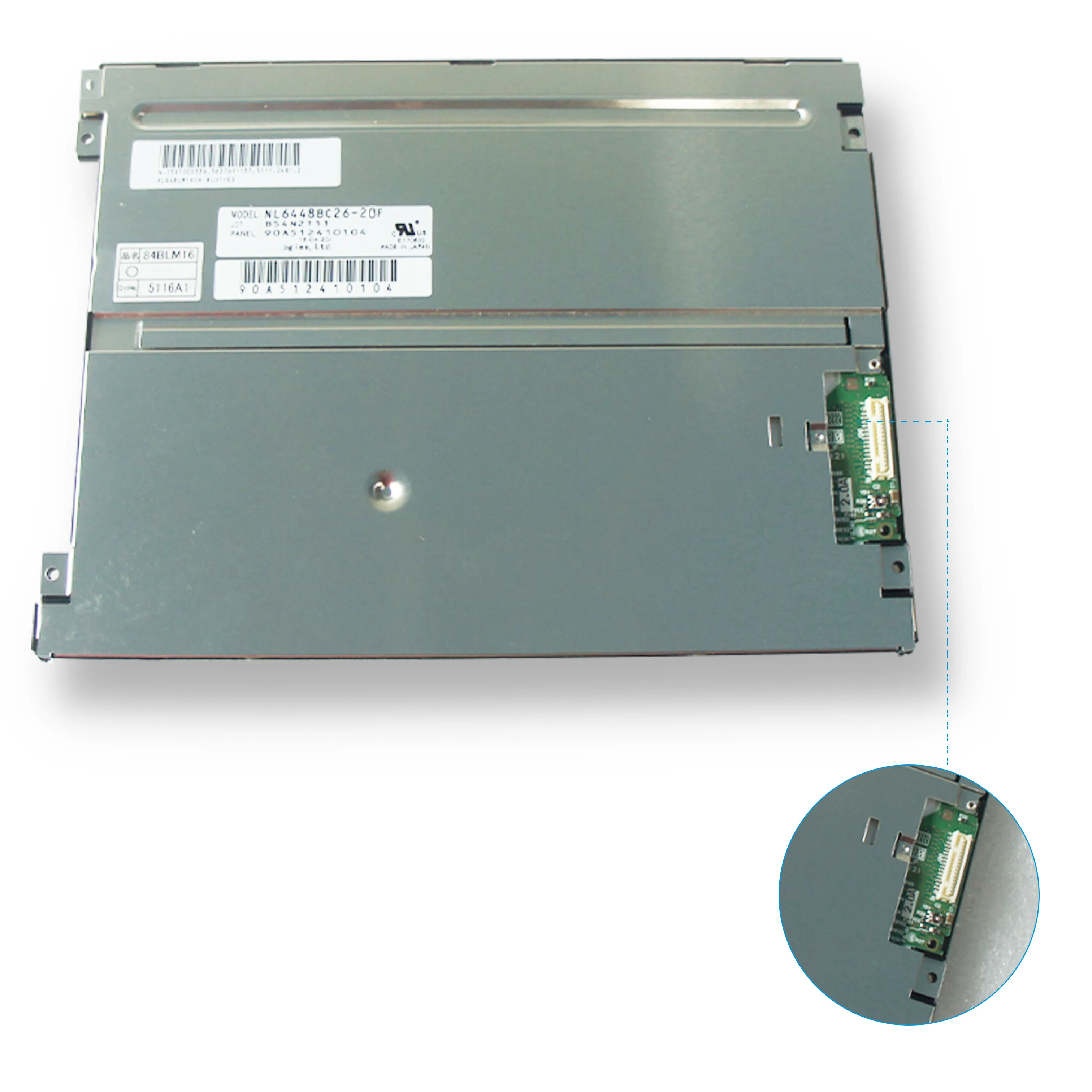
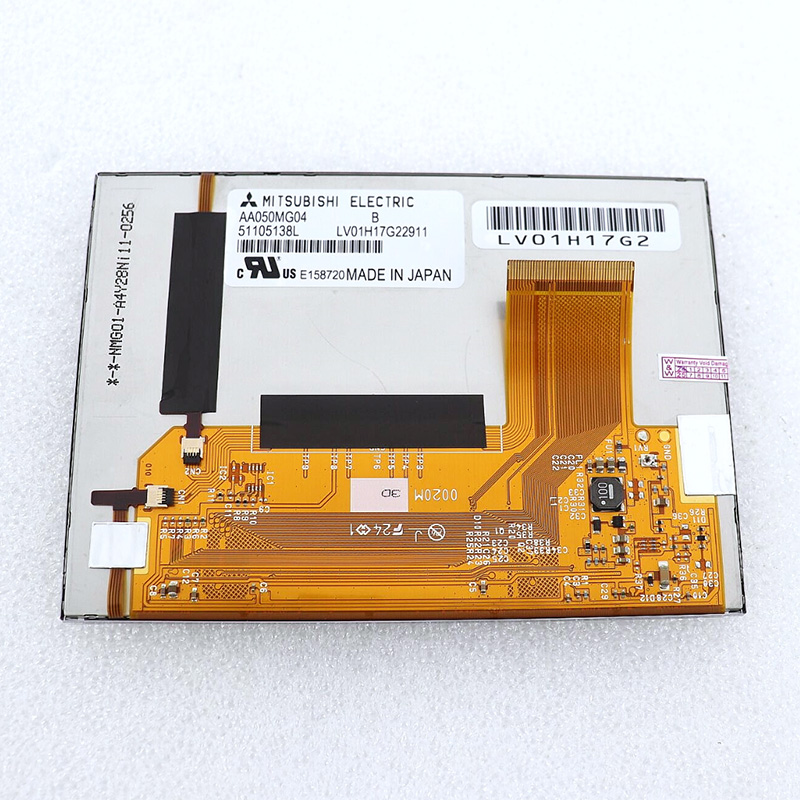
AA050MG04 Mitsubishi TFT LCD Screen
In the intricate world of industrial automation, medical imaging, and specialized display applications, the performance and reliability of the visual interface are non-negotiable. At the heart of many such critical systems lies a component often unseen but fundamentally vital: the AA050MG04 Mitsubishi TFT LCD screen. This 5-inch display module, engineered by the precision-focused Mitsubishi Electric, represents more than just a panel; it embodies a convergence of durability, clarity, and technological refinement tailored for environments where failure is not an option.
This article delves into a comprehensive analysis of the AA050MG04. We will move beyond basic specifications to explore its core technological architecture, the unique value proposition it offers in a competitive market, and its ideal application landscapes. Furthermore, we will provide practical guidance on integration, discuss its long-term operational considerations, and contextualize its position within the broader ecosystem of industrial displays. Our aim is to furnish engineers, procurement specialists, and system integrators with the deep, actionable insights necessary to evaluate this component for their most demanding projects.
Core Technology and Architectural Design
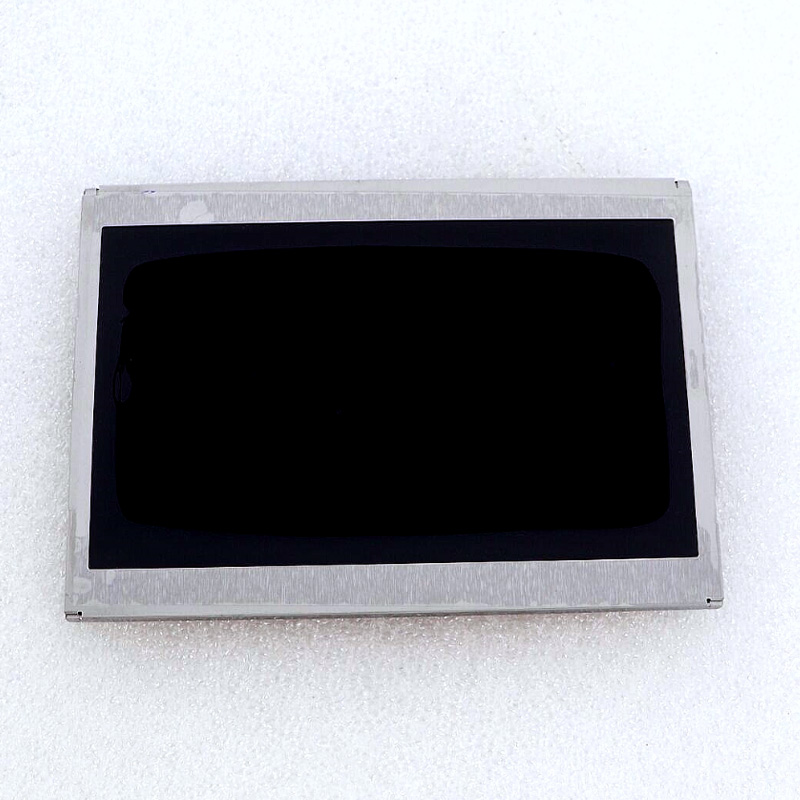
The foundation of the AA050MG04's reliability is its advanced TFT-LCD architecture. It features a 5.0-inch diagonal screen with a resolution of 800 x RGB x 480 (WVGA), providing a balanced pixel density for sharp text and graphic rendering in compact spaces. Utilizing a transmissive display type with an integrated CCFL backlight, it delivers consistent luminance and wide viewing angles, crucial for panels that may be viewed from off-axis positions in machinery or medical carts. At its heart lies a precise a-Si (amorphous Silicon) TFT process, which ensures stable and uniform transistor performance across the panel. The module is fully integrated, containing the driver ICs, controller, and power circuitry, presenting a single, simplified interface to the host system. This level of integration reduces design complexity for engineers, shifting the burden of signal timing, voltage regulation, and EMI management to the proven design of the Mitsubishi module itself, thereby accelerating development cycles and mitigating risk.
Defining Characteristics and Competitive Edge
What truly differentiates the AA050MG04 in a marketplace filled with generic TFT modules are its industrial-grade construction and performance guarantees. Its operating temperature range, typically from -20°C to +70°C, immediately signals its suitability for non-climate-controlled environments like factory floors, transportation, or outdoor kiosks. The high brightness output, often reaching 400 cd/m² or more, ensures readability under harsh ambient lighting conditions. Furthermore, Mitsubishi's stringent quality control and the use of high-reliability components translate into a mean time between failures (MTBF) figure that surpasses consumer-grade displays. This module is built for continuous operation, resisting the vibrations, electrical noise, and thermal cycling that would cause lesser displays to falter. Its competitive edge isn't about being the cheapest, but about offering the lowest total cost of ownership through unwavering performance and longevity in mission-critical applications.
Primary Application Landscapes and Use Cases
The AA050MG04 finds its purpose in sectors where equipment must perform with precision and dependability. In industrial automation, it serves as the human-machine interface (HMI) for PLCs, CNC machine controls, and test/measurement equipment, where it must reliably convey system status and parameters. The medical device industry utilizes it in portable diagnostic units, patient monitoring systems, and surgical tool interfaces, where clarity and accuracy are directly tied to patient outcomes. Additional applications include point-of-sale (POS) systems in retail, information displays in public transportation, and control panels for specialized instrumentation. In each case, the selection of the AA050MG04 is driven by a common need: a display that functions not as a standalone device, but as a seamless, robust component within a larger, more complex system that cannot afford display-related downtime.
Integration Essentials and Interface Protocol
Successfully integrating the AA050MG04requires a clear understanding of its interface. It employs a parallel RGB interface, which, while being a mature and widely supported technology, demands careful attention to signal integrity in layout. Designers must adhere to the module's strict timing requirements for data, clock, and sync signals as outlined in its datasheet to ensure a stable image. Power sequencing is another critical consideration. The module requires multiple voltage rails (e.g., for logic, analog, and the backlight inverter). Applying these voltages in the incorrect order can damage the panel. Mitsubishi's documentation provides a precise power-on/off sequence that must be followed. Additionally, designers must account for the CCFL backlight's high-voltage AC drive, ensuring proper inverter design and shielding to prevent electromagnetic interference with other sensitive circuitry.
Longevity, Maintenance, and Obsolescence Planning
Investing in an industrial component like the AA050MG04 is a long-term decision. Its design life far exceeds that of consumer displays, but proactive planning is still essential. The primary wear component is the CCFL backlight, which will gradually dim over tens of thousands of hours of operation. Understanding the expected luminance half-life is key for applications where consistent brightness is critical, potentially informing scheduled maintenance or replacement cycles. In the fast-moving electronics industry, component obsolescence is a reality. While Mitsubishi has a strong track record of supporting its industrial product lines for extended periods, system architects should engage with authorized distributors to understand lifecycle forecasts. Exploring compatible alternative modules or considering last-time-buy strategies at the appropriate time are prudent steps to protect the production lifecycle of the end equipment.
The Ecosystem: Compatible Controllers and Supply Chain
The AA050MG04 does not operate in isolation. Its value is fully realized when paired with compatible controllers and sourced through reliable channels. Many system designers opt for single-board computers (SBCs) or embedded controllers that feature native LVDS or parallel RGB outputs, simplifying the connection. A thriving ecosystem of interface converter boards (e.g., from TTL to LVDS) also exists to bridge compatibility gaps with various host systems. Procurement should be conducted through authorized or highly reputable specialist distributors. This is crucial to guarantee receipt of genuine, factory-fresh modules, not reclaimed or counterfeit parts that could compromise system integrity. These specialists also provide vital technical support and lifecycle information, becoming partners in the product's integration and long-term deployment.
FAQs: AA050MG04 Mitsubishi TFT LCD Screen
Q1: What is the screen size and resolution of the AA050MG04?A: It is a 5.0-inch diagonal TFT LCD with a resolution of 800 x 480 pixels (WVGA).
Q2: What type of backlight does it use?A: It uses a CCFL (Cold Cathode Fluorescent Lamp) backlight, known for its wide viewing angle and consistent white point.
Q3: What is its operating temperature range?A: It is designed for industrial temperatures, typically operating from -20°C to +70°C.
Q4: What is the main interface for this display?A: It features a parallel RGB (TTL) interface for connecting to a host controller or processor.
Q5: Is this module suitable for medical devices?A: Yes, its reliability, clarity, and stable performance make it a common choice for portable medical and diagnostic equipment.
Q6: How do I drive the CCFL backlight?A: An external high-voltage AC inverter circuit is required, which must be designed to match the lamp's electrical characteristics.
Q7: Can it be used in sunlight-readable applications?A: With a high brightness of ~400 cd/m², it performs well in bright indoor conditions, but for direct sunlight, a higher-brightness panel or optical bonding may be needed.
Q8: What are the key considerations for power supply design?A: Strict adherence to the recommended power sequencing and provision of clean, stable voltage rails (e.g., 3.3V, 5.0V, 12.0V for backlight) are critical.
Q9: Is the AA050MG04 still in production?A: Product lifecycle status changes; you must check with Mitsubishi Electric or an authorized distributor for current production and obsolescence schedules.
Q10: Where can I buy genuine AA050MG04 modules?A: Purchase from authorized Mitsubishi Electric distributors or established industrial electronic component suppliers to ensure authenticity.
Conclusion
The Mitsubishi AA050MG04 TFT LCD module stands as a testament to engineered reliability in a world of commoditized displays. Its significance extends far beyond its basic specifications of size and resolution, residing instead in its robust construction, wide operational margins, and proven performance in challenging environments. This analysis has highlighted that its true value is realized when it is understood not merely as a display, but as a system-critical component with specific integration needs and a long-term lifecycle. For engineers and designers building systems where downtime is costly and performance is paramount, the AA050MG04 offers a compelling solution. The decision to utilize it is an investment in reduced design risk, enhanced product durability, and ultimately, end-user trust. By carefully considering its technology, application fit, and integration requirements outlined here, professionals can leverage this industrial-grade display to build interfaces that are not only seen but depended upon, day after day, in the most demanding applications.