- Industrial LCD display
-
Industrial Products
- DC Servo Drive
- AC Servo Drive
- other
- Heidelberg
- FANUC
- IFM
- Meter
- CCD
- Membrane Keypad
- Film
- YOKOGAWA Module
- Card
- ABB
- MITSUBISHI
- FANUC
- KEYENCE
- BECKHOFF
- Honeywell
- HOLLYSYS
- FUJI servo drives
- HP
- solenoid valve
- thermostat
- Siemens adapter
- color oscilloscope
- Fujitsu connector
- CHELIC
- SMC
- CISCO Module
- INTEL
- Key board
- FAIRCHILD
- Motherboard
- Board
- Bearing
- other
- Control Panel
- Contactor
- Circuit
- OMRON
- Relay
- Controller
- Photoelectric Switch
- Photoelectric Sensor
- Original
- Fan
- Motor Driver
- Limit Switch
- Amplifier
- power supply
- LENZE
- Cable
- Encoder
- Sensor
- Transformer
- Fiber Optic Sensor
- Protection Relay
- Temperature Controller
- Proximity Switch
- Switch Sensor
- Siemens
- Industrial board
- HMI Touch Glass
-
HMI Full Machine Whole unit
- OMRON HMI Touch Panel
- Siemens HMI Touch Panel
- Mitsubishi HMI Touch Panel
- Allen-Bradley automation HMI Touch Panel
- DELTA HMI Touch Panel
- EVIEW DELTA HMI Touch Panel
- KINCO DELTA HMI Touch Panel
- HITECH HMI Touch Panel
- WEINTECK HMI Touch Panel
- TECVIEW HMI Touch Panel
- WEINVIEW HMI Touch Panel
- PRO-FACE HMI Touch Panel
- SIMATIC HMI Touch Panel
- AMPIRE HMI Touch Panel
- HEIDELBERG HMI Touch Panel
- PANASONIC HMI Touch Panel
- PATLITE HMI Touch Panel
- KYOCERA HMI Touch Panel
- KEYENCE HMI Touch Panel
- WEINVIEW HMI Touch Panel
- HITECH HMI Touch Panel
- FUJI HMI Touch Panel
- HAKKO HMI Touch Panel
- SCHNEIDER HMI Touch Panel
- SAMKOON touch panel
- other
- Module
- lcd inverter
- Membrane Keypad Switch
- Winni Touch Screens
- Frequency Inverter
- Servo Motor
- PLC


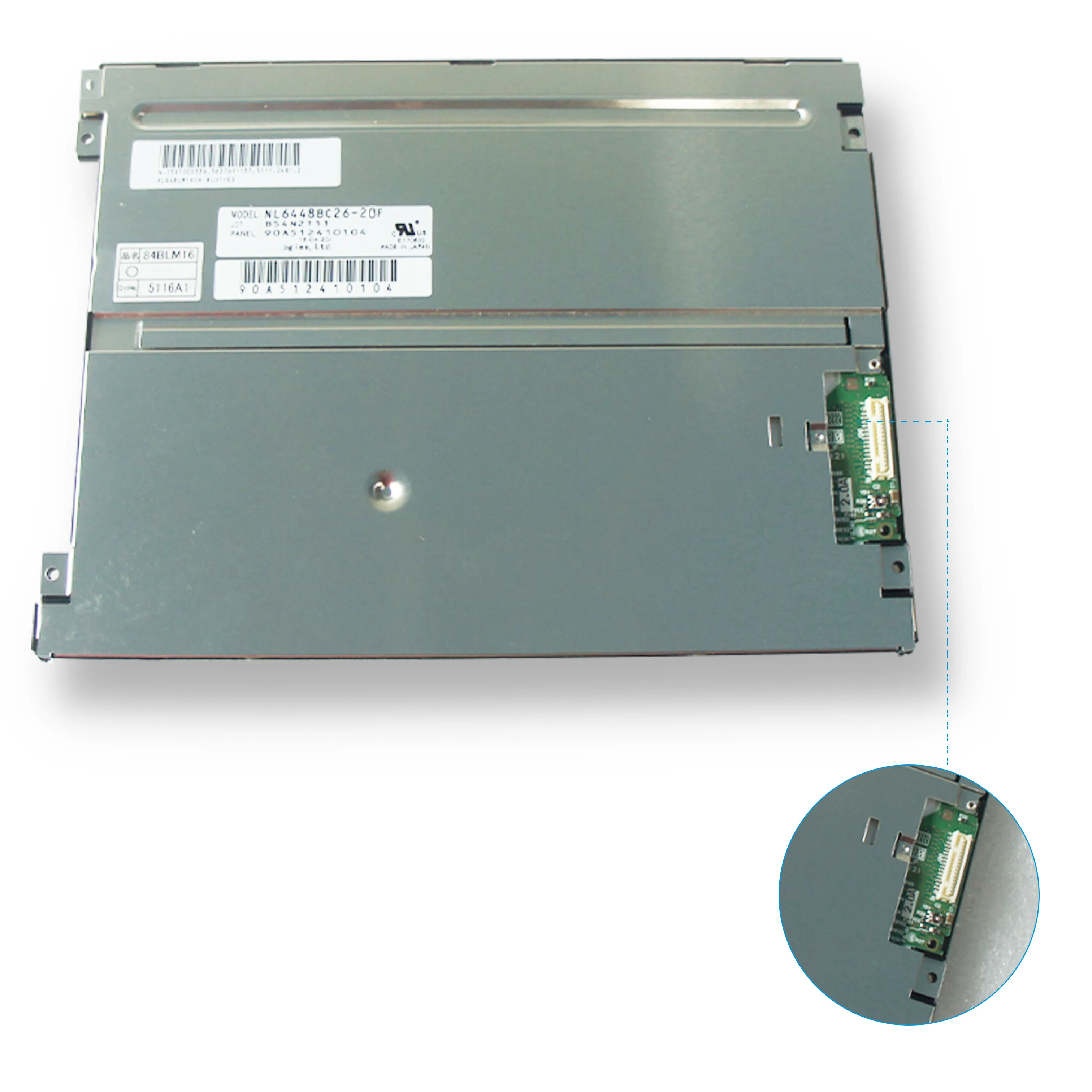


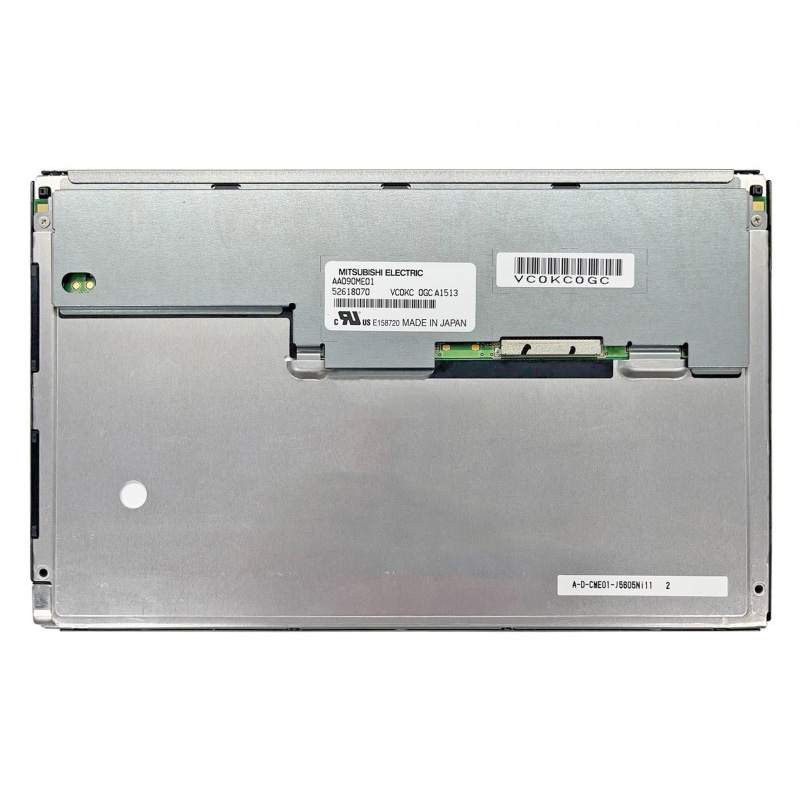
In the intricate world of electronic displays, the selection of a TFT-LCD panel is a critical decision that directly impacts the functionality, user experience, and manufacturability of a device. Among the myriad of specifications and part numbers, one specific model stands out for its balanced combination of size, resolution, and interface: the AA090ME01. This 9.0-inch display module, with its 800 x 480 pixel resolution and 20-pin interface, represents a cornerstone component for a wide range of industrial, automotive, and consumer applications.
This article delves into a comprehensive technical and practical analysis of the AA090ME01 panel. We will move beyond basic datasheet parameters to explore its architectural significance, the implications of its key specifications, and its ideal application environments. By understanding the synergy between its physical characteristics and electrical interface, engineers, procurement specialists, and product designers can make informed decisions about integrating this versatile display into their projects, ensuring optimal performance and reliability.
Decoding the Nomenclature: Understanding the AA090ME01
The part number AA090ME01 is not arbitrary; it is a coded identifier that reveals essential attributes of the panel. Typically, such codes break down as follows: "AA" may denote the series or manufacturer code, "090" clearly indicates the 9.0-inch diagonal screen size, "M" often refers to the module type, "E" could specify the revision or backlight type, and "01" is frequently the version number. This standardized naming convention allows for quick identification in supply chains and technical documentation.
More importantly, this naming points to a specific ecosystem. A 9.0-inch display with 800x480 resolution (often termed WVGA) targets applications where screen real estate is valuable but cost must be controlled. The inclusion of "for 20 pins" is crucial, as it defines the physical and electrical gateway for communication. This pin count typically supports RGB interface signals, power, backlight control, and touch panel connections (if integrated), making it a versatile yet standardized solution for embedding into larger systems.
The Significance of 9.0-Inch WVGA Resolution
The choice of a 9.0-inch diagonal with an 800 x 480 (WVGA) resolution represents a calculated balance between usability and efficiency. Physically, this size is large enough to present substantial information clearly—ideal for control panels, portable devices, or in-vehicle displays—without becoming cumbersome or excessively power-hungry. The pixel density, while not high-definition, is perfectly adequate for displaying user interfaces, readouts, maps, and video feeds in industrial and commercial settings.
From a design perspective, this resolution simplifies processing requirements. Driving an 800x480 panel demands less graphical processing power and memory bandwidth compared to full HD or higher displays, leading to lower system cost and reduced power consumption. The aspect ratio (approximately 16:9 widescreen) is also a standard, ensuring broad compatibility with content and interface design tools. This makes the AA090ME01 a practical workhorse, offering a clear visual experience optimized for functionality rather than ultra-high-fidelity media consumption.
Anatomy of the 20-Pin Interface: Connectivity and Control
The 20-pin interface is the lifeline of the AA090ME01 module. This connector standardizes how the panel receives power, data, and control signals. A typical pinout assignment includes multiple pins for RGB color data (often 6 bits per color), horizontal and vertical sync signals, a pixel clock, and data enable lines. This constitutes a parallel RGB interface, a common and robust method for driving TFT-LCDs directly from microcontrollers or application processors.
Beyond video data, the interface dedicates pins for power supply (VCC and GND) and backlight control. The backlight circuit, usually LED-based in modern modules, may have separate pins for anode, cathode, and brightness adjustment (PWM dimming). If the module includes a resistive or capacitive touch overlay, the connector will also allocate pins for the touchscreen controller's signals (e.g., X+, X-, Y+, Y-). This all-in-one connectivity within a 20-pin footprint simplifies board design and cabling, reducing integration complexity.
Optical and Performance Characteristics
Evaluating the AA090ME01 requires a deep dive into its optical performance specs, which define the user's visual experience. Key parameters include brightness (typically measured in nits), contrast ratio, viewing angles (expressed as left/right/up/down in degrees), and color gamut. For industrial or outdoor use, a higher brightness level (e.g., 500 nits or more) is critical for readability in brightly lit environments. A wide viewing angle, ensured by the type of LCD technology (like IPS or TN), allows the screen to be seen correctly from various positions.
Other vital characteristics include the operating temperature range, which determines the panel's suitability for harsh environments like automotive dashboards or factory floors. Response time affects motion clarity, important for dynamic content. The backlight lifetime (often rated in hours) is a crucial reliability metric. Understanding these specs in the context of the target application is essential—what works for a indoor retail kiosk may fail in a sun-exposed marine navigation device.
Primary Application Domains and Use Cases
The AA090ME01 finds its home in applications where durability, clarity, and cost-effectiveness converge. A primary domain is industrial human-machine interfaces (HMIs) for machinery control, PLC monitoring, and test equipment. Its size allows for comprehensive data visualization, and its robust interface ensures stable communication in electrically noisy environments.
In the automotive aftermarket and commercial vehicle sector, this panel is ideal for infotainment systems, rear-seat entertainment, GPS navigation units, and fleet management displays. Furthermore, it serves consumer and commercial appliances such as advanced kitchen appliances, smart home control panels, point-of-sale (POS) terminals, and portable medical devices. Its versatility stems from its standard interface and balanced performance profile, making it a go-to component for embedded system designers across industries.
Integration Considerations and Best Practices
Successfully integrating the AA090ME01 into a product involves several critical engineering considerations. First, power supply design must be clean and stable, with proper decoupling to avoid noise in the displayed image. The timing of the RGB interface signals must match the panel's datasheet requirements precisely; even minor deviations can cause display artifacts or failure.
Second, mechanical integration is key. Designers must account for the module's exact dimensions, bezel size, mounting hole positions, and connector location. Thermal management should be considered, especially if the device will operate at high ambient temperatures. For the backlight, implementing a PWM dimming circuit allows for brightness control and can extend LED life. Finally, sourcing a reliable LCD controller board or developing a custom driver circuit compatible with the 20-pin interface is a fundamental step in bringing the display to life.
FAQs: AA090ME01 TFT-LCD Panel
10. Where is this panel commonly used?Common applications include industrial HMIs, automotive aftermarket displays, POS systems, medical devices, and appliance control panels.
Conclusion
The AA090ME01 9.0-inch TFT-LCD panel exemplifies how a well-specified component can become a fundamental building block in embedded design. Its balanced attributes—a sufficiently large WVGA display driven through a standardized 20-pin parallel interface—create a versatile solution that bridges the gap between basic functionality and complex visual requirements. By understanding its technical nuances, from optical performance to integration protocols, engineers can leverage its strengths effectively.
Ultimately, selecting a display like the AA090ME01 is not merely a procurement task; it is a strategic design decision. It demands consideration of the end-user environment, system architecture, and long-term reliability. When matched appropriately to its application, this panel provides a reliable, clear, and cost-effective window into the digital world, proving that in the realm of industrial electronics, optimized performance often trumps sheer specification numbers.