- Industrial LCD display
-
Industrial Products
- DC Servo Drive
- AC Servo Drive
- other
- Heidelberg
- FANUC
- IFM
- Meter
- CCD
- Membrane Keypad
- Film
- YOKOGAWA Module
- Card
- ABB
- MITSUBISHI
- FANUC
- KEYENCE
- BECKHOFF
- Honeywell
- HOLLYSYS
- FUJI servo drives
- HP
- solenoid valve
- thermostat
- Siemens adapter
- color oscilloscope
- Fujitsu connector
- CHELIC
- SMC
- CISCO Module
- INTEL
- Key board
- FAIRCHILD
- Motherboard
- Board
- Bearing
- other
- Control Panel
- Contactor
- Circuit
- OMRON
- Relay
- Controller
- Photoelectric Switch
- Photoelectric Sensor
- Original
- Fan
- Motor Driver
- Limit Switch
- Amplifier
- power supply
- LENZE
- Cable
- Encoder
- Sensor
- Transformer
- Fiber Optic Sensor
- Protection Relay
- Temperature Controller
- Proximity Switch
- Switch Sensor
- Siemens
- Industrial board
- HMI Touch Glass
-
HMI Full Machine Whole unit
- OMRON HMI Touch Panel
- Siemens HMI Touch Panel
- Mitsubishi HMI Touch Panel
- Allen-Bradley automation HMI Touch Panel
- DELTA HMI Touch Panel
- EVIEW DELTA HMI Touch Panel
- KINCO DELTA HMI Touch Panel
- HITECH HMI Touch Panel
- WEINTECK HMI Touch Panel
- TECVIEW HMI Touch Panel
- WEINVIEW HMI Touch Panel
- PRO-FACE HMI Touch Panel
- SIMATIC HMI Touch Panel
- AMPIRE HMI Touch Panel
- HEIDELBERG HMI Touch Panel
- PANASONIC HMI Touch Panel
- PATLITE HMI Touch Panel
- KYOCERA HMI Touch Panel
- KEYENCE HMI Touch Panel
- WEINVIEW HMI Touch Panel
- HITECH HMI Touch Panel
- FUJI HMI Touch Panel
- HAKKO HMI Touch Panel
- SCHNEIDER HMI Touch Panel
- SAMKOON touch panel
- other
- Module
- lcd inverter
- Membrane Keypad Switch
- Winni Touch Screens
- Frequency Inverter
- Servo Motor
- PLC


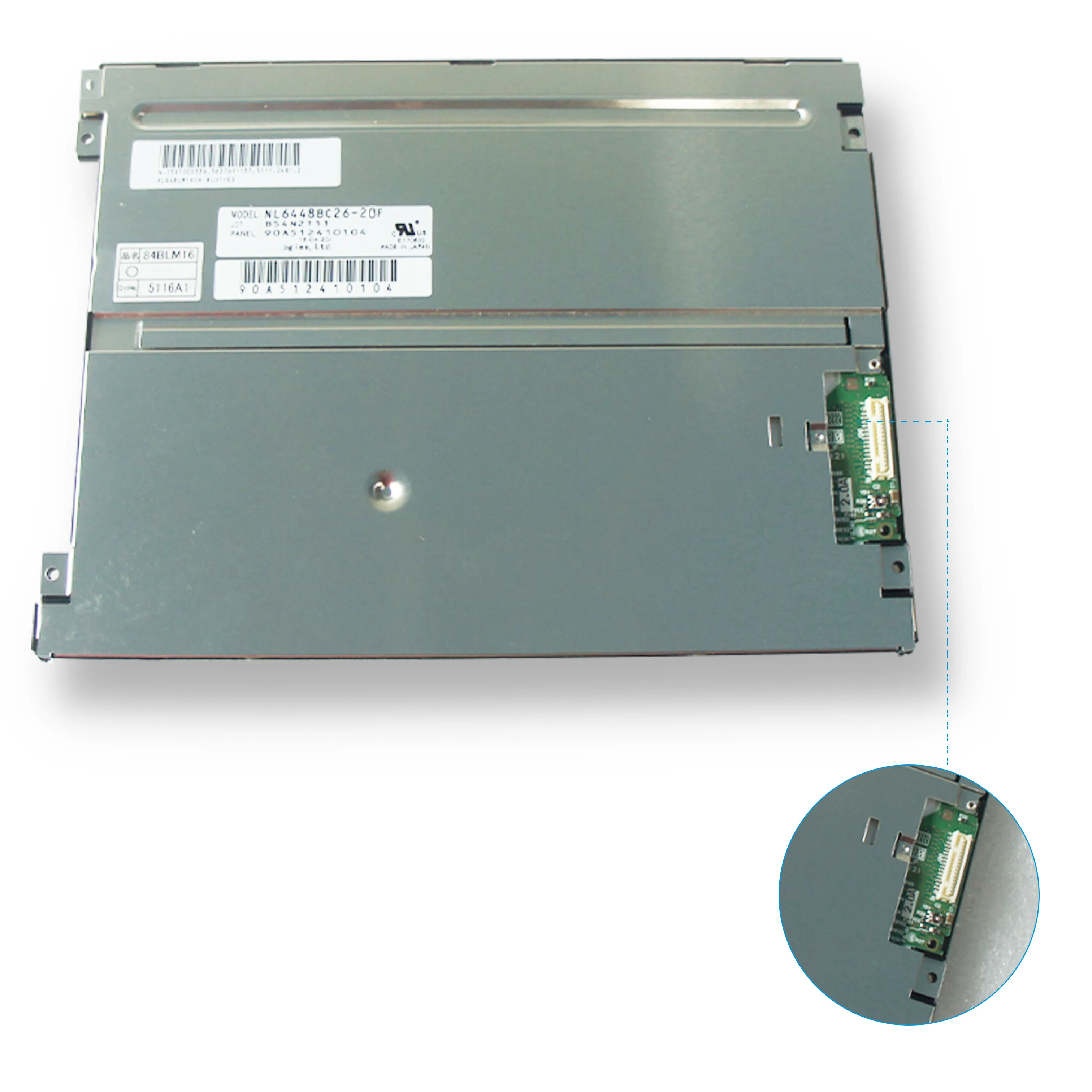


AA104VC09 Mitsubishi 10.4" 640×480 LCD display panel
In the intricate world of industrial automation, medical imaging, and specialized human-machine interfaces (HMIs), the display panel is far more than a simple window to data. It is a critical component that dictates usability, reliability, and system integrity. Among the myriad of options, the AA104VC09 from Mitsubishi Electric stands out as a notable and enduring solution. This 10.4-inch LCD panel, with its characteristic 640 x 480 (VGA) resolution, represents a specific era of display technology engineered not for consumer glamour, but for unwavering performance in demanding environments.
This article delves deep into the technical essence and practical applications of the Mitsubishi AA104VC09. We will move beyond basic specifications to explore why this particular panel has carved its niche, examining its underlying technology, inherent strengths, and ideal use cases. Furthermore, we will contextualize it within the modern landscape, addressing its compatibility, longevity, and the crucial considerations for integration and replacement. For engineers, system integrators, and procurement specialists, understanding the full profile of this component is key to making informed decisions for both legacy system maintenance and new, ruggedized designs.
Decoding the Specification: A Legacy of Clarity and Stability
The Mitsubishi AA104VC09 is built around a 10.4-inch diagonal active area, utilizing a twisted nematic (TN) liquid crystal technology. Its native resolution of 640 x 480 pixels, known as VGA, may seem modest by today's standards, but it was the bedrock of industrial and professional visualization for decades. This lower pixel density, coupled with the panel's physical size, results in large, easily discernible pixels, reducing eye strain in monitoring applications where operators scan for anomalies over long periods.
The panel typically features a high-brightness backlight, often in the range of 400-450 nits, ensuring readability under strong ambient light found on factory floors or in medical settings. Its contrast ratio and color performance are tuned for clarity of data and graphics rather than photographic reproduction, often excelling in monochrome or defined color palette applications. The interface is traditionally LVDS (Low-Voltage Differential Signaling), a robust and noise-resistant standard for internal display connections, highlighting its design intent as an integrated component within a larger system rather than a standalone monitor.
The Engineering Philosophy: Ruggedness and Long-Term Reliability
Mitsubishi engineered the AA104VC09 with a philosophy centered on operational endurance. Unlike consumer-grade panels with planned obsolescence, industrial panels like this are designed for continuous operation, often rated for tens of thousands of hours of backlight life. The materials and construction are chosen to withstand wider temperature ranges, vibration, and humidity—common challenges in industrial control cabinets, transportation, or outdoor equipment.
The stability of the TN technology is a key factor here. While offering narrower viewing angles compared to modern IPS panels, TN technology is known for its fast response times (minimizing motion blur) and, historically, its superior longevity and resistance to image persistence or "burn-in." This makes the AA104VC09 exceptionally suitable for static or semi-static display content, such as SCADA system schematics, diagnostic readouts, or machine control interfaces, where an unchanging menu bar or logo could permanently damage less robust screen types.
Primary Application Domains: Where the AA104VC09 Excels
The true value of this panel is revealed in its application domains. Its primary home is in Industrial Automation and Process Control. Here, it serves as the visual interface for PLCs (Programmable Logic Controllers), CNC machines, and factory automation systems, where its ruggedness and clarity are paramount.
Secondly, it has found significant use in Medical and Diagnostic Equipment. Older but still vital ultrasound machines, patient monitors, and laboratory analyzers often utilize this panel. Its reliability and consistent performance are non-negotiable in life-critical environments. A third major domain is in Transportation and Infrastructure, such as in-cab displays for heavy machinery, rail control systems, or public information kiosks, where readability and durability trump ultra-high resolution.
Integration and Compatibility Considerations
Integrating the AA104VC09 is not a plug-and-play USB affair. As a bare panel, it requires a compatible LCD controller board to function. This controller interprets the video signal from the source (e.g., a PC's VGA output) and converts it into the precise LVDS signaling the panel understands. The compatibility is defined by the panel's specific pin assignment, voltage requirements, and timing controller (T-CON) specifications.
Therefore, replacement or new integration demands careful matching. Using an incompatible controller can result in no image, distorted colors, or permanent damage. For legacy system maintenance, sourcing the original Mitsubishi-specified controller or a verified third-party equivalent is crucial. For new designs, engineers must ensure the entire signal chain, from graphics source to controller to panel, is meticulously aligned.
The Modern Context: Legacy Support vs. Contemporary Alternatives
In today's market, the AA104VC09 is firmly a legacy component. Mitsubishi has likely ceased direct production, with supply maintained through existing stock and specialized distributors. Its continued relevance is driven by the long lifecycles of industrial and medical equipment. Manufacturers must support fielded systems for 15-20 years, creating a sustained demand for exact or compatible replacements to avoid costly system redesigns.
When designing new systems, engineers now weigh this proven technology against modern alternatives like IPS panels with higher resolutions and wider viewing angles. The choice hinges on the application's needs: if the environment is harsh, the content static, and the signal chain built around VGA/LVDS, the AA104VC09's proven reliability can still be the superior choice. For applications requiring touch interaction, wide viewing, or detailed imagery, newer panels are more appropriate.
Sourcing, Verification, and Future-Proofing
Sourcing the AA104VC09 requires vigilance. The market contains new old stock (NOS), refurbished panels, and lower-quality clones. Key verification steps include checking the exact model number label, inspecting for physical integrity, and, if possible, testing for brightness uniformity and absence of dead pixels. Partnering with reputable industrial electronic component suppliers is essential.
Future-proofing strategies involve several approaches. For critical systems, purchasing and storing spare panels is common. Another is "drop-in" compatible upgrades, where a modern panel with identical physical dimensions and interface is used, though this may require controller board adjustments. Ultimately, planning for a eventual technology refresh of the entire HMI subsystem is a necessary long-term consideration for system architects.
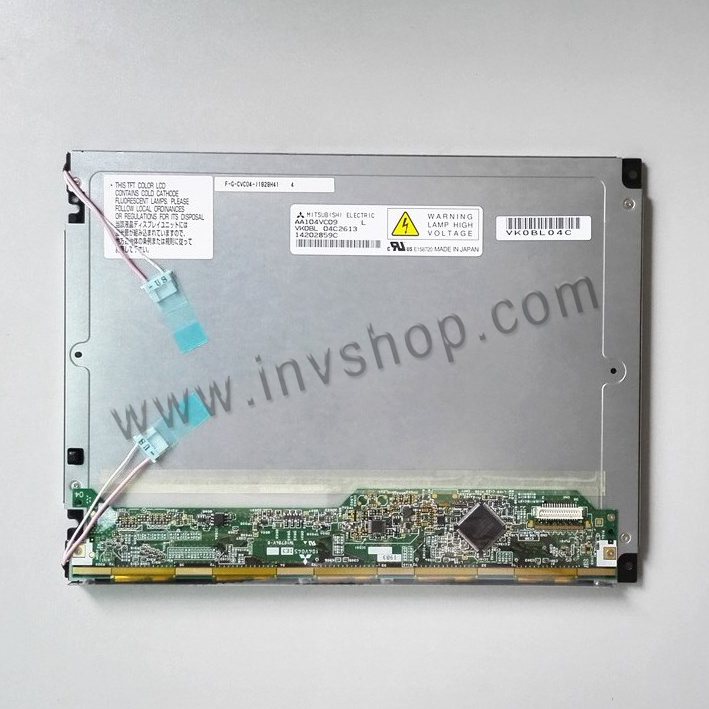
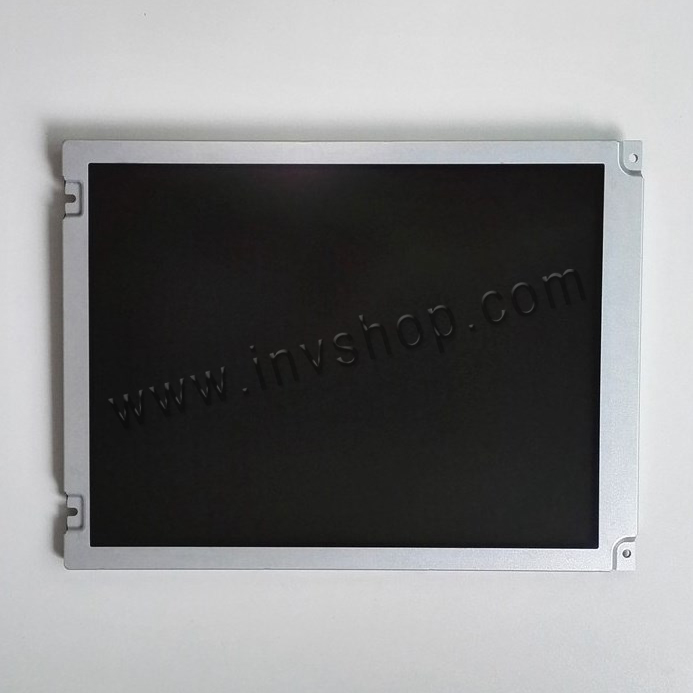
FAQs: Mitsubishi AA104VC09 Display Panel
Q10: Are there modern direct replacements?A10: Yes, some suppliers offer "drop-in" compatible panels with similar specs, but compatibility must be meticulously verified.
Conclusion
The Mitsubishi AA104VC09 is more than a simple display; it is a testament to an engineering ethos that prioritizes durability, stability, and clarity in environments where failure is not an option. Its enduring presence in the market underscores the vast difference between consumer-grade technology and industrial-grade components, where lifecycle measures in decades, not years.
For those maintaining critical legacy systems, understanding this panel's specifications, integration needs, and sourcing landscape is vital for ensuring continuous operation. For designers, its story offers a clear lesson: the optimal component is not always the one with the highest specs, but the one whose characteristics—be they VGA resolution, TN clarity, or rugged LVDS design—are perfectly aligned with the application's fundamental demands. In the right context, the AA104VC09 remains not just a viable solution, but an exemplary one.