- Industrial LCD display
-
Industrial Products
- DC Servo Drive
- AC Servo Drive
- other
- Heidelberg
- FANUC
- IFM
- Meter
- CCD
- Membrane Keypad
- Film
- YOKOGAWA Module
- Card
- ABB
- MITSUBISHI
- FANUC
- KEYENCE
- BECKHOFF
- Honeywell
- HOLLYSYS
- FUJI servo drives
- HP
- solenoid valve
- thermostat
- Siemens adapter
- color oscilloscope
- Fujitsu connector
- CHELIC
- SMC
- CISCO Module
- INTEL
- Key board
- FAIRCHILD
- Motherboard
- Board
- Bearing
- other
- Control Panel
- Contactor
- Circuit
- OMRON
- Relay
- Controller
- Photoelectric Switch
- Photoelectric Sensor
- Original
- Fan
- Motor Driver
- Limit Switch
- Amplifier
- power supply
- LENZE
- Cable
- Encoder
- Sensor
- Transformer
- Fiber Optic Sensor
- Protection Relay
- Temperature Controller
- Proximity Switch
- Switch Sensor
- Siemens
- Industrial board
- HMI Touch Glass
-
HMI Full Machine Whole unit
- OMRON HMI Touch Panel
- Siemens HMI Touch Panel
- Mitsubishi HMI Touch Panel
- Allen-Bradley automation HMI Touch Panel
- DELTA HMI Touch Panel
- EVIEW DELTA HMI Touch Panel
- KINCO DELTA HMI Touch Panel
- HITECH HMI Touch Panel
- WEINTECK HMI Touch Panel
- TECVIEW HMI Touch Panel
- WEINVIEW HMI Touch Panel
- PRO-FACE HMI Touch Panel
- SIMATIC HMI Touch Panel
- AMPIRE HMI Touch Panel
- HEIDELBERG HMI Touch Panel
- PANASONIC HMI Touch Panel
- PATLITE HMI Touch Panel
- KYOCERA HMI Touch Panel
- KEYENCE HMI Touch Panel
- WEINVIEW HMI Touch Panel
- HITECH HMI Touch Panel
- FUJI HMI Touch Panel
- HAKKO HMI Touch Panel
- SCHNEIDER HMI Touch Panel
- SAMKOON touch panel
- other
- Module
- lcd inverter
- Membrane Keypad Switch
- Winni Touch Screens
- Frequency Inverter
- Servo Motor
- PLC




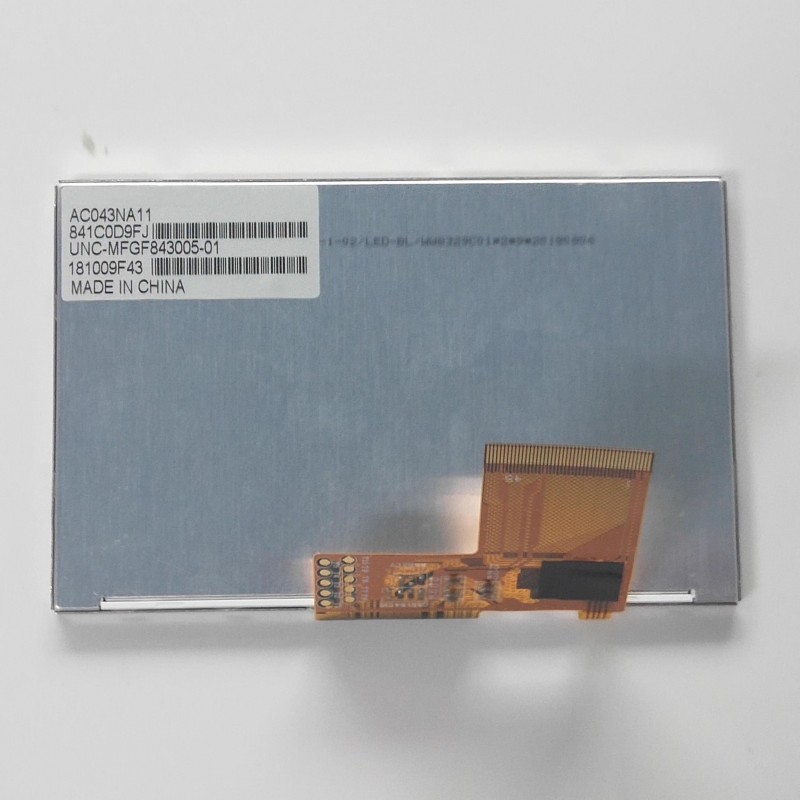
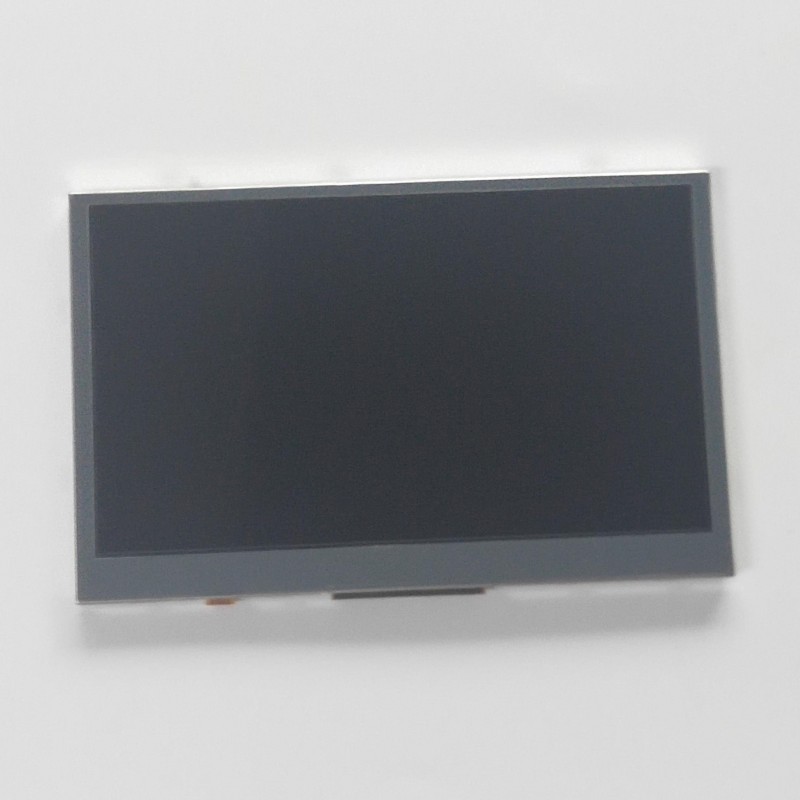
AC043NA11 Mitsubishi 4.3 inch 480*272 LCD PANEL
In the intricate world of industrial automation, human-machine interfaces (HMIs) serve as the critical bridge between complex machinery and human operators. The clarity, reliability, and performance of the display panel directly influence operational efficiency, error reduction, and system uptime. This article delves into a specific, yet pivotal, component that has found its niche across numerous demanding applications: the AC043NA11 Mitsubishi 4.3-inch LCD panel.
Far more than a simple screen, the AC043NA11 represents a carefully engineered solution designed for environments where standard commercial displays would falter. With its 480 x 272 pixel resolution, robust construction, and specific interface compatibility, it is a key element in systems ranging from factory floor PLC interfaces to medical devices and transportation controls. Our exploration will move beyond basic specifications to examine the technical rationale behind its design, its ideal use cases, and the tangible value it delivers to engineers, system integrators, and procurement specialists seeking durable and dependable visualization components.
Decoding the Specifications: More Than Just Numbers
At first glance, the AC043NA11 presents a set of straightforward specs: a 4.3-inch diagonal screen with a resolution of 480 x 272 (WQVGA). However, each parameter is a deliberate choice for its target market. The 4.3-inch size offers an optimal balance between information density and physical footprint, crucial for embedded systems where panel space is constrained. The 480x272 resolution, while not high-definition, provides sufficient clarity for displaying process variables, schematic diagrams, and control buttons without imposing excessive processing load on the connected controller, often a PLC or an embedded CPU.
Beyond size and pixels, critical specifications include its RGB interface, which is a standard parallel digital video input offering direct compatibility with many industrial-grade microprocessors and FPGAs. Its landscape orientation and typical aspect ratio are tailored for supervisory control layouts. Understanding these specs in context reveals the panel's purpose: it is built for functional clarity and system integration efficiency, not multimedia consumption.
The Engineering Philosophy: Durability in Demanding Environments
Mitsubishi's engineering for components like the AC043NA11 is driven by industrial imperatives. Unlike consumer electronics, this panel is designed for extended operational life under potentially harsh conditions. This involves careful selection of materials for the backlight unit and liquid crystal cell to ensure stable performance across a wide temperature range, often from -20°C to +70°C or similar. The panel typically features high brightness (measured in nits) to ensure readability under strong ambient light on factory floors or in outdoor kiosks.
Furthermore, reliability is paramount. The design focuses on minimizing failure points, employing robust solder joints and connectors that can withstand vibration—a common challenge in automotive or manufacturing applications. This philosophy of environmental resilience is what separates an industrial display from a commercial one, justifying its place in mission-critical systems where downtime is not an option.
Core Applications and Integration Scenarios
The AC043NA11 is not a one-size-fits-all product; it excels in specific verticals. Its primary domain is industrial automation, where it serves as the face of PLC-based control systems, CNC machine operator panels, and sensor monitoring stations. In medical technology, its reliability makes it suitable for non-critical patient monitoring devices or diagnostic equipment interfaces where consistent visual feedback is required.
Additional applications include transportation systems (for information displays in buses or trains), building automation (HVAC control panels), and point-of-sale terminals. In these scenarios, integration is key. Engineers value its standard interface, which simplifies the design-in process, allowing them to focus on application software rather than complex display driver development.
Compatibility and Replacement Considerations
A significant aspect of the AC043NA11's value proposition is its role as a direct form-fit-function replacement for other panels in its class. It is famously known as a compatible replacement for several panels used in Allen-Bradley PanelView and other industrial HMI units. For maintenance engineers and OEMs, this compatibility is crucial for extending the lifecycle of existing equipment.
When sourcing a replacement, one must verify not just the physical dimensions and mounting hole patterns, but also the electrical interface (pin-to-pin compatibility), voltage requirements for the backlight, and the logic voltage levels for the RGB signals. The AC043NA11 often matches these parameters precisely, providing a reliable, cost-effective solution for repairing legacy systems without a full hardware redesign.
Advantages Over Alternative Display Technologies
When compared to other options, the AC043NA11's strengths become clear. Against larger, higher-resolution touchscreens, it offers lower power consumption and reduced cost, both vital for embedded, high-volume applications. Compared to older monochrome or STN displays, it provides superior visual performance with color capability and better viewing angles.
Its most significant advantage lies in its proven reliability and supply chain stability from a reputable manufacturer like Mitsubishi. For an industrial designer, choosing a well-documented, widely used component like this mitigates risk. It ensures long-term availability, access to technical documentation, and community knowledge—factors often more important than chasing the latest display technology.
Future-Proofing and Obsolescence Management
In industrial electronics, component obsolescence is a constant challenge. The lifecycle of a control system may span 15-20 years, while display panels may be discontinued by manufacturers much sooner. Proactive management is essential. The AC043NA11 itself has become a standard part, but understanding its eventual phase-out path is important.
Strategies include last-time-buy procurement, identifying certified secondary sources (like the AC043NA11 as a replacement), and working with distributors specializing in lifecycle components. For new designs, considering modules with similar specifications but modern interfaces like LVDS or MIPI, while evaluating adapter solutions, can be a forward-looking approach. The goal is to ensure serviceability for decades.
FAQs: Your Questions Answered
Q10: What does "NA11" in the part number signify?A: The suffix often denotes specific revision, connector type, or backlight version. Always check the exact specification for your required variant.
Conclusion
The Mitsubishi AC043NA11 4.3-inch LCD panel exemplifies the principle that in industrial design, optimal performance is defined by context, not just by peak specifications. Its enduring relevance stems from a deliberate alignment with the core needs of embedded systems: robust construction, environmental resilience, straightforward integration, and long-term reliability. It serves as a vital, often unseen, component that facilitates clear communication between machines and their human overseers.
For engineers and procurement professionals, understanding this component's role transcends a simple purchase decision. It represents a strategic choice for system durability, maintenance planning, and lifecycle cost management. In a landscape increasingly dominated by disposable technology, the AC043NA11 stands as a testament to the value of purpose-built, reliable engineering that forms the dependable backbone of our automated world.