- Industrie-LCD-Display
-
Industrial Products
- DC Servo Drive
- AC Servo Drive
- other
- Heidelberg
- FANUC
- IFM
- Meter
- CCD
- Membrane Keypad
- Film
- YOKOGAWA
- Card
- ABB
- MITSUBISHI
- FANUC
- KEYENCE
- BECKHOFF
- Honeywell
- HOLLYSYS
- FUJI servo drives
- HP
- solenoid valve
- thermostat
- Siemens adapter
- color oscilloscope
- Fujitsu connector
- CHELIC
- SMC
- CISCO
- INTEL
- Key board
- FAIRCHILD
- Der Aufsichtsrat
- Board
- Bearing
- other
- Control Panel
- Contactor
- Circuit
- Omron
- Relais.
- Der controller
- Optoelektronische schalter
- Optoelektronische sensoren
- Original
- Fan
- Motortreiber
- Endschalter
- Verstärker
- power supply
- LENZE
- Cable
- Encoder
- Sensor
- Transformator
- Fiber Optic Sensor
- Schutzrelais
- Temperaturregler
- Näherungsschalter
- Switch Sensor
- Siemens
- PCB
- HMI Touch-Glas
-
HMI-Vollautomat Ganze Einheit
- OMRON HMI Touch Panel
- Siemens HMI Touch Panel
- Mitsubishi HMI Touch Panel
- Allen-Bradley Automatisierung HMI Touch
- DELTA HMI Touch Panel
- EVIEW DELTA HMI Touch Panel
- KINCO DELTA HMI Touch Panel
- HITECH HMI Touch Panel
- WEINTECK HMI Touch Panel
- TECVIEW HMI Touch Panel
- WEINVIEW HMI Touch Panel
- PRO-FACE HMI Touch Panel
- SIMATIC HMI Touch Panel
- AMPIRE HMI Touch Panel
- HEIDELBERG HMI Touch Panel
- PANASONIC HMI Touch Panel
- PATLITE HMI Touch Panel
- KYOCERA HMI Touch Panel
- KEYENCE HMI Touch Panel
- WEINVIEW HMI Touch Panel
- HITECH HMI Touch Panel
- FUJI HMI Touch Panel
- HAKKO HMI Touch Panel
- SCHNEIDER HMI Touch Panel
- SAMKOON touch panel
- andere
- Module
- LCD Wechselrichter
- Membran Tastenfeld Schalter
- Winni Touch Screens
- Frequenzumrichter
- Servo Motor
- PLC


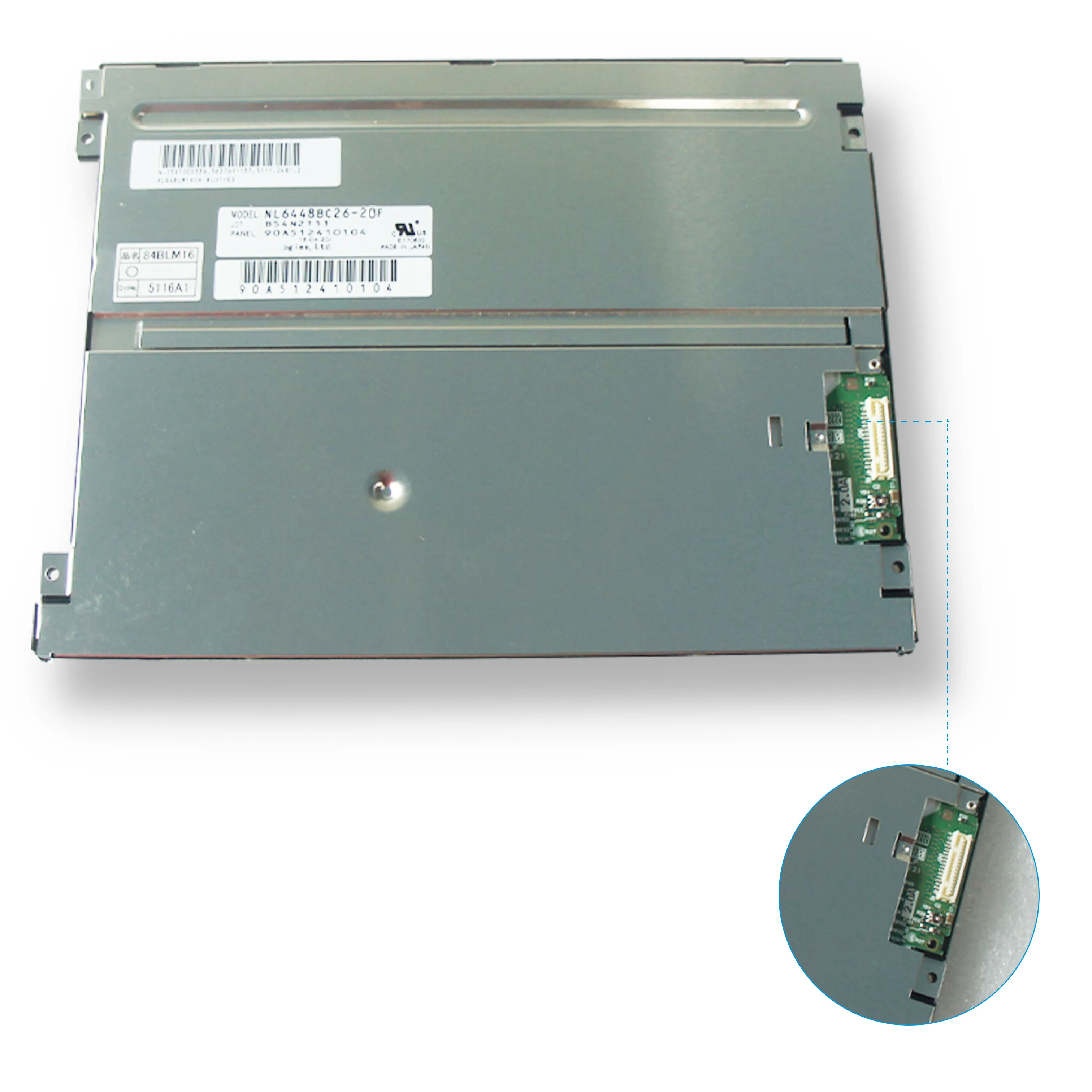


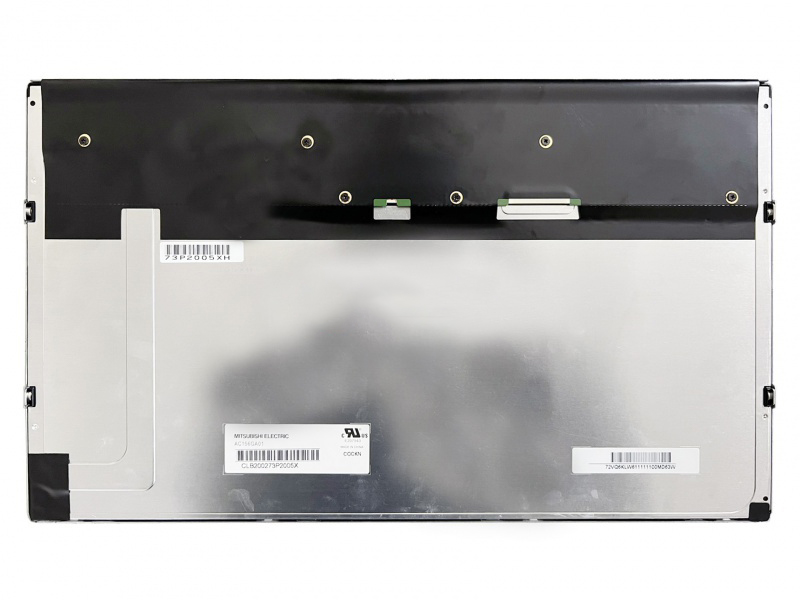
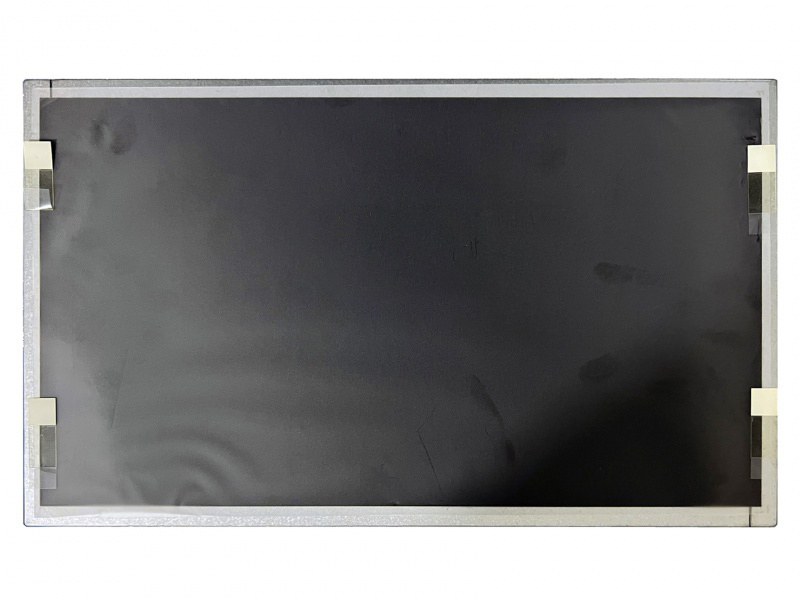
AC156GA01 Mitsubishi 15.6" TFT-LCD screen 1366*768 Display
In the intricate ecosystem of industrial and embedded display solutions, specific components stand out for their reliability and widespread adoption. The Mitsubishi AC156GA01 is one such component—a 15.6-inch TFT-LCD screen with a resolution of 1366 x 768 (HD+). While these specifications might seem standard at a glance, this display module represents a carefully engineered solution designed for environments where consistency, longevity, and performance under demanding conditions are non-negotiable.
This article delves beyond the basic datasheet to explore the AC156GA01 in depth. We will examine its core technological architecture, the rationale behind its seemingly "legacy" resolution, and the specific industrial applications where it excels. Furthermore, we will analyze its interface and compatibility considerations, compare it with modern display alternatives, and provide practical guidance for integration and sourcing. Our goal is to provide engineers, procurement specialists, and technology integrators with a comprehensive understanding of where and why this particular Mitsubishi display continues to be a critical component in countless systems worldwide.
Deconstructing the AC156GA01: Core Technology and Specifications
At its heart, the AC156GA01 is an a-Si (amorphous Silicon) TFT-LCD module. This mature and robust technology is known for its stable production yield and consistent performance, making it a cornerstone for industrial applications. The 15.6-inch diagonal size, measured actively, provides a substantial viewing area without being overly bulky. Its native resolution of 1366 x 768 pixels, often termed HD+ or WXGA, offers a 16:9 aspect ratio perfectly suited for modern content and user interfaces.
Key specifications include a brightness typically ranging from 250 to 300 nits, which is sufficient for controlled indoor environments, and a standard contrast ratio that ensures clear image differentiation. The module features a landscape orientation and utilizes an LVDS (Low-Voltage Differential Signaling) interface, which remains the workhorse protocol for reliable, noise-resistant data transmission in industrial settings. Understanding these foundational specs is crucial, as they directly dictate the module's suitability for specific operational environments and its compatibility with existing control systems.
The Strategic Rationale Behind the 1366 x 768 Resolution
In an era of 4K and beyond, a 1366 x 768 resolution may appear outdated. However, for the AC156GA01's target applications, this resolution is a strategic choice. First and foremost, it strikes an optimal balance between display clarity and system resource efficiency. Lower resolution demands less processing power from the host system's CPU and GPU, reduces memory bandwidth requirements, and simplifies the design of supporting driver electronics. This leads to lower overall system cost, reduced heat generation, and enhanced reliability.
Furthermore, this resolution is more than adequate for the human-machine interface (HMI) panels, diagnostic equipment, point-of-sale systems, and industrial control terminals where it is commonly deployed. These applications prioritize legibility of text, clarity of schematic diagrams, and stability of the display over ultra-high pixel density. The resolution aligns perfectly with the scale of information that needs to be presented without overwhelming the operator, proving that in industrial design, appropriateness often trumps raw specification.
Primary Industrial Applications and Use Cases
The AC156GA01 finds its home in environments where commercial-grade monitors would quickly fail. Its design caters to continuous operation and resilience. A primary application is in Industrial Automation and HMI. Here, it serves as the visual interface for PLCs (Programmable Logic Controllers) and SCADA (Supervisory Control and Data Acquisition) systems, running 24/7 on factory floors.
It is equally prevalent in Medical Diagnostic Equipment, such as ultrasound machines or patient monitors, where color accuracy and consistent performance are critical. The Transportation Sector utilizes it in infotainment or information displays within buses, trains, and maritime vessels. Other key uses include Point-of-Sale (POS) terminals in retail and hospitality, kiosks for information or ticketing, and specialized test and measurement instruments. In each case, the module's reliability, standardized form factor, and predictable performance are more valuable than cutting-edge pixel count.
Interface, Compatibility, and Integration Essentials
Successful integration of the AC156GA01 hinges on understanding its interface and power requirements. The module uses a standard LVDS interface, typically requiring a compatible controller board or a system with an LVDS output. Engineers must ensure the pin configuration and signal timing match the host system. The backlight system, usually CCFL (Cold Cathode Fluorescent Lamp) or possibly LED in certain versions, requires an inverter or direct driver, adding a layer to the power design.
Physically, the module is designed for panel mounting, with screw holes for secure installation into enclosures. Considerations for integration include managing heat dissipation, although its power consumption is relatively modest, and ensuring proper electromagnetic compatibility (EMC) shielding within the end product. Sourcing a compatible controller board, cables, and mounting brackets is often as important as sourcing the panel itself, making partnerships with knowledgeable distributors or system integrators a valuable step.
Comparative Analysis: AC156GA01 vs. Modern Display Alternatives
When evaluating the AC156GA01, it is essential to compare it with contemporary options. Modern alternatives often feature higher resolutions (Full HD, 4K), slimmer bezels, and LED backlights as standard. They may also offer touchscreen capabilities (which the standard AC156GA01 does not) and use newer interfaces like eDP (Embedded DisplayPort).
The trade-off, however, lies in long-term availability and environmental robustness. Industrial-grade modules like the AC156GA01 are often part of long-lifecycle programs, guaranteed to be in production for many years—a critical factor for products with decade-long service lives. Newer consumer-grade panels have rapid refresh cycles. Furthermore, the AC156GA01 is designed and tested for wider operating temperature ranges and higher vibration tolerance than typical commercial screens. The choice, therefore, is between newer technology and proven, sustainable industrial reliability.
Sourcing, Longevity, and Lifecycle Considerations
For OEMs and system integrators, the procurement strategy for a component like the AC156GA01 is strategic. Mitsubishi, as a manufacturer, has a history of supporting long product lifecycles, but even industrial panels eventually face end-of-life (EOL) notices. Proactive sourcing involves identifying authorized distributors with guaranteed stock, evaluating reputable aftermarket suppliers who may offer refurbished or newly manufactured compatible panels, and considering form-fit-function equivalents from other manufacturers.
Planning for the entire product lifecycle is crucial. This includes securing an initial stock for production, forecasting future needs, and having a transition plan for when the module is eventually discontinued. The value of the AC156GA01 is not just in its technical specs but in the supply chain stability it represents for mission-critical systems, making vendor relationships and lifecycle management a key part of the engineering process.
FAQs: Mitsubishi AC156GA01 Display Module
Q10: Can I replace it with a higher-resolution panel?A10: Possibly, but it requires ensuring mechanical fit, interface (e.g., LVDS vs. eDP) compatibility, and driver support from your host system.
Conclusion
The Mitsubishi AC156GA01 15.6-inch TFT-LCD module exemplifies the principle that in industrial technology, optimal suitability often outweighs pure specification metrics. Its enduring relevance is not an accident but a result of its deliberate design for reliability, long-term availability, and performance in challenging environments. The choice of 1366 x 768 resolution, LVDS interface, and robust construction are all calculated decisions that serve its core market perfectly.
For engineers and buyers, understanding this display means looking beyond the numbers to appreciate its role in ensuring system stability over a product's entire lifespan. It serves as a reminder that in many critical applications, proven, dependable, and sustainable technology is the most advanced choice one can make. The AC156GA01 remains a benchmark for industrial display solutions, demonstrating that true value is measured in years of flawless operation, not just pixels per inch.