- Industrie-LCD-Display
-
Industrial Products
- DC Servo Drive
- AC Servo Drive
- other
- Heidelberg
- FANUC
- IFM
- Meter
- CCD
- Membrane Keypad
- Film
- YOKOGAWA
- Card
- ABB
- MITSUBISHI
- FANUC
- KEYENCE
- BECKHOFF
- Honeywell
- HOLLYSYS
- FUJI servo drives
- HP
- solenoid valve
- thermostat
- Siemens adapter
- color oscilloscope
- Fujitsu connector
- CHELIC
- SMC
- CISCO
- INTEL
- Key board
- FAIRCHILD
- Der Aufsichtsrat
- Board
- Bearing
- other
- Control Panel
- Contactor
- Circuit
- Omron
- Relais.
- Der controller
- Optoelektronische schalter
- Optoelektronische sensoren
- Original
- Fan
- Motortreiber
- Endschalter
- Verstärker
- power supply
- LENZE
- Cable
- Encoder
- Sensor
- Transformator
- Fiber Optic Sensor
- Schutzrelais
- Temperaturregler
- Näherungsschalter
- Switch Sensor
- Siemens
- PCB
- HMI Touch-Glas
-
HMI-Vollautomat Ganze Einheit
- OMRON HMI Touch Panel
- Siemens HMI Touch Panel
- Mitsubishi HMI Touch Panel
- Allen-Bradley Automatisierung HMI Touch
- DELTA HMI Touch Panel
- EVIEW DELTA HMI Touch Panel
- KINCO DELTA HMI Touch Panel
- HITECH HMI Touch Panel
- WEINTECK HMI Touch Panel
- TECVIEW HMI Touch Panel
- WEINVIEW HMI Touch Panel
- PRO-FACE HMI Touch Panel
- SIMATIC HMI Touch Panel
- AMPIRE HMI Touch Panel
- HEIDELBERG HMI Touch Panel
- PANASONIC HMI Touch Panel
- PATLITE HMI Touch Panel
- KYOCERA HMI Touch Panel
- KEYENCE HMI Touch Panel
- WEINVIEW HMI Touch Panel
- HITECH HMI Touch Panel
- FUJI HMI Touch Panel
- HAKKO HMI Touch Panel
- SCHNEIDER HMI Touch Panel
- SAMKOON touch panel
- andere
- Module
- LCD Wechselrichter
- Membran Tastenfeld Schalter
- Winni Touch Screens
- Frequenzumrichter
- Servo Motor
- PLC


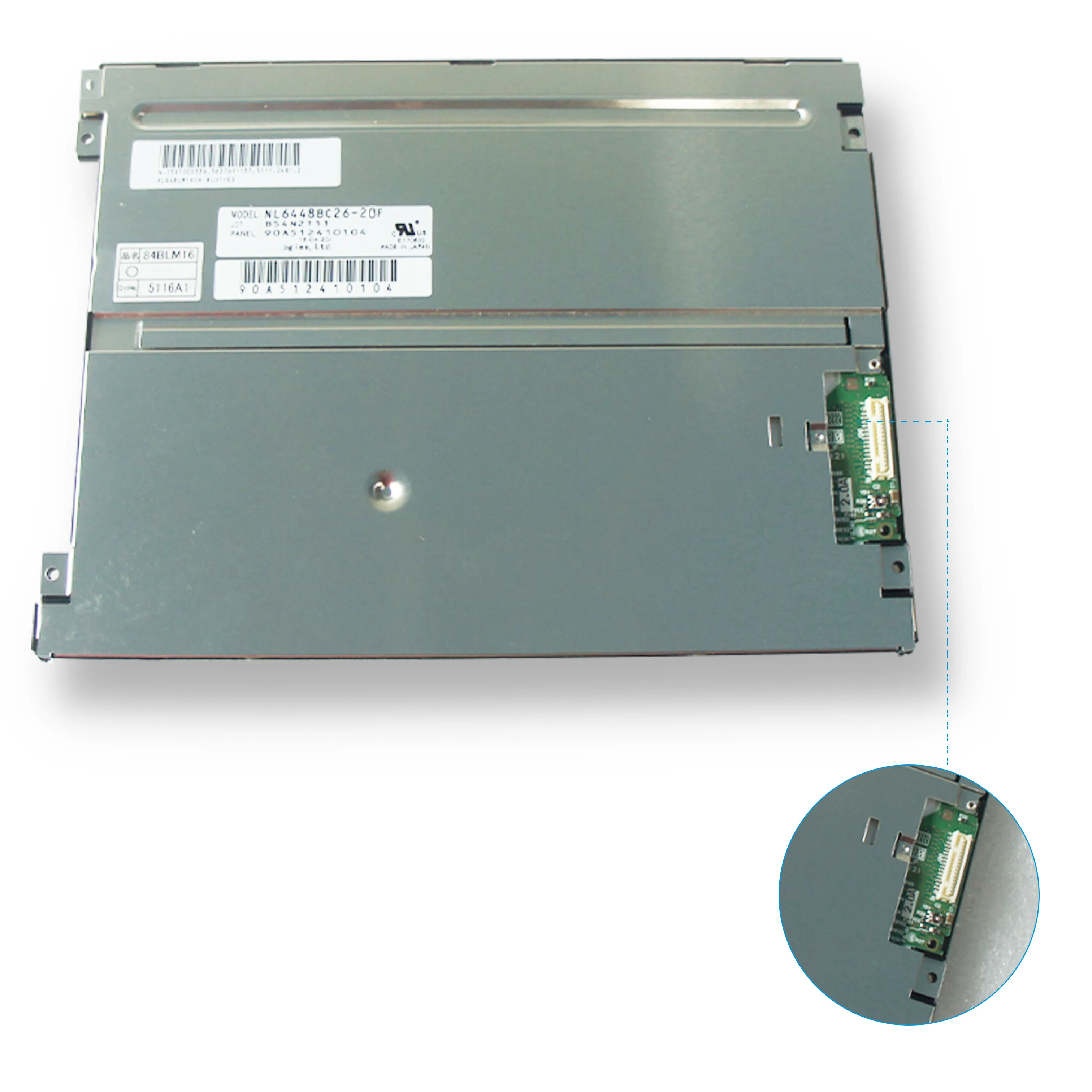

Antiglare 18.5" Chimei LCD Panel With Dot Matrix Lcd Display Panel G185BGE-L01
In the intricate ecosystem of electronic components, the display panel serves as the critical interface between machine data and human perception. Among the myriad of options available to engineers and product designers, the Chimei Innolux G185BGE-L01 stands out as a specialized solution tailored for environments where visual clarity is perpetually challenged. This 18.5-inch LCD panel is not merely a screen; it is an engineered answer to the pervasive problem of glare and ambient light interference.
This article delves into a comprehensive analysis of the G185BGE-L01, moving beyond basic specifications to explore its core technological differentiators. We will dissect the synergistic relationship between its antiglare treatment and dot matrix display technology, examining how this combination redefines readability. From its industrial-grade construction to its specific application landscapes and integration considerations, we provide a deep dive for professionals seeking to understand why this panel is a strategic choice for demanding visual applications.
Decoding the Core: Antiglare and Dot Matrix Synergy
The fundamental value proposition of the G185BGE-L01 lies in the marriage of two key technologies. The antiglare (AG) surface treatment is a physical or chemical layer applied to the panel's front. It works by diffusing reflected light, scattering it in multiple directions rather than allowing it to form a sharp, disruptive mirror image. This drastically reduces reflections from overhead lighting, windows, or other bright sources, minimizing eye strain and preserving contrast.
Complementing this is the Dot Matrix LCD Display structure. Unlike standard consumer panels optimized for video, a dot matrix display emphasizes precise control of individual pixels (dots) to form characters, numbers, and simple graphics with sharp edges. This technology, often associated with industrial and instrumentation use, prioritizes legibility and stability over color gamut. In the G185BGE-L01, the dot matrix design ensures that the antiglare treatment's slight diffusion does not soften critical alphanumeric data, maintaining pixel-perfect clarity where it matters most.
Technical Specifications and Performance Analysis
At its heart, the G185BGE-L01 is an 18.5-inch panel with a resolution of 1366 x 768 (HD+). This aspect ratio and resolution are strategically chosen for data display rather than widescreen multimedia. Its brightness typically reaches 250 nits or higher, a crucial factor when paired with AG coating, as some light is inherently diffused. The contrast ratio ensures that black text remains distinct against a white or colored background, a non-negotiable requirement for long-term monitoring.
Performance extends beyond the datasheet. The panel's viewing angles are optimized for consistency, preventing color or contrast shift when viewed from off-center positions—common in control panels or multi-operator stations. Furthermore, its operational temperature range is typically wider than commercial displays, indicating robust components designed for 24/7 operation in varied environments, from factory floors to medical carts, where reliability is paramount.
Industrial-Grade Durability and Construction
The G185BGE-L01 is built to endure. Its construction philosophy prioritizes longevity and resilience over aesthetic slimness. The panel module often features a sturdy metal chassis that protects the delicate LCD matrix and backlight system from physical shock, vibration, and electromagnetic interference (EMI). This ruggedness is a direct response to the harsh realities of industrial, commercial, and outdoor settings.
Key durability features include resistance to dust and moisture ingress, often supported by robust sealing at critical junctions. The surface itself is designed to resist scratches and chemical abrasion from cleaning agents. The backlight unit, typically utilizing LED arrays for efficiency and long life, is engineered for consistent output over tens of thousands of hours, minimizing maintenance downtime and total cost of ownership for embedded systems.
Target Applications and Use Case Scenarios
The specific attributes of this panel define its ideal application landscape. It excels anywhere ambient light and reliability are primary concerns. In Industrial Human-Machine Interfaces (HMIs), it provides operators with a clear view of process controls and diagnostics under bright factory lighting. For Point-of-Sale (POS) systems and self-service kiosks, it ensures transaction information is readable in sunlit retail environments.
Additional critical use cases include medical monitoring equipment, where accurate, glare-free data reading can be vital; transportation information displays in buses or trains; and utility and infrastructure control panels. In each scenario, the panel is not a consumer gadget but an integrated component of a larger, mission-critical system where failure is not an option.
Integration Considerations for Design Engineers
For engineers, selecting the G185BGE-L01 is the first step; successfully integrating it is the next. The panel typically features an LVDS (Low-Voltage Differential Signaling) interface, a standard for robust, noise-resistant data transmission in embedded systems. Designers must ensure their controller board supports the correct interface protocol, voltage, and pinout.
Power sequencing and thermal management are also crucial. The backlight inverter or LED driver circuit must be correctly matched to the panel's specifications to avoid flicker or premature failure. Adequate heat dissipation around the module, even with efficient LEDs, must be factored into the enclosure design. Furthermore, the mechanical integration must account for the panel's bezel dimensions and mounting points, ensuring a secure fit that does not stress the glass.


Comparative Advantage in a Crowded Market
When evaluated against generic 18.5-inch panels, the G185BGE-L01's advantages become stark. A standard glossy panel offers higher color saturation and sharper "pop" in dark rooms but fails catastrophically under glare. A consumer-grade matte panel might reduce reflections but often lacks the durability, wide temperature range, and long-life backlight.
This Chimei panel occupies a specialized niche. Its true competitors are other industrial-grade modules with AG treatment. Its advantage lies in the proven reliability of Chimei Innolux's manufacturing scale, the specific clarity of its dot matrix design, and its optimization for alphanumeric data integrity. For the right project, it represents a total value solution that lowers long-term risk, rather than just a lowest-cost component.
FAQs: Antiglare 18.5" Chimei LCD Panel G185BGE-L01
1. What is the primary purpose of the antiglare coating on this panel?
It diffuses ambient light reflections, drastically improving readability under bright lighting conditions and reducing eye strain.
2. What does "Dot Matrix Display" mean in this context?
It refers to an LCD structure optimized for sharp rendering of characters, numbers, and basic graphics, prioritizing legibility for data display over video performance.
3. Is this panel suitable for outdoor use?
While it has antiglare and durable construction, it is not typically a sunlight-readable high-brightness panel (1000+ nits). It is best for bright indoor or shaded outdoor applications.
4. What is the most common interface for this panel?
It typically uses an LVDS (Low-Voltage Differential Signaling) interface, standard for industrial and embedded display integration.
5. Can I use this panel as a direct replacement for a standard computer monitor?
Not directly. It requires a compatible LVDS controller board, as it lacks the standard VGA/HDMI inputs of a consumer monitor.
6. What industries commonly use this panel?
Industrial automation, medical devices, point-of-sale systems, transportation, utility controls, and self-service kiosks.
7. How does the antiglare coating affect image sharpness?
It causes a very slight diffusion, which can soften extreme fine details in photos/videos but is beneficial for enhancing the perceived sharpness and comfort of text and graphics under glare.
8. What is the typical lifespan of the backlight?
Industrial LED backlights like those used here are often rated for 50,000 hours or more to half-brightness, supporting years of continuous operation.
9. Does it support touch screen functionality?
The G185BGE-L01 is a display panel only. Touch functionality (resistive or capacitive) would require an additional touch overlay laminated to its surface.
10. What are key checks before integrating this panel?
Verify interface compatibility (LVDS pinout, voltage), mechanical dimensions, backlight driver requirements, and operational temperature range against your application needs.
Conclusion
The Chimei Innolux G185BGE-L01 antiglare dot matrix panel exemplifies how specialized component design solves specific, real-world problems. It transcends the role of a simple display by integrating optical clarity, mechanical durability, and electronic reliability into a single, cohesive module. Its value is not measured in pixels alone, but in its ability to perform consistently where other panels would falter—under the harsh glare of industrial lighting or in the demanding continuous operation of critical systems.
For product designers and engineers, selecting this panel is a strategic decision that prioritizes long-term user experience and system integrity over generic specifications. It serves as a powerful reminder that in the world of embedded electronics, the right specialized component is often the keystone of a successful, dependable product. The G185BGE-L01 isn't just showing data; it's ensuring that data can always be seen, clearly and reliably.