- Industrial LCD display
-
Industrial Products
- DC Servo Drive
- AC Servo Drive
- other
- Heidelberg
- FANUC
- IFM
- Meter
- CCD
- Membrane Keypad
- Film
- YOKOGAWA Module
- Card
- ABB
- MITSUBISHI
- FANUC
- KEYENCE
- BECKHOFF
- Honeywell
- HOLLYSYS
- FUJI servo drives
- HP
- solenoid valve
- thermostat
- Siemens adapter
- color oscilloscope
- Fujitsu connector
- CHELIC
- SMC
- CISCO Module
- INTEL
- Key board
- FAIRCHILD
- Motherboard
- Board
- Bearing
- other
- Control Panel
- Contactor
- Circuit
- OMRON
- Relay
- Controller
- Photoelectric Switch
- Photoelectric Sensor
- Original
- Fan
- Motor Driver
- Limit Switch
- Amplifier
- power supply
- LENZE
- Cable
- Encoder
- Sensor
- Transformer
- Fiber Optic Sensor
- Protection Relay
- Temperature Controller
- Proximity Switch
- Switch Sensor
- Siemens
- Industrial board
- HMI Touch Glass
-
HMI Full Machine Whole unit
- OMRON HMI Touch Panel
- Siemens HMI Touch Panel
- Mitsubishi HMI Touch Panel
- Allen-Bradley automation HMI Touch Panel
- DELTA HMI Touch Panel
- EVIEW DELTA HMI Touch Panel
- KINCO DELTA HMI Touch Panel
- HITECH HMI Touch Panel
- WEINTECK HMI Touch Panel
- TECVIEW HMI Touch Panel
- WEINVIEW HMI Touch Panel
- PRO-FACE HMI Touch Panel
- SIMATIC HMI Touch Panel
- AMPIRE HMI Touch Panel
- HEIDELBERG HMI Touch Panel
- PANASONIC HMI Touch Panel
- PATLITE HMI Touch Panel
- KYOCERA HMI Touch Panel
- KEYENCE HMI Touch Panel
- WEINVIEW HMI Touch Panel
- HITECH HMI Touch Panel
- FUJI HMI Touch Panel
- HAKKO HMI Touch Panel
- SCHNEIDER HMI Touch Panel
- SAMKOON touch panel
- other
- Module
- lcd inverter
- Membrane Keypad Switch
- Winni Touch Screens
- Frequency Inverter
- Servo Motor
- PLC


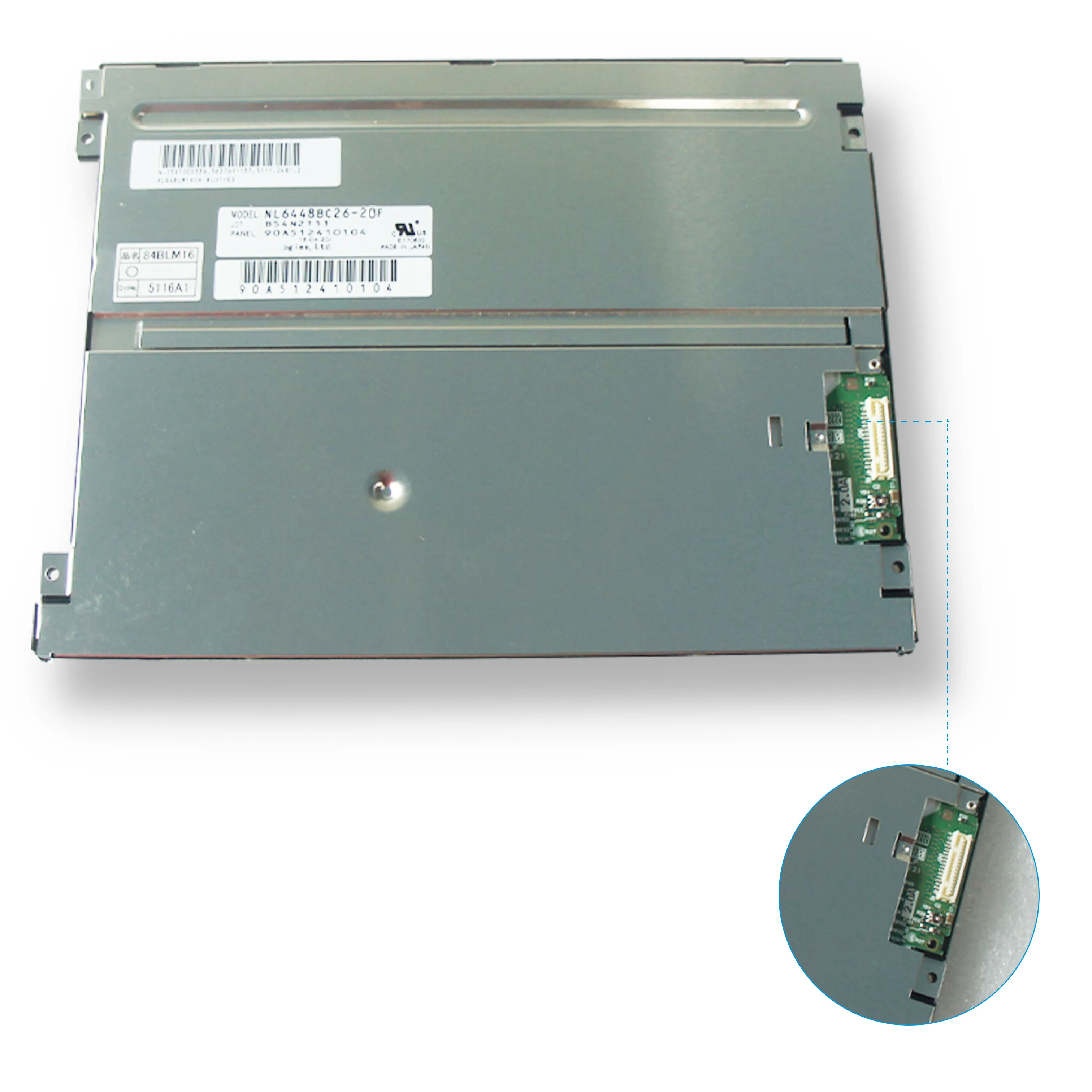


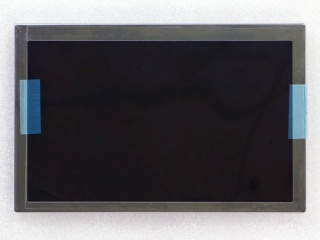
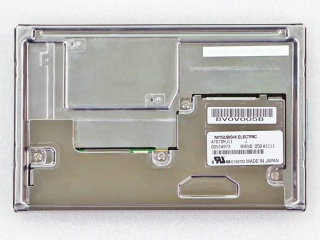
AT070MJ11 Mitsubishi 7.0 inch 800*480 LCD PANEL
In the intricate world of industrial and embedded display solutions, the choice of a component can define the performance, reliability, and user experience of an entire system. Among the myriad of options available to engineers and product designers, the AT070MJ11 from Mitsubishi Electric stands out as a notable and enduring reference. This 7.0-inch LCD panel, with its 800 x 480 resolution (WVGA), represents more than just a screen; it encapsulates a specific era of display technology tailored for demanding environments where consistency is paramount.
This article delves into a comprehensive technical and application-focused analysis of the AT070MJ11. We will move beyond basic datasheet specifications to explore its underlying TFT technology, its distinctive optical characteristics, and the practical electrical considerations for integration. Furthermore, we will examine its primary industrial use cases, the critical factors involved in its system integration, and finally, contextualize its position in today's market of modern alternatives. Our goal is to provide a deep, actionable resource for professionals evaluating this panel for current projects or seeking to understand its legacy in embedded design.
Deconstructing the TFT Technology and Core Specifications
The AT070MJ11 is built upon a-Si (amorphous Silicon) Thin-Film Transistor (TFT) technology, the workhorse of LCDs for decades. This foundation offers a mature, stable, and cost-effective manufacturing process. The panel's native 800 x 480 pixel array, formatted in a 15:9 aspect ratio, classifies it as Wide VGA (WVGA). This resolution provides a clear, functional pixel density for a 7-inch diagonal, suitable for displaying structured data, graphical user interfaces (GUIs), and video feeds without excessive power consumption or processing overhead.
It utilizes a transmissive display structure, requiring a constant backlight for visibility. The color depth is typically 18-bit (262K colors), delivering sufficient color fidelity for most industrial and instrumentation applications. Understanding these core specs is the first step, as they directly influence the optical performance, interface requirements, and ultimately, the suitability of the panel for an intended operating environment, whether it's a factory floor or a medical device.
Optical Performance and Viewing Characteristics
The optical characteristics of the AT070MJ11 are engineered for readability and consistency. It boasts a high brightness level, typically around 450 cd/m², which is crucial for overcoming ambient light in industrial settings. Coupled with a standard contrast ratio, this ensures that graphics and text remain discernible under various lighting conditions.
A key feature of this panel is its wide viewing angle performance, achieved through specific TFT alignment techniques. This allows multiple operators to view the screen from different positions without significant color shift or contrast inversion, a vital attribute for shared control panels or diagnostic equipment. The surface treatment likely includes an anti-glare layer to diffuse reflections, further enhancing usability in brightly lit environments. These combined optical traits make it a robust choice for applications where visual clarity is non-negotiable.
Electrical Interface and Power Considerations
Integration of the AT070MJ11 is governed by its electrical interface. It features a classic LVDS (Low-Voltage Differential Signaling) interface, typically in a 2-channel, 8-bit configuration. LVDS remains a popular choice for its robustness against electromagnetic interference (EMI), essential for the noisy electrical environments of industrial machinery. Designers must ensure their controller board can generate the correct LVDS signal or utilize a converter bridge from other video outputs.
Power consumption is a critical design factor. The panel itself requires a single power supply, often 3.3V or 5.0V, but the total system power is dominated by the CCFL (Cold Cathode Fluorescent Lamp) backlight. CCFL backlights, while providing excellent uniformity and brightness, are less energy-efficient and require a high-voltage inverter circuit. This adds complexity and impacts the overall power budget, a point of consideration when designing for portable or energy-sensitive applications.
Primary Industrial and Embedded Applications
The AT070MJ11 finds its home in environments where reliability trumps cutting-edge consumer features. Its primary application domains include:
Industrial Human-Machine Interfaces (HMIs): As the touch-enabled front-end for PLCs, controlling manufacturing lines, robotics, and process automation.
Test and Measurement Equipment: Providing display functionality for oscilloscopes, spectrum analyzers, and medical diagnostic devices where clear data presentation is critical.
Transportation and Fleet Management: Integrated into vehicle telematics systems, navigation units for specialized vehicles, and onboard diagnostic displays.
Point-of-Sale (POS) and Kiosk Systems: Where durability and long operational hours are required in retail or public information terminals.
In these contexts, the panel's longevity, stable supply (historically), and predictable performance are more valuable than ultra-high resolution or sleek form factors.
System Integration and Design Challenges
Successfully integrating the AT070MJ11 into a product involves addressing several practical challenges. First is the mechanical integration. Designers must account for its precise dimensions, bezel size, and mounting holes. The inclusion of a resistive or capacitive touch panel adds another layer, requiring careful optical bonding (if desired for enhanced readability) and a separate touch controller IC.
Second is the backlight management. The CCFL inverter requires careful PCB layout to minimize EMI and must be designed for the lamp's specific operating characteristics and lifetime. Finally, the entire display subsystem must be thermally managed, as the CCFL and power circuits generate heat. Proper ventilation and possibly heat sinking are necessary to ensure long-term reliability and prevent premature backlight failure.
The AT070MJ11 in the Modern Display Landscape
While the AT070MJ11 is a proven solution, the display technology landscape has evolved. Modern alternatives often feature:
LED Backlighting: Offering lower power consumption, longer lifespan, thinner profiles, and no requirement for a high-voltage inverter.
Higher Resolutions: Panels with 1024x600 or 1280x800 resolutions provide sharper images for more complex GUIs.
Advanced Technologies: IPS panels offer even wider and more consistent viewing angles, while newer interfaces like MIPI-DSI are common in compact designs.
Therefore, selecting the AT070MJ11 today is a deliberate choice. It is often driven by legacy system upgrades, specific compatibility requirements, or cost optimization in volume for applications where its established performance envelope is perfectly adequate. Evaluating it against modern panels involves a trade-off analysis between proven reliability, integration effort, and contemporary feature sets.
FAQs: AT070MJ11 LCD Panel
Q1: What is the screen size and resolution of the AT070MJ11?A1: It is a 7.0-inch diagonal TFT LCD with a resolution of 800 x 480 pixels (WVGA).Q2: What type of interface does it use?A2: It uses a standard LVDS (Low-Voltage Differential Signaling) interface, typically in a 2-channel configuration.Q3: Does this panel have a touch screen?A3: The AT070MJ11 is the LCD panel only. Touch functionality (usually resistive or capacitive) is provided by a separate overlay that must be integrated.Q4: What is the backlight technology and its typical lifetime?A4: It uses a CCFL (Cold Cathode Fluorescent Lamp) backlight, with a typical half-brightness lifetime in the range of 20,000 to 50,000 hours.Q5: Is it suitable for outdoor use?A5: While bright (≈450 cd/m²), it is not specifically designed for sunlight readability. For full outdoor use, a high-brightness version with an enhanced optical stack would be needed.Q6: What are the main power supply requirements?A6: The panel logic typically requires 3.3V or 5.0V, but the CCFL backlight requires a separate high-voltage AC supply from an inverter.Q7: What are the common applications for this display?A7: Industrial HMIs, test/measurement equipment, medical devices, transportation systems, and POS/kiosks.Q8: How does it compare to modern LED-backlit panels?A8: CCFL backlights are generally thicker, less energy-efficient, and require an inverter compared to LED backlights, which are thinner and have a longer lifespan.Q9: What are key mechanical considerations for mounting it?A9: Designers must account for its outline dimensions, mounting hole positions, bezel area, and the space needed for the backlight inverter and connectors.
Q10: Is the AT070MJ11 still a recommended choice for new designs?A10: It depends. For cost-sensitive, volume industrial applications where its specs are sufficient and supply is stable, it can be a valid choice. New designs often evaluate newer LED-backlit, higher-resolution options for better performance and efficiency.
Conclusion
The Mitsubishi AT070MJ11 7-inch LCD panel is a quintessential example of a robust, purpose-built industrial display component. Its value lies not in being the most advanced, but in offering a predictable, reliable, and well-understood performance profile. From its WVGA resolution and high-brightness CCFL backlight to its sturdy LVDS interface, every aspect is geared towards enduring the rigors of embedded and industrial environments.
For engineers and product managers, the decision to use this panel involves a careful assessment of optical requirements, integration complexity (particularly around backlight power), and the evolving landscape of display technology. While newer alternatives offer advantages in power and thinness, the AT070MJ11 remains a credible solution for maintaining legacy systems or for new designs where its specific set of mature characteristics aligns perfectly with project goals. It serves as a reminder that in industrial design, proven reliability often carries as much weight as technical novelty.