Produkte Klassifizierung
- Industrie-LCD-Display
-
Industrial Products
- DC Servo Drive
- AC Servo Drive
- other
- Heidelberg
- FANUC
- IFM
- Meter
- CCD
- Membrane Keypad
- Film
- YOKOGAWA
- Card
- ABB
- MITSUBISHI
- FANUC
- KEYENCE
- BECKHOFF
- Honeywell
- HOLLYSYS
- FUJI servo drives
- HP
- solenoid valve
- thermostat
- Siemens adapter
- color oscilloscope
- Fujitsu connector
- CHELIC
- SMC
- CISCO
- INTEL
- Key board
- FAIRCHILD
- Der Aufsichtsrat
- Board
- Bearing
- other
- Control Panel
- Contactor
- Circuit
- Omron
- Relais.
- Der controller
- Optoelektronische schalter
- Optoelektronische sensoren
- Original
- Fan
- Motortreiber
- Endschalter
- Verstärker
- power supply
- LENZE
- Cable
- Encoder
- Sensor
- Transformator
- Fiber Optic Sensor
- Schutzrelais
- Temperaturregler
- Näherungsschalter
- Switch Sensor
- Siemens
- PCB
- HMI Touch-Glas
-
HMI-Vollautomat Ganze Einheit
- OMRON HMI Touch Panel
- Siemens HMI Touch Panel
- Mitsubishi HMI Touch Panel
- Allen-Bradley Automatisierung HMI Touch
- DELTA HMI Touch Panel
- EVIEW DELTA HMI Touch Panel
- KINCO DELTA HMI Touch Panel
- HITECH HMI Touch Panel
- WEINTECK HMI Touch Panel
- TECVIEW HMI Touch Panel
- WEINVIEW HMI Touch Panel
- PRO-FACE HMI Touch Panel
- SIMATIC HMI Touch Panel
- AMPIRE HMI Touch Panel
- HEIDELBERG HMI Touch Panel
- PANASONIC HMI Touch Panel
- PATLITE HMI Touch Panel
- KYOCERA HMI Touch Panel
- KEYENCE HMI Touch Panel
- WEINVIEW HMI Touch Panel
- HITECH HMI Touch Panel
- FUJI HMI Touch Panel
- HAKKO HMI Touch Panel
- SCHNEIDER HMI Touch Panel
- SAMKOON touch panel
- andere
- Module
- LCD Wechselrichter
- Membran Tastenfeld Schalter
- Winni Touch Screens
- Frequenzumrichter
- Servo Motor
- PLC

Empfohlene Produkt




Homepage » news
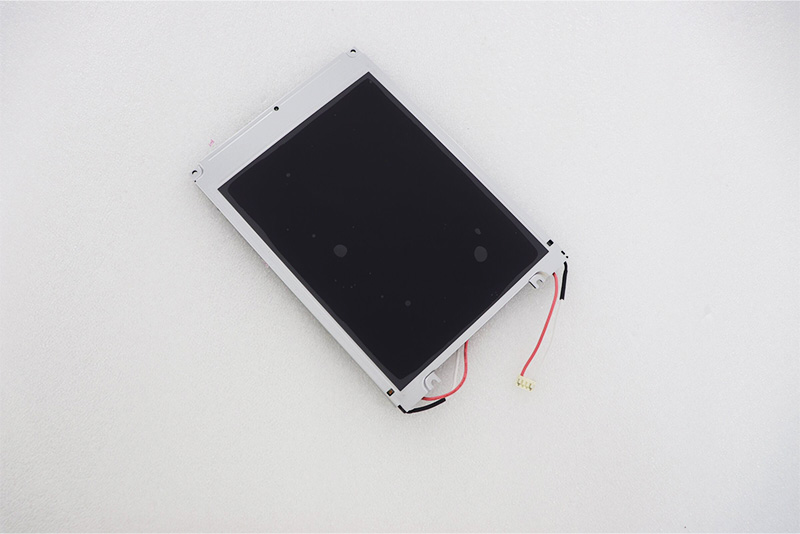
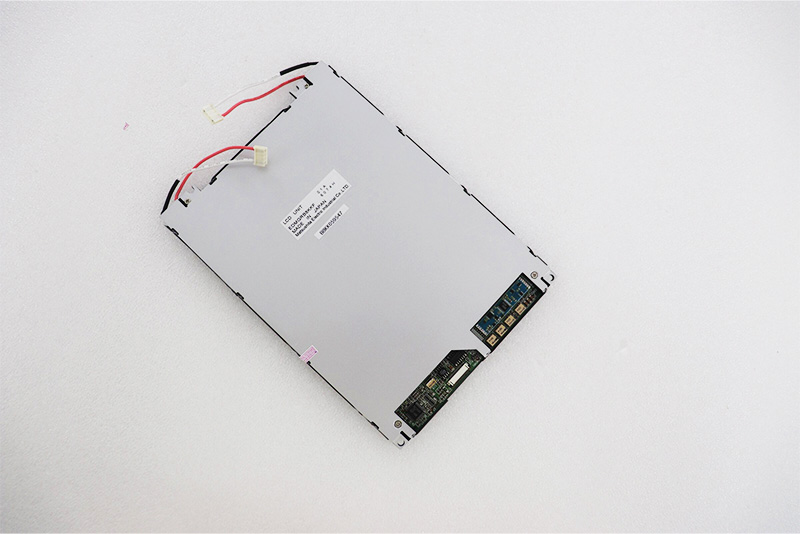
EDMGRB8KKF Panasonic 7.8-inch 640x480 LCD Screen
In the intricate world of electronic components, where specifications often blur into a sea of part numbers, the Panasonic EDMGRB8KKF emerges as a distinct and noteworthy solution. This identifier refers to a specific 7.8-inch LCD module, a self-contained display unit featuring a resolution of 640 x 480 pixels, commonly known as VGA. More than just a simple screen, this module represents a carefully engineered intersection of reliability, clarity, and industrial-grade performance, designed to serve as the visual interface for a wide array of demanding applications.
This article delves deep into the Panasonic EDMGRB8KKF, moving beyond the basic datasheet to explore its significance in the broader context of human-machine interface (HMI) design. We will dissect its core technological attributes, examine the specific market needs it addresses, and contrast it with alternative display technologies. Our journey will uncover why this particular combination of size, resolution, and pedigree makes it a persistent and valued component in sectors where failure is not an option, from medical diagnostics to factory automation and beyond.
Decoding the Specification: A VGA Workhorse
The Panasonic EDMGRB8KKF is built around a 7.8-inch diagonal TFT LCD panel with a native resolution of 640 x 480. This VGA standard, while considered low by consumer smartphone standards, remains a powerhouse in industrial and professional contexts. The 4:3 aspect ratio is a key characteristic, perfectly suited for displaying legacy software interfaces, diagnostic data in tabular form, and control system dashboards without wasteful black bars or distorted graphics.
Beyond size and resolution, the module integrates critical components: a robust LED backlight system ensuring consistent brightness and long life, and a dedicated LCD controller. This controller is crucial, as it manages the timing, power sequencing, and signal conversion, providing a simplified interface (typically parallel RGB) for the host system's main processor. This integration reduces design complexity for engineers, allowing them to focus on application software rather than low-level display driver development.
The Industrial Design Philosophy: Reliability Above All
Panasonic's engineering for components like the EDMGRB8KKF is driven by an industrial design philosophy that prioritizes longevity, stability, and resilience. These modules are constructed to withstand the rigors of 24/7 operation, often in environments with wide temperature fluctuations, elevated humidity, or constant vibration. The use of high-grade materials and stringent manufacturing processes minimizes the risk of dead pixels, backlight decay, or connection failures over time.
This reliability translates directly into lower total cost of ownership for OEMs (Original Equipment Manufacturers). A display failure in a medical device, an industrial scanner, or a point-of-sale system can lead to costly downtime, repairs, and reputational damage. By specifying a proven, industrial-grade module like this, manufacturers mitigate these risks. The extended product lifecycle support typical of Panasonic also means the module will be available for production for many years, securing the supply chain for long-term projects.
Core Application Sectors: Where Precision Meets Durability
The unique blend of clarity, ruggedness, and a familiar aspect ratio positions the EDMGRB8KKF as the display of choice in several critical sectors. In medical technology, it is found in portable diagnostic devices, patient monitoring systems, and laboratory equipment, where accurate color representation and flawless reliability are non-negotiable for patient safety.
Within industrial automation and HMI, this screen serves as the face of programmable logic controller (PLC) panels, machine operator terminals, and test/measurement equipment. Its readability under various lighting conditions and resistance to electrical noise are paramount. Furthermore, the transportation and logistics sector utilizes it in vehicle telematics, forklift dashboards, and handheld inventory scanners, where sunlight readability and shock resistance are essential.
Comparative Analysis: TFT vs. Emerging Display Tech
To fully appreciate the EDMGRB8KKF's role, a comparison with newer technologies is instructive. Modern consumer-grade TFTs offer higher resolutions (HD, FHD) but often sacrifice wide-temperature performance and long-term reliability for cost and thinness. OLED displays provide superior contrast and viewing angles but can suffer from burn-in and have shorter lifespans under static image display—a significant drawback for industrial HMIs.
Emerging technologies like sunlight-readable transflective LCDs or ultra-low-power memory-in-pixel displays serve different niches. The Panasonic module's strength lies in being a balanced, high-performance solution for a vast middle ground. It offers excellent optical characteristics, proven durability, and a straightforward integration path, making it a "goldilocks" solution for applications that need more than a cheap consumer panel but do not require the extreme specs (or extreme cost) of specialized military or outdoor-grade displays.
Integration Considerations for Engineers
Successfully integrating the EDMGRB8KKF into a product requires attention to several technical details. Electrical integration involves matching the module's voltage requirements (typically 3.3V or 5V for logic and a higher voltage for the backlight) and correctly interfacing the parallel RGB data bus with the host microcontroller or processor. Mechanical design must account for the module's exact footprint, bezel requirements, and the need for proper mounting to prevent stress on the glass.
Furthermore, the optical stack is critical. Engineers must select an appropriate touch panel (resistive or projected capacitive) and cover glass, considering factors like anti-glare coatings, optical bonding to reduce reflections and improve readability, and sealing for dust/water resistance. Proper thermal management, even for an LCD, ensures the backlight and drivers operate within their specified temperature range, guaranteeing performance and longevity.
The Supply Chain and Legacy System Support
In the world of industrial and medical electronics, product lifecycles span a decade or more. The availability of critical components like displays throughout this period is a major concern. Panasonic has a strong reputation for long-term product support, which makes modules like the EDMGRB8KKF attractive for products that cannot undergo frequent hardware redesigns.
This reliability extends to the supply chain itself. Sourcing from a major manufacturer like Panasonic provides stability and reduces the risk of counterfeit components. For companies maintaining legacy systems, the continued availability of a direct-fit replacement module is invaluable, preventing the need for costly and time-consuming requalification of a new display solution. This aspect of "future-proofing" the design is a hidden but immense value of choosing a tier-1 industrial component.
FAQs: Panasonic EDMGRB8KKF 7.8-inch LCD Screen
Q1: What is the exact resolution of the EDMGRB8KKF screen?A1: It has a resolution of 640 x 480 pixels, standard VGA, with a 4:3 aspect ratio.
Q2: What type of LCD technology is used?A2: It uses a TFT (Thin-Film Transistor) LCD panel with an LED backlight for bright, consistent illumination.
Q3: Is this a module or just a bare panel?A3: It is a complete LCD module, integrating the TFT panel, LED backlight, driver electronics, and controller on a single board.
Q4: What are the primary interfaces for this display?A4: It typically uses a parallel RGB digital interface, which is common for embedded systems and simplifies integration.
Q5: In what kinds of products is this screen commonly used?A5: It's widely used in medical devices, industrial HMI panels, test equipment, POS systems, and transportation telematics.
Q6: How does it perform in extreme temperatures?A6: As an industrial-grade component, it is designed to operate reliably over a wider temperature range than consumer-grade displays.
Q7: Can a touch screen be added to this module?A7: Yes, it is commonly paired with resistive or capacitive touch panels, which are added as a separate layer during assembly.
Q8: Why choose VGA resolution when higher resolutions are available?A8: VGA is often ideal for displaying legacy software, text/data interfaces, and is less demanding on system processing power, improving reliability and cost.
Q9: What is a key advantage of sourcing from Panasonic?A9: Key advantages include guaranteed long-term reliability, extended product lifecycle support, and a stable, trustworthy supply chain.
Q10: Is this module suitable for outdoor use?A10: Not directly. While rugged, it requires additional optical bonding, high-brightness options, and proper sealing for reliable outdoor/sunlight-readable use.
Conclusion
The Panasonic EDMGRB8KKF 7.8-inch VGA LCD module exemplifies the enduring value of purpose-built industrial components. It transcends the basic function of displaying an image to become a cornerstone of reliable system design in critical fields. Its optimized 4:3 aspect ratio, robust construction, and integrated controller offer a balanced solution that newer, consumer-oriented technologies often fail to match in terms of longevity and environmental resilience.
For engineers and product designers, selecting this module is a strategic decision that prioritizes lifecycle cost, supply chain security, and proven performance over fleeting specifications. In an era of rapid technological change, the EDMGRB8KKF stands as a testament to the principle that in many professional applications, dependable clarity and unwavering reliability are the most advanced features a display can offer.