All Categories
- Industrial LCD display
-
Industrial Products
- DC Servo Drive
- AC Servo Drive
- other
- Heidelberg
- FANUC
- IFM
- Meter
- CCD
- Membrane Keypad
- Film
- YOKOGAWA Module
- Card
- ABB
- MITSUBISHI
- FANUC
- KEYENCE
- BECKHOFF
- Honeywell
- HOLLYSYS
- FUJI servo drives
- HP
- solenoid valve
- thermostat
- Siemens adapter
- color oscilloscope
- Fujitsu connector
- CHELIC
- SMC
- CISCO Module
- INTEL
- Key board
- FAIRCHILD
- Motherboard
- Board
- Bearing
- other
- Control Panel
- Contactor
- Circuit
- OMRON
- Relay
- Controller
- Photoelectric Switch
- Photoelectric Sensor
- Original
- Fan
- Motor Driver
- Limit Switch
- Amplifier
- power supply
- LENZE
- Cable
- Encoder
- Sensor
- Transformer
- Fiber Optic Sensor
- Protection Relay
- Temperature Controller
- Proximity Switch
- Switch Sensor
- Siemens
- Industrial board
- HMI Touch Glass
-
HMI Full Machine Whole unit
- OMRON HMI Touch Panel
- Siemens HMI Touch Panel
- Mitsubishi HMI Touch Panel
- Allen-Bradley automation HMI Touch Panel
- DELTA HMI Touch Panel
- EVIEW DELTA HMI Touch Panel
- KINCO DELTA HMI Touch Panel
- HITECH HMI Touch Panel
- WEINTECK HMI Touch Panel
- TECVIEW HMI Touch Panel
- WEINVIEW HMI Touch Panel
- PRO-FACE HMI Touch Panel
- SIMATIC HMI Touch Panel
- AMPIRE HMI Touch Panel
- HEIDELBERG HMI Touch Panel
- PANASONIC HMI Touch Panel
- PATLITE HMI Touch Panel
- KYOCERA HMI Touch Panel
- KEYENCE HMI Touch Panel
- WEINVIEW HMI Touch Panel
- HITECH HMI Touch Panel
- FUJI HMI Touch Panel
- HAKKO HMI Touch Panel
- SCHNEIDER HMI Touch Panel
- SAMKOON touch panel
- other
- Module
- lcd inverter
- Membrane Keypad Switch
- Winni Touch Screens
- Frequency Inverter
- Servo Motor
- PLC

Recommended Products




Home » News
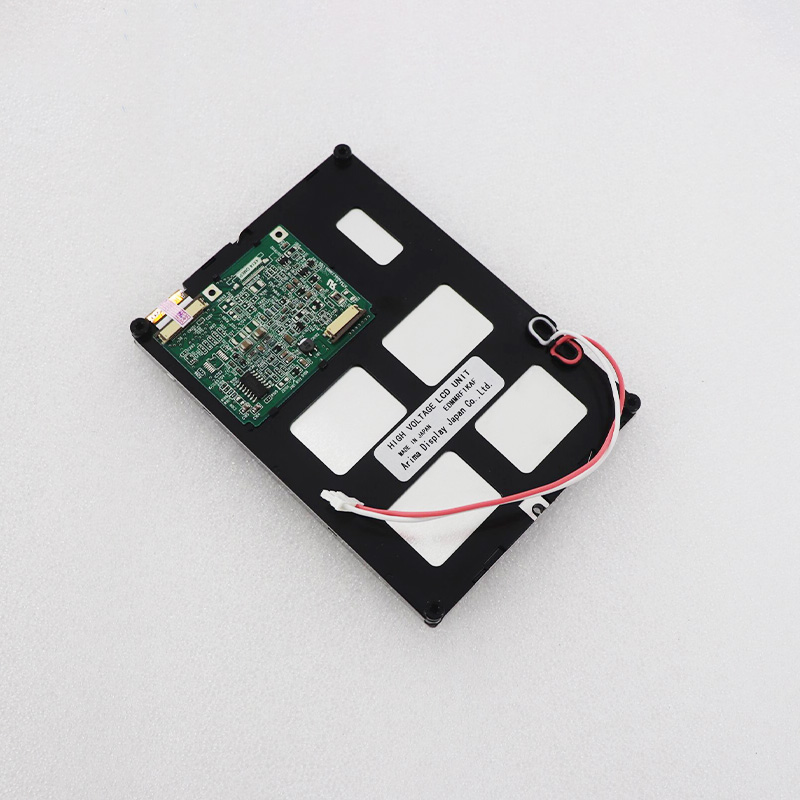
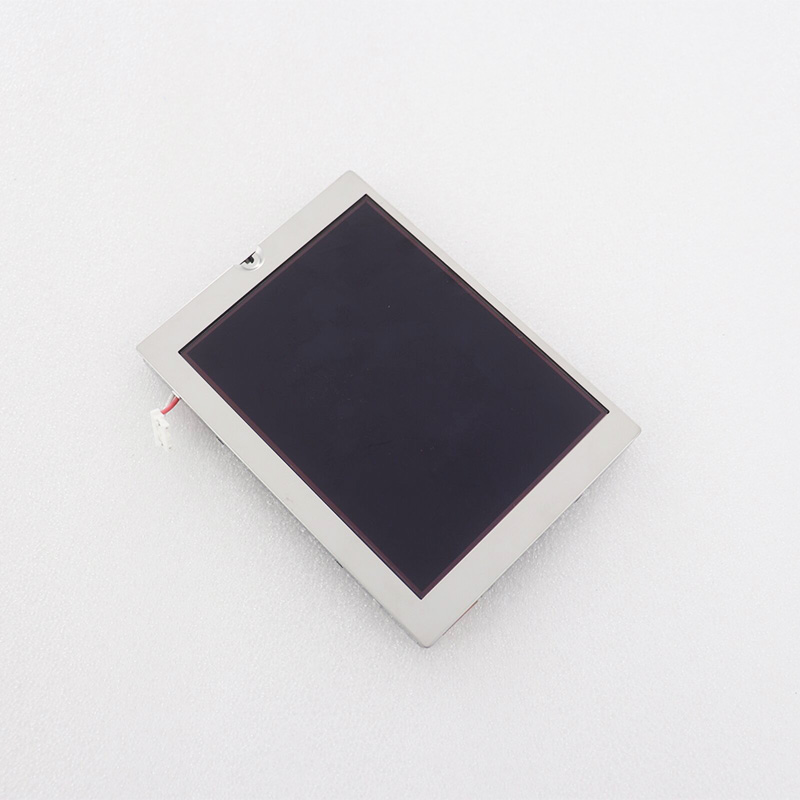
EDMMRF1KAF 5.7-inch LCD Panel Display
In the intricate world of electronic components, the display panel often serves as the critical interface between machine and user. Among the myriad of options available to engineers and product designers, the EDMMRF1KAF 5.7-inch LCD panel emerges as a specialized component worthy of detailed examination. This model number represents more than just a screen size; it encapsulates a specific set of technological parameters, performance characteristics, and application potentials that distinguish it in the competitive landscape of industrial and embedded displays.
This article delves into a comprehensive analysis of the EDMMRF1KAF display. We will move beyond basic specifications to explore its underlying technology, the unique advantages it offers, and the practical considerations for its integration. Our goal is to provide a resource that bridges the gap between a simple datasheet and real-world implementation, offering valuable insights for professionals involved in selecting display solutions for demanding environments where reliability, clarity, and durability are non-negotiable.
Decoding the EDMMRF1KAF: Core Specifications and Technology
The foundation of understanding any display module lies in its core specifications. The EDMMRF1KAF is fundamentally a 5.7-inch diagonal Liquid Crystal Display (LCD) panel, typically featuring a resolution of 320 x 240 pixels (QVGA). This resolution, while not high-definition, provides a sharp and functional pixel density for its size, ideal for displaying structured data, user interface elements, and graphics in industrial settings.
At its heart, the panel likely employs a Twisted Nematic (TN) or advanced In-Plane Switching (IPS) technology, which dictates its viewing angles, color reproduction, and response time. A key technological aspect is its integration of a resistive or capacitive touch screen, transforming it from a passive display into an interactive human-machine interface (HMI) component. The module is designed as a complete system, incorporating a LED backlight unit for illumination and a driver board that interprets signals from the host system. Understanding this technological stack is the first step in evaluating its suitability for a project.
Defining Characteristics and Competitive Advantages
What sets the EDMMRF1KAF apart from generic 5.7-inch displays? Its advantages are tailored for robustness and longevity. First, it is engineered for extended operational life, often rated for tens of thousands of hours, thanks to a high-quality LED backlight with stable drivers. Second, it is built to perform consistently across a wide temperature range, typically from -20°C to 70°C or broader, making it resilient in uncontrolled environments like factory floors or outdoor kiosks.
Furthermore, its optical bonding process—where the touch layer is laminated directly to the LCD—reduces internal reflection, enhances sunlight readability, and improves durability against condensation and physical shock. The panel's design often emphasizes low power consumption, a critical factor for portable or battery-operated devices. These characteristics collectively form a value proposition centered on reliability, not just raw pixel count.
Primary Applications and Industry Use Cases
The specific strengths of the EDMMRF1KAF panel naturally align with applications where environmental toughness and clear information presentation are paramount. In industrial automation, it serves as the face of PLCs (Programmable Logic Controllers), CNC machine controls, and test equipment interfaces. The medical device industry utilizes similar panels in portable diagnostic tools and monitoring equipment, where clarity and reliability can impact patient care.
Beyond these, it finds a home in transportation and logistics (e.g., vehicle telematics systems, forklift dashboards), point-of-sale (POS) terminals in retail, and building automation control panels. In each case, the display acts as a robust portal for operators to input commands and receive critical system feedback, enduring constant use and potentially harsh conditions where a consumer-grade screen would fail.
Critical Integration Considerations for Engineers
Successfully incorporating the EDMMRF1KAF into a product requires careful planning. The interface type (e.g., LVDS, RGB, or MIPI) must be compatible with the host processor's video output. Power supply design must account for the backlight's current draw, often requiring a dedicated constant-current driver to ensure even brightness and long life. Mechanical integration involves precise cutouts, secure mounting to withstand vibration, and sealing against dust and moisture if needed.
Software development is equally crucial. Drivers must be configured for the panel's exact timing parameters. For touch functionality, calibration routines and gesture recognition algorithms need to be implemented. Engineers must also plan for thermal management, ensuring the display and its drivers do not overheat in enclosed spaces, which could shorten lifespan or cause malfunctions.
Comparative Analysis with Alternative Display Sizes and Technologies
The 5.7-inch form factor occupies a strategic niche. Compared to smaller 3.5 or 4.3-inch displays, it offers significantly more real estate for complex data visualization and multi-parameter control without dominating the device's footprint. Conversely, against larger 7-inch or 10-inch panels, it provides a more compact and often more cost-effective solution for applications where space and budget are constrained.
Technologically, while OLED displays offer superior contrast and viewing angles, the EDMMRF1KAF's LCD-based technology typically provides better sunlight readability, longer lifespan (without risk of burn-in), and lower cost—key factors in industrial contexts. This comparative analysis underscores that component selection is a balancing act of size, performance, environment, and total cost of ownership.
Future-Proofing and Long-Term Supply Chain Strategy
Adopting a specialized industrial component like the EDMMRF1KAF necessitates a long-term view. A critical step is vetting the manufacturer and distributor for a proven track record of stable product lifecycle management. Industries like medical and industrial automation have long product development and service lives, making a guaranteed supply for 5-10 years essential.
Strategies include securing commitments for long-term orders, identifying and qualifying alternative secondary sources or pin-compatible modules, and maintaining a strategic buffer inventory. Furthermore, staying informed about the manufacturer's roadmap can alert designers to future iterations with enhanced features, facilitating planned upgrades. This proactive approach mitigates the significant risk of a product line being halted due to a single discontinued component.
FAQs: EDMMRF1KAF 5.7-Inch LCD Panel Display
1. What is the typical resolution of the EDMMRF1KAF panel?It commonly features a QVGA resolution of 320 x 240 pixels.
2. Does it include a touch screen?Yes, it is typically available with integrated resistive or capacitive touch screen options.
3. What is the operating temperature range?It is designed for a wide range, often from -20°C to 70°C, suitable for industrial environments.
4. What type of backlight does it use?It uses a long-life LED backlight system.
5. What are the main interface types for this panel?Common interfaces include LVDS, RGB parallel, and sometimes MIPI, depending on the specific module.
6. Is this panel suitable for outdoor use?With optical bonding for sunlight readability and a wide temperature range, it is suitable for many outdoor applications, though direct sunlight may still require a high-brightness version.
7. What industries commonly use this display size?Industrial automation, medical devices, transportation, POS systems, and building automation.
8. How does it compare to an OLED display?It generally offers better sunlight readability, longer lifespan, no burn-in risk, and lower cost, while OLEDs have better contrast and viewing angles.
9. What is optical bonding and why is it important?It laminates the touch layer to the LCD, reducing glare, improving durability, and enhancing readability in bright light.
10. How can I ensure long-term supply for my product?Work with reputable suppliers, secure lifecycle guarantees, consider buffer stock, and identify alternative or pin-compatible modules.
Conclusion
The EDMMRF1KAF 5.7-inch LCD panel is far more than a simple screen; it is a robust, engineered solution designed to meet the rigorous demands of professional and industrial applications. Its value lies not in ultra-high resolution, but in its proven reliability, environmental resilience, and optimized performance within a specific form factor. From its core technology and distinct advantages to its critical role in diverse industries, this display module represents a strategic choice for designers prioritizing durability and long-term functionality.
Selecting such a component requires a holistic approach, balancing technical integration with strategic supply chain planning. By understanding its full profile—from the engineering considerations during integration to the foresight needed for product lifecycle management—developers can leverage the EDMMRF1KAF to create interfaces that are not only functional but also fundamentally trustworthy, ensuring clear communication between human operators and complex machines for years to come.