- Industrie-LCD-Display
-
Industrial Products
- DC Servo Drive
- AC Servo Drive
- other
- Heidelberg
- FANUC
- IFM
- Meter
- CCD
- Membrane Keypad
- Film
- YOKOGAWA
- Card
- ABB
- MITSUBISHI
- FANUC
- KEYENCE
- BECKHOFF
- Honeywell
- HOLLYSYS
- FUJI servo drives
- HP
- solenoid valve
- thermostat
- Siemens adapter
- color oscilloscope
- Fujitsu connector
- CHELIC
- SMC
- CISCO
- INTEL
- Key board
- FAIRCHILD
- Der Aufsichtsrat
- Board
- Bearing
- other
- Control Panel
- Contactor
- Circuit
- Omron
- Relais.
- Der controller
- Optoelektronische schalter
- Optoelektronische sensoren
- Original
- Fan
- Motortreiber
- Endschalter
- Verstärker
- power supply
- LENZE
- Cable
- Encoder
- Sensor
- Transformator
- Fiber Optic Sensor
- Schutzrelais
- Temperaturregler
- Näherungsschalter
- Switch Sensor
- Siemens
- PCB
- HMI Touch-Glas
-
HMI-Vollautomat Ganze Einheit
- OMRON HMI Touch Panel
- Siemens HMI Touch Panel
- Mitsubishi HMI Touch Panel
- Allen-Bradley Automatisierung HMI Touch
- DELTA HMI Touch Panel
- EVIEW DELTA HMI Touch Panel
- KINCO DELTA HMI Touch Panel
- HITECH HMI Touch Panel
- WEINTECK HMI Touch Panel
- TECVIEW HMI Touch Panel
- WEINVIEW HMI Touch Panel
- PRO-FACE HMI Touch Panel
- SIMATIC HMI Touch Panel
- AMPIRE HMI Touch Panel
- HEIDELBERG HMI Touch Panel
- PANASONIC HMI Touch Panel
- PATLITE HMI Touch Panel
- KYOCERA HMI Touch Panel
- KEYENCE HMI Touch Panel
- WEINVIEW HMI Touch Panel
- HITECH HMI Touch Panel
- FUJI HMI Touch Panel
- HAKKO HMI Touch Panel
- SCHNEIDER HMI Touch Panel
- SAMKOON touch panel
- andere
- Module
- LCD Wechselrichter
- Membran Tastenfeld Schalter
- Winni Touch Screens
- Frequenzumrichter
- Servo Motor
- PLC



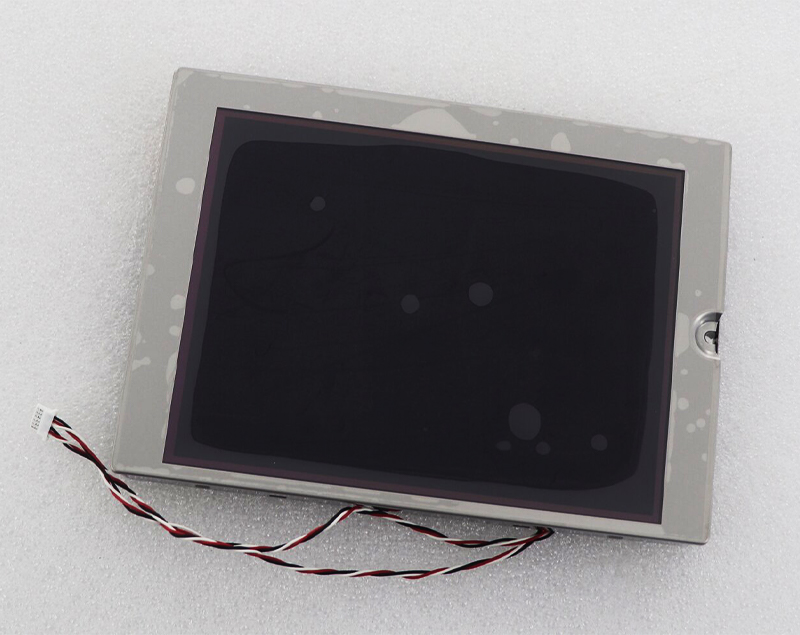
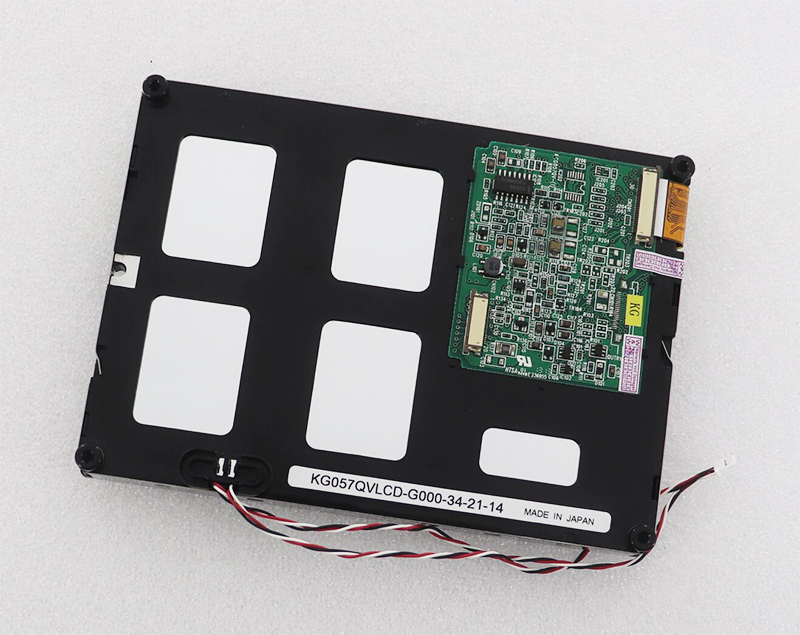
FOR KYOCERA KG057QVLCD-G000 320*240 5.7" STN LCD PANEL
In an era dominated by high-resolution TFT and OLED displays, the continued relevance of specific Super Twisted Nematic (STN) LCD panels, such as the Kyocera KG057QVLCD-G000, speaks volumes about the stringent demands of industrial applications. This 5.7-inch panel, with its modest 320x240 resolution, is not a relic of the past but a carefully engineered solution for environments where ruggedness, low power consumption, and sunlight readability are paramount. Unlike consumer-grade displays, this panel is designed for the long haul in medical devices, factory automation, and heavy machinery. This article delves beyond the basic specification sheet to explore the engineering trade-offs, interface nuances, and practical deployment strategies that define this component. We will examine why the STN architecture remains a viable choice, how to properly interface with it, and what factors determine its lifespan in critical systems. This is not just a component review; it is a guide for engineers and procurement specialists who need to understand the depth of value held within this specific Kyocera module.
To appreciate the KG057QVLCD-G000, one must first understand the foundational technology. While Thin-Film Transistor (TFT) LCDs offer superior color saturation and faster response times, they are inherently more complex and fragile. The STN (Super Twisted Nematic) architecture of this Kyocera panel operates on a passive matrix principle. This means it uses fewer transistors and a simpler glass structure, which yields a critical advantage: exceptional durability against thermal shock and mechanical vibration. In a factory floor environment or within a portable diagnostic tool, a TFT panel is more susceptible to pixel failure from physical stress.
Furthermore, power efficiency is a decisive factor. STN panels consume significantly less power than their TFT counterparts because they do not require a backlight of the same intensity or a constant refresh of a thin-film transistor array. For battery-operated industrial handhelds, this difference can extend operational uptime by hours. The trade-off, however, is visual: STN offers slower response times and a more limited viewing angle. The KG057QVLCD-G000 is optimized specifically for applications where contrast and readability in direct sunlight outweigh the need for cinematic motion clarity. Its monochrome or color STN (CSTN) variant prioritizes a high contrast ratio for static data displays like instrument clusters or control menus, making it a calculated choice for reliability over aesthetics.
The KG057QVLCD-G000 operates via a parallel interface, typically an 8-bit or 18-bit data bus. This is a critical point for engineers integrating the display. Unlike modern displays that use serial interfaces like LVDS or MIPI, this panel relies on a direct digital interface requiring precise timing signals (HSYNC, VSYNC, Dot Clock, and Data Enable). A common misstep is assuming a simple microcontroller can drive this display without a dedicated graphics controller or an FPGA.
The timing constraints for this specific model are unforgiving. Engineers must adhere to strict setup and hold times for the data lines relative to the pixel clock. Signal integrity becomes paramount; long, unshielded ribbon cables can introduce crosstalk, resulting in ghosting or missing columns of pixels. It is highly recommended to use 1% to 2% tolerance termination resistors on the control lines and keep the data lines as short as possible. Furthermore, the panel requires specific voltage levels for its logic (typically 3.3V or 5V, depending on the revision). Interfacing with a newer 2.8V logic microcontroller level, without proper level shifting, will lead to intermittent functionality or permanent damage to the input gates of the panel driver ICs. A thorough review of the datasheet’s AC timing table is not optional; it is the blueprint for a stable display.
One of the most challenging aspects of deploying an STN panel is achieving optimal visual performance. Unlike TFT panels which have a uniform brightness curve, STN panels are highly sensitive to driving voltage and temperature. The KG057QVLCD-G000 includes a built-in negative voltage generator (VEE) for the LCD bias, but the contrast (Vop) must be calibrated. A software-controlled digital potentiometer or an analog trim pot is essential for adjusting the LCD drive voltage.
Calibration should occur at the operating temperature of the device, not during initial benchtop testing at room temperature. As the panel heats up, its optical characteristics shift, and a Vop set at 25°C will cause the display to appear washed out or overly dark at 50°C. The viewing angle is another critical parameter. This Kyocera panel is typically designed for a 6 o’clock viewing direction (best viewed from below). Mounting the final product at a different angle (e.g., tilted upward or downward) will drastically reduce legibility. For high-ambient-light conditions, consider adding a circular polarizer to the front surface. This reduces glare from the glass surface, enhancing the apparent contrast ratio without increasing backlight power, which is a standard technique in avionics and outdoor kiosk design.
CCFL Version: Offers a warm, stable light spectrum but has a finite lifespan (typically 10,000 to 20,000 hours to half-brightness). It requires a high-voltage inverter circuit (often 500V-1000V AC) to ignite. Failure of the inverter or the lamp itself results in a completely dark display, even if the glass is fully functional.
LED Version: More efficient and longer lasting (50,000+ hours), but driven by a constant current source. A common mistake is driving the LED array with a constant voltage, which causes rapid LED degradation (color shift and dimming).
For 24/7 operation in medical or security applications, we recommend derating the backlight current to 80% of the maximum specification. This simple measure can extend the backlight lifespan by 2x to 3x. Furthermore, implementing a PWM dimming control using a high-frequency signal (above 200 Hz) prevents audible coil whine from the inverter or LED driver, a frequent complaint in quiet hospital environments. Replacing a backlight is significantly cheaper than replacing the entire module, so ensure your design allows for access to this consumable component.
As a mature component, the KG057QVLCD-G000 is subject to obsolescence cycles and market variation. When sourcing this display, beware of "compatible" or "equivalent" modules from third-party manufacturers. While they may fit physically, subtle differences in the controller IC register set or timing margins can cause the display to operate incorrectly or fail prematurely. Always request the Kyocera original part number and cross-reference it with the specific operating temperature range required.
A critical compatibility issue is the connector. This panel uses a specialized pitch connector (often 20-pin or 31-pin). Ensure your connector supplier provides the correct mating part with the correct gold-plated contacts to avoid corrosion in humid environments. Additionally, ESD (Electrostatic Discharge) protection is paramount. The driver ICs on the glass are exposed at the bonding area. A discharge of only a few hundred volts can damage the input buffers, leading to a "dead column" or "line flicker." We strongly advise the use of a shielded interconnect cable and transient voltage suppression (TVS) diodes on all signal lines within 10cm of the display connector. Treating this panel not just as a display, but as a sensitive electronic component, will dramatically reduce field-failure rates.
Q: Can I drive this panel with a Raspberry Pi?
A: Not directly. The GPIO pins do not provide the high-speed, parallel timing required. You must use a dedicated parallel-to-LCD controller (e.g., an FTDI EVE chip or an FPGA) to interface with it.
Q: What is the typical power consumption?
A: The glass panel itself consumes roughly 0.5W to 1W. The backlight (CCFL or LED) typically adds 2W to 4W, depending on brightness settings.
Q: How does the CSTN color version compare to TFT?
A: CSTN (Color STN) has slower response times (typically 100-200ms vs 20ms for TFT) and limited color depth (256 colors vs 16 million). It is not suitable for video.
Q: My display shows horizontal lines. What is the cause?
A: This usually indicates a voltage ripple on the VEE (negative bias) supply or a weak connection on the LCD bias pin. Check your DC-DC converter output for noise.
Q: Is the CCFL backlight repairable?
A: Yes, but it requires careful disassembly of the metal frame and handling of the glass CCFL tube. It is often more cost-effective to replace the entire backlight unit or the module.
Q: What is the optimal viewing angle for this display?
A: The datasheet specifies a 6 o’clock viewing direction. That means the best contrast is achieved when viewing from slightly below the perpendicular.
Q: Can I use a higher resolution image on this 320x240 panel?
A: No. The panel has a fixed physical resolution. You must scale or crop your source image to 320x240 pixels.
Q: How do I clean the surface of the polarizer?
A: Use a soft, lint-free microfiber cloth slightly dampened with distilled water. Never use alcohol or acetone as these will chemically damage the polarizer film.
Q: What happens if the panel gets too hot (above 70°C)?
A: The liquid crystal fluid will begin to break down, causing permanent black spots or "burn-in." This is irreversible. Ensure proper ventilation and thermal isolation.
Q: Are there drop-in replacements if Kyocera obsoletes this part?
A: There are no direct drop-in replacements. You would need to redesign the mounting, interface, and controller firmware to use a modern TFT panel of similar size.
Conclusion: Maximizing Value Beyond the Specification Sheet
The Kyocera KG057QVLCD-G000 is more than a simple display; it is a mission-critical component for applications that demand reliability over flashy aesthetics. Its STN architecture, while technically dated, provides unmatched advantages in power efficiency and mechanical robustness when compared to modern TFT alternatives. Success with this panel hinges not on its raw capabilities, but on the engineering discipline applied around it: precise timing control, careful backlight management, and environmental hardening. For engineers and procurement teams, the key takeaway is to treat this component as a system. Investing in proper signal integrity, temperature-compensated contrast calibration, and a robust power supply will yield a display that operates flawlessly for a decade or more. As the industry rushes toward higher resolutions, the quiet, steadfast performance of the KG057QVLCD-G000 serves as a powerful reminder that the best solution for a specific problem is not always the newest one. It is the one that works, reliably, under the worst conditions.