- Industrial LCD display
-
Industrial Products
- DC Servo Drive
- AC Servo Drive
- other
- Heidelberg
- FANUC
- IFM
- Meter
- CCD
- Membrane Keypad
- Film
- YOKOGAWA Module
- Card
- ABB
- MITSUBISHI
- FANUC
- KEYENCE
- BECKHOFF
- Honeywell
- HOLLYSYS
- FUJI servo drives
- HP
- solenoid valve
- thermostat
- Siemens adapter
- color oscilloscope
- Fujitsu connector
- CHELIC
- SMC
- CISCO Module
- INTEL
- Key board
- FAIRCHILD
- Motherboard
- Board
- Bearing
- other
- Control Panel
- Contactor
- Circuit
- OMRON
- Relay
- Controller
- Photoelectric Switch
- Photoelectric Sensor
- Original
- Fan
- Motor Driver
- Limit Switch
- Amplifier
- power supply
- LENZE
- Cable
- Encoder
- Sensor
- Transformer
- Fiber Optic Sensor
- Protection Relay
- Temperature Controller
- Proximity Switch
- Switch Sensor
- Siemens
- Industrial board
- HMI Touch Glass
-
HMI Full Machine Whole unit
- OMRON HMI Touch Panel
- Siemens HMI Touch Panel
- Mitsubishi HMI Touch Panel
- Allen-Bradley automation HMI Touch Panel
- DELTA HMI Touch Panel
- EVIEW DELTA HMI Touch Panel
- KINCO DELTA HMI Touch Panel
- HITECH HMI Touch Panel
- WEINTECK HMI Touch Panel
- TECVIEW HMI Touch Panel
- WEINVIEW HMI Touch Panel
- PRO-FACE HMI Touch Panel
- SIMATIC HMI Touch Panel
- AMPIRE HMI Touch Panel
- HEIDELBERG HMI Touch Panel
- PANASONIC HMI Touch Panel
- PATLITE HMI Touch Panel
- KYOCERA HMI Touch Panel
- KEYENCE HMI Touch Panel
- WEINVIEW HMI Touch Panel
- HITECH HMI Touch Panel
- FUJI HMI Touch Panel
- HAKKO HMI Touch Panel
- SCHNEIDER HMI Touch Panel
- SAMKOON touch panel
- other
- Module
- lcd inverter
- Membrane Keypad Switch
- Winni Touch Screens
- Frequency Inverter
- Servo Motor
- PLC




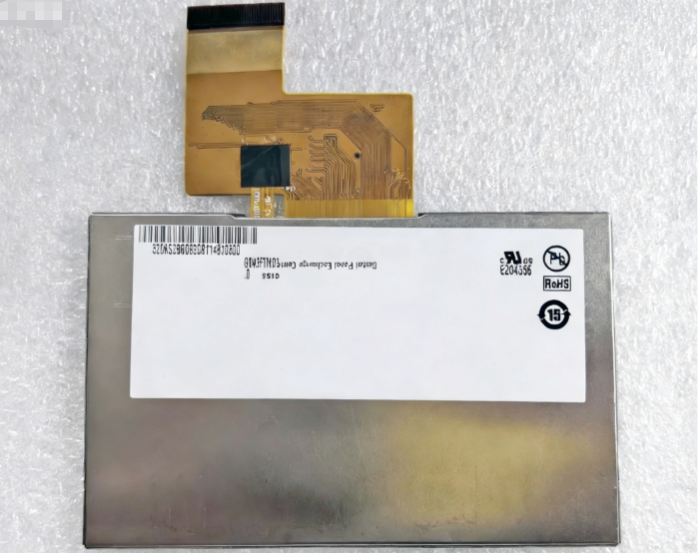
G043FTN01.0 AUO 4.3 inch TFT-LCD screen 480*272 Display
In the intricate world of electronic components, the display often serves as the critical interface between a device and its user. Among the myriad of options available to engineers and product designers, the G043FTN01.0 from AUO (AU Optronics) stands out as a highly specialized and reliable solution for applications where compact size, clear visibility, and robust performance are paramount. This 4.3-inch TFT-LCD module, with its resolution of 480 x 272 pixels (WVGA), represents a mature yet continually relevant technology in industrial, automotive, and portable device markets.
This article delves into a comprehensive analysis of the G043FTN01.0 screen. We will move beyond basic specifications to explore its underlying technology, the specific advantages conferred by its design choices, and the practical considerations for integration. Our journey will cover its core characteristics, the rationale behind its resolution and size, its electrical and mechanical interface, ideal application scenarios, and crucial integration guidelines. The goal is to provide a deep, actionable understanding of where and how this display module can be effectively deployed to create superior user experiences in demanding environments.
Unpacking the G043FTN01.0: Core Specifications and Technology
The AUO G043FTN01.0 is a 4.3-inch diagonal TFT (Thin-Film Transistor) Liquid Crystal Display module. Its native resolution of 480 x 272 pixels is classified as Wide Video Graphics Array (WVGA), a format that provides a wider aspect ratio compared to standard VGA. The module typically incorporates a built-in LED backlight unit, ensuring uniform brightness and long operational life. As a transmissive LCD, it requires a backlight to be visible, making it suitable for most indoor and many controlled outdoor lighting conditions.
Key technological features include its a-Si (amorphous Silicon) TFT process, which offers a proven balance of performance, yield, and cost-effectiveness. The module delivers a standard color depth of 262K/16.7M colors (6-bit/8-bit interface), producing vibrant and clear images. Understanding these foundational specs is crucial, as they directly influence optical performance, compatibility with controller hardware, and the overall visual quality of the end product.

The Rationale Behind 4.3-Inch and 480x272 Resolution
The choice of a 4.3-inch diagonal with a 480x272 resolution is not arbitrary but a result of careful engineering trade-offs. This size offers a substantial viewing area for information display while maintaining exceptional compactness, a critical factor for embedded systems where panel real estate is limited. The WVGA resolution at this size results in a pixel pitch that yields good sharpness for text and graphics without overwhelming the host system's graphical processing capabilities.
This combination strikes an optimal balance between detail clarity and system cost. It provides sufficient pixels to display intuitive icons, readable multi-line text, and clear schematic diagrams, which is essential for human-machine interfaces (HMIs). Furthermore, this resolution aligns well with many low-to-mid-range microprocessor and FPGA video outputs, simplifying the design of the driving circuitry and reducing overall bill-of-materials costs.
Electrical Interface and Signal Requirements
Designers must pay close attention to the voltage level requirements for logic (often 3.3V or 5V) and the backlight driver circuit. The LED backlight usually requires a constant current driver to ensure stable luminosity and longevity. Additionally, the power sequencing guidelines—the order in which panel power, logic power, and signals are applied and removed—are critical to prevent latent damage and ensure reliable startup and shutdown.
Mechanical Design and Environmental Considerations
The mechanical footprint and construction of the G043FTN01.0 are designed for robust integration. The module includes a defined outline dimension, bezel area, and the location of mounting holes. These precise specifications allow engineers to design enclosures and front panels with accurate cutouts. The interface is commonly through a flexible printed circuit (FPC) cable with a connector, necessitating careful routing and strain relief in the final assembly.
Environmental robustness is a key strength. Many versions of this panel are specified to operate over a wide temperature range, suitable for industrial environments. Designers must also consider optical bonding options, which fill the air gap between the LCD and the cover glass or touch panel. This bonding enhances readability in high-ambient-light conditions, reduces internal condensation, and improves mechanical durability against shock and vibration.
Ideal Application Scenarios and Use Cases
The G043FTN01.0 finds its niche in applications where reliability, clarity, and space efficiency are more critical than ultra-high resolution. A primary domain is industrial human-machine interfaces (HMIs) for control systems, PLCs, and test equipment. Its size is perfect for compact control panels that need to display status, parameters, and diagnostic data clearly.
Other prominent use cases include aftermarket automotive displays for rear-seat entertainment, navigation units, or diagnostic tools; portable medical monitoring devices; and specialized handheld terminals for logistics and field service. In these contexts, the module's proven technology, stable supply chain, and predictable performance often outweigh the allure of newer, but potentially less rugged or more power-hungry, display technologies.
Integration Best Practices and Common Challenges
Integrating this display smoothly requires adherence to several best practices. First, always source the official datasheet and application notes from AUO or authorized distributors, as they contain vital timing diagrams and power specifications. Second, prototype with a known-good evaluation kit to validate signal integrity and software drivers before designing custom hardware.
Common challenges include managing electromagnetic interference (EMI) from the high-speed data lines, which may require careful PCB layout with impedance control and shielding. Another frequent issue is backlight uniformity or dimming flicker, often traceable to an inadequate or poorly configured LED driver circuit. Ensuring the host controller can consistently drive the display at its required frame rate without dropping frames is also essential for a flicker-free user experience.
FAQs: G043FTN01.0 Display Module
10. Is this panel still in active production?Availability should be checked with AUO or distributors, as it is a mature product. It may be in sustained production or have recommended replacements.
Conclusion
The AUO G043FTN01.0 4.3-inch TFT-LCD module exemplifies how a well-executed, purpose-driven display solution maintains relevance in a fast-evolving market. Its strength lies not in cutting-edge specs, but in its proven reliability, optimal form-factor, and ease of integration for specific industrial and embedded applications. The 480x272 resolution on a 4.3-inch canvas provides a practical balance of information density and hardware simplicity.
For engineers and product developers, selecting this module is a strategic decision that prioritizes durability, cost-effectiveness, and a mature supply chain. By thoroughly understanding its electrical and mechanical requirements, and adhering to integration best practices, developers can leverage this robust display to create interfaces that are clear, reliable, and perfectly suited for demanding environments. In the world of embedded displays, the G043FTN01.0 remains a solid and intelligent choice for a wide range of professional applications.