- Industrie-LCD-Display
-
Industrial Products
- DC Servo Drive
- AC Servo Drive
- other
- Heidelberg
- FANUC
- IFM
- Meter
- CCD
- Membrane Keypad
- Film
- YOKOGAWA
- Card
- ABB
- MITSUBISHI
- FANUC
- KEYENCE
- BECKHOFF
- Honeywell
- HOLLYSYS
- FUJI servo drives
- HP
- solenoid valve
- thermostat
- Siemens adapter
- color oscilloscope
- Fujitsu connector
- CHELIC
- SMC
- CISCO
- INTEL
- Key board
- FAIRCHILD
- Der Aufsichtsrat
- Board
- Bearing
- other
- Control Panel
- Contactor
- Circuit
- Omron
- Relais.
- Der controller
- Optoelektronische schalter
- Optoelektronische sensoren
- Original
- Fan
- Motortreiber
- Endschalter
- Verstärker
- power supply
- LENZE
- Cable
- Encoder
- Sensor
- Transformator
- Fiber Optic Sensor
- Schutzrelais
- Temperaturregler
- Näherungsschalter
- Switch Sensor
- Siemens
- PCB
- HMI Touch-Glas
-
HMI-Vollautomat Ganze Einheit
- OMRON HMI Touch Panel
- Siemens HMI Touch Panel
- Mitsubishi HMI Touch Panel
- Allen-Bradley Automatisierung HMI Touch
- DELTA HMI Touch Panel
- EVIEW DELTA HMI Touch Panel
- KINCO DELTA HMI Touch Panel
- HITECH HMI Touch Panel
- WEINTECK HMI Touch Panel
- TECVIEW HMI Touch Panel
- WEINVIEW HMI Touch Panel
- PRO-FACE HMI Touch Panel
- SIMATIC HMI Touch Panel
- AMPIRE HMI Touch Panel
- HEIDELBERG HMI Touch Panel
- PANASONIC HMI Touch Panel
- PATLITE HMI Touch Panel
- KYOCERA HMI Touch Panel
- KEYENCE HMI Touch Panel
- WEINVIEW HMI Touch Panel
- HITECH HMI Touch Panel
- FUJI HMI Touch Panel
- HAKKO HMI Touch Panel
- SCHNEIDER HMI Touch Panel
- SAMKOON touch panel
- andere
- Module
- LCD Wechselrichter
- Membran Tastenfeld Schalter
- Winni Touch Screens
- Frequenzumrichter
- Servo Motor
- PLC


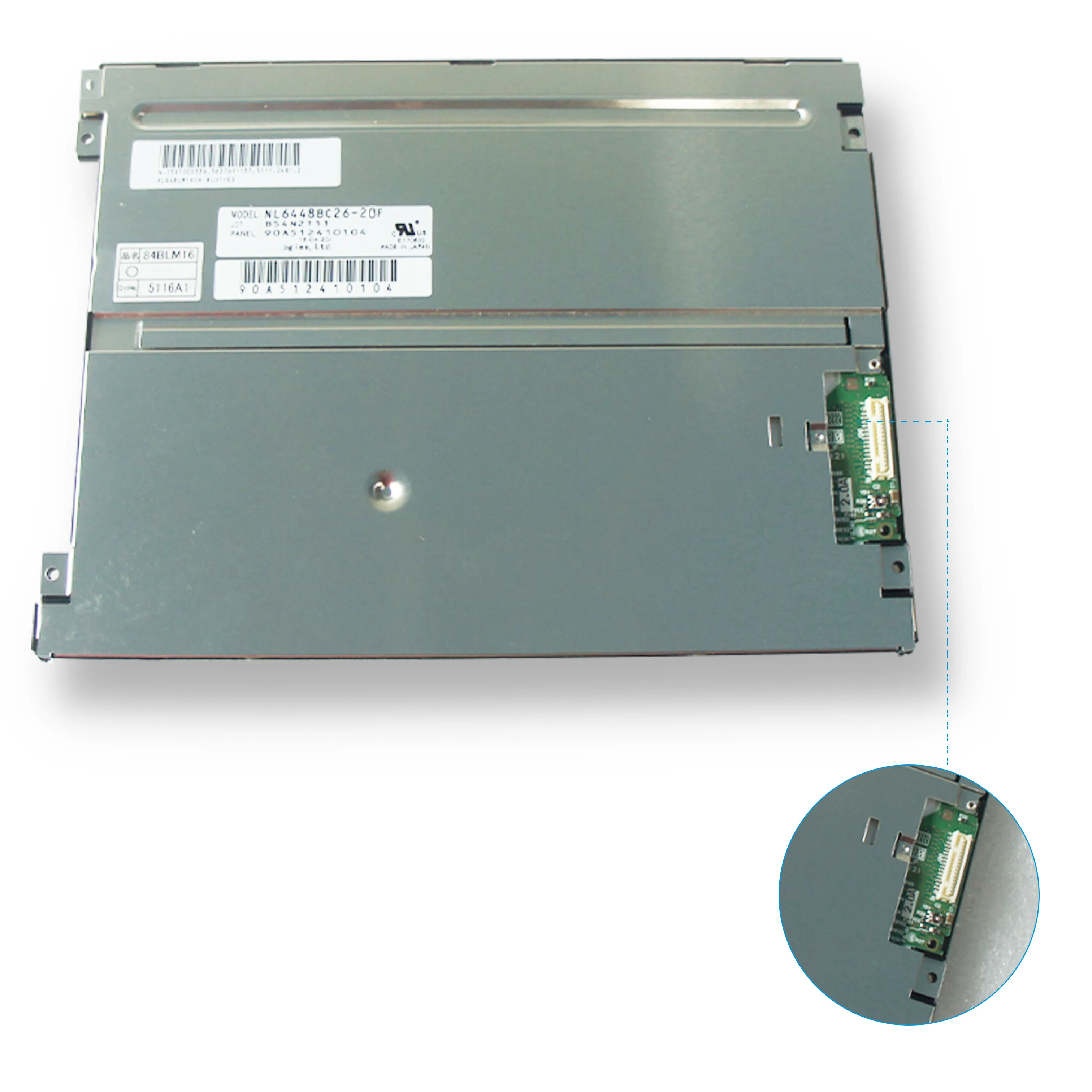


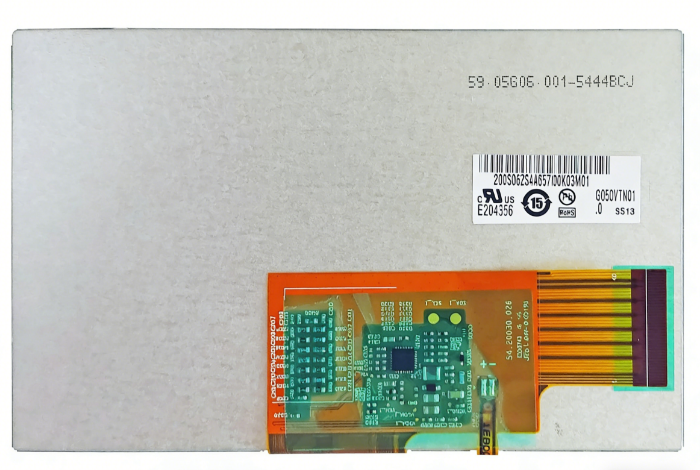
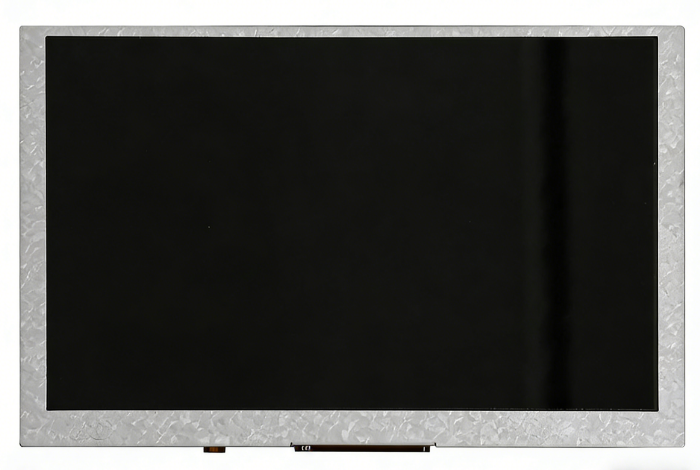
G050VAN01.0 AUO 5 inch TFT-LCD screen 800*480 Display
In the intricate world of electronic components, where specifications often blur into a sea of part numbers, the G050VAN01.0 emerges as a distinct and highly capable solution for embedded visual interfaces. This 5-inch TFT-LCD module, manufactured by AU Optronics (AUO), represents a specific convergence of form, function, and reliability tailored for industrial, automotive, and dedicated device applications. With its 800 x 480 pixel resolution (commonly known as WVGA), this display strikes a critical balance between sufficient detail and manageable data throughput.
This article delves beyond the basic datasheet to explore the G050VAN01.0's role in modern engineering. We will dissect its core technological profile, examine the advantages of its specific interface and rugged construction, and contextualize its position within the competitive landscape. Our goal is to provide system integrators, product designers, and procurement specialists with a comprehensive understanding of where this particular display excels, its potential limitations, and the key considerations for successful implementation in demanding environments.
Technical Anatomy of the G050VAN01.0 Module
At its heart, the G050VAN01.0 is an a-Si (amorphous Silicon) TFT-LCD panel. The 5-inch diagonal active area provides a compact viewing surface, while the 800 x 480 resolution yields a pixel density of approximately 186 PPI. This WVGA format offers 60% more pixels than traditional 480x272 displays, resulting in noticeably sharper text and more detailed graphics without requiring excessive processing power for rendering.
The module typically incorporates a standard RGB interface, often in 24-bit parallel format, allowing for direct connection to many mainstream microprocessors and application processors. This direct drive capability simplifies design by reducing the need for external bridge chips. Crucially, the module is a fully integrated unit, containing the LCD glass, driver ICs, backlight (usually LED-based for longevity and low power), and a sturdy metal or plastic frame. This integration transforms a bare panel into a drop-in component, significantly reducing development time and complexity for engineers.
Key Performance Characteristics and Strengths
The G050VAN01.0 is engineered for stability and readability. It commonly features a brightness rating of 300-400 nits, making it suitable for indoor use and many semi-outdoor applications where ambient light is controlled. The contrast ratio, often around 500:1, ensures solid differentiation between dark and light areas on the screen.
Its true strength lies in its industrial-grade design parameters. Unlike consumer-grade screens, this module is specified for a wide operating temperature range, typically from -20°C to 70°C, ensuring functionality in harsh thermal environments. Furthermore, its long-life LED backlight is rated for tens of thousands of hours of continuous operation, a critical factor for kiosks, medical devices, or industrial control panels that cannot afford frequent downtime. The robust mechanical construction also provides resistance to vibration and shock, which is paramount in automotive or mobile applications.
The Critical Role of the Interface and Compatibility
Successful integration hinges on interface compatibility. The parallel RGB interface of the G050VAN01.0 is both its advantage and a point of careful consideration. It allows for real-time, high-speed data transfer directly from the host controller's display controller unit, minimizing latency. Designers must ensure their host processor supports this parallel output with a timing configuration that matches the display's strict requirements for horizontal/vertical sync, dot clock, and data enable signals.
For systems using processors with only serial (LVDS, MIPI) outputs, an additional LCD controller board or bridge IC becomes mandatory, adding cost and complexity. Therefore, selecting this display is most efficient when paired with a compatible host from the outset. Understanding voltage level requirements (typically 3.3V for logic and 5-12V for backlight) and designing appropriate power sequencing circuits are also vital steps to prevent potential damage during power-up/power-down cycles.
Primary Application Sectors and Use Cases
The G050VAN01.0 finds its niche in markets where reliability trumps ultra-high resolution. In industrial human-machine interfaces (HMIs), it serves as the visual conduit for factory automation, PLC control screens, and test equipment, where its wide temperature range and longevity are essential.
The automotive aftermarket and dedicated vehicle telematics systems utilize it for rear-seat entertainment, navigation displays, or fleet management terminals, benefiting from its vibration resistance. Other prominent applications include portable medical diagnostic devices, home automation control panels, point-of-sale terminals, and specialized handheld instruments. In each case, the display is valued as a dependable, "always-on" component that performs consistently over many years.
Comparative Analysis with Alternative Display Options
Positioning the G050VAN01.0 requires comparison. Against lower-resolution 5-inch panels (480x272), it offers superior clarity, making it a compelling upgrade for next-generation products. Compared to higher-resolution 5-inch screens (e.g., 720p), it demands less from the host processor's graphics subsystem and memory bandwidth, potentially lowering overall system cost and power consumption.
The choice between a integrated module like this and a bare panel approach is significant. A bare panel requires sourcing and integrating a separate backlight, driver boards, and frame—a process that offers customization but adds substantial engineering overhead. The G050VAN01.0 module provides a validated, tested solution, reducing time-to-market and qualification risks, which is often more valuable than marginal cost savings on the component itself.
Sourcing, Lifespan, and Design-In Considerations
As a specific part from a major manufacturer like AUO, the G050VAN01.0 is subject to standard electronic component lifecycle policies. Engineers must verify its active production status and long-term availability for products with multi-year manufacturing cycles. Engaging with authorized distributors or the manufacturer directly is crucial.
Design-in involves more than electrical connection. Mechanical mounting, using the provided screw holes, must account for tolerance stacks. The viewing experience can be fine-tuned by specifying optional optical enhancements, such as polarizer treatments for improved sunlight readability or bonding with a projected capacitive touchscreen for intuitive interaction. Planning for these options early in the design phase ensures a seamless and professional end-product.
Frequently Asked Questions (FAQs)
Q10: Where can I find the detailed datasheet?A10: The official datasheet should be sourced from AUO's website or through their authorized distributors for the most accurate specifications.
Conclusion
The AUO G050VAN01.0 5-inch TFT-LCD module is far more than a simple screen; it is a engineered subsystem optimized for durability and integration. Its WVGA resolution provides a sweet spot of clarity for embedded applications, while its industrial construction ensures performance where consumer-grade components would fail. The choice to use this module ultimately hinges on a clear alignment between its strengths—wide temperature operation, long lifespan, and parallel RGB compatibility—and the project's core requirements for reliability and environmental endurance.
For designers navigating the complex component selection process, the G050VAN01.0 stands out as a proven, vendor-backed solution that mitigates risk and accelerates development. By thoroughly understanding its technical profile, interface needs, and ideal application contexts, engineering teams can leverage this display to build robust and dependable human-machine interfaces that stand the test of time and environment.