- Industrie-LCD-Display
-
Industrial Products
- DC Servo Drive
- AC Servo Drive
- other
- Heidelberg
- FANUC
- IFM
- Meter
- CCD
- Membrane Keypad
- Film
- YOKOGAWA
- Card
- ABB
- MITSUBISHI
- FANUC
- KEYENCE
- BECKHOFF
- Honeywell
- HOLLYSYS
- FUJI servo drives
- HP
- solenoid valve
- thermostat
- Siemens adapter
- color oscilloscope
- Fujitsu connector
- CHELIC
- SMC
- CISCO
- INTEL
- Key board
- FAIRCHILD
- Der Aufsichtsrat
- Board
- Bearing
- other
- Control Panel
- Contactor
- Circuit
- Omron
- Relais.
- Der controller
- Optoelektronische schalter
- Optoelektronische sensoren
- Original
- Fan
- Motortreiber
- Endschalter
- Verstärker
- power supply
- LENZE
- Cable
- Encoder
- Sensor
- Transformator
- Fiber Optic Sensor
- Schutzrelais
- Temperaturregler
- Näherungsschalter
- Switch Sensor
- Siemens
- PCB
- HMI Touch-Glas
-
HMI-Vollautomat Ganze Einheit
- OMRON HMI Touch Panel
- Siemens HMI Touch Panel
- Mitsubishi HMI Touch Panel
- Allen-Bradley Automatisierung HMI Touch
- DELTA HMI Touch Panel
- EVIEW DELTA HMI Touch Panel
- KINCO DELTA HMI Touch Panel
- HITECH HMI Touch Panel
- WEINTECK HMI Touch Panel
- TECVIEW HMI Touch Panel
- WEINVIEW HMI Touch Panel
- PRO-FACE HMI Touch Panel
- SIMATIC HMI Touch Panel
- AMPIRE HMI Touch Panel
- HEIDELBERG HMI Touch Panel
- PANASONIC HMI Touch Panel
- PATLITE HMI Touch Panel
- KYOCERA HMI Touch Panel
- KEYENCE HMI Touch Panel
- WEINVIEW HMI Touch Panel
- HITECH HMI Touch Panel
- FUJI HMI Touch Panel
- HAKKO HMI Touch Panel
- SCHNEIDER HMI Touch Panel
- SAMKOON touch panel
- andere
- Module
- LCD Wechselrichter
- Membran Tastenfeld Schalter
- Winni Touch Screens
- Frequenzumrichter
- Servo Motor
- PLC




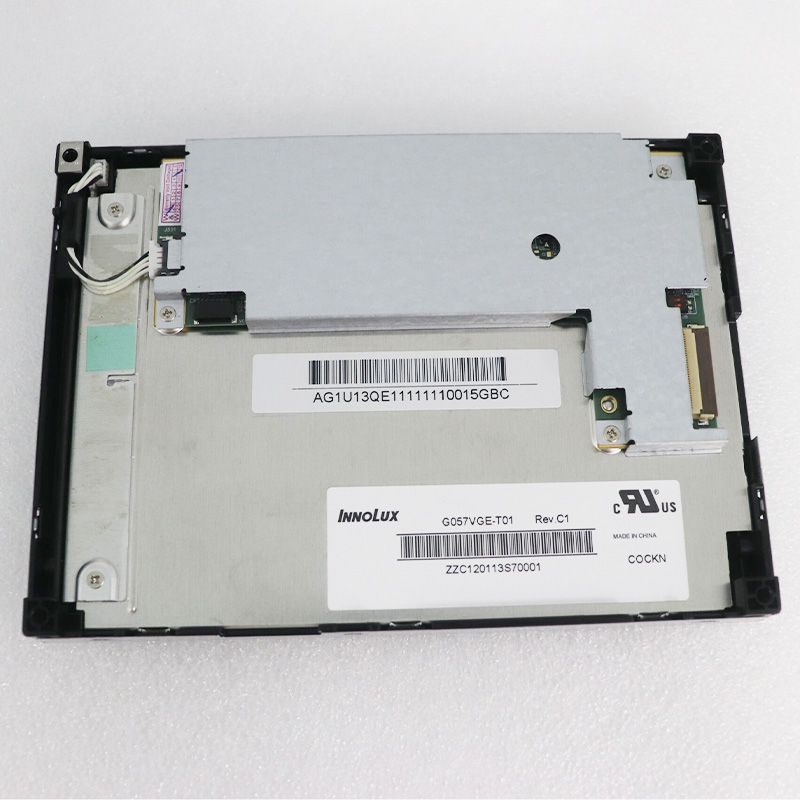
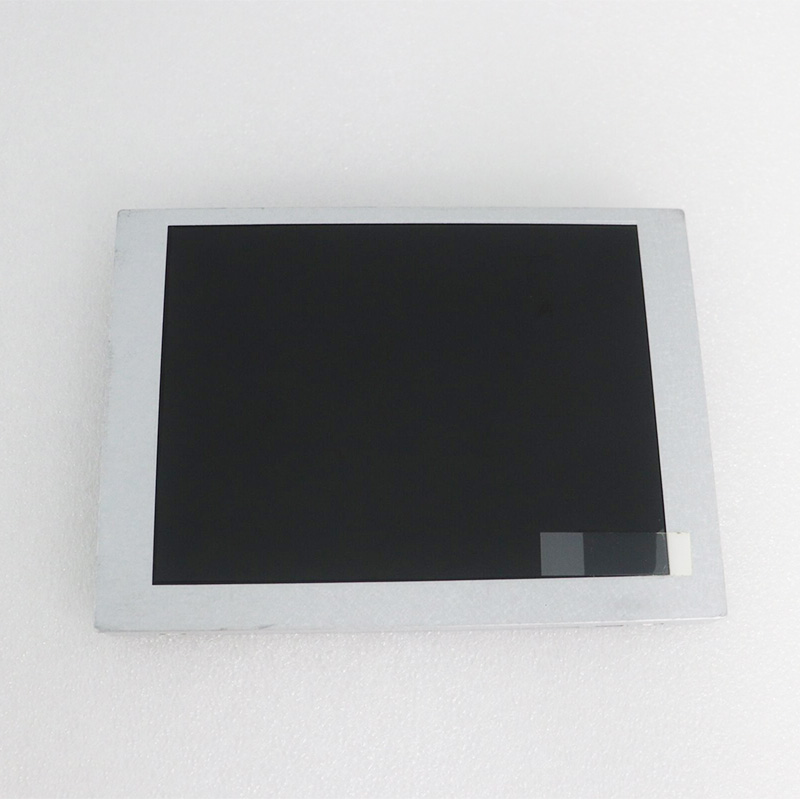
In the intricate world of electronic components, where specifications dictate performance and form factor defines application, the Innolux G057VGE-T01 emerges as a highly specialized display solution. This 5.7-inch LCD panel, with its distinctive 640x480 resolution, occupies a unique niche that bridges legacy requirements with modern manufacturing. It is not merely a screen; it is a critical interface component engineered for industrial, medical, and embedded systems where reliability, readability, and longevity are non-negotiable.
This article delves into a comprehensive analysis of the G057VGE-T01. We will move beyond basic datasheet parameters to explore its underlying technology, the rationale behind its seemingly "retro" aspect ratio, and the specific market demands it fulfills. From its optical performance and rugged construction to its integration challenges and competitive landscape, we will unpack why this particular panel remains a relevant and often preferred choice in an era dominated by high-resolution smartphone displays.
Decoding the Specification: A Panel Built for Precision
The G057VGE-T01 is a 5.7-inch diagonal TFT-LCD module with an active area of 115.2mm x 86.4mm. Its defining characteristic is the VGA (640 x 480 pixel) resolution, which yields a pixel pitch of approximately 0.180mm x 0.180mm. This specification is far from arbitrary. In many industrial and medical applications, excessive pixel density is not a benefit but a liability. The larger, more defined pixels of a VGA panel on a 5.7-inch canvas ensure exceptional character legibility and sharp, unambiguous graphics for diagnostic readouts, control system interfaces, or instrumentation data.
Furthermore, the panel employs In-Plane Switching (IPS) technology. This is a critical differentiator, as IPS provides superior viewing angles—typically 85/85/85/85 degrees in all directions—compared to older TN panels. For equipment where the operator may not be directly in front of the screen, consistent color and contrast across wide angles are essential. The module also features a standard RGB interface and a robust 20-pin connector, emphasizing its design for direct integration into larger electronic assemblies rather than consumer-grade plug-and-play use.
The Enduring Relevance of the 4:3 Aspect Ratio
In a world of widescreen 16:9 and taller 18:9 displays, the G057VGE-T01's steadfast 4:3 aspect ratio is a statement of purpose. This format is intrinsically linked to its target applications. Industrial Human-Machine Interfaces (HMIs), patient monitoring devices, laboratory equipment, and legacy system upgrades were originally designed for square-ish CRT monitors. Migrating these interfaces to a widescreen format would either result in wasteful, unused screen real estate or force a costly and potentially confusing UI redesign.
The 4:3 ratio provides an optimal fit for data-dense, form-driven interfaces. It allows for the logical stacking of information, menus, and status indicators without the need for horizontal scrolling. For applications involving portrait-mode document display or specific diagnostic imaging that originated in square formats, the 4:3 panel is physically and digitally congruent. Its continued production is a direct response to the long lifecycles and design inertia of B2B and B2G sectors, where standardization often trumps trendiness.
Optical Performance and Ruggedized Design
Performance for a panel like the G057VGE-T01 is measured not in millions of colors for entertainment, but in clarity, stability, and endurance. It typically offers a brightness level of 300 nits or higher, sufficient for indoor use under controlled or even brightly lit environments. The contrast ratio, enhanced by the IPS technology, ensures that text and symbols "pop" from the background, reducing operator eye strain during prolonged use.
Perhaps more importantly, this panel is built for environments where consumer-grade displays would fail. While specific build details vary by integrator, panels in this class are designed to support extended temperature ranges (often from -20°C to 70°C) and resist vibration. The surface is frequently treated with anti-glare coatings to mitigate reflections from overhead lighting. Furthermore, the longevity of the backlight (often LED-based for efficiency and durability) is a key specification, as downtime for display replacement in an industrial or medical setting is exceptionally costly.
Integration Considerations and Interface Protocol
Integrating the G057VGE-T01 is an engineering task. Developers must account for its power sequencing requirements, signal timing (typically following standard VGA timing), and the physical mounting mechanism. The module requires a stable power supply and a controller capable of driving its RGB interface with precise synchronization. Unlike modern MIPI-based displays, this parallel RGB interface is simpler in protocol but demands more physical connections and careful PCB layout to avoid signal integrity issues.
Successful integration also involves managing the electromagnetic compatibility (EMC). The display system must neither emit excessive interference nor be susceptible to it, especially in sensitive medical or industrial environments. This often necessitates additional shielding, filtering, and grounding considerations in the final product design. Understanding these requirements upfront is crucial to leveraging the panel's reliability in the field.
Target Applications and Market Niche
The G057VGE-T01 finds its home in applications where function decisively outweighs form. Key verticals include: Industrial Automation (PLC interfaces, CNC machine controls, test and measurement equipment), Medical Devices (portable diagnostic devices, bedside monitors, dental equipment displays), and Transportation & Aviation (in-vehicle information systems, avionics displays for smaller aircraft or ground support).
It also serves the legacy upgrade market. Manufacturers of systems with 20-year lifecycles often seek "drop-in" display replacements when original components become obsolete. The G057VGE-T01, with its standard form factor and interface, acts as a lifeline for such equipment, preventing costly full-system redesigns. This panel thrives in markets characterized by stringent certification processes, long product support timelines, and a premium on proven performance over flashy specs.
Competitive Landscape and Sourcing Strategy
While Innolux is a primary manufacturer, the G057VGE-T01 is part of a broader ecosystem of industrial VGA panels. Competitors may offer modules with slightly different brightness, connector types, or thickness. The sourcing strategy for such components is critical. Buyers must prioritize supply chain longevity and technical support over the lowest per-unit cost. Working with authorized distributors or experienced intermediaries who understand the lifecycle of industrial components is essential.
Evaluating alternatives requires a holistic view: Does a competing panel offer the same viewing angle performance (IPS vs. TN)? Are the mechanical dimensions and mounting hole patterns identical for a seamless upgrade? What is the manufacturer's commitment to continued production? For engineers and procurement specialists, these questions are as important as the initial specifications, ensuring the selected display will be available and reliable for the entire lifespan of the end product.
FAQs
Q10: Where can I source this panel?A10: Through authorized electronic component distributors, specialized display module suppliers, or directly from Innolux partners. Focus on suppliers with industrial market expertise.
Conclusion
The Innolux G057VGE-T01 5.7-inch LCD panel exemplifies how a component engineered for specific, demanding professional environments can achieve enduring relevance. Its value proposition is not rooted in the pursuit of the highest pixel count, but in delivering uncompromising reliability, functional clarity, and seamless integration within established technological ecosystems. The choice of VGA resolution, IPS technology, and the 4:3 aspect ratio is a calculated response to the real-world needs of industrial, medical, and embedded system designers.
For engineers and product developers, understanding this panel's strengths and integration nuances is key to leveraging its full potential. It serves as a reminder that in the component world, context is king. The G057VGE-T01 remains a vital tool, not for displaying multimedia content, but for presenting critical data where readability, accuracy, and system longevity are the ultimate benchmarks of performance.