- Industrial LCD display
-
Industrial Products
- DC Servo Drive
- AC Servo Drive
- other
- Heidelberg
- FANUC
- IFM
- Meter
- CCD
- Membrane Keypad
- Film
- YOKOGAWA Module
- Card
- ABB
- MITSUBISHI
- FANUC
- KEYENCE
- BECKHOFF
- Honeywell
- HOLLYSYS
- FUJI servo drives
- HP
- solenoid valve
- thermostat
- Siemens adapter
- color oscilloscope
- Fujitsu connector
- CHELIC
- SMC
- CISCO Module
- INTEL
- Key board
- FAIRCHILD
- Motherboard
- Board
- Bearing
- other
- Control Panel
- Contactor
- Circuit
- OMRON
- Relay
- Controller
- Photoelectric Switch
- Photoelectric Sensor
- Original
- Fan
- Motor Driver
- Limit Switch
- Amplifier
- power supply
- LENZE
- Cable
- Encoder
- Sensor
- Transformer
- Fiber Optic Sensor
- Protection Relay
- Temperature Controller
- Proximity Switch
- Switch Sensor
- Siemens
- Industrial board
- HMI Touch Glass
-
HMI Full Machine Whole unit
- OMRON HMI Touch Panel
- Siemens HMI Touch Panel
- Mitsubishi HMI Touch Panel
- Allen-Bradley automation HMI Touch Panel
- DELTA HMI Touch Panel
- EVIEW DELTA HMI Touch Panel
- KINCO DELTA HMI Touch Panel
- HITECH HMI Touch Panel
- WEINTECK HMI Touch Panel
- TECVIEW HMI Touch Panel
- WEINVIEW HMI Touch Panel
- PRO-FACE HMI Touch Panel
- SIMATIC HMI Touch Panel
- AMPIRE HMI Touch Panel
- HEIDELBERG HMI Touch Panel
- PANASONIC HMI Touch Panel
- PATLITE HMI Touch Panel
- KYOCERA HMI Touch Panel
- KEYENCE HMI Touch Panel
- WEINVIEW HMI Touch Panel
- HITECH HMI Touch Panel
- FUJI HMI Touch Panel
- HAKKO HMI Touch Panel
- SCHNEIDER HMI Touch Panel
- SAMKOON touch panel
- other
- Module
- lcd inverter
- Membrane Keypad Switch
- Winni Touch Screens
- Frequency Inverter
- Servo Motor
- PLC


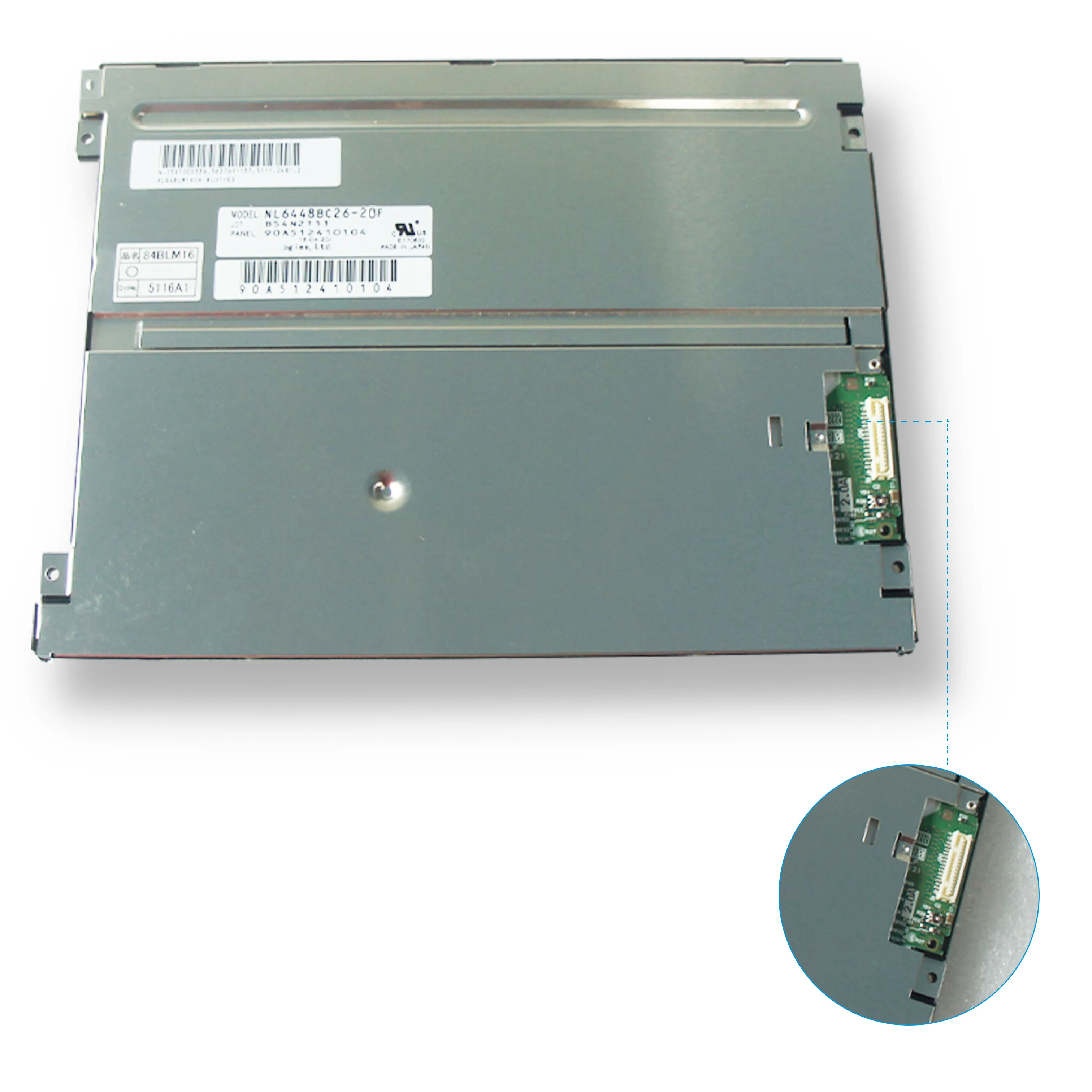


G070VTN04.0 AUO 7inch 800×480 LCD DISPLAY
In the intricate world of electronic components, where specifications dictate functionality and performance defines application, the G070VTN04.0 emerges as a distinct and capable player. This 7-inch LCD display module, manufactured by AUO (AU Optronics), is not merely a generic screen but a carefully engineered solution designed for embedded systems, industrial controls, and specialized consumer devices. With its 800 x 480 pixel resolution (WVGA format) and a diagonal size that balances information density with physical compactness, it occupies a critical niche.
This article delves deep into the G070VTN04.0, moving beyond basic datasheet parameters to explore its technical DNA, practical implications, and ideal use-case scenarios. We will dissect its core characteristics, from the TFT-LCD technology and interface options to its optical performance and mechanical construction. For engineers, product designers, and procurement specialists, understanding the nuances of this display is key to unlocking its potential and determining if it is the optimal visual interface for your next project. Join us as we illuminate the capabilities and considerations surrounding the AUO G070VTN04.0 display.
Core Technical Architecture and Panel Specifications
At its heart, the G070VTN04.0 is an a-Si (amorphous Silicon) TFT-LCD module. This mature and cost-effective technology provides reliable color reproduction and fast enough response times for a wide array of applications beyond video playback. The 800 x 480 WVGA resolution offers a pixel pitch that results in clear, legible graphics and text for its size, striking a balance between detail and the processing power required to drive it.
The module typically incorporates a standard RGB interface, often in a 24-bit or 18-bit configuration, providing a direct digital connection to common microprocessors and display controllers. Crucially, it includes an integrated LED backlight unit and driver, ensuring uniform brightness across the screen. Key optical specs include a defined brightness level (often in the range of 300-400 nits), a contrast ratio suitable for indoor environments, and a color gamut covering a significant portion of the sRGB standard. These foundational specs form the basis of its performance in real-world conditions.


Interface Integration and Signal Compatibility
Successful integration hinges on understanding the display's communication pathway. The G070VTN04.0 primarily utilizes a parallel RGB interface. This requires a matching controller on the host device that can output timing signals (HSYNC, VSYNC, DE) and pixel data clocks. Designers must ensure electrical compatibility (voltage levels) and correctly implement the timing parameters specified in the datasheet to avoid image artifacts like flickering or tearing.
Furthermore, the module may offer flexibility in its control interface, often supporting both MCU (Memory Controller Unit) and RGB (CPU) modes via pin configuration. This adaptability allows it to connect to a broader range of host systems. Additionally, attention must be paid to the backlight driver circuit. While integrated, it requires a specific voltage and current input, and its dimming method (typically PWM) must be compatible with the system's power management strategy to control brightness effectively and extend LED lifespan.
Optical Performance in Application Environments
The published specifications come to life under various lighting conditions. The module's brightness and anti-glare treatment determine its readability in brightly lit indoor settings or under office lighting. For applications requiring outdoor visibility, even at 400 nits, a transflective technology or a high-brightness variant would be necessary, which this standard module is not designed for.
Viewing angle is another critical practical consideration. Using In-Plane Switching (IPS) or similar wide-view technology, AUO ensures that the G070VTN04.0 offers consistent color and contrast across horizontal and vertical viewing angles exceeding 80 degrees. This is vital for devices where the screen may be viewed from off-center angles, such as in-car displays, point-of-sale terminals, or multi-operator industrial panels. The color consistency across these angles prevents information degradation.
Mechanical Design and Robustness Considerations
The physical construction of the G070VTN04.0 is tailored for embedded integration. It features a compact outline with mounting holes positioned for secure fastening into a chassis or bezel. The surface is usually covered with a polarizer and may offer options for additional enhancements like anti-glare, anti-fingerprint, or hardened glass surfaces for added durability in harsh environments.
The module's operating temperature range, typically from -20°C to 70°C, defines its suitability for industrial or automotive applications where thermal conditions can be extreme. Its resilience to vibration and shock is also a factor for mobile or heavy machinery applications. Understanding these mechanical and environmental limits is essential for ensuring long-term reliability and preventing failures caused by physical stress or thermal cycling.
Typical Application Scenarios and Market Niche
The G070VTN04.0 finds its home in applications where reliability, clarity, and cost-effectiveness are paramount. It is a common sight in Human-Machine Interfaces (HMIs) for factory automation, controlling PLCs and monitoring processes. Its format is ideal for portable diagnostic equipment, handheld scanners, and test instruments where size and power consumption are constraints.
Other key markets include consumer appliances with advanced interfaces (like high-end coffee machines or HVAC controllers), in-vehicle infotainment systems for auxiliary displays, and point-of-sale terminals. It serves as a versatile workhorse in segments that do not require ultra-high resolution or extreme brightness but demand stable, long-term performance and easy integration with embedded computing platforms.
Competitive Landscape and Sourcing Considerations
While AUO is a major panel manufacturer, the G070VTN04.0 exists within a competitive ecosystem. Displays with similar form factors and resolutions are available from other manufacturers like Innolux, BOE, or Tianma. The choice often boils down to nuanced differences in optical performance (color temperature, gamma curve), specific interface support, mechanical dimensions, price, and most importantly, long-term availability.
For engineers, designing in a display that may face end-of-life (EOL) notices is a significant risk. Sourcing from authorized distributors or considering compatible "drop-in" alternatives with verified pin-to-pin compatibility is a crucial part of the design process. Evaluating not just the initial sample but the supply chain stability is a key step in selecting the G070VTN04.0 for a product destined for mass production.
FAQs: G070VTN04.0 AUO 7-Inch Display
Q10: Where can I find the detailed datasheet?A10: The official datasheet should be sourced from AU Optronics' website or through their authorized distributors for the most accurate and current specifications.
Conclusion
The AUO G070VTN04.0 7-inch display stands as a testament to optimized, application-driven design. It successfully fulfills the requirements of a vast array of embedded systems where a reliable, clear, and cost-effective visual interface is non-negotiable. Its value lies not in cutting-edge specs, but in its proven performance, robust construction, and seamless integration capabilities within established industrial and commercial ecosystems.
For product developers, the journey with this module involves a thorough evaluation beyond the datasheet: confirming interface compatibility, testing optical performance under target environment conditions, and securing a stable supply chain. When these factors align, the G070VTN04.0 becomes more than a component; it becomes a dependable window for user interaction, capable of supporting products through years of reliable service.