- Industrie-LCD-Display
-
Industrial Products
- DC Servo Drive
- AC Servo Drive
- other
- Heidelberg
- FANUC
- IFM
- Meter
- CCD
- Membrane Keypad
- Film
- YOKOGAWA
- Card
- ABB
- MITSUBISHI
- FANUC
- KEYENCE
- BECKHOFF
- Honeywell
- HOLLYSYS
- FUJI servo drives
- HP
- solenoid valve
- thermostat
- Siemens adapter
- color oscilloscope
- Fujitsu connector
- CHELIC
- SMC
- CISCO
- INTEL
- Key board
- FAIRCHILD
- Der Aufsichtsrat
- Board
- Bearing
- other
- Control Panel
- Contactor
- Circuit
- Omron
- Relais.
- Der controller
- Optoelektronische schalter
- Optoelektronische sensoren
- Original
- Fan
- Motortreiber
- Endschalter
- Verstärker
- power supply
- LENZE
- Cable
- Encoder
- Sensor
- Transformator
- Fiber Optic Sensor
- Schutzrelais
- Temperaturregler
- Näherungsschalter
- Switch Sensor
- Siemens
- PCB
- HMI Touch-Glas
-
HMI-Vollautomat Ganze Einheit
- OMRON HMI Touch Panel
- Siemens HMI Touch Panel
- Mitsubishi HMI Touch Panel
- Allen-Bradley Automatisierung HMI Touch
- DELTA HMI Touch Panel
- EVIEW DELTA HMI Touch Panel
- KINCO DELTA HMI Touch Panel
- HITECH HMI Touch Panel
- WEINTECK HMI Touch Panel
- TECVIEW HMI Touch Panel
- WEINVIEW HMI Touch Panel
- PRO-FACE HMI Touch Panel
- SIMATIC HMI Touch Panel
- AMPIRE HMI Touch Panel
- HEIDELBERG HMI Touch Panel
- PANASONIC HMI Touch Panel
- PATLITE HMI Touch Panel
- KYOCERA HMI Touch Panel
- KEYENCE HMI Touch Panel
- WEINVIEW HMI Touch Panel
- HITECH HMI Touch Panel
- FUJI HMI Touch Panel
- HAKKO HMI Touch Panel
- SCHNEIDER HMI Touch Panel
- SAMKOON touch panel
- andere
- Module
- LCD Wechselrichter
- Membran Tastenfeld Schalter
- Winni Touch Screens
- Frequenzumrichter
- Servo Motor
- PLC


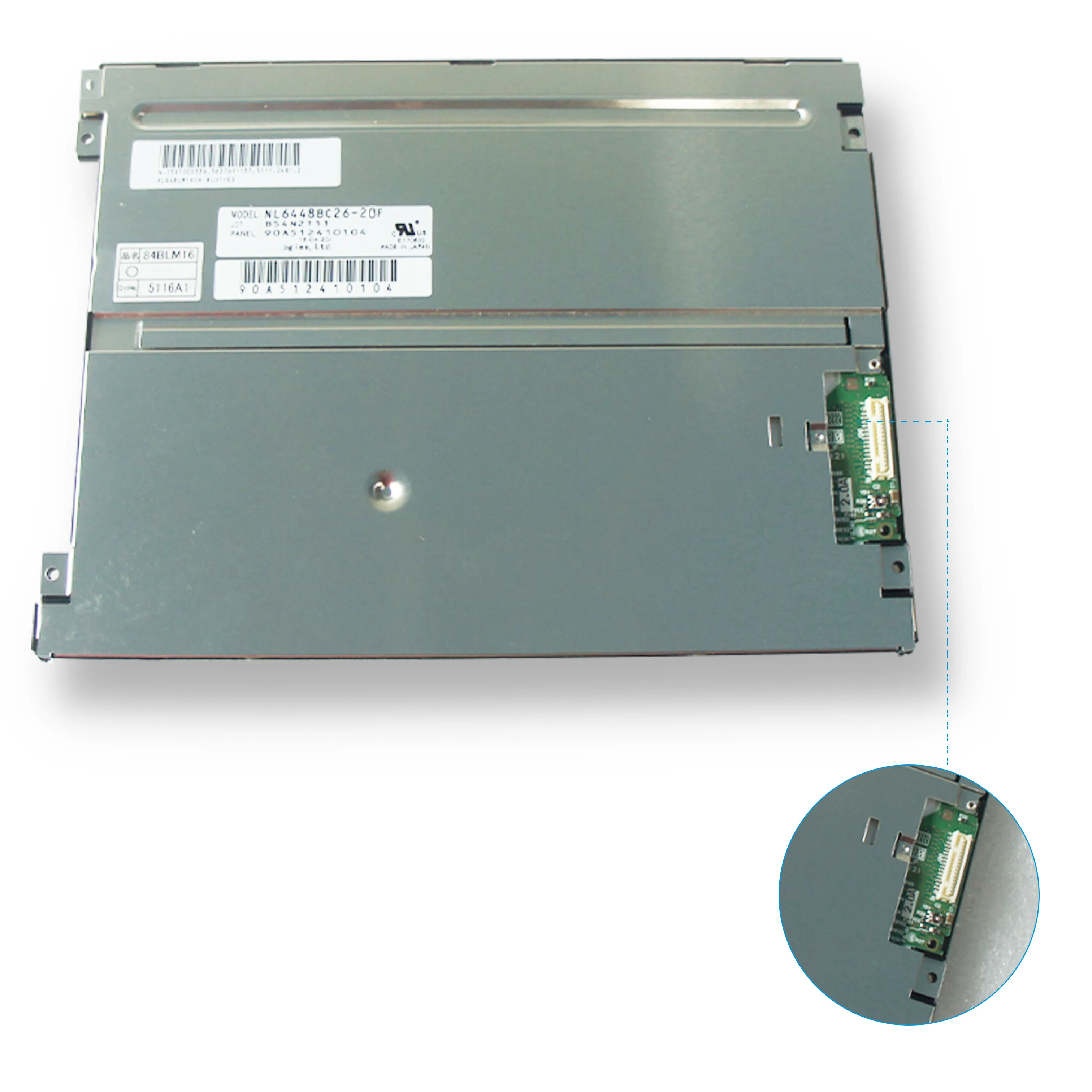


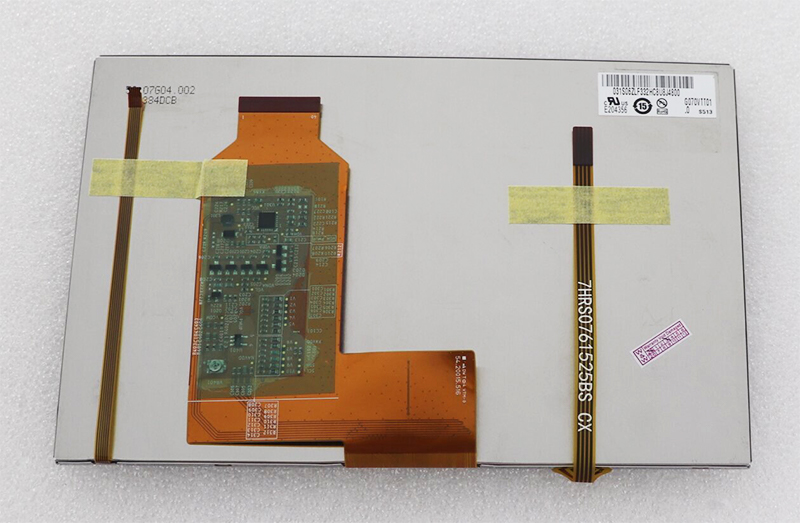
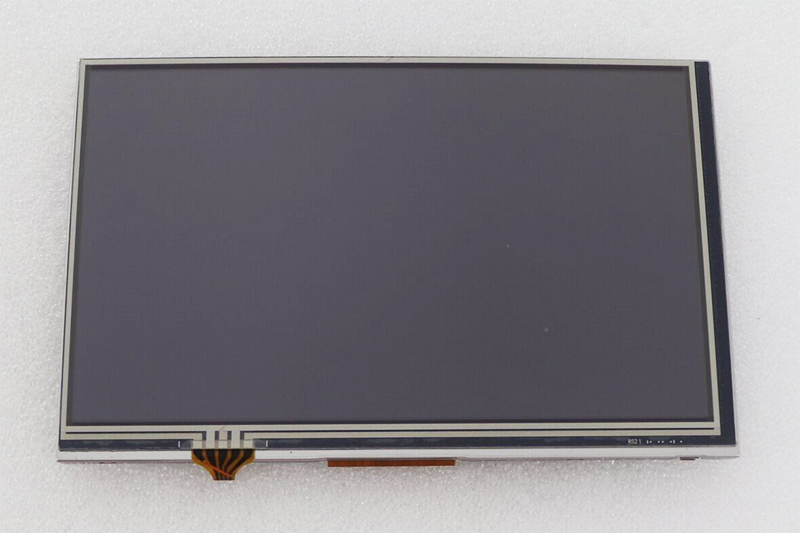
G070VTT01.0 AUO 7.0 inch 800×480 LCD PANEL DISPLAY
In the intricate world of electronic components, the display panel often serves as the critical interface between a device and its user. Among the myriad of options available to engineers and product developers, the G070VTT01.0 from AUO (AU Optronics) stands out as a specialized solution for a specific class of embedded applications. This 7.0-inch LCD panel, with its 800×480 resolution (WVGA format), represents more than just a screen; it is a carefully engineered component designed to balance performance, reliability, and cost-effectiveness.
This article delves into a comprehensive technical and commercial analysis of the AUO G070VTT01.0 display module. We will move beyond basic datasheet specifications to explore its underlying technology, the design considerations it necessitates, and the real-world applications where it excels. By understanding its strengths, limitations, and optimal use cases, design engineers, procurement specialists, and technology enthusiasts can make informed decisions about integrating this panel into their next-generation projects, from industrial HMIs to portable medical devices.
Technical Specifications and Core Architecture
The AUO G070VTT01.0 is built on a Twisted Nematic (TN) liquid crystal technology. This mature and cost-effective technology provides the fundamental characteristics of the display: its fast response times and relatively simple driving electronics. The physical dimensions are precisely defined, with an active area of 154.08 × 85.92 mm and a landscape orientation perfectly suited for wide-format information presentation.
The 800×480 pixel array yields a pixel pitch of approximately 0.1925 mm, resulting in a pixels-per-inch (PPI) count near 133. While not in the "retina" class of high-density smartphone displays, this PPI is optimal for viewing at arm's length, providing clear, legible characters and graphics without excessive power draw. The module typically features an RGB interface, a parallel digital interface that offers a direct and reliable connection to many embedded processors and display controllers, simplifying system integration.
Optical Performance and Viewing Experience
Evaluating a display goes beyond resolution. The G070VTT01.0 offers a standard brightness level, often around 250-300 nits, which is adequate for indoor and controlled lighting environments. Its contrast ratio, a key factor in image depth and readability, is characteristic of TN panels—functional but with limitations in viewing angles compared to more advanced IPS technology.
This leads to the panel's most defining optical characteristic: its viewing angle dependency. TN panels exhibit significant color shift and contrast inversion when viewed from vertical extremes. For the G070VTT01.0, this means the optimal viewing experience is directly in front of the screen. This is not necessarily a flaw but a design parameter; it makes the panel ideal for applications where the user's position is fixed and known, such as in a car dashboard, a fixed kiosk, or a dedicated control panel, while also providing a degree of privacy.
Interface and System Integration
Successful integration of the G070VTT01.0 hinges on understanding its electrical and physical interface. The standard 40-pin or 50-pin RGB interface carries digital color data, synchronization signals, and power. Designers must ensure their host processor has a compatible LCD controller or employ an external bridge chip. Power sequencing is critical; improper turn-on/turn-off order can stress the LCD driver ICs and shorten lifespan.
Furthermore, the module requires a backlight driver circuit. Most units are supplied with an LED backlight, necessitating a constant-current driver to ensure uniform brightness and longevity. Mechanical integration involves careful attention to the bezel design, mounting holes, and connector placement to avoid stress on the fragile glass substrate. EMI shielding and grounding practices are also paramount to prevent display noise in sensitive electronic environments.
Target Applications and Market Niche
The G070VTT01.0 is not a one-size-fits-all component. Its value proposition shines in specific, demanding vertical markets. The industrial human-machine interface (HMI) is a primary domain, where its rugged construction, reliable parallel interface, and sunlight-readable versions (if available) are prized for factory automation and machinery control.
In the transportation sector, it finds use in automotive head-up displays (HUDs), rear-seat entertainment, and diagnostic tooling. The portable medical device market utilizes this panel in patient monitoring systems and diagnostic equipment, where clarity, reliability, and moderate power consumption are key. It also appears in point-of-sale systems, handheld test equipment, and low-to-mid-tier portable navigation devices, forming the visual backbone of countless embedded systems.
Comparative Analysis with Alternative Technologies
To appreciate the G070VTT01.0's position, one must contrast it with alternatives. Compared to higher-resolution panels of the same size, it offers lower system cost and reduced data bandwidth requirements, easing the load on the host CPU. Against modern IPS (In-Plane Switching) panels, it concedes in wide viewing angles and color fidelity but wins on cost and, in some cases, response time.
The most significant comparison is against newer TFT technologies like Advanced Hyper-Viewing Angle (AHVA) or FFS (Fringe Field Switching). These provide superior optical performance but at a higher price point. The choice, therefore, becomes an engineering trade-off: does the application demand wide viewing angles and vibrant color, or are cost, availability, and proven reliability the dominant factors? For many industrial and embedded uses, the latter holds true, securing the G070VTT01.0's niche.
Supply Chain and Lifecycle Considerations
For product developers, component longevity is as crucial as technical specs. The G070VTT01.0, as a part from a major manufacturer like AUO, benefits from established supply chain stability and comprehensive documentation. However, the display industry evolves rapidly. Engineers must conduct due diligence regarding the panel's product lifecycle status (active, end-of-life, obsolete) before committing to a multi-year product design.
Engaging with authorized distributors or directly with AUO is essential to secure a reliable supply. For long-term projects, exploring second-source options or planning a future migration path to a pin-compatible alternative is a prudent risk mitigation strategy. Understanding minimum order quantities, lead times, and potential for custom modifications (like bonded touchscreens) are all part of the strategic procurement process for this critical component.
FAQs
Q10: Where can I find reliable technical support or datasheets?A10: Official documentation and support should be sourced from AU Optronics (AUO) directly or through their authorized distributors.
Conclusion
The AUO G070VTT01.0 7-inch WVGA display panel exemplifies how a well-executed, purpose-driven component can sustain relevance in a fast-paced technological landscape. Its value lies not in cutting-edge specs, but in its proven reliability, cost-optimized performance, and suitability for a well-defined range of embedded and industrial applications. By mastering its technical interfaces, optical behaviors, and integration requirements, engineers can leverage this module to create robust and effective user interfaces.
Ultimately, selecting the G070VTT01.0 is a strategic decision that balances performance with practicality. In a world increasingly focused on ultra-high definition and expansive color gamuts, this panel serves as a reminder that for countless critical systems, clarity, durability, and simplicity remain the most valuable features of all. It continues to be a workhorse component, enabling innovation in the machines and devices that operate reliably behind the scenes of modern life.