- Industrie-LCD-Display
-
Industrial Products
- DC Servo Drive
- AC Servo Drive
- other
- Heidelberg
- FANUC
- IFM
- Meter
- CCD
- Membrane Keypad
- Film
- YOKOGAWA
- Card
- ABB
- MITSUBISHI
- FANUC
- KEYENCE
- BECKHOFF
- Honeywell
- HOLLYSYS
- FUJI servo drives
- HP
- solenoid valve
- thermostat
- Siemens adapter
- color oscilloscope
- Fujitsu connector
- CHELIC
- SMC
- CISCO
- INTEL
- Key board
- FAIRCHILD
- Der Aufsichtsrat
- Board
- Bearing
- other
- Control Panel
- Contactor
- Circuit
- Omron
- Relais.
- Der controller
- Optoelektronische schalter
- Optoelektronische sensoren
- Original
- Fan
- Motortreiber
- Endschalter
- Verstärker
- power supply
- LENZE
- Cable
- Encoder
- Sensor
- Transformator
- Fiber Optic Sensor
- Schutzrelais
- Temperaturregler
- Näherungsschalter
- Switch Sensor
- Siemens
- PCB
- HMI Touch-Glas
-
HMI-Vollautomat Ganze Einheit
- OMRON HMI Touch Panel
- Siemens HMI Touch Panel
- Mitsubishi HMI Touch Panel
- Allen-Bradley Automatisierung HMI Touch
- DELTA HMI Touch Panel
- EVIEW DELTA HMI Touch Panel
- KINCO DELTA HMI Touch Panel
- HITECH HMI Touch Panel
- WEINTECK HMI Touch Panel
- TECVIEW HMI Touch Panel
- WEINVIEW HMI Touch Panel
- PRO-FACE HMI Touch Panel
- SIMATIC HMI Touch Panel
- AMPIRE HMI Touch Panel
- HEIDELBERG HMI Touch Panel
- PANASONIC HMI Touch Panel
- PATLITE HMI Touch Panel
- KYOCERA HMI Touch Panel
- KEYENCE HMI Touch Panel
- WEINVIEW HMI Touch Panel
- HITECH HMI Touch Panel
- FUJI HMI Touch Panel
- HAKKO HMI Touch Panel
- SCHNEIDER HMI Touch Panel
- SAMKOON touch panel
- andere
- Module
- LCD Wechselrichter
- Membran Tastenfeld Schalter
- Winni Touch Screens
- Frequenzumrichter
- Servo Motor
- PLC


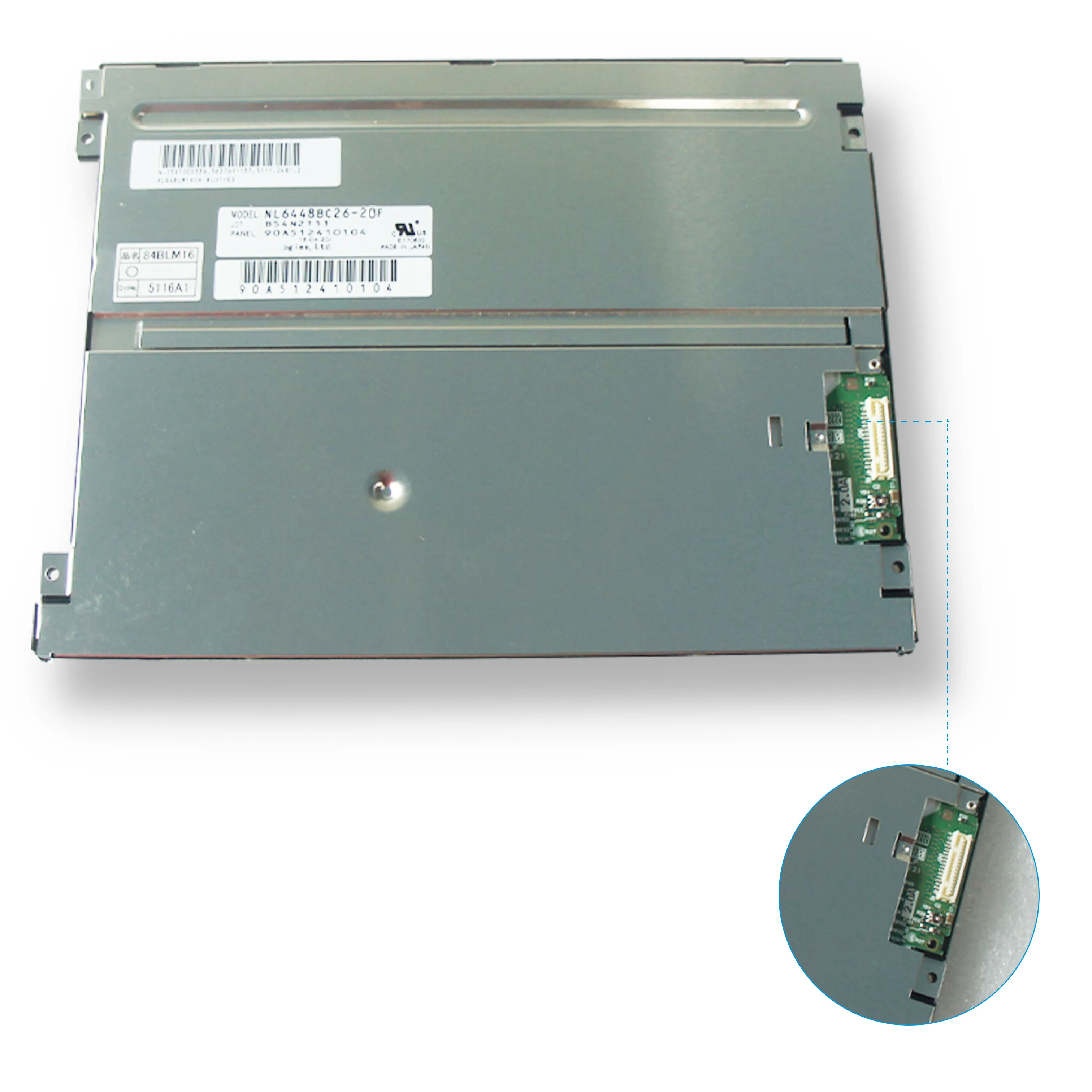


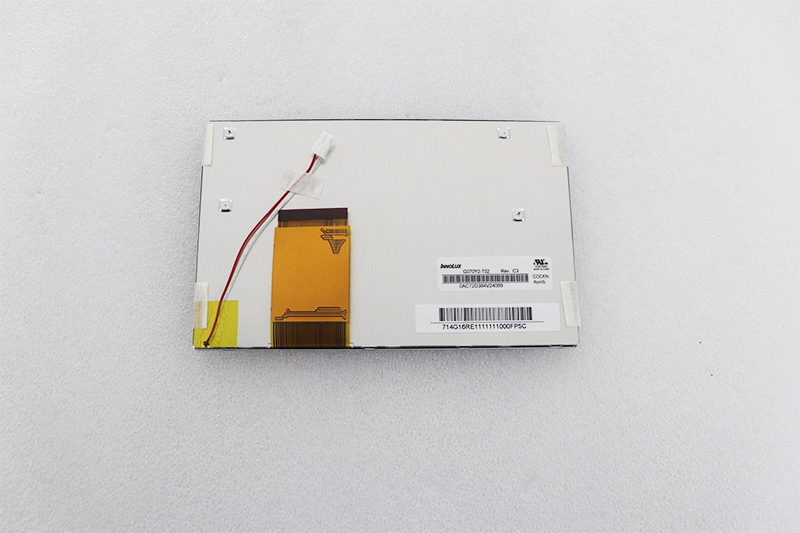
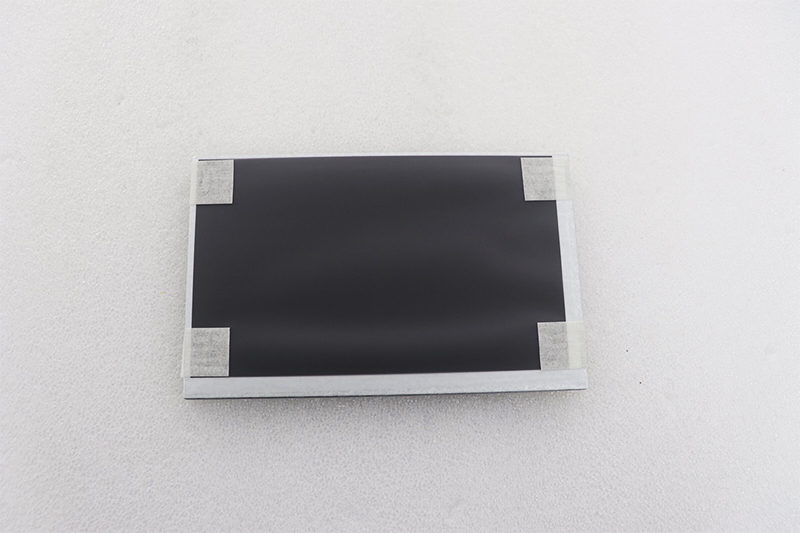
G070Y2-T02 Innolux 7inch 800*480 lcd display
In the intricate world of electronic components, the display often serves as the critical interface between machine and user. For engineers, product designers, and procurement specialists, selecting the right LCD module is a decision that balances technical specifications, reliability, and cost. This article provides a comprehensive, in-depth analysis of one such component: the G070Y2-T02, a 7-inch display module manufactured by Innolux. Far from a superficial overview, we will dissect this specific model to understand its role and relevance in today's market.
Our exploration will move beyond the basic datasheet parameters. We will investigate the core technology behind its 800x480 resolution, evaluate its performance characteristics under various conditions, and examine its electrical and mechanical integration requirements. Furthermore, we will contextualize its application potential, compare it with contemporary alternatives, and address key considerations for successful implementation. By the end, you will gain a holistic understanding of whether the Innolux G070Y2-T02 is the optimal display solution for your next embedded project, industrial HMI, or portable device.
Decoding the G070Y2-T02: Core Specifications and Technology
The Innolux G070Y2-T02 is a 7.0-inch diagonal TFT-LCD module with a native resolution of 800 pixels horizontally by 480 pixels vertically (WVGA). This aspect ratio of 15:9 is a common standard for a wide range of applications. The module utilizes a-TFT (amorphous Silicon Thin Film Transistor) technology, which provides a good balance of performance and manufacturing cost. The display area measures 152.4mm x 91.44mm, resulting in a pixel density of approximately 133 PPI, which is suitable for clear text and graphics viewing at an arm's length.
At its heart, the module employs a transmissive display type. This means it requires a backlight unit (BLU) for illumination, which is typically integrated as part of the module. The standard version features a white LED edge-light backlight system, known for its longevity, uniform brightness, and relatively low power consumption. The optical performance starts with a brightness specification typically around 300 cd/m², ensuring good visibility in most indoor environments. Understanding these foundational specs is crucial as they directly dictate the module's basic capabilities and limitations.
Performance Analysis: Brightness, Contrast, and Viewing Angles
Moving beyond static specifications, the true user experience is defined by dynamic performance metrics. The brightness of 300 cd/m² is a key figure for the G070Y2-T02, making it adequate for office equipment, industrial control panels, and point-of-sale terminals where direct sunlight is not a major factor. The contrast ratio, often in the range of 500:1 to 800:1, defines the depth between the darkest blacks and brightest whites, impacting image clarity and readability.
Perhaps equally critical are the viewing angles. This module typically specifies viewing angles of 70/70/50/70 degrees (Left/Right/Up/Down, CR>10). This indicates a somewhat asymmetrical performance, with a more restricted upward view. For applications where the screen will be viewed from multiple positions, such as a shared kiosk, this parameter requires careful consideration. The color gamut coverage, usually around 50-60% of NTSC, indicates it is capable of displaying decent color for standard interfaces but may not be suitable for high-fidelity graphic or video work.
Electrical Interface and Signal Integration
Integrating the G070Y2-T02 into an electronic system requires a clear understanding of its interface. This module commonly features an LVDS (Low-Voltage Differential Signaling) interface. LVDS is a popular choice for its robustness, noise immunity, and ability to transmit high-speed data over longer distances within a device compared to older parallel RGB interfaces. The specific pin configuration and signal mapping must be meticulously followed from the datasheet to the main controller board (such as an ARM or FPGA-based system).
Power supply requirements are typically centered on a +3.3V or +5.0V input for the logic, with a separate higher voltage drive for the LED backlight. The backlight driver circuit, which may be external or partially integrated, must be designed to provide a constant current to ensure uniform brightness and long LED life. Proper power sequencing and electromagnetic compatibility (EMC) design around the display interface are essential steps to avoid flickering, noise, or permanent damage.
Mechanical Design and Environmental Considerations
The physical integration of the display module presents its own set of challenges. The G070Y2-T02 comes with a defined outline dimension, mounting hole positions, and a recommended bezel area. Designers must account for mechanical tolerances, stress points, and the use of appropriate gaskets or adhesives if the product requires sealing against dust or moisture. The module's operating and storage temperature ranges (commonly -20°C to 70°C operational) must align with the product's intended deployment environment.
For applications in vehicles, outdoor equipment, or harsh industrial settings, additional factors like vibration resistance, humidity tolerance, and potential use of a heater for cold-temperature start-up become relevant. While the standard G070Y2-T02 is designed for general commercial use, understanding these mechanical and environmental boundaries is key to ensuring long-term reliability and preventing field failures.
Application Landscape and Ideal Use Cases
The technical profile of the G070Y2-T02 positions it squarely in a competitive market segment. Its ideal use cases are projects where a reliable, cost-effective, and medium-resolution display is needed for human-machine interaction. This includes industrial human-machine interfaces (HMIs) for factory automation, portable test and measurement devices, commercial appliance control panels (e.g., coffee machines, printers), and basic information kiosks.
It is less suited for applications demanding ultra-high brightness for sunlight readability, wide temperature extremes beyond its specification, or sophisticated touch requirements (though it is commonly paired with a resistive or projected capacitive touchscreen overlay). Its value proposition lies in offering a proven, stable display solution from a major manufacturer like Innolux, which can simplify supply chain and qualification processes for volume OEMs.
Competitive Context and Sourcing Strategy
No component exists in a vacuum. The G070Y2-T02 faces competition from other panel makers offering similar 7-inch WVGA modules, as well as from newer technologies like higher-resolution IPS panels. When evaluating, one must compare not just price, but also availability, lead times, and technical support. As a mature product, the G070Y2-T02 may offer better supply stability and cost advantages for long-running projects compared to newer, cutting-edge displays.
A smart sourcing strategy involves requesting current samples for performance verification, confirming long-term availability forecasts from distributors or directly from Innolux, and understanding the minimum order quantities. For critical applications, qualifying a second-source or compatible alternative module from another manufacturer is a prudent risk-mitigation step. The goal is to secure a display that is not only technically suitable but also logistically sustainable for the product's lifecycle.
FAQs: Innolux G070Y2-T02 Display Module
10. Where can I find the detailed datasheet?The official datasheet should be sourced from authorized Innolux distributors or the Innolux website for the most accurate and current specifications.
Conclusion
The Innolux G070Y2-T02 7-inch LCD module represents a mature, reliable, and cost-effective solution in the embedded display landscape. Its WVGA resolution, LVDS interface, and standard commercial-grade performance make it a versatile choice for a wide array of applications where sophisticated graphics are not the primary requirement. Success with this module hinges on a thorough integration process, respecting its electrical, optical, and mechanical parameters.
Ultimately, selecting any display component is an exercise in balanced engineering. The G070Y2-T02 excels when the project priorities are proven reliability, straightforward integration, and value. By carefully evaluating its specifications against your project's specific environmental, performance, and lifecycle demands, you can confidently determine if this Innolux module is the right window to your device's functionality.