- Industrial LCD display
-
Industrial Products
- DC Servo Drive
- AC Servo Drive
- other
- Heidelberg
- FANUC
- IFM
- Meter
- CCD
- Membrane Keypad
- Film
- YOKOGAWA Module
- Card
- ABB
- MITSUBISHI
- FANUC
- KEYENCE
- BECKHOFF
- Honeywell
- HOLLYSYS
- FUJI servo drives
- HP
- solenoid valve
- thermostat
- Siemens adapter
- color oscilloscope
- Fujitsu connector
- CHELIC
- SMC
- CISCO Module
- INTEL
- Key board
- FAIRCHILD
- Motherboard
- Board
- Bearing
- other
- Control Panel
- Contactor
- Circuit
- OMRON
- Relay
- Controller
- Photoelectric Switch
- Photoelectric Sensor
- Original
- Fan
- Motor Driver
- Limit Switch
- Amplifier
- power supply
- LENZE
- Cable
- Encoder
- Sensor
- Transformer
- Fiber Optic Sensor
- Protection Relay
- Temperature Controller
- Proximity Switch
- Switch Sensor
- Siemens
- Industrial board
- HMI Touch Glass
-
HMI Full Machine Whole unit
- OMRON HMI Touch Panel
- Siemens HMI Touch Panel
- Mitsubishi HMI Touch Panel
- Allen-Bradley automation HMI Touch Panel
- DELTA HMI Touch Panel
- EVIEW DELTA HMI Touch Panel
- KINCO DELTA HMI Touch Panel
- HITECH HMI Touch Panel
- WEINTECK HMI Touch Panel
- TECVIEW HMI Touch Panel
- WEINVIEW HMI Touch Panel
- PRO-FACE HMI Touch Panel
- SIMATIC HMI Touch Panel
- AMPIRE HMI Touch Panel
- HEIDELBERG HMI Touch Panel
- PANASONIC HMI Touch Panel
- PATLITE HMI Touch Panel
- KYOCERA HMI Touch Panel
- KEYENCE HMI Touch Panel
- WEINVIEW HMI Touch Panel
- HITECH HMI Touch Panel
- FUJI HMI Touch Panel
- HAKKO HMI Touch Panel
- SCHNEIDER HMI Touch Panel
- SAMKOON touch panel
- other
- Module
- lcd inverter
- Membrane Keypad Switch
- Winni Touch Screens
- Frequency Inverter
- Servo Motor
- PLC




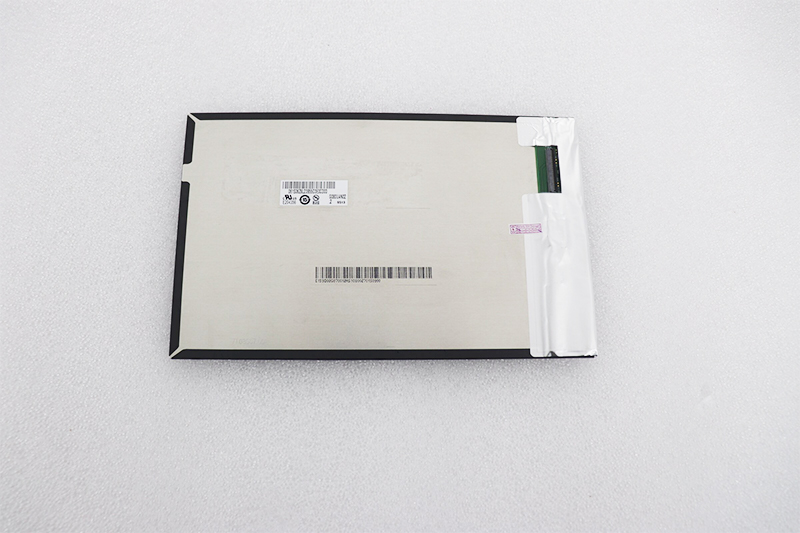
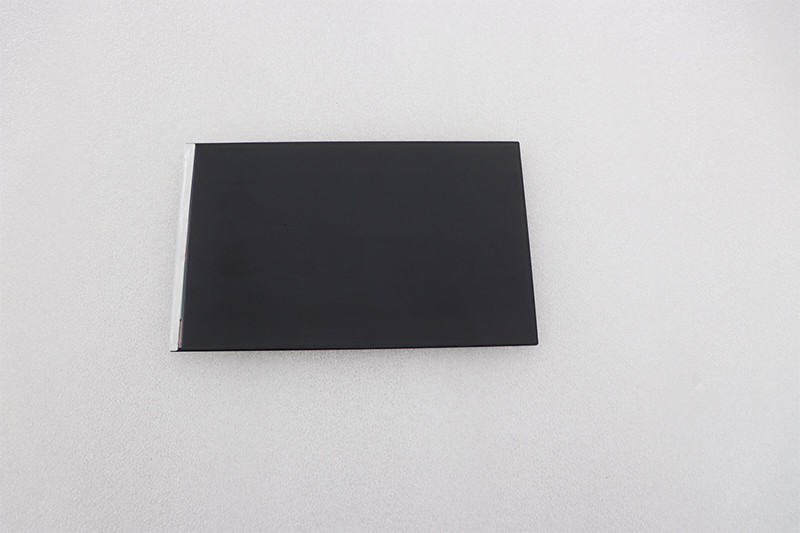
G080UAN02.2 AUO 8inch TFT-LCD screen 1200*1920 Display
In the intricate world of electronic components, where specifications dictate performance and quality defines longevity, the G080UAN02.2 emerges as a notable contender. This 8-inch TFT-LCD module from AUO (AU Optronics) is not merely a screen; it is a meticulously engineered portal for visual data, designed to meet the rigorous demands of modern industrial, medical, and professional applications. With a native resolution of 1200 x 1920 in a portrait orientation, it presents a pixel-dense canvas that challenges the norms for its size class.
This article delves deep into the architecture and application of the G080UAN02.2 display. We will move beyond the basic datasheet to explore the technological implications of its high pixel density, its interface and control logic, and the specific use-case scenarios where its performance becomes a critical advantage. For engineers, product designers, and procurement specialists, understanding the nuances of this component is key to unlocking its potential in creating superior human-machine interfaces.
Decoding the Specification: A Portrait of Precision
The G080UAN02.2's defining characteristic is its 1200 x 1920 resolution on an 8-inch diagonal. This yields an exceptionally high Pixel Per Inch (PPI) count, approximately 283 PPI, which ensures razor-sharp text, smooth lines, and the ability to render intricate graphical details without visible pixelation. The portrait (vertical) orientation is a deliberate design choice, catering to applications like handheld diagnostic devices, vertical control panels, or portable readers where information is naturally scrolled or stacked vertically.
Beyond resolution, the module features a wide viewing angle (typically 80/80/80/80 in all directions), crucial for devices viewed from various positions. Its brightness and contrast ratios are engineered for readability in diverse lighting conditions. This combination of high density and optical performance establishes it as a premium component, setting the stage for applications where visual clarity is non-negotiable.
Core Technology: The Anatomy of an AUO TFT-LCD
At its heart, the G080UAN02.2 utilizes a-Si (amorphous Silicon) TFT (Thin-Film Transistor) technology, a mature and reliable backbone for LCDs. Each pixel is controlled by its own transistor, allowing for precise and fast switching, which translates into stable image quality and good response times. The LCD matrix is typically paired with an LED backlight unit, providing uniform illumination and supporting a wide color gamut that can cover standard RGB spaces effectively.
The module is a fully integrated system, incorporating the LCD panel, driver ICs, backlight, and interface connectors into a single, ruggedized unit. This system-on-glass (SOG) or chip-on-glass (COG) approach minimizes external components, reduces electromagnetic interference (EMI), and enhances overall reliability—a critical factor for industrial and medical equipment that must operate consistently over long periods.
Interface and Integration: The Communication Pathway
Integration is governed by the module's interface. The G080UAN02.2 commonly utilizes an LVDS (Low-Voltage Differential Signaling) or eDP (Embedded DisplayPort) interface. LVDS is renowned for its robustness, noise immunity, and ability to transmit high-speed data over longer traces within a device, making it an industry staple. eDP offers a more modern, packetized protocol with potential for higher bandwidth and auxiliary channel features.
Understanding the pin configuration, power sequencing requirements, and signal timing is paramount for successful integration. Designers must ensure the host controller's output matches the display's input standard. Furthermore, the module often requires precise power rails (e.g., 3.3V for logic, a specific voltage for the LED backlight) and may feature control pins for enabling/disabling the display and adjusting backlight brightness via PWM (Pulse Width Modulation).
Application Landscape: Where Precision Meets Demand
The specific attributes of the G080UAN02.2 make it ideal for niche, high-value applications. In the medical field, it is perfectly suited for portable ultrasound devices, patient monitoring systems, and handheld diagnostic scanners, where high resolution reveals critical anatomical details and portrait orientation matches the form factor of the equipment.
In industrial automation, it serves as the perfect display for advanced handheld terminals, programmable logic controller (PLC) interfaces, and test and measurement equipment. The high PPI allows for dense information display—showing complex schematics, multiple data readouts, or detailed control menus—all within a compact, rugged device built for the factory floor.
Performance Optimization and Calibration
To achieve the intended visual fidelity, integrating the G080UAN02.2 often involves calibration and optimization. This includes color calibration to ensure accurate and consistent color reproduction across all units, which is vital for medical imaging or design applications. Gamma correction is applied to ensure a linear relationship between input signal and luminance output, preserving image detail in shadows and highlights.
Additionally, managing the backlight brightness and power consumption is a key engineering task. Implementing dynamic brightness control based on ambient light sensors can enhance user experience and battery life in portable devices. Thermal management of the backlight and drivers also contributes to long-term stability and prevents performance throttling.
Comparative Analysis and Market Position
When compared to standard 8-inch displays with lower resolutions (e.g., 800 x 600 or 1024 x 768), the G080UAN02.2 occupies a premium, specialized segment. Its value proposition is clear: unparalleled sharpness in a compact form. The trade-off often involves higher cost, slightly increased power draw for driving more pixels, and potentially more complex driver requirements.
Its main competitors are other high-PPI panels from manufacturers like Innolux or Japan Display Inc. (JDI). The choice between them often comes down to specific optical performance parameters (color gamut, contrast), supply chain availability, and technical support. AUO's reputation for quality and reliability in the industrial sector gives the G080UAN02.2 a strong standing for projects where failure is not an option.
FAQs: G080UAN02.2 AUO 8-inch Display
Q10: Where can I find the technical datasheet and driver guidelines?A10: The official datasheet and application notes should be requested directly from AU Optronics (AUO) or their authorized distributors for accurate and complete information.
Conclusion
The G080UAN02.2 from AUO stands as a testament to the pursuit of visual excellence in compact display technology. It transcends the role of a simple output device, positioning itself as a critical component for innovation in fields where detail, reliability, and form factor converge. Its high-resolution, portrait-oriented design is not a mere specification but a solution engineered for the complex visual demands of modern professional electronics.
For product developers, selecting this display means committing to a superior user experience, where information is presented with unmatched clarity. While its integration demands careful attention to interface and power design, the result is a product capable of distinguishing itself in a competitive market. In the landscape of human-machine interaction, the G080UAN02.2 is more than a screen; it is a clear window into precision.