- Industrie-LCD-Display
-
Industrial Products
- DC Servo Drive
- AC Servo Drive
- other
- Heidelberg
- FANUC
- IFM
- Meter
- CCD
- Membrane Keypad
- Film
- YOKOGAWA
- Card
- ABB
- MITSUBISHI
- FANUC
- KEYENCE
- BECKHOFF
- Honeywell
- HOLLYSYS
- FUJI servo drives
- HP
- solenoid valve
- thermostat
- Siemens adapter
- color oscilloscope
- Fujitsu connector
- CHELIC
- SMC
- CISCO
- INTEL
- Key board
- FAIRCHILD
- Der Aufsichtsrat
- Board
- Bearing
- other
- Control Panel
- Contactor
- Circuit
- Omron
- Relais.
- Der controller
- Optoelektronische schalter
- Optoelektronische sensoren
- Original
- Fan
- Motortreiber
- Endschalter
- Verstärker
- power supply
- LENZE
- Cable
- Encoder
- Sensor
- Transformator
- Fiber Optic Sensor
- Schutzrelais
- Temperaturregler
- Näherungsschalter
- Switch Sensor
- Siemens
- PCB
- HMI Touch-Glas
-
HMI-Vollautomat Ganze Einheit
- OMRON HMI Touch Panel
- Siemens HMI Touch Panel
- Mitsubishi HMI Touch Panel
- Allen-Bradley Automatisierung HMI Touch
- DELTA HMI Touch Panel
- EVIEW DELTA HMI Touch Panel
- KINCO DELTA HMI Touch Panel
- HITECH HMI Touch Panel
- WEINTECK HMI Touch Panel
- TECVIEW HMI Touch Panel
- WEINVIEW HMI Touch Panel
- PRO-FACE HMI Touch Panel
- SIMATIC HMI Touch Panel
- AMPIRE HMI Touch Panel
- HEIDELBERG HMI Touch Panel
- PANASONIC HMI Touch Panel
- PATLITE HMI Touch Panel
- KYOCERA HMI Touch Panel
- KEYENCE HMI Touch Panel
- WEINVIEW HMI Touch Panel
- HITECH HMI Touch Panel
- FUJI HMI Touch Panel
- HAKKO HMI Touch Panel
- SCHNEIDER HMI Touch Panel
- SAMKOON touch panel
- andere
- Module
- LCD Wechselrichter
- Membran Tastenfeld Schalter
- Winni Touch Screens
- Frequenzumrichter
- Servo Motor
- PLC


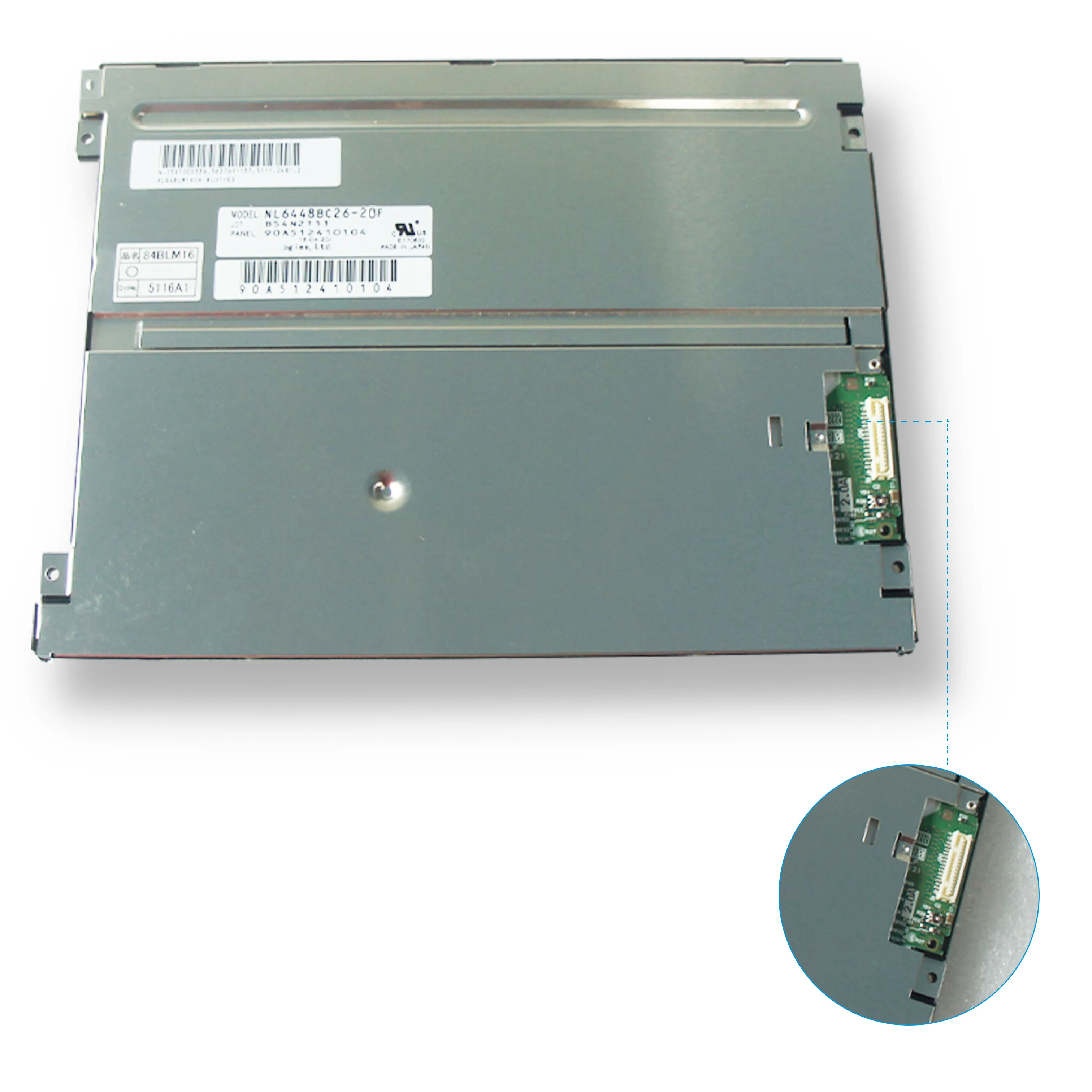


G080Y1-T01 Chimei Innolux 8 inch 800*480 lcd panel screen
In the intricate ecosystem of modern electronics, the display panel serves as the critical interface between human and machine. Among the myriad of components available, specific industrial-grade panels carve out essential niches in applications where reliability, clarity, and cost-effectiveness are paramount. This article delves into a detailed examination of one such component: the G080Y1-T01, an 8-inch LCD panel module manufactured by Chimei Innolux (CMI).
We will explore this panel not merely as a product specification sheet, but as a solution engineered for specific market demands. From its core technological attributes to its practical integration challenges and ultimate applications, this analysis aims to provide engineers, product developers, and procurement specialists with a comprehensive understanding. By dissecting its features, compatibility, and position within the broader display landscape, we uncover the tangible value this 800 x 480 resolution screen brings to embedded systems, industrial controls, and portable devices.
Core Technology and Specification Breakdown
The G080Y1-T01 is built upon a Twisted Nematic (TN) LCD technology, a mature and cost-effective solution known for its fast response times and high brightness capabilities. The defining characteristic is its 8-inch diagonal active area with a native resolution of 800 pixels horizontally by 480 pixels vertically (WVGA). This aspect ratio and resolution are historically significant, offering a wide-format display that became a standard for many portable and embedded systems.
Key specifications include a typical brightness of 450 nits, ensuring readability in various indoor lighting conditions, and a contrast ratio that defines the depth between blacks and whites. The module utilizes a standard RGB interface for data input, which is a common parallel communication protocol for displays of this class. Understanding these foundational specs is crucial, as they directly dictate the panel's performance envelope, power consumption profile, and compatibility with standard controller boards.


Interface and Signal Compatibility
Integration is where specifications meet reality. The G080Y1-T01 typically comes with a 40-pin or 50-pin single-channel LVDS (Low-Voltage Differential Signaling) interface. LVDS has been the industry workhorse for transmitting high-speed video data with low noise and low power, making it ideal for the signals of an 800x480 panel. This interface choice immediately defines the type of timing controller (T-CON) or mainboard required to drive the panel.
For developers, the critical task is matching this panel with a compatible controller board that supports its specific LVDS pinout, voltage requirements, and timing parameters (the "panel profile"). Mismatches here are a common source of failure, resulting in no display, flickering, or image artifacts. Furthermore, considerations for backlight power—usually supplied through a separate inverter or LED driver circuit—add another layer to the integration puzzle that must be solved for a functional end product.
Industrial Design and Durability Considerations
Beyond the pixels and pins, the G080Y1-T01 is designed for longevity and stability in demanding environments. Its construction often involves a robust metal frame that provides structural integrity and aids in heat dissipation. The surface treatment typically includes an anti-glare layer to reduce reflections and improve viewing comfort under bright lights, a common feature in industrial and point-of-sale settings.
The operating temperature range is a vital spec for industrial components. This panel is engineered to function reliably across a broad range, often from -20°C to 70°C, ensuring performance in both freezing cold and hot machinery enclosures. This durability, combined with a long lifespan for its CCFL or LED backlight system, translates to lower total cost of ownership and reduced maintenance for end-users, justifying its selection over commercial-grade consumer panels.
Primary Application Scenarios
The specific combination of size, resolution, and robustness makes the G080Y1-T01 a favored choice in several key verticals. In Industrial Human-Machine Interfaces (HMIs), it serves as the primary touchpoint for operators to monitor and control machinery, where its brightness and readability are critical. The Point-of-Sale (POS) and Kiosk industry utilizes these panels for terminal displays and self-service machines, benefiting from their standard size and reliable performance under constant use.
Additionally, it finds a home in portable test and measurement equipment, embedded systems in transportation, and as display units in specific medical devices where color accuracy may be secondary to reliability. Its WVGA format is also compatible with many legacy systems and software interfaces designed for that resolution, making it a practical choice for upgrades or replacements in existing product lines.
Comparison with Alternative Technologies
To fully appreciate the G080Y1-T01's position, a comparative view is essential. Against newer IPS (In-Plane Switching) panels, it may lack the superior viewing angles and color reproduction. However, it often wins on cost and response time for applications where wide viewing angles are not a priority. Compared to higher-resolution panels of the same size, the 800x480 resolution offers a lower pixel density but requires less processing power and simpler, cheaper controller ICs to drive it.
This makes it an economically and technically efficient solution for displaying structured information, menus, and data readouts, as opposed to high-definition video or complex graphics. The choice, therefore, is rarely about finding the "best" panel in absolute terms, but about identifying the most appropriate technology that meets the functional requirements and budget constraints of the project without over-engineering.
Integration Challenges and Best Practices
Successfully deploying this panel requires navigating several practical hurdles. Sourcing can be a challenge as product lines evolve; ensuring a stable supply chain or identifying verified compatible alternatives is key. Electromagnetic Interference (EMI) is another concern; proper shielding of the LVDS cables and following layout guidelines for high-speed signals on the PCB are mandatory to prevent noise and ensure signal integrity.
Best practices include: always consulting the official datasheet for the specific version of the panel; prototyping with a known-compatible evaluation kit; carefully designing the power supply sequence to avoid damaging the T-CON; and implementing appropriate thermal management in the final enclosure. Attention to these details separates a functional prototype from a reliable, mass-producible product.
FAQs
Q: Is this panel still a good choice for new designs?A: For cost-sensitive, reliability-focused industrial and embedded applications where high resolution is not critical, yes. For consumer devices requiring high pixel density and wide viewing angles, newer technologies may be better.
Conclusion
The Chimei Innolux G080Y1-T01 8-inch LCD panel exemplifies how a well-established, purpose-driven technology continues to deliver significant value in specific market segments. Its strength lies not in being the most advanced display available, but in offering a proven, reliable, and cost-optimized solution for a wide range of industrial and embedded applications. The combination of WVGA resolution, robust LVDS interface, and industrial-grade construction makes it a pragmatic workhorse.
For engineers and developers, the key takeaway is that successful implementation hinges on a deep understanding of its interface requirements, environmental specifications, and integration nuances. By respecting its design parameters and following best practices, this panel can serve as the dependable visual core of products that demand longevity and stability above all else. In a world chasing ever-higher pixel counts, the G080Y1-T01 stands as a reminder that in engineering, the optimal solution is always the one that fits the problem perfectly.