- Industrie-LCD-Display
-
Industrial Products
- DC Servo Drive
- AC Servo Drive
- other
- Heidelberg
- FANUC
- IFM
- Meter
- CCD
- Membrane Keypad
- Film
- YOKOGAWA
- Card
- ABB
- MITSUBISHI
- FANUC
- KEYENCE
- BECKHOFF
- Honeywell
- HOLLYSYS
- FUJI servo drives
- HP
- solenoid valve
- thermostat
- Siemens adapter
- color oscilloscope
- Fujitsu connector
- CHELIC
- SMC
- CISCO
- INTEL
- Key board
- FAIRCHILD
- Der Aufsichtsrat
- Board
- Bearing
- other
- Control Panel
- Contactor
- Circuit
- Omron
- Relais.
- Der controller
- Optoelektronische schalter
- Optoelektronische sensoren
- Original
- Fan
- Motortreiber
- Endschalter
- Verstärker
- power supply
- LENZE
- Cable
- Encoder
- Sensor
- Transformator
- Fiber Optic Sensor
- Schutzrelais
- Temperaturregler
- Näherungsschalter
- Switch Sensor
- Siemens
- PCB
- HMI Touch-Glas
-
HMI-Vollautomat Ganze Einheit
- OMRON HMI Touch Panel
- Siemens HMI Touch Panel
- Mitsubishi HMI Touch Panel
- Allen-Bradley Automatisierung HMI Touch
- DELTA HMI Touch Panel
- EVIEW DELTA HMI Touch Panel
- KINCO DELTA HMI Touch Panel
- HITECH HMI Touch Panel
- WEINTECK HMI Touch Panel
- TECVIEW HMI Touch Panel
- WEINVIEW HMI Touch Panel
- PRO-FACE HMI Touch Panel
- SIMATIC HMI Touch Panel
- AMPIRE HMI Touch Panel
- HEIDELBERG HMI Touch Panel
- PANASONIC HMI Touch Panel
- PATLITE HMI Touch Panel
- KYOCERA HMI Touch Panel
- KEYENCE HMI Touch Panel
- WEINVIEW HMI Touch Panel
- HITECH HMI Touch Panel
- FUJI HMI Touch Panel
- HAKKO HMI Touch Panel
- SCHNEIDER HMI Touch Panel
- SAMKOON touch panel
- andere
- Module
- LCD Wechselrichter
- Membran Tastenfeld Schalter
- Winni Touch Screens
- Frequenzumrichter
- Servo Motor
- PLC


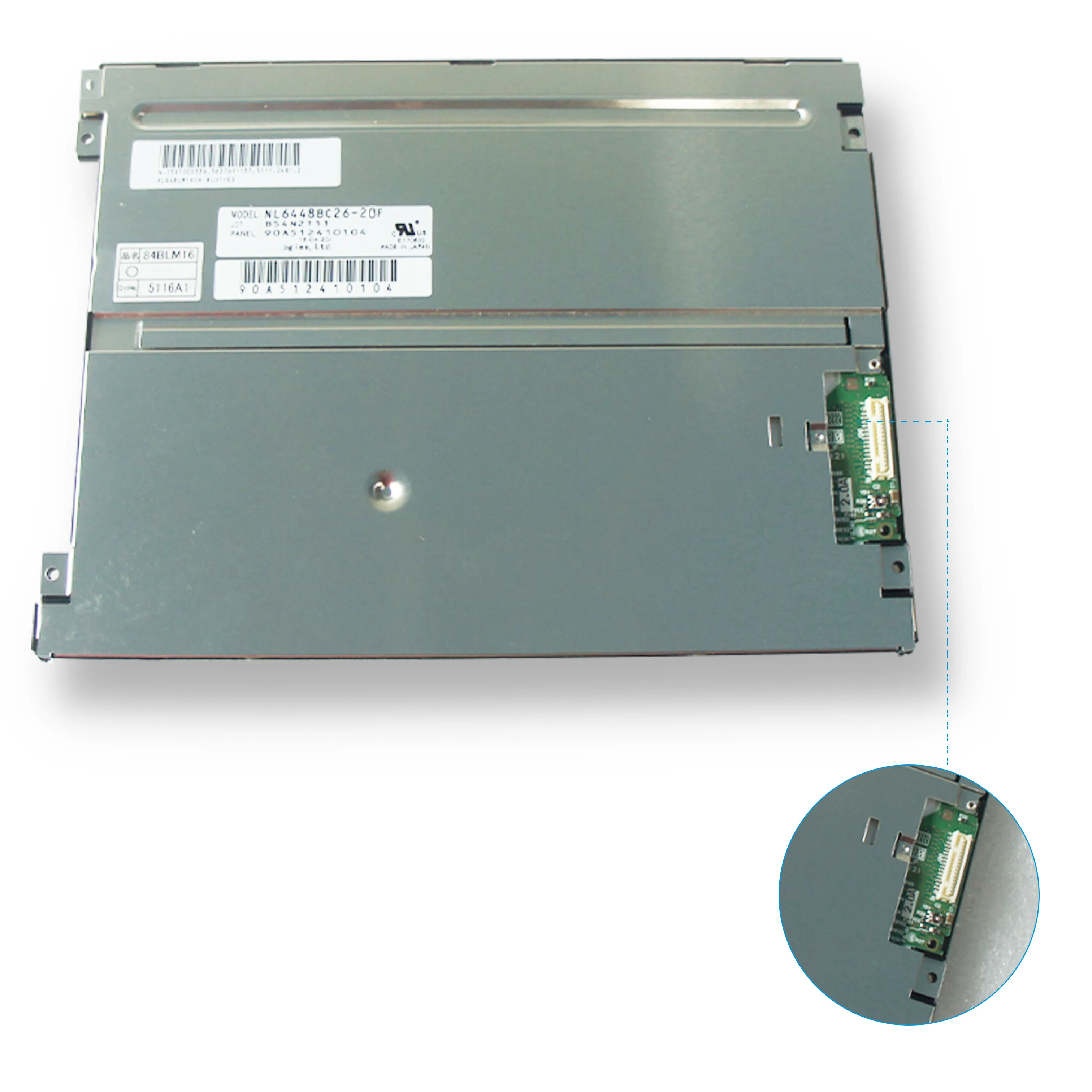


G084SN03 V3 AUO 8.4inch lcd display
In the intricate world of electronic components, where specifications dictate performance and reliability defines longevity, the G084SN03 V3 LCD display module emerges as a specialized solution for demanding applications. Manufactured by AUO (AU Optronics), a global leader in display technology, this 8.4-inch panel represents more than just a screen; it is a carefully engineered interface designed to bridge the gap between digital information and human interaction in challenging environments. This article delves deep into the G084SN03 V3, moving beyond basic datasheet parameters to explore its architectural significance, performance nuances, and the specific industrial niches it serves.
Understanding this display requires an appreciation for its role as a system component. We will dissect its core technology, from the TFT-LCD matrix to its driving logic, and examine how its optical characteristics—brightness, contrast, and viewing angle—are calibrated for clarity under various conditions. Furthermore, we will analyze its mechanical and electrical integration points, the environmental robustness it offers, and the practical considerations for designers implementing it. Our journey aims to provide engineers, product developers, and procurement specialists with a comprehensive resource, transforming technical data into actionable insights for selecting and deploying this critical display module effectively.
Decoding the G084SN03 V3: Core Architecture and Technology
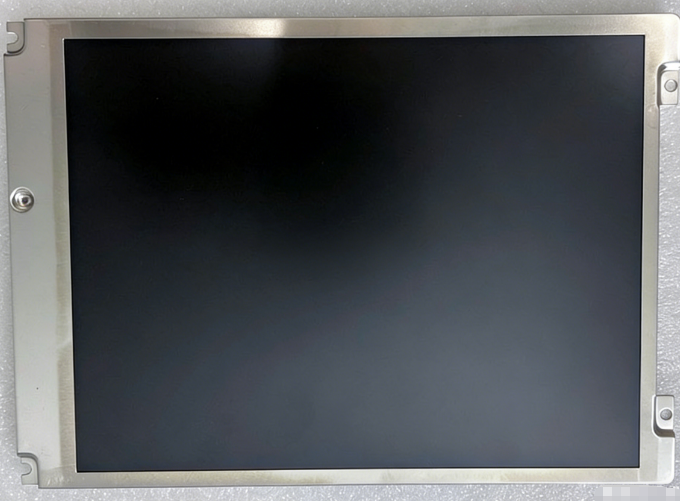
At its heart, the G084SN03 V3 is an 8.4-inch diagonal TFT-LCD (Thin-Film Transistor Liquid Crystal Display) module with a resolution of 800 x 600 pixels (SVGA). This resolution, while not ultra-high definition, offers a balanced pixel density for its size, ensuring sharp text and clear graphics ideal for industrial HMIs, medical devices, and point-of-sale terminals. The "V3" designation typically indicates a specific revision or version, often incorporating improvements in longevity, power efficiency, or supply chain component sourcing over previous iterations.
The module integrates a complete display system. It contains the LCD glass itself, the driver ICs that control each pixel, and a CCFL (Cold Cathode Fluorescent Lamp) or, in some versions, an LED backlight unit. The use of TFT technology ensures fast response times and stable image quality, crucial for dynamic content. The interface is typically LVDS (Low-Voltage Differential Signaling), a standard for robust, noise-resistant data transmission between the display and the system's main controller. This integrated approach reduces design complexity for OEMs, providing a plug-and-play display solution with defined electrical and mechanical parameters.
Optical Performance: Brightness, Contrast, and Viewing Angles
The utility of any display is judged by what the human eye perceives. The G084SN03 V3 is engineered for environments where ambient light can be a challenge. Its brightness, often specified in the range of 300 to 500 nits (cd/m²), is sufficient for indoor use under bright lighting, preventing washout. The contrast ratio, which defines the difference between the darkest black and the brightest white, is critical for readability and image depth. This panel delivers a static contrast ratio that ensures legibility of fine details.
Perhaps equally important for collaborative or multi-operator settings are the viewing angles. Specified as horizontal and vertical viewing angles (e.g., 80/80/80/80), these metrics describe how much the image can be viewed from off-center positions before color inversion or contrast degradation occurs. The G084SN03 V3 offers wide viewing angles, a hallmark of advanced TFT designs, ensuring consistent information display for users not directly in front of the screen. This combination of brightness, contrast, and viewing stability forms the cornerstone of its operational effectiveness.
Mechanical and Electrical Integration Parameters
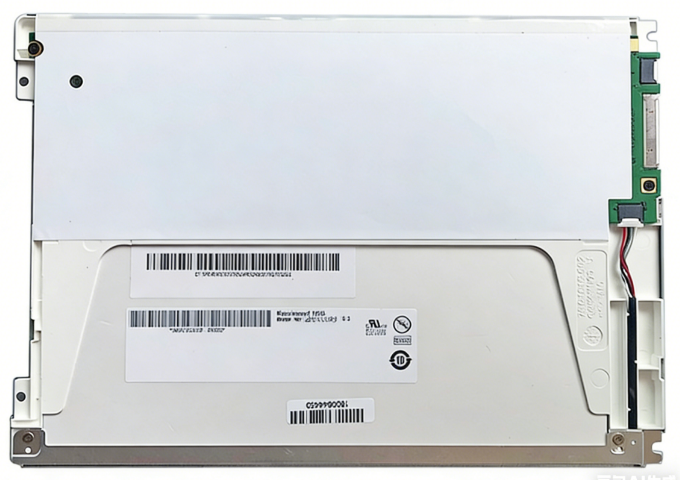
Successful implementation hinges on seamless integration. Mechanically, the module has precise outer dimensions, bezel size, and active area specifications. It features a defined mounting method, often using screw holes on the metal chassis, which also provides electromagnetic shielding. The thickness and weight are vital for compact device design. The surface treatment, typically a hard coating on the polarizer, offers resistance to scratches and chemical exposure.
Electrically, the module requires specific power supply voltages (e.g., 3.3V for logic, a higher voltage for the backlight). The LVDS interface uses a standardized pinout, but designers must carefully match the bit lane configuration (e.g., 1-channel, 8-bit) with their graphics controller. The backlight inverter circuit (for CCFL versions) or LED driver circuit requires careful design to ensure uniform brightness and long life. Understanding these parameters prevents compatibility issues, thermal problems, and ensures the display performs reliably within the broader system's power budget and signal integrity constraints.
Environmental Durability and Reliability Specifications
This is where industrial-grade components distinguish themselves from commercial ones. The G084SN03 V3 is built to withstand the rigors of continuous operation in non-climate-controlled settings. Its operating and storage temperature ranges are key specifications, often spanning from -20°C or -30°C to 70°C or higher. This allows deployment in factory floors, outdoor kiosks (with proper housing), and transportation applications.
Reliability is quantified through mean time between failures (MTBF) figures, often calculated in tens of thousands of hours. The panel is tested for resistance to vibration, shock, and humidity, ensuring it can survive physical stresses during operation and transportation. The backlight's lifespan, usually rated in hours until brightness halves, is a critical wear-out factor. These specifications are not mere marketing points; they are contractual guarantees of performance that inform total cost of ownership and maintenance schedules for the end product.
Target Applications and Industry Use Cases
The technical profile of the G084SN03 V3 directly maps to a set of demanding applications. In industrial automation, it serves as a human-machine interface (HMI) for PLCs, control panels, and test equipment, where reliability and readability under factory lighting are paramount. The medical device field utilizes it in diagnostic equipment, patient monitors, and surgical tools, valuing its stable performance and ability to meet relevant regulatory standards.
Furthermore, it finds a home in point-of-sale (POS) systems, kiosks, and ruggedized laptops for field service. Its SVGA resolution is well-suited for legacy software interfaces and proprietary operating systems common in these fields. Other niches include transportation infotainment, military displays, and specialized instrumentation. In each case, the module is chosen not for being the cheapest or flashiest, but for being a known, reliable, and long-life component that minimizes system risk.
Sourcing, Lifecycle, and Design Considerations
For engineers and buyers, understanding the supply chain is crucial. As a part from a major manufacturer like AUO, the G084SN03 V3 benefits from consistent quality and documentation. However, it's essential to verify its lifecycle status—whether it is in active production, nearing end-of-life (EOL), or already obsolete. Planning for long-term product manufacturing requires securing adequate inventory or planning a future redesign with a successor module.
Design considerations extend beyond the electrical connection. Thermal management must be addressed, as excessive heat can shorten the backlight and LCD life. Optical enhancements, such as bonding an optical bonded touchscreen (resistive or capacitive) or adding an anti-glare film, are common but affect the overall optical stack and mechanical fit. Engaging with display distributors or AUO directly early in the design process can provide application notes, driver recommendations, and samples to validate performance in the actual application environment, mitigating late-stage design changes.
FAQs: G084SN03 V3 LCD Display
10. Where can I find the official datasheet and source this display?Contact authorized distributors of AUO components or search through reputable electronic component suppliers. Always request the latest revision (V3) datasheet.
Conclusion
The G084SN03 V3 from AUO stands as a testament to the engineering philosophy of targeted reliability. It is not a consumer-grade panel chasing the highest pixel count, but a purpose-built industrial component where consistency, durability, and long-term availability are the primary currencies. Through its balanced optical performance, robust electrical and mechanical design, and proven resilience in harsh environments, it solves critical interface challenges across medical, industrial, and commercial fields.
For designers, selecting this module is a strategic decision that reduces project risk. By thoroughly understanding its architecture, integration requirements, and lifecycle status, engineering teams can leverage its strengths to build products that are dependable and maintainable for years. In an era of rapid technological churn, the value of such a stable, high-performance component like the G084SN03 V3 cannot be overstated—it remains a reliable window to digital control and information in mission-critical applications worldwide.