- Industrial LCD display
-
Industrial Products
- DC Servo Drive
- AC Servo Drive
- other
- Heidelberg
- FANUC
- IFM
- Meter
- CCD
- Membrane Keypad
- Film
- YOKOGAWA Module
- Card
- ABB
- MITSUBISHI
- FANUC
- KEYENCE
- BECKHOFF
- Honeywell
- HOLLYSYS
- FUJI servo drives
- HP
- solenoid valve
- thermostat
- Siemens adapter
- color oscilloscope
- Fujitsu connector
- CHELIC
- SMC
- CISCO Module
- INTEL
- Key board
- FAIRCHILD
- Motherboard
- Board
- Bearing
- other
- Control Panel
- Contactor
- Circuit
- OMRON
- Relay
- Controller
- Photoelectric Switch
- Photoelectric Sensor
- Original
- Fan
- Motor Driver
- Limit Switch
- Amplifier
- power supply
- LENZE
- Cable
- Encoder
- Sensor
- Transformer
- Fiber Optic Sensor
- Protection Relay
- Temperature Controller
- Proximity Switch
- Switch Sensor
- Siemens
- Industrial board
- HMI Touch Glass
-
HMI Full Machine Whole unit
- OMRON HMI Touch Panel
- Siemens HMI Touch Panel
- Mitsubishi HMI Touch Panel
- Allen-Bradley automation HMI Touch Panel
- DELTA HMI Touch Panel
- EVIEW DELTA HMI Touch Panel
- KINCO DELTA HMI Touch Panel
- HITECH HMI Touch Panel
- WEINTECK HMI Touch Panel
- TECVIEW HMI Touch Panel
- WEINVIEW HMI Touch Panel
- PRO-FACE HMI Touch Panel
- SIMATIC HMI Touch Panel
- AMPIRE HMI Touch Panel
- HEIDELBERG HMI Touch Panel
- PANASONIC HMI Touch Panel
- PATLITE HMI Touch Panel
- KYOCERA HMI Touch Panel
- KEYENCE HMI Touch Panel
- WEINVIEW HMI Touch Panel
- HITECH HMI Touch Panel
- FUJI HMI Touch Panel
- HAKKO HMI Touch Panel
- SCHNEIDER HMI Touch Panel
- SAMKOON touch panel
- other
- Module
- lcd inverter
- Membrane Keypad Switch
- Winni Touch Screens
- Frequency Inverter
- Servo Motor
- PLC


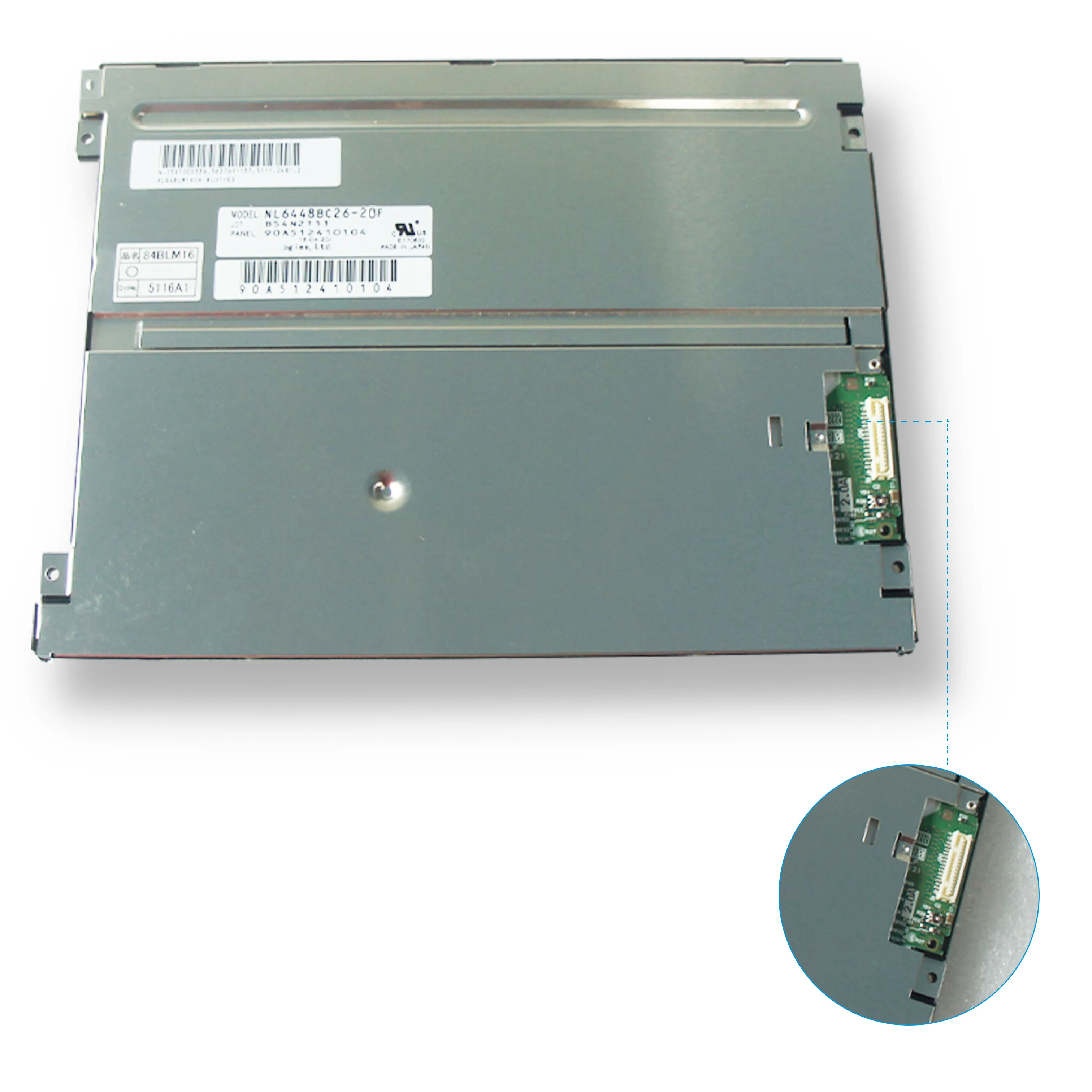


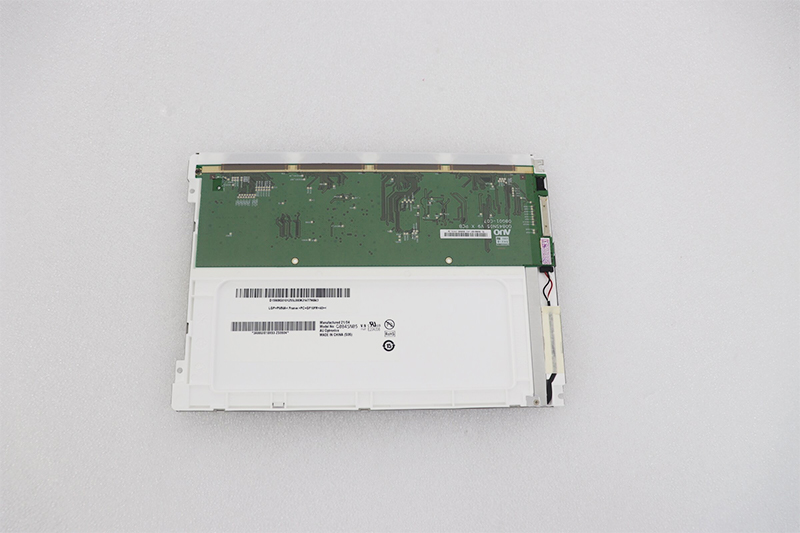
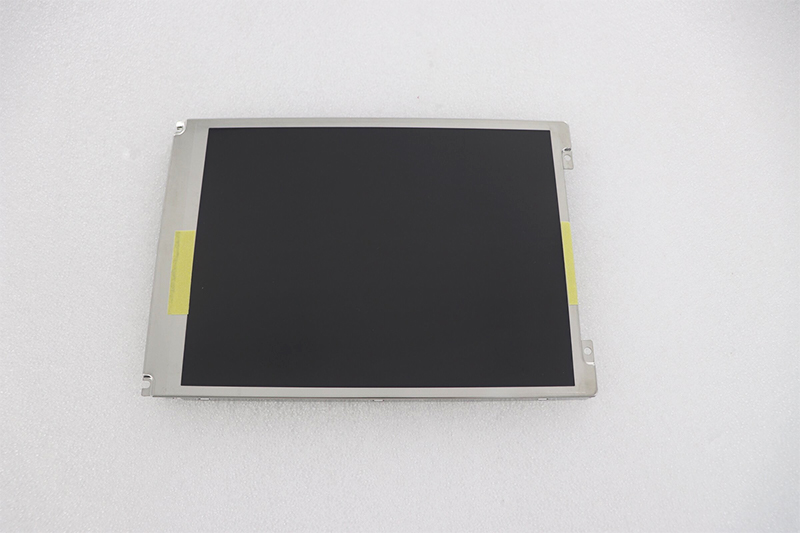
G084SN05 V9 AUO 8.4 inch 800*600 LCD screen
In the intricate world of industrial and embedded display solutions, the alphanumeric code G084SN05 V9 represents far more than a simple part number. It signifies a meticulously engineered component, an 8.4-inch LCD panel from AUO (AU Optronics), designed to meet the rigorous demands of specialized applications. With a resolution of 800 x 600 pixels (SVGA), this display occupies a unique niche, balancing clarity, physical robustness, and compatibility in a compact form factor.
This article delves into a comprehensive analysis of the G084SN05 V9 panel. We will move beyond basic specifications to explore its defining technological characteristics, the specific market applications it serves, and the critical design considerations for engineers. Furthermore, we will examine its integration requirements, compare it with alternative display technologies, and assess its long-term value proposition. Our goal is to provide a definitive resource for procurement specialists, product designers, and engineers seeking to understand where and why this particular LCD screen excels.
Core Technology and Specifications Decoded
The G084SN05 V9 is built on a Twisted Nematic (TN) LCD technology platform. TN panels are renowned for their fast response times and cost-effectiveness, making them suitable for applications where rapid screen updates are necessary, though often at the expense of ultra-wide viewing angles. The 8.4-inch diagonal active area with an 800x600 SVGA resolution offers a pixel density that provides sharp text and clear graphics, a crucial factor for human-machine interface (HMI) panels and diagnostic equipment.
Key specifications include a standard aspect ratio of 4:3, which remains vital for legacy systems and many industrial software interfaces designed for this format. The panel typically features a moderate brightness level (e.g., 300-400 nits) and a contrast ratio sufficient for indoor and controlled lighting environments. Understanding these core specs is the first step in evaluating its fit; the 4:3 SVGA format, for instance, immediately differentiates it from modern widescreen consumer displays and targets it towards specific industrial and medical uses.
Primary Applications and Market Niche
The G084SN05 V9 is not designed for consumer televisions or smartphones. Its true value is unlocked in B2B and embedded environments. A primary application is in Industrial Human-Machine Interfaces (HMIs) for factory automation, process control, and machinery. Here, its rugged construction, reliable performance across temperature ranges, and clear 4:3 display for control schematics are paramount.
Another significant niche is the medical device field, particularly in patient monitoring systems, diagnostic instruments, and portable medical carts. The panel's reliability and ability to display critical patient data clearly are essential. Additionally, it finds use in point-of-sale (POS) systems, transportation information displays, and specialized test and measurement equipment. In all these cases, longevity, supply stability, and consistent performance outweigh the need for the highest color gamut or thinnest bezel.
Critical Design Considerations for Integration
Successfully integrating the G084SN05 V9 into a product requires careful planning beyond just the visual area. Engineers must account for its mechanical footprint, including the exact dimensions of the panel itself and the recommended bezel size for mounting. The interface is typically an LVDS (Low-Voltage Differential Signaling) connection, which necessitates a compatible controller board to translate signals from the host system.
Power consumption and thermal management are also vital. While not as power-hungry as larger, brighter screens, efficient power design extends product life and reduces heat. Furthermore, designers must consider the operating temperature range (often -20°C to 70°C or similar for industrial grades) to ensure functionality in target environments. Failure to address these integration details can lead to reliability issues, even if the panel's core image quality is perfect.
Interface and Compatibility Requirements
The G084SN05 V9 panel is a "bare panel," meaning it requires supporting electronics to function. The standard interface is a single-channel or dual-channel LVDS. This underscores the need for a correctly matched LCD controller board (or timing controller). This board provides the necessary power sequencing, converts video data (e.g., from HDMI, VGA, or RGB sources) into the LVDS format the panel understands, and handles backlight control.
Compatibility hinges on selecting a controller that matches the panel's native resolution, LVDS pin mapping, and backlight type (often CCFL or LED). For system designers, sourcing a compatible controller or a fully integrated display module (panel + controller + backlight + casing) from a reputable supplier is a critical step. This layer of abstraction simplifies development but must be chosen with the panel's long-term availability in mind.
Comparative Analysis with Alternative Displays
Placing the G084SN05 V9 in context reveals its strategic position. Compared to modern IPS (In-Plane Switching) panels, it may offer narrower viewing angles and less vibrant color reproduction. However, it often wins on cost, response time, and long-term supply guarantees for existing product lines. Against newer TFT displays with higher resolutions like 1024x768 (XGA) on the same size, the SVGA resolution consumes less bandwidth and requires less processing power, which can be an advantage for embedded systems with limited resources.
The most significant comparison is against the wave of widescreen (16:9) displays. For new designs displaying video content, a widescreen may be better. However, for interfacing with legacy industrial software or displaying multiple rows of data and traditional control panels, the 4:3 aspect ratio of the G084SN05 V9 is a functional necessity, not an outdated limitation.
Supply Chain and Long-Term Value Proposition
For industrial and medical product manufacturers, a display's lifecycle is measured in years or decades, not months. The G084SN05 V9's value is deeply tied to supply chain stability. AUO, as a major manufacturer, often provides longer lifecycle support for such industrial-grade panels compared to consumer models. This mitigates the risk of a costly and time-consuming redesign mid-product lifecycle.
The long-term value proposition is clear: it offers predictable performance, known integration parameters, and reduced lifecycle management overhead. While the initial unit cost might be higher than a generic consumer panel, the total cost of ownership—factoring in reliability, longevity of supply, and minimized re-engineering—is often lower for mission-critical applications. This makes it a strategic component choice rather than a simple commodity purchase.
FAQs: G084SN05 V9 LCD Screen
10. Where can I source this panel or a compatible module?It is available through authorized electronic component distributors, specialized display module integrators, and industrial hardware suppliers.
Conclusion
The AUO G084SN05 V9 8.4-inch LCD screen exemplifies a component engineered for durability and specific function over consumer-grade flash. Its 4:3 SVGA format, rooted in TN technology and LVDS interface, is not an anachronism but a deliberate specification for a vast ecosystem of industrial, medical, and commercial equipment. Its value lies in its reliability, long-term supply chain stability, and seamless compatibility with established systems.
For designers and engineers, selecting this panel is a strategic decision that prioritizes lifecycle management, proven performance, and total cost of ownership. In a world rapidly moving towards widescreen formats, the G084SN05 V9 stands as a robust and essential solution for the critical displays that operate behind the scenes, powering the interfaces of industry and healthcare.