- Industrie-LCD-Display
-
Industrial Products
- DC Servo Drive
- AC Servo Drive
- other
- Heidelberg
- FANUC
- IFM
- Meter
- CCD
- Membrane Keypad
- Film
- YOKOGAWA
- Card
- ABB
- MITSUBISHI
- FANUC
- KEYENCE
- BECKHOFF
- Honeywell
- HOLLYSYS
- FUJI servo drives
- HP
- solenoid valve
- thermostat
- Siemens adapter
- color oscilloscope
- Fujitsu connector
- CHELIC
- SMC
- CISCO
- INTEL
- Key board
- FAIRCHILD
- Der Aufsichtsrat
- Board
- Bearing
- other
- Control Panel
- Contactor
- Circuit
- Omron
- Relais.
- Der controller
- Optoelektronische schalter
- Optoelektronische sensoren
- Original
- Fan
- Motortreiber
- Endschalter
- Verstärker
- power supply
- LENZE
- Cable
- Encoder
- Sensor
- Transformator
- Fiber Optic Sensor
- Schutzrelais
- Temperaturregler
- Näherungsschalter
- Switch Sensor
- Siemens
- PCB
- HMI Touch-Glas
-
HMI-Vollautomat Ganze Einheit
- OMRON HMI Touch Panel
- Siemens HMI Touch Panel
- Mitsubishi HMI Touch Panel
- Allen-Bradley Automatisierung HMI Touch
- DELTA HMI Touch Panel
- EVIEW DELTA HMI Touch Panel
- KINCO DELTA HMI Touch Panel
- HITECH HMI Touch Panel
- WEINTECK HMI Touch Panel
- TECVIEW HMI Touch Panel
- WEINVIEW HMI Touch Panel
- PRO-FACE HMI Touch Panel
- SIMATIC HMI Touch Panel
- AMPIRE HMI Touch Panel
- HEIDELBERG HMI Touch Panel
- PANASONIC HMI Touch Panel
- PATLITE HMI Touch Panel
- KYOCERA HMI Touch Panel
- KEYENCE HMI Touch Panel
- WEINVIEW HMI Touch Panel
- HITECH HMI Touch Panel
- FUJI HMI Touch Panel
- HAKKO HMI Touch Panel
- SCHNEIDER HMI Touch Panel
- SAMKOON touch panel
- andere
- Module
- LCD Wechselrichter
- Membran Tastenfeld Schalter
- Winni Touch Screens
- Frequenzumrichter
- Servo Motor
- PLC


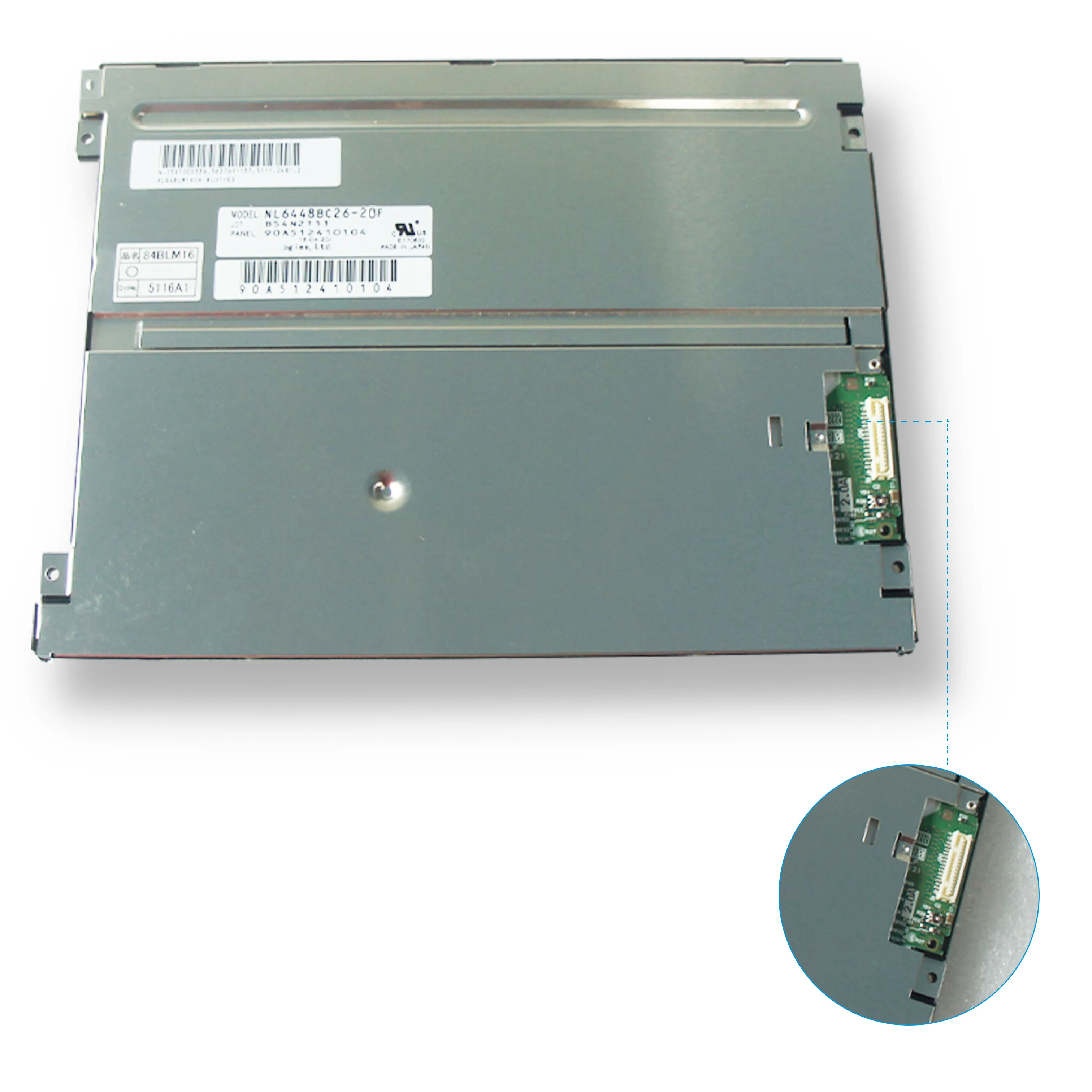

G101EVN01.3 AUO 10.1inch 1280×800 lcd display
In the intricate world of electronic components, the display panel often serves as the critical interface between user and machine. Among the myriad of options available to engineers and product developers, the G101EVN01.3 from AUO (AU Optronics) stands out as a mature and highly reliable solution for a specific class of devices. This 10.1-inch LCD module, with its 1280x800 resolution (WXGA), represents a carefully balanced set of specifications that has powered countless industrial, commercial, and embedded applications over the years.
This article delves deep into the technical DNA and practical application of the AUO G101EVN01.3 display. We will move beyond basic datasheet parameters to explore the engineering rationale behind its design, its performance characteristics in real-world scenarios, and the specific niches where it continues to offer compelling value. Understanding this component is not just about knowing its pinout, but about appreciating its role as a system component within larger technological ecosystems, from rugged field equipment to interactive kiosks.
Decoding the Specification: WXGA in a 10.1-Inch Form Factor
The G101EVN01.3's core identity is defined by its 10.1-inch diagonal screen size and 1280 x 800 pixel resolution, known as WXGA (Wide Extended Graphics Array). This 16:10 aspect ratio was historically prevalent and offers a slight vertical advantage over the now-common 16:9 ratio, providing more usable space for toolbars and documents. With a pixel density of approximately 149 PPI (Pixels Per Inch), it delivers clear, legible text and adequate detail for most non-consumer applications.
The module typically employs a Twisted Nematic (TN) or advanced TN-type panel technology, which offers fast response times and good cost-effectiveness. While viewing angles and color reproduction may not match modern IPS panels, they are sufficient for many fixed-viewing-position applications. The initial specification sets the foundation for its use cases, emphasizing reliability and functional clarity over premium visual media consumption.


Interface and Integration: The LVDS Connection Standard
A key to the G101EVN01.3's longevity is its use of the LVDS (Low-Voltage Differential Signaling) interface. This parallel interface standard has been the backbone of industrial and automotive displays for decades. It provides robust, low-noise data transmission over a cable, which is crucial in environments with potential electromagnetic interference.
Integrating this display requires a compatible LVDS transmitter on the host system's mainboard (like a CPU or FPGA). The pin configuration and power requirements (often 3.3V or 5V for logic and a higher voltage for the backlight) are well-documented. This maturity means a vast ecosystem of compatible controllers and driver boards exists, simplifying prototyping and scaling to production. Understanding this interface is the first step in successfully embedding the display into a hardware design.
Backlight System and Optical Performance
The visual output of any LCD is fundamentally dependent on its backlight unit (BLU). The G101EVN01.3 commonly uses a side-lit LED backlight system. This design offers excellent longevity, consistent brightness, and lower power consumption compared to older CCFL technology. The typical brightness ranges from 250 to 400 nits, making it viewable under normal indoor lighting conditions.
Critical optical parameters include the contrast ratio, which defines the difference between the brightest white and darkest black, and the color gamut, which defines the range of colors it can reproduce. For this module, the gamut typically covers a standard range like 45-50% of the NTSC color space, adequate for data visualization and interfaces. The backlight's lifespan, often rated for 50,000 hours or more, is a major contributor to the display's overall reliability in 24/7 operational settings.
Mechanical Design and Environmental Robustness
Beyond the screen itself, the mechanical construction of the G101EVN01.3 module is engineered for integration. It features a rigid metal frame that provides structural stability, protects the glass substrate, and offers standardized mounting points. The surface is usually covered with a polarizer that may include treatments for anti-glare (haze) to reduce reflections in brightly lit environments.
While not inherently sealed like a fully ruggedized display, the module's solid construction allows it to be further enclosed within a product's housing to meet specific environmental needs. Designers must account for factors such as thermal management, as excessive heat can affect performance and lifespan. The module's datasheet provides crucial parameters like operating temperature range (e.g., 0°C to 50°C) and storage temperature, guiding deployment in various climates.
Primary Application Domains and Use Cases
The G101EVN01.3 finds its home in applications where durability, availability, and cost-effectiveness outweigh the need for ultra-high resolution or perfect color fidelity. Its primary domains include:
Industrial Human-Machine Interfaces (HMIs): Control panels for factory automation, machinery, and test equipment.
Point-of-Sale (POS) and Kiosk Systems: Self-service terminals, information booths, and retail checkout systems.
Embedded Medical Devices: Patient monitoring equipment and diagnostic instruments where reliability is paramount.
Transportation and Fleet Management: In-vehicle displays for logistics, public transit, and agricultural vehicles.
In these contexts, the display is valued for its proven track record, stable supply chain for maintenance, and straightforward integration with industrial-grade computing platforms.
The Ecosystem: Sourcing, Compatibility, and Alternatives
As a mature product, the G101EVN01.3 is available through a network of specialized electronic component distributors. Sourcing involves not just the panel, but often compatible controller boards, cables, and touch screen overlays (typically resistive or projected capacitive).
When considering this module for a new design, engineers must also evaluate the landscape of alternatives. This includes newer panels with IPS technology for wider viewing angles, higher-resolution options, or more modern interfaces like eDP (Embedded DisplayPort). The decision often boils down to a trade-off: the proven, cost-effective, and easy-to-integrate nature of the G101EVN01.3 versus the enhanced performance of newer technologies, which may come with higher cost or integration complexity.
FAQs: G101EVN01.3 LCD Display
Q10: Where can I find technical documentation?A10: Datasheets and pinout diagrams are available from AUO's official website or through authorized distributors.
Conclusion
The AUO G101EVN01.3 10.1-inch LCD display is a testament to the enduring value of robust, well-executed engineering. In an era obsessed with the latest specs, this module carves out its essential niche by delivering unwavering reliability, straightforward integration, and cost-effective performance for mission-critical industrial and commercial applications. Its WXGA resolution and LVDS interface represent a stable technological plateau that continues to support a vast array of equipment worldwide.
For designers and engineers, choosing the G101EVN01.3 is rarely about chasing cutting-edge visuals. It is a strategic decision rooted in supply chain stability, proven field performance, and total system cost. As we move forward, understanding such components provides crucial insight into the less-visible but foundational layers of the technology that powers our daily infrastructure, reminding us that in many contexts, dependability is the most spectacular feature of all.