- Industrie-LCD-Display
-
Industrial Products
- DC Servo Drive
- AC Servo Drive
- other
- Heidelberg
- FANUC
- IFM
- Meter
- CCD
- Membrane Keypad
- Film
- YOKOGAWA
- Card
- ABB
- MITSUBISHI
- FANUC
- KEYENCE
- BECKHOFF
- Honeywell
- HOLLYSYS
- FUJI servo drives
- HP
- solenoid valve
- thermostat
- Siemens adapter
- color oscilloscope
- Fujitsu connector
- CHELIC
- SMC
- CISCO
- INTEL
- Key board
- FAIRCHILD
- Der Aufsichtsrat
- Board
- Bearing
- other
- Control Panel
- Contactor
- Circuit
- Omron
- Relais.
- Der controller
- Optoelektronische schalter
- Optoelektronische sensoren
- Original
- Fan
- Motortreiber
- Endschalter
- Verstärker
- power supply
- LENZE
- Cable
- Encoder
- Sensor
- Transformator
- Fiber Optic Sensor
- Schutzrelais
- Temperaturregler
- Näherungsschalter
- Switch Sensor
- Siemens
- PCB
- HMI Touch-Glas
-
HMI-Vollautomat Ganze Einheit
- OMRON HMI Touch Panel
- Siemens HMI Touch Panel
- Mitsubishi HMI Touch Panel
- Allen-Bradley Automatisierung HMI Touch
- DELTA HMI Touch Panel
- EVIEW DELTA HMI Touch Panel
- KINCO DELTA HMI Touch Panel
- HITECH HMI Touch Panel
- WEINTECK HMI Touch Panel
- TECVIEW HMI Touch Panel
- WEINVIEW HMI Touch Panel
- PRO-FACE HMI Touch Panel
- SIMATIC HMI Touch Panel
- AMPIRE HMI Touch Panel
- HEIDELBERG HMI Touch Panel
- PANASONIC HMI Touch Panel
- PATLITE HMI Touch Panel
- KYOCERA HMI Touch Panel
- KEYENCE HMI Touch Panel
- WEINVIEW HMI Touch Panel
- HITECH HMI Touch Panel
- FUJI HMI Touch Panel
- HAKKO HMI Touch Panel
- SCHNEIDER HMI Touch Panel
- SAMKOON touch panel
- andere
- Module
- LCD Wechselrichter
- Membran Tastenfeld Schalter
- Winni Touch Screens
- Frequenzumrichter
- Servo Motor
- PLC



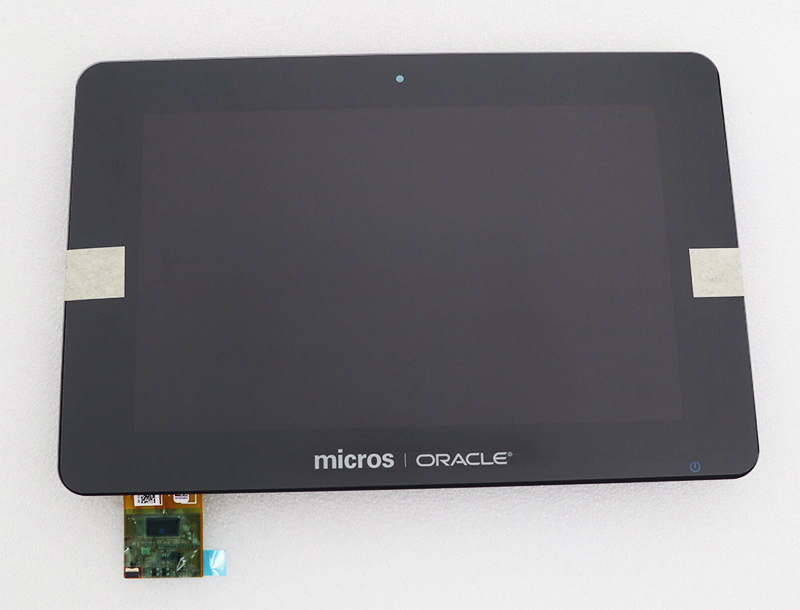
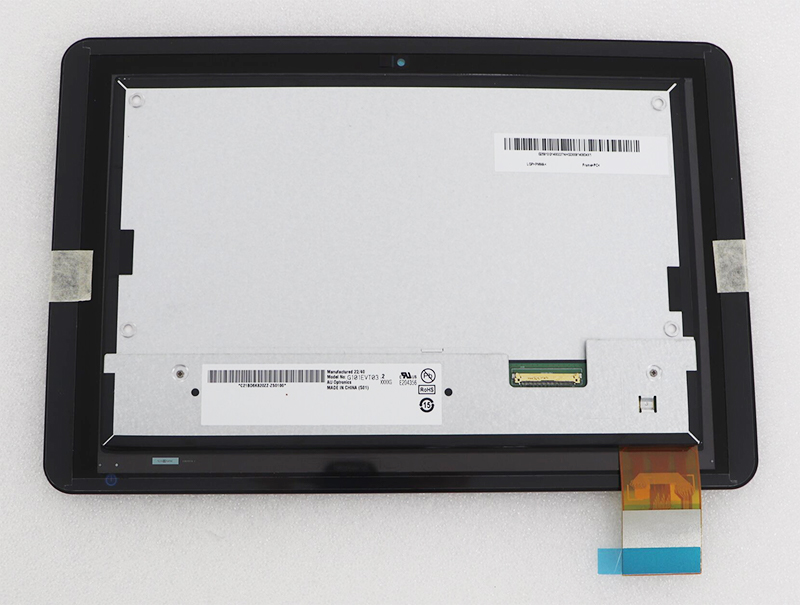
G101EVT03.2 AUO 10.1inch 1280*800 TFT-LCD PANEL
In the intricate world of electronic displays, the selection of a specific LCD panel can define the performance, clarity, and user experience of a device. This article delves into a detailed examination of the G101EVT03.2, a 10.1-inch TFT-LCD module developed by AUO (AU Optronics). As a key component in a wide array of modern digital products, from industrial control systems and portable medical devices to in-car infotainment and point-of-sale terminals, this panel represents a critical intersection of resolution, reliability, and integration.
Our exploration will move beyond basic specifications to analyze the technical nuances, application-specific advantages, and design considerations that make the G101EVT03.2 a noteworthy solution. We will dissect its core attributes, interface technology, environmental robustness, and the practical implications for engineers and product designers. By understanding its strengths and optimal use cases, stakeholders can make informed decisions that enhance their end products in a competitive technological landscape.
Core Technical Specifications and Display Performance
The foundation of the G101EVT03.2 lies in its precise technical parameters. It features a 10.1-inch diagonal active area with a WXGA (1280 x 800 pixel) resolution. This 16:10 aspect ratio offers a balanced workspace, providing more vertical real estate compared to standard 16:9 widescreen formats, which is beneficial for viewing documents, complex control interfaces, or diagnostic data. The pixel density translates to clear, sharp images and text, reducing eye strain during prolonged use.
Employing a-Si TFT (Amorphous Silicon Thin-Film Transistor) technology, the panel ensures stable and reliable performance. It typically offers a brightness level suitable for indoor applications, with specific models providing enhanced luminance for challenging lighting conditions. The contrast ratio defines the depth between blacks and whites, contributing to image clarity. Furthermore, color gamut coverage—often around 50-60% of NTSC—indicates its ability to render colors accurately enough for most industrial and commercial applications, though it may not target high-end graphic design.
Interface and Signal Integration: The LVDS Standard
A critical aspect of any LCD module is how it communicates with the host system. The G101EVT03.2 utilizes an LVDS (Low-Voltage Differential Signaling) interface. This technology is a cornerstone for reliable data transmission in display applications. LVDS operates by sending two complementary signals, which are compared at the receiver. This differential method makes it highly resistant to common-mode noise, which is electrical interference picked up by both signal wires.
The robustness of LVDS allows for high-speed data transfer over longer cable lengths with lower electromagnetic interference (EMI) compared to older TTL interfaces. For integrators, this means a more stable image, reduced signal integrity issues, and greater flexibility in system layout. The specific pin configuration and power sequence of the LVDS connector on the G101EVT03.2 must be meticulously followed during design-in to ensure proper initialization and longevity of the panel.
Mechanical Design and Structural Durability
The physical construction of the G101EVT03.2 is engineered for integration and endurance. The module includes the LCD glass, driver ICs, backlight unit (BLU), and a sturdy metal frame. The outline dimensions, mounting hole positions, and bezel width are precisely defined, enabling seamless fitting into product enclosures. A slim profile is often a key design goal to accommodate modern, compact devices.
Durability is paramount, especially for industrial or transportation applications. The panel is designed to withstand vibrations and minor mechanical shocks. The surface treatment, usually a hard coating on the polarizer, provides resistance against scratches and abrasions. Additionally, the structural integrity helps maintain optical alignment and protects the delicate internal components from physical stress, ensuring consistent performance throughout the product's lifecycle.
Environmental Robustness and Operational Stability
Beyond the lab bench, displays must perform reliably under diverse environmental conditions. The G101EVT03.2 is characterized for a specified operating temperature range (commonly -20°C to 70°C or similar) and a storage temperature range. This wide tolerance is essential for devices deployed in unregulated environments, such as factory floors or vehicle cabins, where temperatures can fluctuate drastically.
Performance parameters like response time—the speed at as pixel can change color—are crucial for displaying dynamic content without smearing. Furthermore, the backlight system, typically composed of long-life LEDs, is rated for tens of thousands of hours of operation. Considerations for humidity resistance and potential optical bonding options (where a glass or touch panel is laminated directly to the LCD to reduce reflection and improve durability) further define its suitability for harsh or demanding use cases.
Backlight System and Power Efficiency
The backlight unit is the primary consumer of power in an LCD module. The G101EVT03.2 employs an LED edge-lit backlight system. LEDs are arranged along one or more edges of the panel, and a light guide plate (LGP) distributes the illumination evenly across the entire screen. This design contributes to a thinner module and offers significant advantages in power efficiency and longevity compared to older CCFL (Cold Cathode Fluorescent Lamp) technology.
The typical operating voltage for the backlight is specified (e.g., 20-30V), and its current draw directly impacts the total system power budget. Designers can often implement PWM (Pulse-Width Modulation) dimming to adjust brightness levels, which also serves as a method for power management. Optimizing backlight usage is key to extending battery life in portable applications and reducing heat generation in enclosed systems.
Application Scenarios and Design-In Considerations
The true value of the G101EVT03.2 is realized in its applications. Its blend of resolution, size, and robustness makes it ideal for Human-Machine Interface (HMI) panels in industrial automation, patient monitoring devices in healthcare, rear-seat entertainment and central information displays in automotive contexts, and self-service kiosks. In each scenario, its reliability and clear readability support critical functions.
For engineers designing it into a product, key considerations include: ensuring compatible LVDS signal output from the host controller, designing a power supply circuit that meets the panel's sequence and ripple requirements, managing thermal output, and sourcing a compatible touch panel overlay if needed. Understanding the complete Bill of Materials (BOM) and long-term supply chain availability from AUO is also vital for product lifecycle planning.
Frequently Asked Questions (FAQs)
Q10: What are the key design-in challenges?A10: Key challenges include managing power sequencing, ensuring LVDS signal integrity, mechanical mounting, thermal management, and sourcing a compatible touch solution.
Conclusion
The AUO G101EVT03.2 10.1-inch LCD panel stands as a versatile and reliable display solution engineered for the demands of professional and industrial applications. Its WXGA resolution offers a clear and productive viewing area, while the robust LVDS interface ensures stable data transmission in electrically noisy environments. The panel's mechanical and environmental specifications underscore its design for durability and long-term operational stability.
Successful integration of this module hinges on a thorough understanding of its electrical requirements, physical dimensions, and thermal characteristics. For product developers targeting markets where performance consistency is non-negotiable—such as industrial control, healthcare, or transportation—the G101EVT03.2 provides a balanced combination of quality, performance, and proven technology. By carefully considering the insights outlined in this analysis, engineers can leverage this component to build more effective, reliable, and user-friendly digital devices.