- Industrie-LCD-Display
-
Industrial Products
- DC Servo Drive
- AC Servo Drive
- other
- Heidelberg
- FANUC
- IFM
- Meter
- CCD
- Membrane Keypad
- Film
- YOKOGAWA
- Card
- ABB
- MITSUBISHI
- FANUC
- KEYENCE
- BECKHOFF
- Honeywell
- HOLLYSYS
- FUJI servo drives
- HP
- solenoid valve
- thermostat
- Siemens adapter
- color oscilloscope
- Fujitsu connector
- CHELIC
- SMC
- CISCO
- INTEL
- Key board
- FAIRCHILD
- Der Aufsichtsrat
- Board
- Bearing
- other
- Control Panel
- Contactor
- Circuit
- Omron
- Relais.
- Der controller
- Optoelektronische schalter
- Optoelektronische sensoren
- Original
- Fan
- Motortreiber
- Endschalter
- Verstärker
- power supply
- LENZE
- Cable
- Encoder
- Sensor
- Transformator
- Fiber Optic Sensor
- Schutzrelais
- Temperaturregler
- Näherungsschalter
- Switch Sensor
- Siemens
- PCB
- HMI Touch-Glas
-
HMI-Vollautomat Ganze Einheit
- OMRON HMI Touch Panel
- Siemens HMI Touch Panel
- Mitsubishi HMI Touch Panel
- Allen-Bradley Automatisierung HMI Touch
- DELTA HMI Touch Panel
- EVIEW DELTA HMI Touch Panel
- KINCO DELTA HMI Touch Panel
- HITECH HMI Touch Panel
- WEINTECK HMI Touch Panel
- TECVIEW HMI Touch Panel
- WEINVIEW HMI Touch Panel
- PRO-FACE HMI Touch Panel
- SIMATIC HMI Touch Panel
- AMPIRE HMI Touch Panel
- HEIDELBERG HMI Touch Panel
- PANASONIC HMI Touch Panel
- PATLITE HMI Touch Panel
- KYOCERA HMI Touch Panel
- KEYENCE HMI Touch Panel
- WEINVIEW HMI Touch Panel
- HITECH HMI Touch Panel
- FUJI HMI Touch Panel
- HAKKO HMI Touch Panel
- SCHNEIDER HMI Touch Panel
- SAMKOON touch panel
- andere
- Module
- LCD Wechselrichter
- Membran Tastenfeld Schalter
- Winni Touch Screens
- Frequenzumrichter
- Servo Motor
- PLC


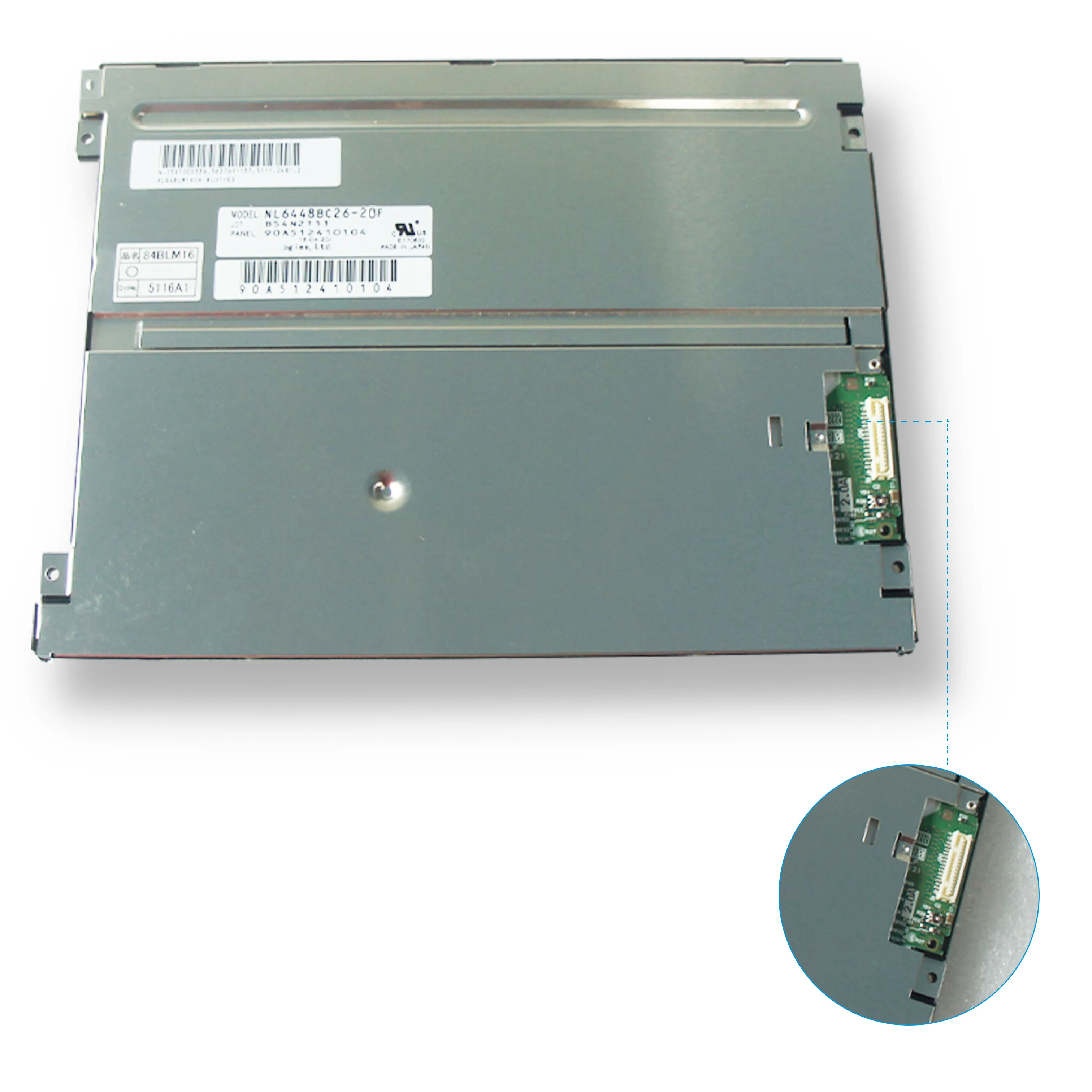


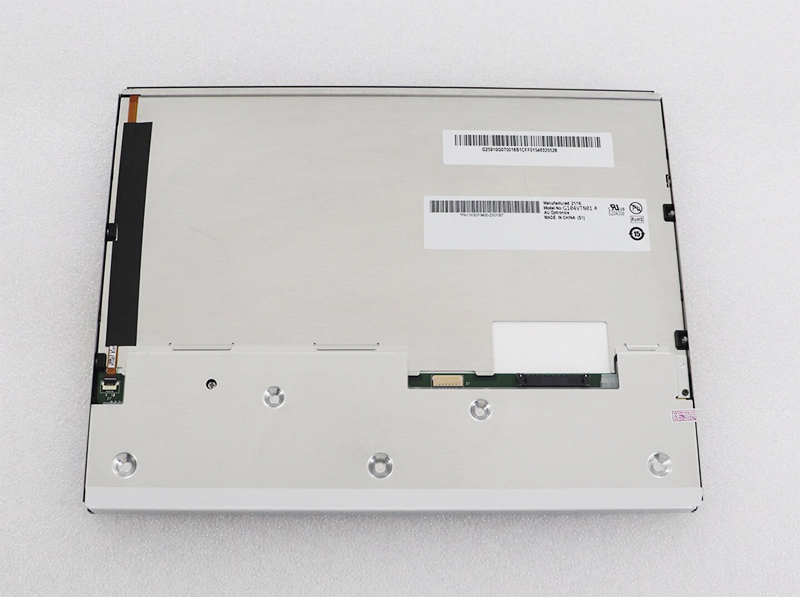
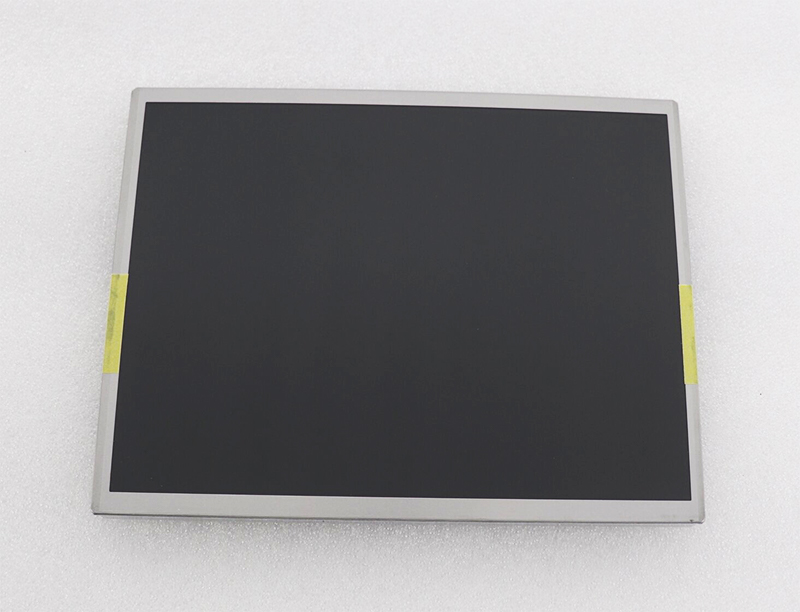
G104VTN01.0 10.4inch 640*480 LCD Display New and Original
In the intricate world of industrial and embedded systems, the display interface often serves as the critical bridge between complex machine operations and human oversight. Among the myriad of specialized components, the G104VTN01.0 10.4-inch LCD display module stands out as a quintessential solution for applications demanding reliability, clarity, and durability. This article delves into a comprehensive analysis of this specific panel, exploring its technical DNA, inherent advantages, and the pivotal distinction between "new" and "original" components.
Beyond mere specifications, we will unpack the real-world implications of its 640x480 (VGA) resolution in modern contexts, guide you through the essential integration process, and examine its diverse industrial applications. Whether you are a design engineer sourcing a critical part, a procurement specialist ensuring supply chain integrity, or a technical enthusiast seeking deeper understanding, this exploration aims to provide the actionable insights needed to make informed decisions about this enduring display technology.
Decoding the G104VTN01.0: Technical Specifications and Core Architecture
The G104VTN01.0 is a 10.4-inch diagonal TFT-LCD (Thin-Film Transistor Liquid Crystal Display) module designed with industrial longevity in mind. Its native resolution of 640 x 480 pixels, commonly known as VGA, establishes a fundamental aspect of its identity. This 4:3 aspect ratio is a hallmark of legacy systems and many industrial control interfaces, offering a square-like viewing area that is often more efficient for displaying toolbars, data logs, and control panels than wider formats.
At its heart, the module typically employs an a-Si (amorphous Silicon) TFT process, balancing performance and cost-effectiveness. Key specifications include a defined range of brightness (often around 300-400 nits), contrast ratio, and color gamut. Crucially, it features an LVDS (Low-Voltage Differential Signaling) interface, which provides robust, high-speed data transmission with reduced electromagnetic interference—a non-negotiable feature in electrically noisy industrial environments. Understanding this architecture is the first step in assessing its compatibility and performance ceiling.
The "New and Original" Imperative: Navigating the Component Supply Chain
In technical procurement, the terms "new" and "original" carry significant, distinct weight. An original G104VTN01.0 display refers to a module manufactured by the original design manufacturer (ODM) or under their authorized license, adhering precisely to the published datasheets and quality standards. It guarantees material integrity, performance consistency, and expected lifespan.
A new component simply indicates it has not been used previously. However, it could be an original part, a compatible clone, or a refurbished unit. The risk with non-original "new" parts lies in potential deviations: inferior-grade LEDs for backlighting, substandard polarizers, or controller ICs that may not fully comply with timing specifications, leading to compatibility issues or premature failure. For mission-critical applications, insisting on new and original components is a risk mitigation strategy, ensuring system stability and avoiding costly downtime.
VGA Resolution in a High-Definition World: Relevance and Justification
In an era dominated by 4K and beyond, the persistence of VGA resolution may seem anachronistic. Yet, for the G104VTN01.0's target applications, its 640x480 resolution remains not only relevant but often optimal. Firstly, it imposes a lower computational load on the system's central processor or dedicated controller, freeing resources for core operational algorithms. This is vital in real-time control systems.
Secondly, the larger pixel pitch enhances readability from a distance or in challenging lighting conditions, a common scenario in factories or outdoor settings. Furthermore, this resolution aligns perfectly with legacy software and hardware interfaces that are expensive or impractical to redesign. The choice for VGA is thus a calculated trade-off—favoring reliability, efficiency, and backward compatibility over pixel density where visual detail is secondary to data presentation and system control.
Integration Essentials: Interface, Power, and Mechanical Considerations
Successfully deploying the G104VTN01.0 requires careful attention to integration parameters. The LVDS interface necessitates a compatible controller board (often called an LCD controller or interface board) that can translate your system's video signal (e.g., from HDMI, VGA, or embedded graphics) into the precise LVDS protocol this panel requires. Power supply design must be clean and stable, adhering to the module's voltage requirements (often 3.3V or 5V for logic and a higher voltage for the backlight).
Mechanically, the module's outline dimensions, bezel size, and mounting hole positions are critical for chassis design. Additionally, the backlight type (typically CCFL or LED) has implications for power consumption, lifespan, and inverter circuit needs. A holistic review of the official datasheet is mandatory before PCB layout and mechanical design to avoid integration failures.
Primary Industrial Applications and Use Case Scenarios
The robustness and clarity of the G104VTN01.0 make it a preferred choice across several demanding sectors. In Industrial Automation, it serves as the human-machine interface (HMI) for PLCs, CNC machine controls, and factory monitoring stations. The Medical Equipment field utilizes it in diagnostic devices and patient monitoring systems where consistent performance is critical.
It is also found in Transportation and Avionics for dashboard displays or onboard information systems, and in Point-of-Sale (POS) and kiosk systems where continuous operation is required. In each scenario, the display is valued not for its cinematic prowess, but for its dependability, readability, and seamless integration into larger, purpose-built systems where failure is not an option.
Comparative Analysis: Evaluating Against Alternative Display Options
When selecting a display, comparing the G104VTN01.0 to alternatives clarifies its value proposition. Against modern higher-resolution panels of the same size, it wins on system cost (simpler driving electronics) and compatibility. Compared to other 10.4-inch VGA panels, its advantage lies in the specific mechanical footprint, interface type (LVDS vs. older TTL), and brightness/contrast specs.
The most significant comparison is often between choosing a brand-new original module versus a compatible panel or refurbished unit. While the latter may offer short-term cost savings, the former provides guaranteed performance, full lifespan (often 50,000 hours for the backlight), and manufacturer reliability. For long-term product lifecycle management, the total cost of ownership typically favors the original component.
FAQs: G104VTN01.0 LCD Display
10. Where can I find the reliable datasheet for integration?The most reliable datasheet should be sourced from authorized distributors or the original manufacturer, not third-party sites.
Conclusion
The G104VTN01.0 10.4-inch LCD display represents a specialized tool engineered for durability and clarity in demanding environments. Its value is not defined by cutting-edge pixel density, but by its proven reliability, seamless integration into legacy and industrial systems, and the critical assurance that comes with new and original components. The choice of VGA resolution is a strategic one, prioritizing functional efficiency and compatibility over sheer visual detail.
For engineers and procurement professionals, understanding its technical architecture, the nuances of the supply chain, and its ideal application scenarios is paramount. In a landscape filled with rapidly evolving consumer technology, components like the G104VTN01.0 serve as a reminder that in industrial design, appropriateness, reliability, and longevity often trump raw specification. Making an informed decision about this display means investing in the sustained operational integrity of the larger system it serves.