- Industrie-LCD-Display
-
Industrial Products
- DC Servo Drive
- AC Servo Drive
- other
- Heidelberg
- FANUC
- IFM
- Meter
- CCD
- Membrane Keypad
- Film
- YOKOGAWA
- Card
- ABB
- MITSUBISHI
- FANUC
- KEYENCE
- BECKHOFF
- Honeywell
- HOLLYSYS
- FUJI servo drives
- HP
- solenoid valve
- thermostat
- Siemens adapter
- color oscilloscope
- Fujitsu connector
- CHELIC
- SMC
- CISCO
- INTEL
- Key board
- FAIRCHILD
- Der Aufsichtsrat
- Board
- Bearing
- other
- Control Panel
- Contactor
- Circuit
- Omron
- Relais.
- Der controller
- Optoelektronische schalter
- Optoelektronische sensoren
- Original
- Fan
- Motortreiber
- Endschalter
- Verstärker
- power supply
- LENZE
- Cable
- Encoder
- Sensor
- Transformator
- Fiber Optic Sensor
- Schutzrelais
- Temperaturregler
- Näherungsschalter
- Switch Sensor
- Siemens
- PCB
- HMI Touch-Glas
-
HMI-Vollautomat Ganze Einheit
- OMRON HMI Touch Panel
- Siemens HMI Touch Panel
- Mitsubishi HMI Touch Panel
- Allen-Bradley Automatisierung HMI Touch
- DELTA HMI Touch Panel
- EVIEW DELTA HMI Touch Panel
- KINCO DELTA HMI Touch Panel
- HITECH HMI Touch Panel
- WEINTECK HMI Touch Panel
- TECVIEW HMI Touch Panel
- WEINVIEW HMI Touch Panel
- PRO-FACE HMI Touch Panel
- SIMATIC HMI Touch Panel
- AMPIRE HMI Touch Panel
- HEIDELBERG HMI Touch Panel
- PANASONIC HMI Touch Panel
- PATLITE HMI Touch Panel
- KYOCERA HMI Touch Panel
- KEYENCE HMI Touch Panel
- WEINVIEW HMI Touch Panel
- HITECH HMI Touch Panel
- FUJI HMI Touch Panel
- HAKKO HMI Touch Panel
- SCHNEIDER HMI Touch Panel
- SAMKOON touch panel
- andere
- Module
- LCD Wechselrichter
- Membran Tastenfeld Schalter
- Winni Touch Screens
- Frequenzumrichter
- Servo Motor
- PLC


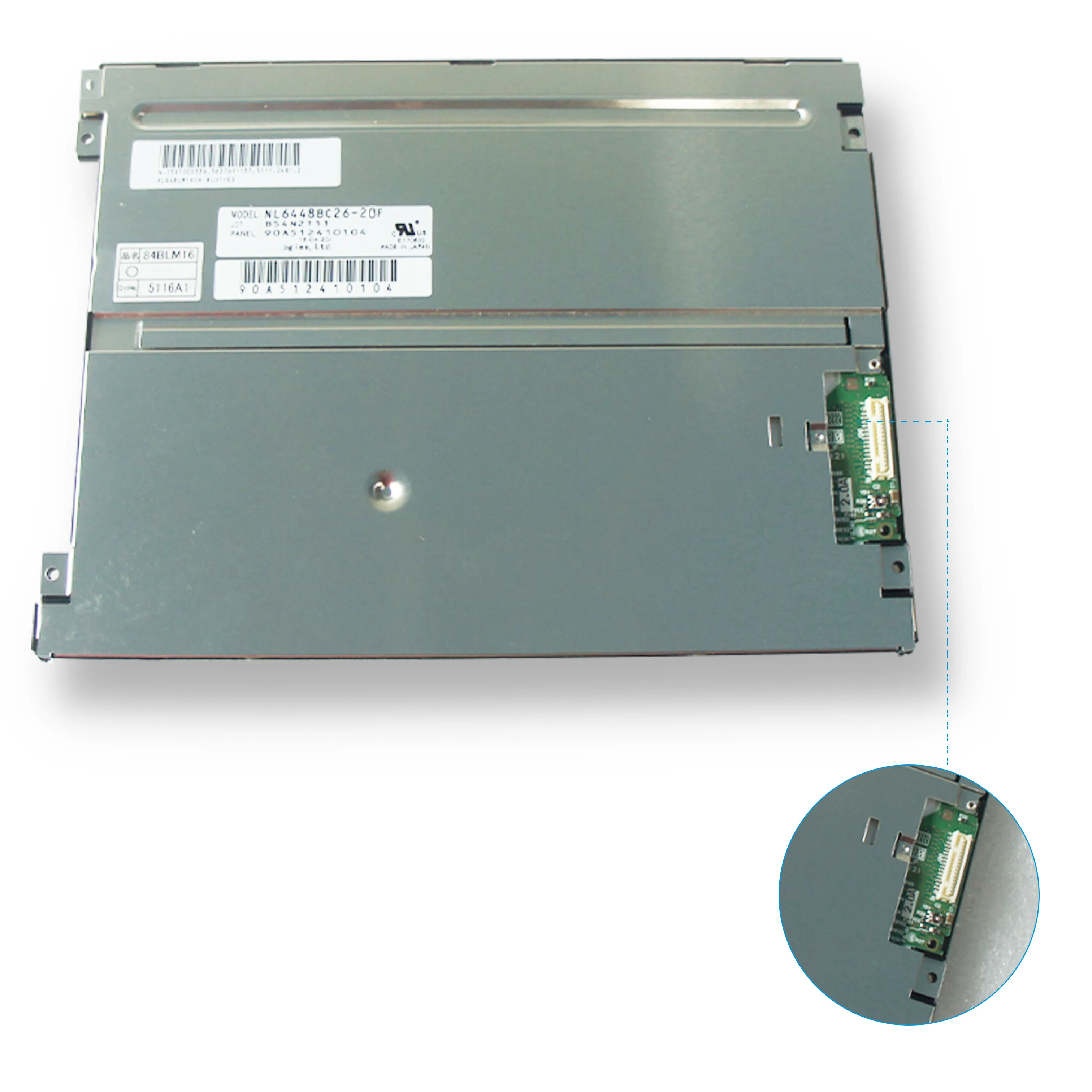

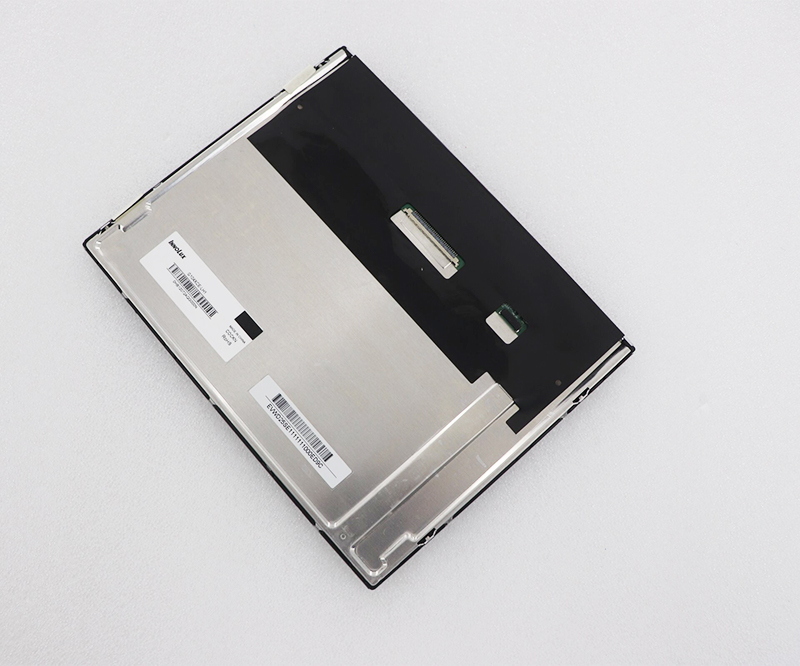
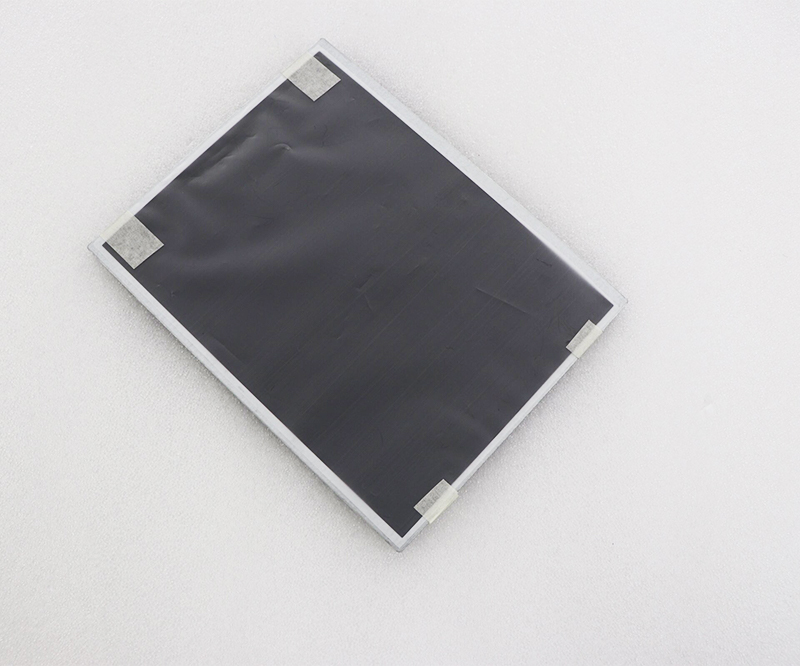
G104XCE-LH1 Innolux 10.4 inch TFT-LCD screen 1024*768 Display
In the intricate world of industrial and embedded display solutions, the choice of a screen is far more than a simple specification check. It is a critical decision that impacts system reliability, user interaction, and long-term performance in demanding environments. At the heart of many ruggedized applications—from medical devices and industrial control panels to transportation systems and test equipment—lies a specific class of components engineered for resilience and clarity. This article delves deep into one such pivotal component: the G104XCE-LH1, a 10.4-inch TFT-LCD module from Innolux.
Our exploration moves beyond basic datasheet parameters. We will dissect the technical DNA of this 1024x768 (XGA) display, uncovering the engineering rationale behind its design choices. From its robust construction and advanced backlight system to its precise electronic interface and environmental fortitude, each aspect contributes to its role as a workhorse in critical settings. This analysis aims to provide engineers, procurement specialists, and system integrators with a comprehensive understanding of where and why the G104XCE-LH1 stands out, transforming raw specifications into actionable insights for your next project.
Decoding the Core Specifications: XGA in a 10.4-Inch Form Factor
The G104XCE-LH1 is built around a 10.4-inch diagonal active area with a native resolution of 1024 x 768 pixels, adhering to the XGA (Extended Graphics Array) standard. This specific pairing is not arbitrary. The 4:3 aspect ratio, often considered "square" compared to modern widescreens, remains highly valued in industrial and medical applications. It provides optimal vertical space for data-rich interfaces, schematic diagrams, and legacy software systems designed for this format without wasteful black bars or distorted scaling.
With a pixel pitch of approximately 0.210mm x 0.210mm, the module achieves a balance between detail density and readability. The resulting ~123 PPI (Pixels Per Inch) ensures sharp character and graphic rendering, which is crucial for operators who may spend long hours monitoring screens. The choice of XGA over lower resolutions like SVGA (800x600) offers a significant 60% increase in usable pixel real estate, enabling more complex control panels and diagnostic information to be displayed simultaneously without excessive clutter or scrolling.
Robust Construction and Optical Performance
Innolux engineers this display for environments where standard commercial panels would fail. The module features a robust mechanical structure, often incorporating a sturdy metal frame to resist bending, vibration, and shock—common in factory floors or mobile installations. Optically, the G104XCE-LH1 typically employs a high-brightness LED backlight system, with options often ranging from 500 to 1000 nits or higher, ensuring clear visibility under direct sunlight or bright ambient lighting.
The panel utilizes advanced liquid crystal modes to deliver consistent performance across a wide operating temperature range (commonly -30°C to 80°C). Key optical specifications include a high contrast ratio (e.g., 800:1 or better) for deep blacks and clear image hierarchy, and wide viewing angles (e.g., 80/80/80/80 in Left/Right/Up/Down directions) allowing for accurate color and content perception from various positions. This combination of durability and optical excellence ensures the display remains a reliable interface point in harsh conditions.
The Critical Role of the Interface: LVDS and Control Logic
The bridge between the host system and the visual output is the display interface, a cornerstone of the G104XCE-LH1's design. This module predominantly uses an LVDS (Low-Voltage Differential Signaling) interface, typically a 2-channel or 1-channel configuration depending on the specific variant. LVDS is the industry standard for robust, noise-resistant data transmission over longer cable lengths within devices. Its differential signaling minimizes electromagnetic interference (EMI), which is paramount in sensitive electronic environments.
Integrated onto the module's PCB is a dedicated timing controller (T-CON). This chip is the brain of the display, responsible for correctly mapping the incoming LVDS signal data to the millions of individual pixels on the screen. It manages critical timing sequences, gamma correction, and power sequencing for the LCD panel and backlight. The presence of a well-designed T-CON ensures stable operation, eliminates flicker, and maintains color consistency across the entire screen area, which is vital for diagnostic and monitoring tasks.
Backlight Technology and Longevity Considerations
Illumination is a primary factor in usability and lifetime. The G104XCE-LH1 employs an edge-lit LED backlight system. Modern versions use long-life, white LEDs arranged along one or more edges of the panel, with a light guide plate distributing illumination evenly across the screen. This design offers significant advantages over older CCFL (Cold Cathode Fluorescent Lamp) technology, including instant-on capability, lower power consumption, a wider operating temperature range, and the absence of mercury.
Backlight longevity, often rated for 50,000 hours or more to half-brightness, is a key selling point. For 24/7 operational equipment, this translates to years of maintenance-free service. The backlight's brightness is usually adjustable via PWM (Pulse Width Modulation) control from the host system, allowing dynamic adaptation to ambient light conditions and contributing to overall power efficiency. The robust design of the backlight unit also ensures consistent performance despite thermal cycling and mechanical stress.
Environmental Endurance and Application-Specific Design
The true value of an industrial-grade display like the G104XCE-LH1 is proven under stress. Its specifications are tailored to meet stringent environmental benchmarks. This includes reliable operation across extreme temperature ranges, high resistance to humidity, and the ability to withstand significant levels of vibration and shock as per standards like IEC 60068. Such resilience ensures boot-up and flawless operation in unheated warehouses, on vibrating heavy machinery, or in ambulances.
Furthermore, the module is often designed with application-specific enhancements. These may include optically bonded touchscreen solutions (resistive or capacitive) that reduce parallax and enhance durability, anti-glare surface treatments to diffuse ambient light, and electromagnetic shielding to prevent interference with sensitive nearby equipment. This holistic approach to design transforms the display from a mere output device into a sealed, reliable human-machine interface (HMI) unit ready for system integration.
Integration Guidelines and Market Positioning
Successfully integrating the G104XCE-LH1 requires attention to detail. System designers must account for its precise power sequencing requirements—typically a sequence that powers the logic, then the panel, and finally the backlight—to prevent potential damage. Mechanical integration must consider the module's outline dimensions, mounting hole patterns, and bezel requirements to ensure a secure fit and proper heat dissipation.
In the market landscape, the G104XCE-LH1 occupies a strategic position. It serves as a direct and reliable replacement for legacy 10.4-inch XGA displays from other manufacturers, offering a modernized internal design (LED backlight, improved ICs) with form-factor and interface compatibility. It competes not on flashy consumer features but on proven reliability, long-term availability, and a specification sheet written for engineers who need guarantees, not just promises. It is the definitive choice for upgrading or building systems where failure is not an option.
FAQs
Q10: Where is this display commonly used?A: Common applications include medical monitors, industrial HMI panels, test and measurement equipment, transportation systems, and point-of-sale terminals.
Conclusion
The Innolux G104XCE-LH1 is far more than a collection of technical specifications on a page. It represents a meticulously engineered solution built for endurance, clarity, and reliability in environments where commercial displays would falter. From its purposeful XGA resolution and robust LVDS interface to its long-life LED backlight and extreme environmental tolerances, every feature is aligned with the pragmatic needs of industrial and embedded system design.
For engineers and integrators, selecting this module is a decision that prioritizes long-term system stability and user trust. It embodies the principle that in critical applications, the display is not just a window to data, but a fundamental component of system integrity. As technology evolves, the demand for such specialized, reliable components remains constant, securing the G104XCE-LH1's role as a trusted workhorse at the intersection of digital information and the physical world.