- Industrie-LCD-Display
-
Industrial Products
- DC Servo Drive
- AC Servo Drive
- other
- Heidelberg
- FANUC
- IFM
- Meter
- CCD
- Membrane Keypad
- Film
- YOKOGAWA
- Card
- ABB
- MITSUBISHI
- FANUC
- KEYENCE
- BECKHOFF
- Honeywell
- HOLLYSYS
- FUJI servo drives
- HP
- solenoid valve
- thermostat
- Siemens adapter
- color oscilloscope
- Fujitsu connector
- CHELIC
- SMC
- CISCO
- INTEL
- Key board
- FAIRCHILD
- Der Aufsichtsrat
- Board
- Bearing
- other
- Control Panel
- Contactor
- Circuit
- Omron
- Relais.
- Der controller
- Optoelektronische schalter
- Optoelektronische sensoren
- Original
- Fan
- Motortreiber
- Endschalter
- Verstärker
- power supply
- LENZE
- Cable
- Encoder
- Sensor
- Transformator
- Fiber Optic Sensor
- Schutzrelais
- Temperaturregler
- Näherungsschalter
- Switch Sensor
- Siemens
- PCB
- HMI Touch-Glas
-
HMI-Vollautomat Ganze Einheit
- OMRON HMI Touch Panel
- Siemens HMI Touch Panel
- Mitsubishi HMI Touch Panel
- Allen-Bradley Automatisierung HMI Touch
- DELTA HMI Touch Panel
- EVIEW DELTA HMI Touch Panel
- KINCO DELTA HMI Touch Panel
- HITECH HMI Touch Panel
- WEINTECK HMI Touch Panel
- TECVIEW HMI Touch Panel
- WEINVIEW HMI Touch Panel
- PRO-FACE HMI Touch Panel
- SIMATIC HMI Touch Panel
- AMPIRE HMI Touch Panel
- HEIDELBERG HMI Touch Panel
- PANASONIC HMI Touch Panel
- PATLITE HMI Touch Panel
- KYOCERA HMI Touch Panel
- KEYENCE HMI Touch Panel
- WEINVIEW HMI Touch Panel
- HITECH HMI Touch Panel
- FUJI HMI Touch Panel
- HAKKO HMI Touch Panel
- SCHNEIDER HMI Touch Panel
- SAMKOON touch panel
- andere
- Module
- LCD Wechselrichter
- Membran Tastenfeld Schalter
- Winni Touch Screens
- Frequenzumrichter
- Servo Motor
- PLC


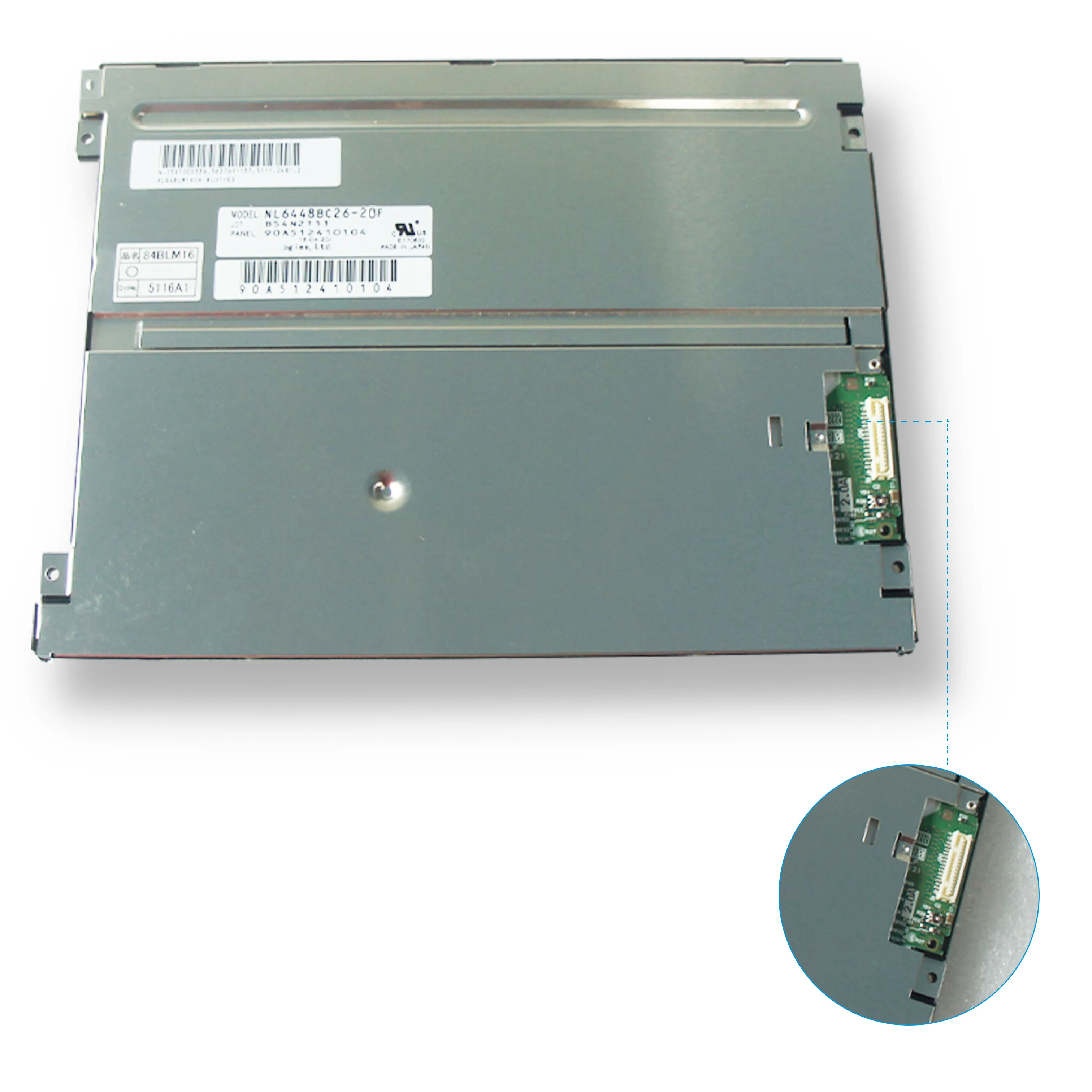

G121EAN01.2 AUO 12.1 inch TFT-LCD screen 1280*800 Display
In the intricate world of electronic components, where specifications dictate performance and compatibility, the G121EAN01.2 emerges as a significant and widely adopted solution. This 12.1-inch TFT-LCD module, manufactured by AUO (AU Optronics), represents a mature yet highly relevant technology standard for industrial, embedded, and specialized display applications. Its core identity is defined by a 1280x800 pixel resolution, commonly known as WXGA, which offers a balanced compromise between detail clarity and system resource demands.
This article delves beyond the basic datasheet parameters of the G121EAN01.2 screen. We will explore its technical architecture, dissect the practical implications of its key features, and examine the specific market niches where it excels. Understanding this display is not merely about knowing its size and resolution; it's about comprehending its interface logic, its mechanical design constraints, its optical performance under various conditions, and its suitability for projects requiring longevity and reliability over consumer-grade flash. Join us as we unpack the engineering and application considerations that make this particular TFT-LCD module a persistent choice in a rapidly evolving technological landscape.
Decoding the Specification: WXGA Resolution and Its Practical Impact
The G121EAN01.2's 1280x800 resolution is its most defining characteristic. This WXGA (Wide Extended Graphics Array) format provides a 16:10 aspect ratio, which offers slightly more vertical space compared to the ubiquitous 16:9 widescreen format. This extra vertical real estate is particularly valuable in industrial and professional settings for viewing longer data lists, code, or diagnostic information without excessive scrolling.
From a pixel density perspective, on a 12.1-inch diagonal, this resolution strikes a critical balance. It delivers significantly sharper text and finer line graphics than older, lower-resolution panels (like 800x600), while avoiding the extreme scaling challenges and higher GPU load associated with high-DPI displays. This makes it inherently compatible with a vast range of legacy and modern systems without requiring specialized software scaling. The resolution directly influences the complexity of the driving electronics and the bandwidth requirements of the interface, factors crucial for system integrators designing cost-effective and stable solutions.
Interface and Signal Integration: The LVDS Pathway
At the heart of the G121EAN01.2's compatibility is its use of an LVDS (Low-Voltage Differential Signaling) interface. This is a critical differentiator from consumer screens using eDP (Embedded DisplayPort). LVDS is a mature, robust, and noise-resistant transmission standard ideal for environments with potential electrical interference, common in industrial and automotive applications.
The module typically uses a standard 2-channel LVDS configuration to transmit the RGB data, clock, and control signals. This standardization is a key advantage; it allows engineers to source compatible controller boards and cabling from multiple vendors. Integrating this screen into a project requires an LVDS transmitter from the host system's graphics source (e.g., from an FPGA or a system-on-chip) and a carefully matched cable. Understanding the pinout definition, voltage levels (typically 3.3V or 5V for power and backlight), and signal timing is paramount for a successful implementation, turning the raw panel into a functional display subsystem.
Optical Performance: Brightness, Contrast, and Viewing Angles
The functional utility of any display is judged by what the user sees. The G121EAN01.2 is engineered for environments where reliability often trumps peak vibrancy. Its brightness, often specified in the range of 300 to 400 nits, is sufficient for indoor use and many controlled-light environments, though it may not be suitable for direct sunlight readability without additional enhancements.
Contrast ratio and viewing angles are defined by the specific TFT technology employed (typically TN or advanced AHVA by AUO). While modern IPS panels offer wider viewing angles, the technology used in this module provides a stable image for primary-axis viewing, which is acceptable for many fixed-position machines or devices. The color gamut coverage is usually around 45-55% of NTSC, adequate for data visualization and graphical user interfaces but not for color-critical graphic design work. These optical characteristics precisely define its application envelope, prioritizing longevity, response time, and cost-effectiveness over cinematic visual performance.
Mechanical and Durability Considerations
The "drop-in" design of the G121EAN01.2 is as important as its electronic specs. It comes as a modular unit, often including the LCD matrix, driver circuits, backlight unit (CCFL or LED), and a metal frame. The mechanical outline dimensions, bezel size, and mounting hole positions are standardized, allowing designers to create precise cutouts and brackets in their enclosures.
Durability is a silent feature. Designed for continuous operation in commercial and industrial settings, it often boasts a long backlight lifespan (tens of thousands of hours). Its operating temperature range is notably wider than that of consumer laptop screens, supporting stable performance in non-climate-controlled spaces. Resistance to vibration and shock is inherent in its solid construction. This mechanical robustness reduces total cost of ownership by minimizing failures and maintenance needs in critical systems, from medical devices to factory automation panels.


Typical Applications and Market Niches
The specific combination of features makes the G121EAN01.2 a champion in specific verticals. It is a staple in Industrial Human-Machine Interfaces (HMIs), where it serves as the primary touchpoint for controlling machinery, monitoring processes, and displaying diagnostic data. Its reliability and standard interface are paramount here.
Furthermore, it finds extensive use in embedded systems such as portable test equipment, aviation and marine instrumentation, and specialized computing terminals. The medical field employs it in non-critical patient monitoring devices or diagnostic equipment interfaces, where clarity and 24/7 readiness are needed. Its format is also common in legacy or purpose-built point-of-sale systems and kiosks. In these applications, the display is a component within a larger, value-added system, and its predictability and availability are key purchasing factors.
Sourcing, Compatibility, and Lifecycle Management
For engineers and procurement specialists, navigating the lifecycle of a component like the G121EAN01.2 is a practical challenge. As a product that has been on the market for years, understanding its availability status (active, nearing end-of-life, or obsolete) from AUO is crucial for new designs. Fortunately, the standardized nature of the form factor and interface creates a vibrant aftermarket and compatible alternative ecosystem.
Many third-party manufacturers produce "compatible" or "drop-in replacement" screens that match the G121EAN01.2's physical dimensions, mounting holes, and interface pinout. While optical performance may vary slightly, this compatibility offers a vital path for extending the life of existing products when the original module is phased out. Sourcing requires verifying not just the model number but also detailed parameters like backlight type, connector position, and exact voltage requirements to ensure a seamless swap or integration.
FAQs: G121EAN01.2 12.1-inch TFT-LCD Screen
Q10: Where can I find the technical datasheet for this module?A: Datasheets can be sourced from AUO's official website or through authorized distributors and major electronic component suppliers.