- Industrie-LCD-Display
-
Industrial Products
- DC Servo Drive
- AC Servo Drive
- other
- Heidelberg
- FANUC
- IFM
- Meter
- CCD
- Membrane Keypad
- Film
- YOKOGAWA
- Card
- ABB
- MITSUBISHI
- FANUC
- KEYENCE
- BECKHOFF
- Honeywell
- HOLLYSYS
- FUJI servo drives
- HP
- solenoid valve
- thermostat
- Siemens adapter
- color oscilloscope
- Fujitsu connector
- CHELIC
- SMC
- CISCO
- INTEL
- Key board
- FAIRCHILD
- Der Aufsichtsrat
- Board
- Bearing
- other
- Control Panel
- Contactor
- Circuit
- Omron
- Relais.
- Der controller
- Optoelektronische schalter
- Optoelektronische sensoren
- Original
- Fan
- Motortreiber
- Endschalter
- Verstärker
- power supply
- LENZE
- Cable
- Encoder
- Sensor
- Transformator
- Fiber Optic Sensor
- Schutzrelais
- Temperaturregler
- Näherungsschalter
- Switch Sensor
- Siemens
- PCB
- HMI Touch-Glas
-
HMI-Vollautomat Ganze Einheit
- OMRON HMI Touch Panel
- Siemens HMI Touch Panel
- Mitsubishi HMI Touch Panel
- Allen-Bradley Automatisierung HMI Touch
- DELTA HMI Touch Panel
- EVIEW DELTA HMI Touch Panel
- KINCO DELTA HMI Touch Panel
- HITECH HMI Touch Panel
- WEINTECK HMI Touch Panel
- TECVIEW HMI Touch Panel
- WEINVIEW HMI Touch Panel
- PRO-FACE HMI Touch Panel
- SIMATIC HMI Touch Panel
- AMPIRE HMI Touch Panel
- HEIDELBERG HMI Touch Panel
- PANASONIC HMI Touch Panel
- PATLITE HMI Touch Panel
- KYOCERA HMI Touch Panel
- KEYENCE HMI Touch Panel
- WEINVIEW HMI Touch Panel
- HITECH HMI Touch Panel
- FUJI HMI Touch Panel
- HAKKO HMI Touch Panel
- SCHNEIDER HMI Touch Panel
- SAMKOON touch panel
- andere
- Module
- LCD Wechselrichter
- Membran Tastenfeld Schalter
- Winni Touch Screens
- Frequenzumrichter
- Servo Motor
- PLC




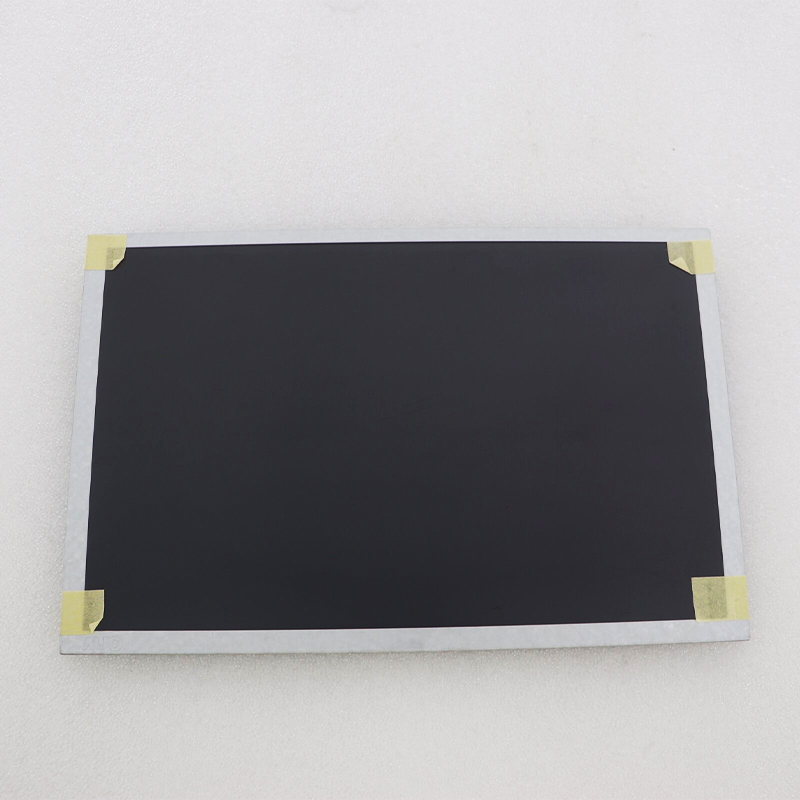
G121EAN01.3 AUO 12.1inch 1280*800 lcd panel
In the intricate world of display technology, where specifications often blur into a sea of numbers, certain components stand out for their pivotal role in enabling the devices we rely on daily. The G121EAN01.3, a 12.1-inch LCD panel manufactured by AUO (AU Optronics), is one such component. This panel, with its 1280x800 resolution (WXGA), represents a carefully balanced intersection of form, function, and application-specific engineering. It is not merely a screen; it is a critical interface that dictates user experience, power efficiency, and integration feasibility across a diverse range of professional and industrial equipment.
This article delves into a comprehensive analysis of the AUO G121EAN01.3 LCD panel. We will move beyond basic datasheet parameters to explore the technological underpinnings, performance characteristics, and nuanced design choices that define this display module. Our journey will cover its core visual performance, mechanical and electrical integration, the specific market niches it serves, and a comparative view against alternative technologies. The goal is to provide engineers, procurement specialists, and tech enthusiasts with a deep, practical understanding of where and why this particular panel shines, empowering informed decision-making for their next project.
Decoding the Core Specifications: WXGA in a 12.1-Inch Form
At the heart of the G121EAN01.3 lies its 12.1-inch diagonal active area and 1280x800 pixel resolution, commonly termed WXGA (Wide Extended Graphics Array). This 16:10 aspect ratio is a significant differentiator. Compared to the more ubiquitous 16:9 ratio, the 16:10 format provides additional vertical space, which is highly valued in productivity and industrial applications for displaying more lines of code, longer document pages, or additional toolbar elements without excessive scrolling.
The pixel density calculates to approximately 125 PPI (Pixels Per Inch). While not in the "Retina" class of modern smartphones, this density is optimal for its intended use cases. It ensures sharp, legible text and clear graphics at typical viewing distances for embedded systems, while also maintaining a balance with power consumption and signal integrity. The panel typically employs an LVDS (Low-Voltage Differential Signaling) interface, a robust and widely supported standard for transmitting high-speed video data reliably in electrically noisy environments, which is crucial for industrial settings.
Visual Performance and Technology Under the Hood
The G121EAN01.3 delivers its image through a standard Twisted Nematic (TN) or Advanced-TN type LCD technology. This choice is strategic. TN panels are renowned for their fast response times (often in the range of 25ms or lower for gray-to-gray), which is essential for displaying dynamic data or basic graphical user interfaces without noticeable smearing. They also offer high brightness levels, commonly reaching 300 nits or more, ensuring readability under various ambient lighting conditions.
However, the trade-off for speed and brightness is in viewing angles and color reproduction. TN panels typically exhibit more significant color shift and contrast reduction when viewed from vertical angles. This is a critical consideration for the panel's application. For a fixed-viewing-angle device like a medical monitor, test equipment, or a point-of-sale terminal, this limitation is manageable. The panel's contrast ratio (e.g., 500:1 or 700:1) and color gamut (covering a standard sRGB range) are engineered to be perfectly adequate for these functional, rather than entertainment-focused, purposes.
Mechanical Design and Integration Considerations
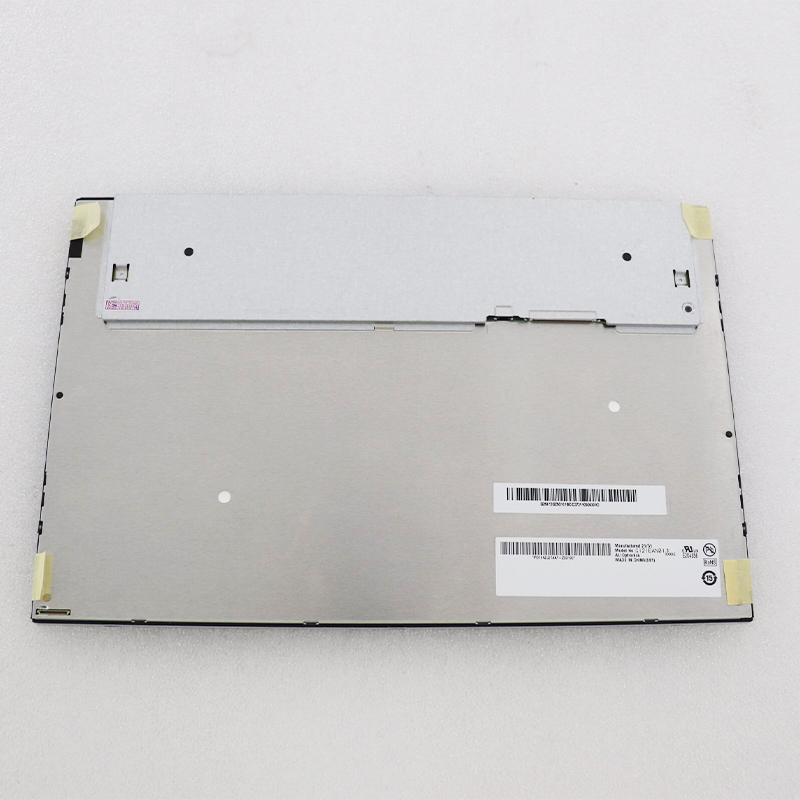
Integrating a display into a product is as much about physical engineering as it is about electronics. The G121EAN01.3 comes as a modular panel, often including the LCD matrix, backlight unit (LED-based for modern versions), driver circuits, and a metal or plastic frame. Its outline dimensions, mounting hole positions, and bezel width are standardized but require precise attention during product enclosure design.
The thickness of the module, influenced by the backlight assembly, directly impacts the slimness of the end device. Furthermore, the interface connector's type and location (typically a 30-pin or 40-pin LVDS connector along one edge) dictate internal cabling routing. Thermal management is another silent but vital aspect. The LED backlight and driving ICs generate heat, and the product design must ensure adequate dissipation to prevent premature aging or performance degradation of the panel, especially in sealed or fanless systems common in industrial applications.
Power Profile and Reliability for Sustained Operation
In embedded and portable industrial devices, power efficiency translates directly to battery life, heat output, and overall system reliability. The G121EAN01.3, with its LED backlight, is designed with this in mind. The total power consumption is dominated by the backlight; a typical module might consume 3-4 watts at full brightness. Designers often have control over backlight intensity through PWM (Pulse-Width Modulation) dimming, allowing for significant power savings when full brightness is not required.
Reliability is paramount. These panels are built and tested for long-term, continuous operation, often rated for tens of thousands of hours of backlight life. They are engineered to withstand a wider operating temperature range (e.g., 0°C to 50°C or broader for extended grades) and higher humidity levels compared to consumer laptop panels. This ruggedness ensures stable performance in demanding environments like factory floors, transportation systems, or outdoor kiosks, where consumer-grade displays would quickly fail.
Primary Application Ecosystems and Market Fit
The specific blend of features of the G121EAN01.3 makes it a preferred solution in several well-defined vertical markets. Its 16:10 aspect ratio and robust build are a mainstay in Industrial Human-Machine Interfaces (HMIs) and PLC control panels, where information density and reliability are critical. In the medical device field, it finds use in diagnostic equipment, patient monitors, and surgical tools where clear data presentation under clinical lighting is essential.
Other key applications include transportation infotainment and control systems (in trains, aircraft, or marine), point-of-sale and self-service kiosks, and specialized test and measurement instrumentation. In these contexts, the panel is not a commodity but a qualified component. Its longevity in the market—often remaining in production for many years—is a direct response to these industries' long product lifecycles and aversion to frequent requalification of core components.
Comparative Landscape and Future Trajectory
Positioning the G121EAN01.3 requires comparison. Against newer IPS (In-Plane Switching) panels, it concedes on viewing angles and color fidelity but may retain advantages in cost and response time for specific uses. Compared to higher-resolution modern displays, its strength lies in lower system cost (requiring less powerful and expensive graphics processors and memory) and better compatibility with legacy systems.
The future for panels like the G121EAN01.3 is not obsolescence but evolution. While consumer trends push toward 4K and OLED, the industrial and professional sectors evolve slower, prioritizing reliability, supply stability, and cost-effectiveness. The trajectory for this class of display involves incremental improvements: adoption of more power-efficient LED backlights, potential integration of touch panels (resistive or projective capacitive), and perhaps transitions to newer interfaces like eDP (Embedded DisplayPort) while maintaining mechanical and electrical compatibility where possible to serve its entrenched application base.
FAQs: AUO G121EAN01.3 LCD Panel
10. Is this panel still in production and available?Availability varies. While it may be in active production, it's often categorized as a long-lifecycle industrial panel. Checking with authorized AUO distributors or display module integrators is necessary for current stock and lead times.
Conclusion
The AUO G121EAN01.3 12.1-inch WXGA LCD panel exemplifies how a seemingly standard component is, in fact, a highly engineered solution tailored to specific market demands. Its value proposition is not rooted in chasing the highest resolution or most vibrant colors, but in delivering a reliable, balanced, and application-optimized performance package. The choice of 16:10 aspect ratio, TN technology, LVDS interface, and robust construction is a coherent response to the needs of industrial, medical, and professional embedded systems.
For designers and engineers, understanding this panel's characteristics—its strengths in speed and brightness, its trade-offs in viewing angles, its integration requirements, and its power profile—is crucial for successful implementation. It serves as a reminder that in technology, the "best" component is not the one with the highest specs, but the one that most precisely and reliably fulfills the functional, environmental, and economic requirements of the final product. The enduring relevance of the G121EAN01.3 underscores the enduring need for such purpose-built display solutions in our increasingly digital and interfaced world.