- Industrie-LCD-Display
-
Industrial Products
- DC Servo Drive
- AC Servo Drive
- other
- Heidelberg
- FANUC
- IFM
- Meter
- CCD
- Membrane Keypad
- Film
- YOKOGAWA
- Card
- ABB
- MITSUBISHI
- FANUC
- KEYENCE
- BECKHOFF
- Honeywell
- HOLLYSYS
- FUJI servo drives
- HP
- solenoid valve
- thermostat
- Siemens adapter
- color oscilloscope
- Fujitsu connector
- CHELIC
- SMC
- CISCO
- INTEL
- Key board
- FAIRCHILD
- Der Aufsichtsrat
- Board
- Bearing
- other
- Control Panel
- Contactor
- Circuit
- Omron
- Relais.
- Der controller
- Optoelektronische schalter
- Optoelektronische sensoren
- Original
- Fan
- Motortreiber
- Endschalter
- Verstärker
- power supply
- LENZE
- Cable
- Encoder
- Sensor
- Transformator
- Fiber Optic Sensor
- Schutzrelais
- Temperaturregler
- Näherungsschalter
- Switch Sensor
- Siemens
- PCB
- HMI Touch-Glas
-
HMI-Vollautomat Ganze Einheit
- OMRON HMI Touch Panel
- Siemens HMI Touch Panel
- Mitsubishi HMI Touch Panel
- Allen-Bradley Automatisierung HMI Touch
- DELTA HMI Touch Panel
- EVIEW DELTA HMI Touch Panel
- KINCO DELTA HMI Touch Panel
- HITECH HMI Touch Panel
- WEINTECK HMI Touch Panel
- TECVIEW HMI Touch Panel
- WEINVIEW HMI Touch Panel
- PRO-FACE HMI Touch Panel
- SIMATIC HMI Touch Panel
- AMPIRE HMI Touch Panel
- HEIDELBERG HMI Touch Panel
- PANASONIC HMI Touch Panel
- PATLITE HMI Touch Panel
- KYOCERA HMI Touch Panel
- KEYENCE HMI Touch Panel
- WEINVIEW HMI Touch Panel
- HITECH HMI Touch Panel
- FUJI HMI Touch Panel
- HAKKO HMI Touch Panel
- SCHNEIDER HMI Touch Panel
- SAMKOON touch panel
- andere
- Module
- LCD Wechselrichter
- Membran Tastenfeld Schalter
- Winni Touch Screens
- Frequenzumrichter
- Servo Motor
- PLC



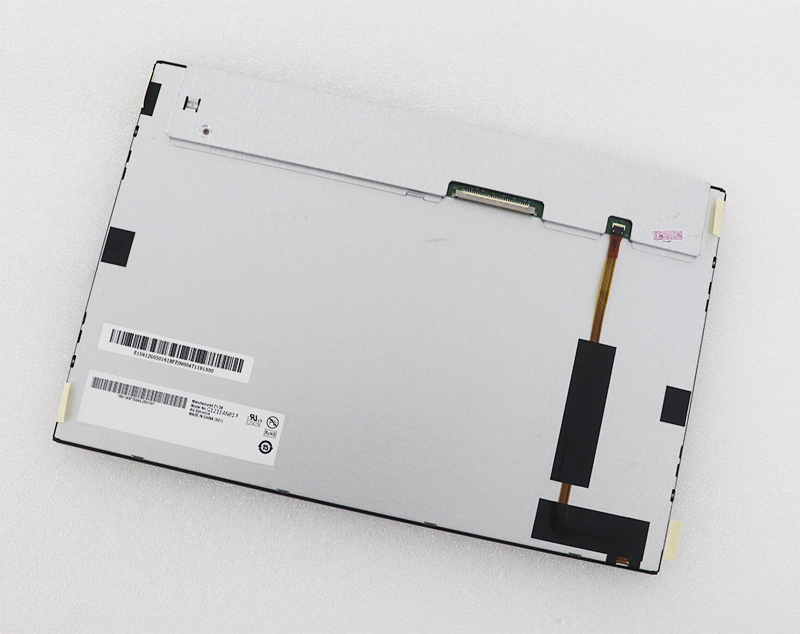
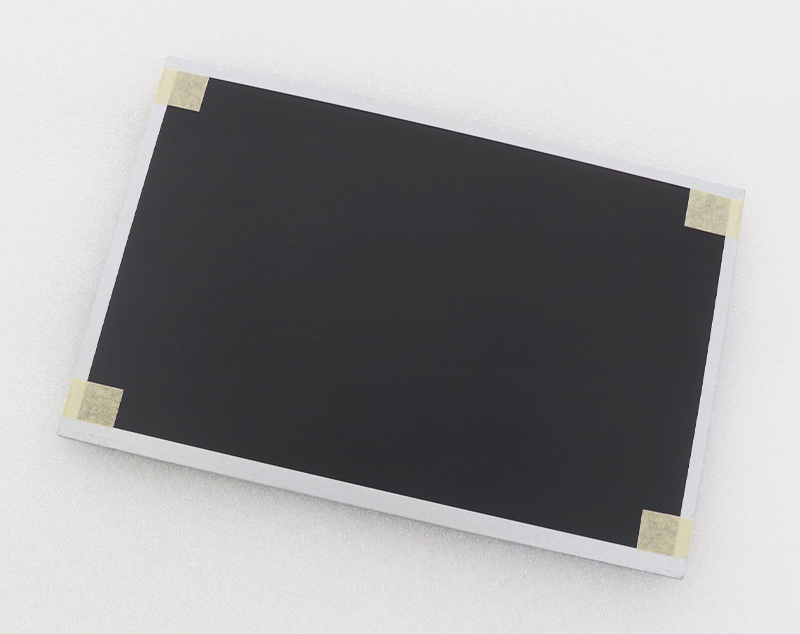
G121EAN01.5 AUO 12.1inch TFT-LCD screen 1280*800 Display
In the intricate world of electronic components, where specifications dictate performance and compatibility is king, a single part number can unlock a universe of application potential. The G121EAN01.5 from AUO (AU Optronics) is precisely such a key. This 12.1-inch TFT-LCD display module, with its 1280x800 resolution (WXGA), represents a critical intersection of clarity, compact form factor, and industrial-grade reliability. It is far more than just a screen; it is a foundational visual interface engineered for demanding environments.
This article delves deep into the G121EAN01.5, moving beyond basic datasheet parameters to explore its technological significance and practical implications. We will dissect its core attributes, from the pixel density that defines its sharpness to the mechanical and electrical characteristics that determine its integration pathway. Our journey will uncover why this specific panel is a preferred choice across diverse sectors, analyze its competitive positioning in the market, and provide crucial insights for engineers, procurement specialists, and product developers looking to harness its capabilities for their next-generation devices.
Decoding the Specification: WXGA in a 12.1-Inch Form Factor
The 1280x800 resolution, known as WXGA (Wide Extended Graphics Array), is the first defining feature of the G121EAN01.5. On a 12.1-inch diagonal, this translates to a pixel density of approximately 125 Pixels Per Inch (PPI). This density strikes a deliberate balance: it offers significantly sharper text and finer graphical detail than traditional 1024x768 (XGA) panels, while avoiding the excessive power draw and system load associated with higher-resolution, high-PPI displays. The 16:10 aspect ratio is another strategic advantage.
Compared to the more common 16:9 ratio, 16:10 provides additional vertical screen real estate. This is immensely valuable for professional and industrial applications, allowing users to view more lines of code, longer documents, or additional data points without excessive scrolling. This combination of resolution, size, and aspect ratio establishes the G121EAN01.5 as a panel designed for functional clarity and productivity, not merely media consumption.
Core Technologies: TFT-LCD, Interface, and Backlighting
At its heart, the G121EAN01.5 utilizes a Twisted Nematic (TN) or Advanced-TN type TFT-LCD technology, a proven workhorse known for its fast response times and cost-effectiveness. While viewing angles may not match IPS panels, modern TN variants offer sufficient performance for many fixed-viewing applications like kiosks or embedded systems. The module typically features an LVDS (Low-Voltage Differential Signaling) interface, a robust and widely adopted standard for transmitting high-speed video data with resistance to noise, which is crucial in electrically noisy industrial environments.
The backlight system is a critical component, often employing LED edge-lighting. This technology ensures uniform brightness across the screen surface while enabling a slim profile. The brightness level, usually specified in nits (cd/m²), is a key determinant of readability under various ambient lighting conditions, from office settings to sunlit factory floors. Understanding these core technologies—the panel type, the signal interface, and the illumination method—is essential for successful integration and performance prediction.
Mechanical and Electrical Integration Parameters
Successful implementation hinges on precise mechanical and electrical integration. The G121EAN01.5 comes as a complete module, including the LCD panel, driver circuitry, backlight unit, and often a metal frame. Its exact outline dimensions, bezel width, and mounting hole positions are non-negotiable data for enclosure design. The thickness of the module directly impacts the final product's slimness.
On the electrical side, the power supply requirements (voltage and current for both the logic board and the LED backlight) must be meticulously matched. Designers must also account for the control signals (enable, brightness adjustment via PWM) and ensure compatibility with the host system's timing controller (T-CON) or graphics source. Ignoring these parameters can lead to display failure, image artifacts, or reduced lifespan, making the integration phase a critical step from prototype to production.
Primary Application Sectors and Use Cases
The technical profile of the G121EAN01.5 makes it a versatile solution for sectors where reliability and clear data presentation are paramount. Its primary applications include:
Industrial Human-Machine Interfaces (HMIs): Used in factory automation control panels, PLC interfaces, and test equipment, where its robust construction and clear display of complex data are essential.
Medical Devices: Found in diagnostic equipment, patient monitoring systems, and portable medical carts, benefiting from its reliable performance and adequate resolution for medical imagery.
Point-of-Sale (POS) and Kiosk Systems: Powers self-service terminals, retail checkouts, and information booths, offering a balance of durability and visual appeal.
Transportation and Fleet Management: Integrated into vehicle-mounted systems for logistics, public transport, and automotive diagnostics.
Specialized Computing: Used in ruggedized laptops, portable workstations, and embedded computers for field service and logistics.
Comparative Analysis and Market Positioning
Positioning the G121EAN01.5 within the broader display market clarifies its value proposition. It competes directly with other 12.1-inch WXGA modules, often distinguishing itself through AUO's manufacturing consistency and supply chain reliability. Compared to consumer-grade laptop panels, the G121EAN01.5 is built to higher durability standards, with wider operating temperature ranges and longer lifecycle support, which is critical for B2B and industrial products.
When evaluated against newer technologies, its strengths become niche-specific. It may not offer the color gamut or viewing angles of an IPS panel, nor the sunlight readability of a high-brightness transflective display. However, for its target applications, it provides an optimal cost-to-performance ratio. Its market position is that of a proven, reliable, and readily integratable component for professional systems, rather than a cutting-edge consumer feature.
Sourcing, Lifecycle, and Design Considerations
For engineers and buyers, practical considerations extend beyond the datasheet. Sourcing the G121EAN01.5 requires working with authorized distributors or directly with AUO's sales channels to guarantee authenticity and avoid counterfeit components. Understanding its product lifecycle stage is crucial; as a mature product, one must assess its long-term availability (LTA) status and plan for potential end-of-life (EOL) scenarios, including last-time buys or identifying suitable replacement panels.
Design considerations include planning for the thermal management of the module, ensuring adequate heat dissipation in sealed enclosures. Furthermore, selecting a compatible LCD controller board (if not integrating directly at the PCB level) is a common step for prototyping and smaller-scale production. These logistical and forward-planning aspects are as vital to project success as the technical specifications themselves.
FAQs: G121EAN01.5 Display Module
Q10: Where can I find the detailed datasheet and pinout diagram?A10: The official datasheet should be sourced from AUO's official website or requested from their authorized sales representatives or distributors to ensure accuracy.
Conclusion
The AUO G121EAN01.5 12.1-inch WXGA TFT-LCD module exemplifies how a meticulously engineered component becomes an industry staple. Its value lies not in flashy, consumer-oriented features, but in its proven reliability, functional design, and seamless integratability into professional and industrial ecosystems. The thoughtful marriage of 1280x800 resolution with a 16:10 aspect ratio delivers tangible productivity benefits, while its robust LVDS interface and construction ensure performance in challenging environments.
For product developers and engineers, selecting this display is a decision rooted in pragmatism and long-term planning. It requires a holistic understanding that spans from pixel-level specifications to supply-chain lifecycle management. Ultimately, the G121EAN01.5 serves as a critical and reliable window for data and interaction in machines that power our industrial, medical, and commercial infrastructure, proving that in the world of embedded technology, consistent performance often outweighs transient innovation.