- Industrie-LCD-Display
-
Industrial Products
- DC Servo Drive
- AC Servo Drive
- other
- Heidelberg
- FANUC
- IFM
- Meter
- CCD
- Membrane Keypad
- Film
- YOKOGAWA
- Card
- ABB
- MITSUBISHI
- FANUC
- KEYENCE
- BECKHOFF
- Honeywell
- HOLLYSYS
- FUJI servo drives
- HP
- solenoid valve
- thermostat
- Siemens adapter
- color oscilloscope
- Fujitsu connector
- CHELIC
- SMC
- CISCO
- INTEL
- Key board
- FAIRCHILD
- Der Aufsichtsrat
- Board
- Bearing
- other
- Control Panel
- Contactor
- Circuit
- Omron
- Relais.
- Der controller
- Optoelektronische schalter
- Optoelektronische sensoren
- Original
- Fan
- Motortreiber
- Endschalter
- Verstärker
- power supply
- LENZE
- Cable
- Encoder
- Sensor
- Transformator
- Fiber Optic Sensor
- Schutzrelais
- Temperaturregler
- Näherungsschalter
- Switch Sensor
- Siemens
- PCB
- HMI Touch-Glas
-
HMI-Vollautomat Ganze Einheit
- OMRON HMI Touch Panel
- Siemens HMI Touch Panel
- Mitsubishi HMI Touch Panel
- Allen-Bradley Automatisierung HMI Touch
- DELTA HMI Touch Panel
- EVIEW DELTA HMI Touch Panel
- KINCO DELTA HMI Touch Panel
- HITECH HMI Touch Panel
- WEINTECK HMI Touch Panel
- TECVIEW HMI Touch Panel
- WEINVIEW HMI Touch Panel
- PRO-FACE HMI Touch Panel
- SIMATIC HMI Touch Panel
- AMPIRE HMI Touch Panel
- HEIDELBERG HMI Touch Panel
- PANASONIC HMI Touch Panel
- PATLITE HMI Touch Panel
- KYOCERA HMI Touch Panel
- KEYENCE HMI Touch Panel
- WEINVIEW HMI Touch Panel
- HITECH HMI Touch Panel
- FUJI HMI Touch Panel
- HAKKO HMI Touch Panel
- SCHNEIDER HMI Touch Panel
- SAMKOON touch panel
- andere
- Module
- LCD Wechselrichter
- Membran Tastenfeld Schalter
- Winni Touch Screens
- Frequenzumrichter
- Servo Motor
- PLC


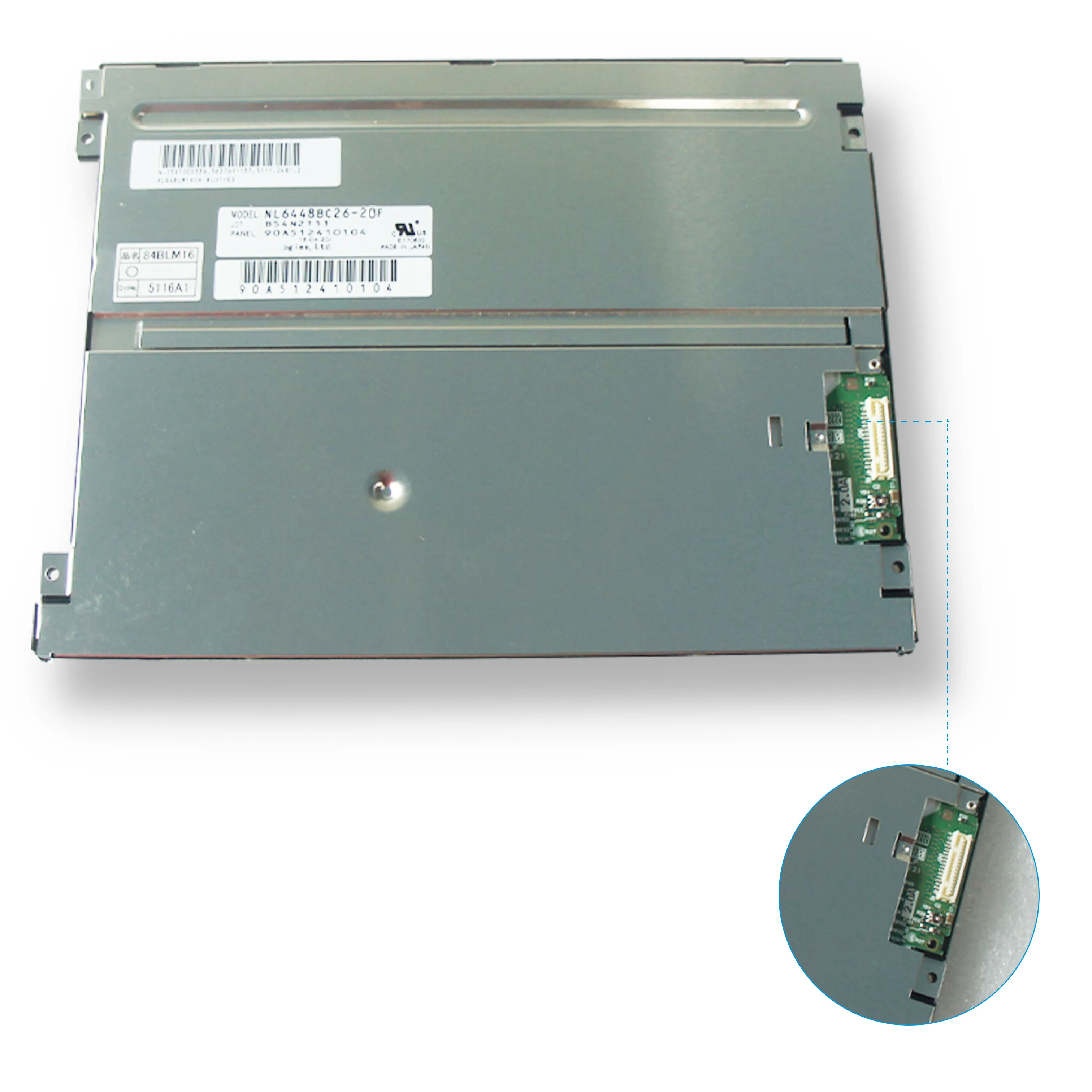

G121STN01.0 AUO 12.1 inch 800*600 LCD PANEL SCREEN
In the intricate ecosystem of industrial and embedded display solutions, specific panel models become the unsung heroes powering critical applications where reliability is non-negotiable. The G121STN01.0, a 12.1-inch LCD panel from AUO (AU Optronics), stands as a prime example of such a component. With its 800 x 600 SVGA resolution and ruggedized design, this panel is engineered not for consumer entertainment, but for the demanding environments of factories, medical devices, point-of-sale systems, and human-machine interfaces.
This article provides a comprehensive exploration of the G121STN01.0. We will dissect its core technical specifications, understand the enduring relevance of its STN technology, and delve into its specific interface and compatibility requirements. Beyond the datasheet, we will analyze its ideal application landscapes, compare it with modern alternatives, and provide crucial guidance for sourcing, integrating, and maintaining this industrial-grade workhorse. Our goal is to offer engineers, procurement specialists, and system integrators the depth of knowledge needed to make informed decisions about this pivotal display component.
Decoding the G121STN01.0: Core Specifications and Architecture
At its heart, the AUO G121STN01.0 is a 12.1-inch diagonal liquid crystal display panel with an active area of 246.0mm x 184.5mm. Its native resolution is 800 x 600 pixels, commonly known as SVGA. This 4:3 aspect ratio is a hallmark of industrial and legacy systems, perfectly suited for displaying data-rich interfaces, diagnostic information, and control panels without the widescreen format common in modern consumer devices.
The panel utilizes a CCFL (Cold Cathode Fluorescent Lamp) backlighting system, which, while less energy-efficient than contemporary LED backlights, offers proven stability and a wide operating temperature range crucial for industrial settings. It features a typical brightness of 300 nits, ensuring readability in various lighting conditions. A critical specification is its wide viewing angle, achieved through specific STN technology enhancements, allowing for clear visibility from different positions—a key requirement for control panels viewed by multiple operators.


The STN Technology Explained: Advantages in a Niche Context
G121STN01.0 employs STN (Super Twisted Nematic) LCD technology, which differs significantly from the TFT (Thin-Film Transistor) panels found in smartphones and monitors. STN is a passive-matrix technology, meaning it does not have an individual transistor for each pixel. This results in a simpler, potentially more robust physical structure with lower power consumption.
The trade-offs include slower response times and generally lower contrast ratios compared to active-matrix TFTs. However, for static or slowly updating industrial data screens, these drawbacks are often irrelevant. The true strength of STN in this context lies in its cost-effectiveness for monochrome or limited-color displays and its excellent performance across extreme temperature ranges. The "Super Twisted" design improves the viewing angle and contrast over older Twisted Nematic (TN) panels, making it a balanced choice for specific rugged applications where absolute image fidelity is secondary to longevity and environmental resilience.
Interface and Compatibility: The LVDS Connection Standard
Integration is a critical step, and the G121STN01.0 panel utilizes a standard LVDS (Low-Voltage Differential Signaling) interface. This 20-pin single-channel LVDS interface is a common and robust protocol for transmitting high-speed video data from a controller board to the LCD panel, resistant to electromagnetic interference—a common concern in industrial environments.
System integrators must note that this panel requires an external LCD controller board. The panel itself does not accept direct VGA, HDMI, or other common video inputs. The controller board must be compatible with the panel's resolution, LVDS pin configuration, voltage requirements (typically 3.3V or 5V for logic and a higher voltage for the CCFL backlight inverter), and timing parameters. Matching the correct controller, often defined by a "panel model" in controller firmware, is essential for a functional display system.
Primary Applications and Industry Use Cases
The G121STN01.0 finds its home in environments where failure is not an option. Its design caters to several key verticals:
Industrial Automation & HMI: As the primary visual interface on factory floor machinery, PLC (Programmable Logic Controller) panels, and test equipment, where it displays control parameters, system status, and diagnostic data.
Medical Equipment: In devices like patient monitors, diagnostic instruments, and older medical imaging systems, where consistent performance and readability are critical.
Point-of-Sale (POS) & Kiosk Systems: In retail and hospitality terminals that operate for long hours, requiring durable screens capable of withstanding constant use.
Transportation & Aerospace: In legacy vehicle information systems, cockpit displays, or ground support equipment where component certification and long lifecycle support are paramount.
Sourcing and Replacement Considerations in the Modern Market
As a product that has been in circulation for many years, sourcing the G121STN01.0 involves navigating a market of original, refurbished, and compatible panels. For mission-critical systems, especially in medical or aviation, sourcing from authorized distributors or reputable specialists who guarantee authentic AUO panels is crucial to ensure specification compliance and reliability.
For replacement scenarios, identifying a direct equivalent involves matching not just the size and resolution, but also the mechanical dimensions (mounting hole positions, bezel size), interface type (20-pin LVDS), backlight type (CCFL), and voltage requirements. The rise of LED-backlit TFT panels as potential upgrades must be carefully evaluated, as they may require different controller boards, inverters, and mechanical adaptation, turning a simple panel swap into a more complex system redesign.
Integration Best Practices and Longevity Management
Successful integration extends beyond electrical connection. Mechanically, the panel must be securely mounted, often using metal brackets, to withstand vibration. Thermal management should be considered, as CCFL backlights generate more heat than LEDs; ensuring adequate airflow around the display assembly prolongs its life.
For longevity, the CCFL backlight is typically the first component to degrade. Planning for eventual backlight replacement or having a strategy for transitioning to an LED-backlit solution is prudent for long-term system maintenance. Furthermore, keeping spare controller boards and cables on hand can minimize downtime for essential equipment, making the entire display subsystem serviceable for decades—a core principle in industrial design.
FAQs: G121STN01.0 LCD Panel
Q10: What is the most critical factor when replacing this panel?A10: Ensuring mechanical compatibility (mounting holes, dimensions), interface match (20-pin LVDS), and compatible voltage/backlight requirements with your existing controller.
Conclusion
The AUO G121STN01.0 12.1-inch LCD panel exemplifies the engineering priorities of the industrial display world: reliability, longevity, and specialization over consumer-grade specs. Its SVGA resolution, STN technology, and CCFL backlight are not outdated features but deliberate choices that align perfectly with the needs of harsh, stable, and long-lifecycle applications. Understanding its architecture, interface requirements, and ideal use cases is essential for anyone responsible for maintaining or integrating such systems.
In an era of rapid technological turnover, components like the G121STN01.0 remind us that in critical sectors, proven performance and availability often trump the latest advancements. For system integrators and maintenance engineers, mastering the nuances of these industrial workhorses is key to ensuring operational continuity and making informed decisions between direct replacement, refurbishment, and strategic upgrade paths.