- Industrie-LCD-Display
-
Industrial Products
- DC Servo Drive
- AC Servo Drive
- other
- Heidelberg
- FANUC
- IFM
- Meter
- CCD
- Membrane Keypad
- Film
- YOKOGAWA
- Card
- ABB
- MITSUBISHI
- FANUC
- KEYENCE
- BECKHOFF
- Honeywell
- HOLLYSYS
- FUJI servo drives
- HP
- solenoid valve
- thermostat
- Siemens adapter
- color oscilloscope
- Fujitsu connector
- CHELIC
- SMC
- CISCO
- INTEL
- Key board
- FAIRCHILD
- Der Aufsichtsrat
- Board
- Bearing
- other
- Control Panel
- Contactor
- Circuit
- Omron
- Relais.
- Der controller
- Optoelektronische schalter
- Optoelektronische sensoren
- Original
- Fan
- Motortreiber
- Endschalter
- Verstärker
- power supply
- LENZE
- Cable
- Encoder
- Sensor
- Transformator
- Fiber Optic Sensor
- Schutzrelais
- Temperaturregler
- Näherungsschalter
- Switch Sensor
- Siemens
- PCB
- HMI Touch-Glas
-
HMI-Vollautomat Ganze Einheit
- OMRON HMI Touch Panel
- Siemens HMI Touch Panel
- Mitsubishi HMI Touch Panel
- Allen-Bradley Automatisierung HMI Touch
- DELTA HMI Touch Panel
- EVIEW DELTA HMI Touch Panel
- KINCO DELTA HMI Touch Panel
- HITECH HMI Touch Panel
- WEINTECK HMI Touch Panel
- TECVIEW HMI Touch Panel
- WEINVIEW HMI Touch Panel
- PRO-FACE HMI Touch Panel
- SIMATIC HMI Touch Panel
- AMPIRE HMI Touch Panel
- HEIDELBERG HMI Touch Panel
- PANASONIC HMI Touch Panel
- PATLITE HMI Touch Panel
- KYOCERA HMI Touch Panel
- KEYENCE HMI Touch Panel
- WEINVIEW HMI Touch Panel
- HITECH HMI Touch Panel
- FUJI HMI Touch Panel
- HAKKO HMI Touch Panel
- SCHNEIDER HMI Touch Panel
- SAMKOON touch panel
- andere
- Module
- LCD Wechselrichter
- Membran Tastenfeld Schalter
- Winni Touch Screens
- Frequenzumrichter
- Servo Motor
- PLC


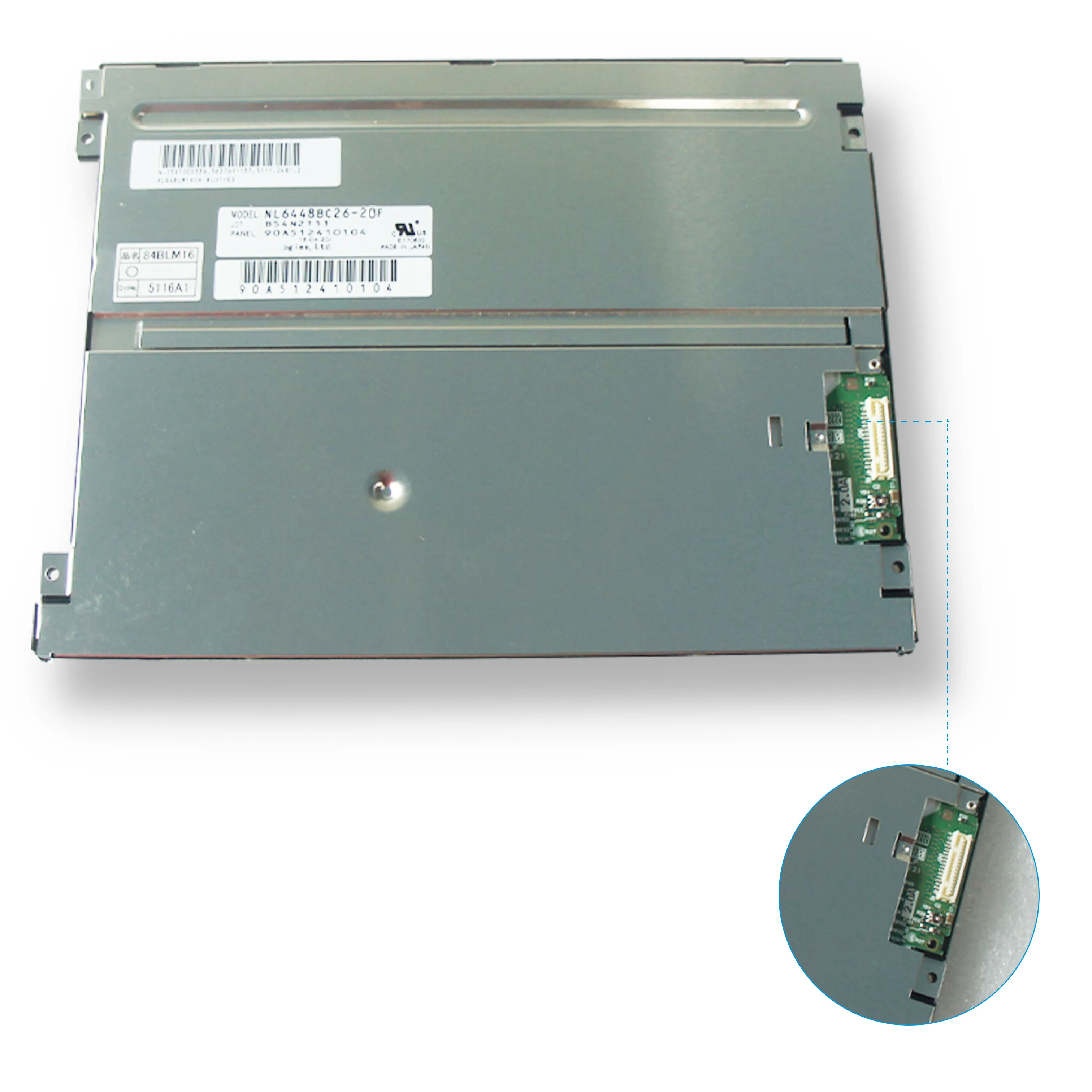


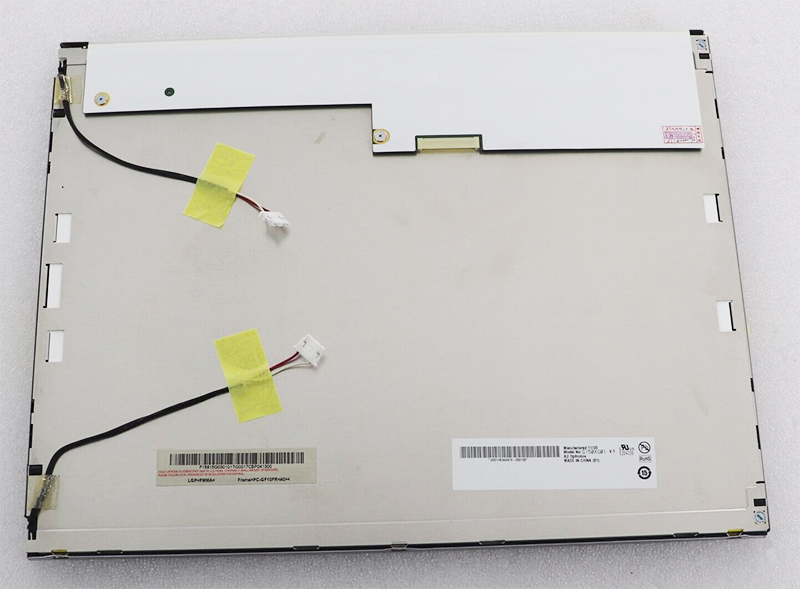
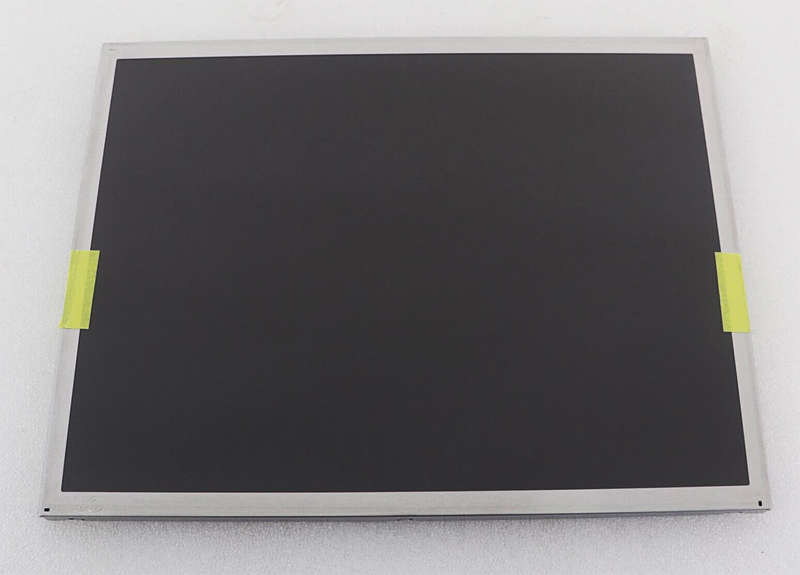
G150XG01 V1 15 inch 1024*768 AUO LCD Panel
In the intricate ecosystem of electronic components, the display panel often serves as the critical interface between machine and user. Among the myriad of options available to designers and engineers, the G150XG01 V1 stands out as a specific and enduring solution for industrial and embedded applications. This 15-inch LCD panel from AU Optronics (AUO) with its 1024x768 (XGA) resolution represents a fascinating case study in balancing performance, reliability, and longevity in demanding environments.
This article delves into a comprehensive technical and application-focused analysis of the AUO G150XG01 V1 panel. We will move beyond basic datasheet specifications to explore its underlying technology, the rationale behind its enduring design, and its ideal use cases. By examining its strengths in context with modern alternatives, we aim to provide system integrators, procurement specialists, and engineering professionals with the depth of understanding needed to make informed decisions for projects where durability and consistency are paramount.
Core Specifications and Technological Profile
The AUO G150XG01 V1 is a 15.0-inch diagonal liquid crystal display module utilizing a Twisted Nematic (TN) panel technology. Its native resolution is 1024 x 768 pixels, adhering to the XGA standard, which yields a pixel pitch of approximately 0.297mm. The panel features a standard RGB stripe arrangement and typically employs a CCFL (Cold Cathode Fluorescent Lamp) backlighting system, which was the industry norm at its inception. This combination delivers a brightness level suitable for indoor, controlled-lighting environments.
From an interface perspective, it commonly supports LVDS (Low-Voltage Differential Signaling) input, a robust and widely adopted standard for transmitting high-speed video data with minimal noise interference. The aspect ratio of 4:3 is a defining characteristic, setting it apart from the widescreen formats prevalent in consumer electronics today. This specification profile is not about pushing the boundaries of color gamut or refresh rate; rather, it is engineered for functional clarity, signal stability, and power efficiency within a well-defined operational envelope.
The Enduring Relevance of XGA 4:3 in Niche Applications
In an era dominated by Full HD and 4K widescreens, the persistence of the 1024x768 (XGA) resolution on a 4:3 aspect panel may seem anachronistic. However, its continued relevance is firmly rooted in practical necessity. Many industrial, medical, and point-of-sale systems were designed and built around this display format. Upgrading to a widescreen often requires costly and complex software GUI redesigns, which is neither feasible nor necessary for dedicated-function machines.
Furthermore, the 4:3 aspect ratio is exceptionally well-suited for vertical data presentation. Applications such as diagnostic medical imaging displays (for certain modalities), factory control panels showing lists and schematics, or legacy database terminals benefit from the taller, more square viewing area. The G150XG01 V1 serves as a direct replacement component within these ecosystems, ensuring system longevity without triggering a cascade of other hardware and software changes. It is a pillar of backward compatibility and lifecycle extension.
AUO's Manufacturing and Quality Assurance
AU Optronics, as a leading global manufacturer of TFT-LCD panels, brings a significant level of manufacturing rigor to the G150XG01 V1. The "V1" designation typically indicates a specific revision or version of the panel, encompassing fixed parameters in its driver IC, backlight configuration, and mechanical mounting points. This consistency is vital for industrial clients who require predictable performance across thousands of units over many years.
Quality assurance for such industrial-grade panels extends beyond pixel defects. It involves stringent testing for operational temperature range, humidity tolerance, vibration resistance, and long-term backlight stability. Panels like the G150XG01 V1 are often subjected to extended burn-in periods and graded for use in more severe environments. This level of control provides OEMs with the confidence to integrate the panel into products with lifecycles measured in decades, not years.
Typical Integration and Application Scenarios
The integration of the G150XG01 V1 is most common in systems where reliability trumps cutting-edge visual specs. Its primary application domains are characterized by continuous operation and often harsh conditions.
Industrial Human-Machine Interfaces (HMIs): Embedded into machinery for factory automation, process control, and test equipment.
Medical Monitoring Devices: Used in patient monitors, diagnostic equipment, and other clinical devices where clear, stable data readout is critical.
Point-of-Sale (POS) and Kiosk Systems: Found in retail terminals, self-service kiosks, and banking ATMs, valued for their durability and consistent performance.
Transportation and Avionics: Suitable for non-critical onboard information displays in certain marine, rail, or auxiliary aviation contexts.
In these scenarios, the panel is rarely a standalone product but is carefully matched with a compatible controller board and housed in a protective bezel designed for its exact form factor.
Comparative Analysis with Modern Panel Alternatives
When evaluating the G150XG01 V1 against contemporary alternatives, the comparison is not about which is objectively "better," but which is more appropriate for the task. Modern IPS (In-Plane Switching) panels offer vastly superior viewing angles and color reproduction. LED backlighting is more energy-efficient and allows for thinner profiles than CCFL. Higher resolutions provide sharper detail.
However, these advancements come with trade-offs. A modern panel may not share the same mechanical footprint or mounting hole pattern, forcing a costly enclosure redesign. Its electronic interface (e.g., eDP) may not be compatible with older control systems. The primary advantage of the G150XG01 V1 is its role as a drop-in replacement. For maintaining and repairing existing installed bases, its value is immense. For new designs, it would only be selected if the application specifically benefits from its 4:3 format and its technical profile aligns perfectly with cost and compatibility constraints.
Supply Chain Considerations and Lifecycle Management
Procuring a panel like the AUO G150XG01 V1 involves navigating a specialized segment of the electronics supply chain. As a product that has likely transitioned from mass production to a sustained manufacturing or "end-of-life" support phase, availability can shift from mainstream distributors to specialized brokers and excess inventory suppliers. Understanding the panel's lot codes, revision history, and compatible alternates becomes crucial.
Strategic lifecycle management for OEMs using this panel involves forecasting long-term needs, securing buffer stock, and potentially qualifying a second-source or pin-compatible alternative panel for future risk mitigation. The ecosystem supporting such industrial components includes not just the panel itself, but also compatible controller boards, inverters for the CCFL backlight, and cable assemblies. Effective management ensures the serviceability of end-user equipment for its entire intended lifespan, which is a key commitment in industrial and medical fields.
FAQs: AUO G150XG01 V1 LCD Panel
10. Where can I source this panel?Through specialized electronic component distributors, brokers dealing in industrial panels, or excess inventory suppliers.
Conclusion
The AUO G150XG01 V1 15-inch LCD panel exemplifies the principle that in engineering, the optimal component is not always the newest, but the most fit-for-purpose. Its value proposition is built on a foundation of reliability, specific format compatibility, and predictable performance within the stringent parameters required by industrial and embedded systems. It serves as a vital lifeline for the long-term maintenance and repair of a vast installed base of equipment.
For professionals tasked with system design, integration, or lifecycle management, understanding panels like the G150XG01 V1 is essential. It highlights the critical need to balance technological progress with practical realities such as total cost of ownership, backward compatibility, and environmental durability. In a world racing toward higher resolutions and sleeker form factors, this panel remains a steadfast and indispensable workhorse in the fields where failure is not an option.