- Industrie-LCD-Display
-
Industrial Products
- DC Servo Drive
- AC Servo Drive
- other
- Heidelberg
- FANUC
- IFM
- Meter
- CCD
- Membrane Keypad
- Film
- YOKOGAWA
- Card
- ABB
- MITSUBISHI
- FANUC
- KEYENCE
- BECKHOFF
- Honeywell
- HOLLYSYS
- FUJI servo drives
- HP
- solenoid valve
- thermostat
- Siemens adapter
- color oscilloscope
- Fujitsu connector
- CHELIC
- SMC
- CISCO
- INTEL
- Key board
- FAIRCHILD
- Der Aufsichtsrat
- Board
- Bearing
- other
- Control Panel
- Contactor
- Circuit
- Omron
- Relais.
- Der controller
- Optoelektronische schalter
- Optoelektronische sensoren
- Original
- Fan
- Motortreiber
- Endschalter
- Verstärker
- power supply
- LENZE
- Cable
- Encoder
- Sensor
- Transformator
- Fiber Optic Sensor
- Schutzrelais
- Temperaturregler
- Näherungsschalter
- Switch Sensor
- Siemens
- PCB
- HMI Touch-Glas
-
HMI-Vollautomat Ganze Einheit
- OMRON HMI Touch Panel
- Siemens HMI Touch Panel
- Mitsubishi HMI Touch Panel
- Allen-Bradley Automatisierung HMI Touch
- DELTA HMI Touch Panel
- EVIEW DELTA HMI Touch Panel
- KINCO DELTA HMI Touch Panel
- HITECH HMI Touch Panel
- WEINTECK HMI Touch Panel
- TECVIEW HMI Touch Panel
- WEINVIEW HMI Touch Panel
- PRO-FACE HMI Touch Panel
- SIMATIC HMI Touch Panel
- AMPIRE HMI Touch Panel
- HEIDELBERG HMI Touch Panel
- PANASONIC HMI Touch Panel
- PATLITE HMI Touch Panel
- KYOCERA HMI Touch Panel
- KEYENCE HMI Touch Panel
- WEINVIEW HMI Touch Panel
- HITECH HMI Touch Panel
- FUJI HMI Touch Panel
- HAKKO HMI Touch Panel
- SCHNEIDER HMI Touch Panel
- SAMKOON touch panel
- andere
- Module
- LCD Wechselrichter
- Membran Tastenfeld Schalter
- Winni Touch Screens
- Frequenzumrichter
- Servo Motor
- PLC


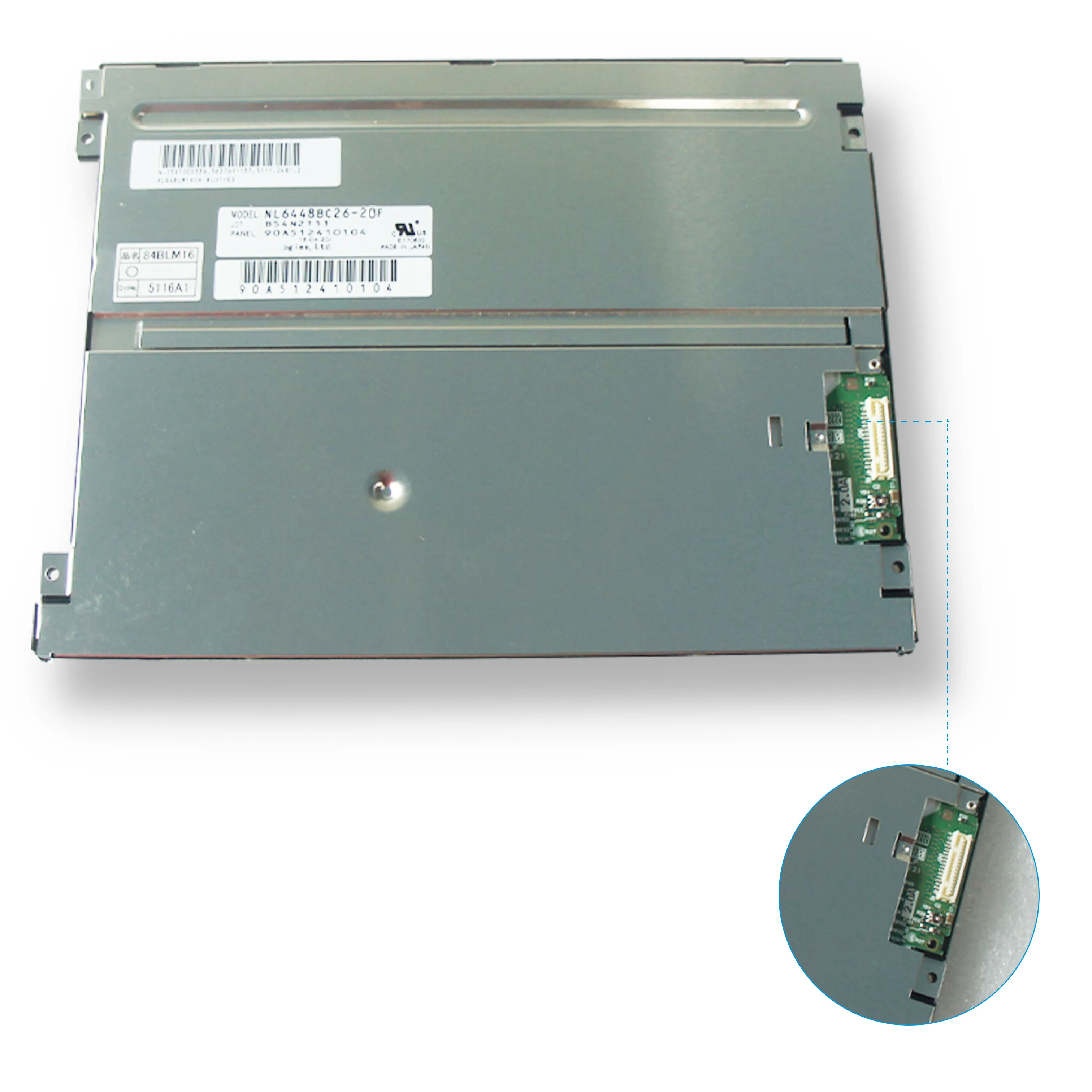


G150XG01 V.4 FOR AUO TFT LCD PANEL 15inch G150XG01 V4
In the intricate ecosystem of industrial and commercial display solutions, specific components become benchmarks for reliability and performance. The G150XG01 V.4 TFT LCD panel, a 15-inch module designed by AUO (AU Optronics), stands as one such critical component. This iteration, the Version 4, represents a refined evolution in a proven product lineage, engineered to meet the exacting demands of applications where consistent visual clarity and robust operation are non-negotiable.
This article delves into a comprehensive technical and application-oriented analysis of the AUO G150XG01 V.4 panel. We will move beyond basic specifications to explore its architectural improvements, the tangible benefits these bring in real-world deployment, and its ideal use-case scenarios. Understanding the nuances of this display module is essential for engineers, procurement specialists, and system integrators aiming to optimize performance, ensure compatibility, and guarantee longevity in their display-integrated products, from medical monitors and industrial HMIs to point-of-sale systems and transportation displays.
Core Architecture and Key Specifications
The G150XG01 V.4 is built upon an a-Si (amorphous Silicon) TFT LCD technology, offering a balanced profile of cost-effectiveness and reliable performance. Its 15-inch diagonal provides an XGA resolution of 1024 x 768 pixels, resulting in a pixel pitch suited for detailed graphics and text readability at typical viewing distances. The panel employs an LVDS (Low-Voltage Differential Signaling) interface, a mature and noise-resistant standard that ensures stable data transmission from the controller board.
Critical specifications include its brightness level, typically around 300 nits or higher, ensuring visibility in various ambient lighting conditions. The contrast ratio defines the depth between blacks and whites, impacting image clarity. Furthermore, parameters like viewing angles (both horizontal and vertical), color gamut coverage, and response time are fundamental to its performance profile. This version (V.4) often incorporates refinements in these areas over its predecessors, such as improved backlight uniformity or enhanced color calibration from the factory, establishing a solid foundation for demanding applications.
Evolution from Predecessors: The V.4 Enhancements
The designation "V.4" signifies a specific revision within the G150XG01 model family. While maintaining mechanical and electrical compatibility is often a priority, the version update typically targets key areas of improvement. For the G150XG01, the V.4 revision may address several critical aspects. One common focus is the backlight system, potentially transitioning to a more efficient LED array that offers longer lifespan, reduced power consumption, and better luminance consistency across the screen surface.
Another area of enhancement could be in the optical stack, including polarizers and filters. V.4 might feature an improved anti-glare coating for better readability under bright lights or a wider-temperature-range liquid crystal material for stable operation in extreme environments. These iterative changes, while sometimes subtle on a spec sheet, collectively contribute to higher reliability, better image quality, and extended operational life, reducing total cost of ownership for integrators.
Optical Performance and Image Quality Analysis
The visual output of the G150XG01 V.4 is where its engineering translates into user experience. The XGA resolution, while not full HD, provides sufficient detail density for complex user interfaces, technical schematics, and diagnostic imagery. The panel's color performance is calibrated for accuracy, which is paramount in fields like medical imaging (for grayscale diagnostics) or digital signage (for brand color consistency).
A high contrast ratio ensures that text appears sharp and images have depth, reducing eye strain during prolonged use. Wide viewing angles, often utilizing IPS or similar technology variants, guarantee that the content remains visible and color-stable even when viewed from off-center positions—a crucial feature for multi-operator workstations or public-facing kiosks. The optimization of response time minimizes motion blur, which is beneficial for displaying dynamic data or interactive touch applications.
Interface, Connectivity, and Signal Integrity
Reliable integration is paramount, and the G150XG01 V.4's LVDS interface is central to this. LVDS is favored in industrial applications for its robustness against electromagnetic interference (EMI), which is common in environments with heavy machinery or numerous electronic devices. The interface definition includes a specific pinout, voltage levels, and clocking scheme that must be precisely matched by the system's timing controller (TCON) or display driver board.
Understanding the interface requirements is critical for successful implementation. This includes matching the single or dual-channel LVDS configuration, the number of data lanes, and the supported color depth (e.g., 6-bit or 8-bit). Furthermore, the power supply sequence and inverter requirements (if using a CCFL backlight in some versions) or LED driver specifications must be adhered to strictly to prevent damage and ensure stable performance over the panel's entire lifespan.
Target Applications and Industry Use Cases
The technical attributes of the G150XG01 V.4 make it a versatile solution for several key vertical markets. In industrial automation, it serves as a durable Human-Machine Interface (HMI) on factory floors, resistant to vibrations and capable of operating in extended temperature ranges. The medical device industry utilizes this panel for patient monitoring equipment and diagnostic displays, where reliability and grayscale reproduction are critical.
Point-of-Sale (POS) and kiosk systems benefit from its consistent performance under long operating hours and public use. In transportation, such as for in-vehicle infotainment or control systems, its ruggedness is a key asset. Finally, it finds use in specialized test and measurement equipment, where clear data presentation is essential. In each case, the panel is valued not as a consumer gadget but as a dependable, long-life component within a larger, mission-critical system.
Integration Considerations and Long-Term Reliability
Successfully deploying the G150XG01 V.4 extends beyond plug-and-play. Mechanical integration must account for its exact dimensions, bezel design, and mounting hole patterns. Thermal management is crucial; ensuring adequate ventilation around the panel prevents overheating, which can degrade the LCD fluid and LEDs, shortening lifespan. Electrical design must provide clean, stable power as per the datasheet specifications to avoid flicker or premature failure.
Long-term reliability is a cornerstone of its value proposition. This involves selecting a panel from authorized distributors to guarantee authenticity and access to consistent batches. Planning for the product lifecycle is also essential, understanding AUO's end-of-life notices and potential future replacements like the G150XG01 V.5 or equivalent models. Proper integration practices directly influence the Mean Time Between Failures (MTBF), maximizing the return on investment for the end product.


FAQS
Q10: Where can I find technical support or datasheets for this panel?A10: Official datasheets and support should be sourced from AU Optronics directly or through their authorized distribution partners to ensure information accuracy.
Conclusion
The AUO G150XG01 V.4 is far more than a simple display; it is a precision-engineered component designed for endurance and stability in professional environments. Its value lies in the synergy of its refined optical performance, robust LVDS interface, and proven reliability—attributes honed through iterative development. For engineers and integrators, selecting this panel is a strategic decision that impacts the quality, durability, and user experience of the final product.
In a market where display technology often chases consumer trends, the G150XG01 V.4 stands as a testament to the enduring need for specialized, dependable solutions. By thoroughly understanding its specifications, evolutionary improvements, and integration requirements, professionals can leverage its capabilities to build systems that perform consistently, day in and day out, across critical industries worldwide.