- Industrial LCD display
-
Industrial Products
- DC Servo Drive
- AC Servo Drive
- other
- Heidelberg
- FANUC
- IFM
- Meter
- CCD
- Membrane Keypad
- Film
- YOKOGAWA Module
- Card
- ABB
- MITSUBISHI
- FANUC
- KEYENCE
- BECKHOFF
- Honeywell
- HOLLYSYS
- FUJI servo drives
- HP
- solenoid valve
- thermostat
- Siemens adapter
- color oscilloscope
- Fujitsu connector
- CHELIC
- SMC
- CISCO Module
- INTEL
- Key board
- FAIRCHILD
- Motherboard
- Board
- Bearing
- other
- Control Panel
- Contactor
- Circuit
- OMRON
- Relay
- Controller
- Photoelectric Switch
- Photoelectric Sensor
- Original
- Fan
- Motor Driver
- Limit Switch
- Amplifier
- power supply
- LENZE
- Cable
- Encoder
- Sensor
- Transformer
- Fiber Optic Sensor
- Protection Relay
- Temperature Controller
- Proximity Switch
- Switch Sensor
- Siemens
- Industrial board
- HMI Touch Glass
-
HMI Full Machine Whole unit
- OMRON HMI Touch Panel
- Siemens HMI Touch Panel
- Mitsubishi HMI Touch Panel
- Allen-Bradley automation HMI Touch Panel
- DELTA HMI Touch Panel
- EVIEW DELTA HMI Touch Panel
- KINCO DELTA HMI Touch Panel
- HITECH HMI Touch Panel
- WEINTECK HMI Touch Panel
- TECVIEW HMI Touch Panel
- WEINVIEW HMI Touch Panel
- PRO-FACE HMI Touch Panel
- SIMATIC HMI Touch Panel
- AMPIRE HMI Touch Panel
- HEIDELBERG HMI Touch Panel
- PANASONIC HMI Touch Panel
- PATLITE HMI Touch Panel
- KYOCERA HMI Touch Panel
- KEYENCE HMI Touch Panel
- WEINVIEW HMI Touch Panel
- HITECH HMI Touch Panel
- FUJI HMI Touch Panel
- HAKKO HMI Touch Panel
- SCHNEIDER HMI Touch Panel
- SAMKOON touch panel
- other
- Module
- lcd inverter
- Membrane Keypad Switch
- Winni Touch Screens
- Frequency Inverter
- Servo Motor
- PLC


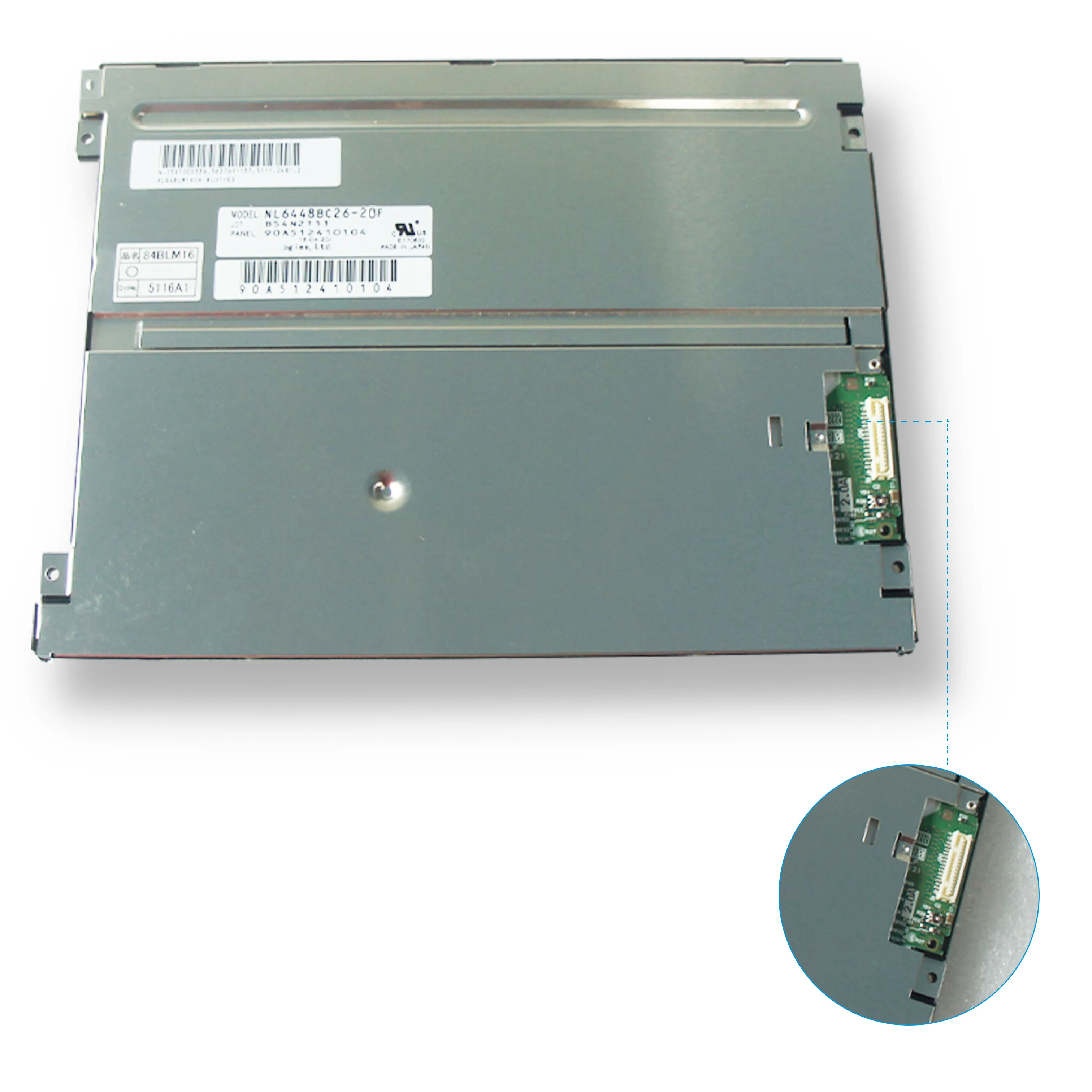


G150XG02 V.0 AUO 15" TFT-LCD screen 1024*768 Display G150XG02 V0
In the intricate ecosystem of electronic components, certain parts become quiet legends, powering generations of devices long after their initial release. The G150XG02 V.0 by AUO (AU Optronics) is one such component. This 15-inch TFT-LCD display module, with its signature XGA (1024 x 768) resolution, represents a pivotal moment in display technology, bridging the gap between the early days of digital panels and the high-definition era. While not a new product, its legacy and continued relevance in specific industrial and commercial applications are profound.
This article delves deep into the technical DNA, historical context, and enduring utility of the G150XG02 V.0 screen. We will move beyond basic specifications to explore why this particular model was engineered, the problems it solved for OEMs, and the niche markets where it remains a preferred solution today. For engineers, procurement specialists, and technology historians, understanding components like this is key to maintaining legacy systems and appreciating the evolution of the devices we use.
Decoding the Model: Anatomy of G150XG02 V.0
The model name G150XG02 V.0 is a concise technical dossier. 'G' typically denotes AUO's series for standard TFT-LCD modules. '150' clearly indicates a 15.0-inch diagonal screen size. 'XG' stands for XGA, the 1024 x 768 pixel resolution that became an industry workhorse. '02' refers to the specific design revision and internal project code. Crucially, 'V.0' signifies the initial version or revision of this particular panel design, establishing it as the baseline from which later modifications might have been made.
This naming convention is not arbitrary; it provides immediate, critical information to engineers. The 15-inch form factor and XGA resolution point to a panel designed for a balance between viewable area and pixel density, suitable for applications where fine detail was less critical than stable, reliable output. Understanding this coding system is the first step in sourcing, replacing, or integrating this display into a larger system, as even a minor suffix change can indicate compatibility differences.
The XGA Standard: Why 1024 x 768 Ruled an Era
To understand the G150XG02's purpose, one must appreciate the reign of the XGA (Extended Graphics Array) standard. In the late 1990s and early 2000s, 1024 x 768 was the gold standard for desktop computing, business applications, and early digital instrumentation. It offered a significant leap from the previous 800 x 600 SVGA standard, providing more desktop real estate for toolbars, spreadsheets, and early graphical user interfaces without demanding exorbitant graphics processing power.
For a 15-inch panel, this resolution resulted in a pixel pitch that offered clear, legible text and adequate image representation. It struck an optimal balance between cost, performance, and manufacturing yield for panel makers like AUO. The G150XG02 V.0 was engineered precisely for this massive market, finding its way into countless monitors, point-of-sale systems, industrial control panels, and medical devices where reliability and standardization were paramount over cutting-edge resolution.
Technical Specifications and Interface Deep Dive
At its core, the G150XG02 V.0 is a transmissive, a-Si (amorphous Silicon) TFT-LCD module. Its 1024 x 768 resolution operates with an RGB vertical stripe arrangement. Key performance parameters typically included a brightness level suitable for indoor use (often around 200-250 nits), a contrast ratio that provided depth for the time, and a range of supported color gamuts defined by the backlight technology (often CCFL, given its era).
The interface is a critical compatibility factor. This panel almost certainly uses an LVDS (Low-Voltage Differential Signaling) interface, which was the dominant standard for transmitting high-speed video data from a controller board to the panel itself. The specific pin configuration, voltage requirements (often 3.3V or 5V), and signal timing defined by the G150XG02's datasheet are absolute commandments for successful integration. Mismatching the interface or power will render the panel inoperable.
Primary Applications and Market Context
The G150XG02 V.0 was not designed for the consumer retail shelf but as an OEM component for integrated systems. Its primary applications were diverse yet specific:
Industrial Human-Machine Interfaces (HMIs): Factory automation controls, machine operator stations, and test equipment where durability and long-term availability were key.
Medical Monitoring Devices: Equipment for displaying patient vitals or ultrasound images, where color consistency and reliability are non-negotiable.
Point-of-Sale (POS) and Kiosk Systems: Cash registers, self-service terminals, and information booths requiring clear, stable displays under constant use.
Legacy Computing and Specialized Terminals: Systems where the entire software and hardware ecosystem was built around the XGA standard.
In these contexts, the display was a dependable, known quantity for system designers.
The Challenge of Legacy Components: Sourcing and Compatibility
Today, the G150XG02 V.0 is a legacy component. AUO and other manufacturers have long since moved production to higher-resolution, LED-backlit panels. This creates a significant challenge for industries with long product lifecycles. A manufacturing line built in 2005 with an integrated G150XG02 display cannot simply upgrade to a modern 1080p panel without extensive electrical and software re-engineering.
This has given rise to a specialized market for new old stock (NOS), refurbished panels, and compatible replacements. Sourcing a genuine G150XG02 V.0 requires verifying suppliers rigorously to avoid counterfeit or remarked panels. Furthermore, understanding compatibility with potential substitutes—often denoted by similar but not identical model numbers (like G150XG02 V.1, V.2, or versions from other brands like LG-Philips)—is a technical necessity to avoid costly downtime.
Modern Alternatives and Replacement Considerations
When maintaining a legacy system, engineers face a choice: seek an original G150XG02 V.0 or attempt an upgrade. Direct "drop-in" replacements are rare, but some modern 15-inch LCDs with LVDS interfaces and 1024x768 resolution are manufactured specifically for the industrial replacement market. These often feature modern LED backlights for better efficiency and longevity.
Mechanical Fit: Mounting hole positions, bezel dimensions, and overall thickness.
Electrical Interface: Pin-for-pin compatibility of the LVDS connector, voltage requirements, and backlight inverter type (CCFL vs. LED).
Signal Timing: The exact clock frequency and data mapping must match the system's original video controller.
A successful replacement extends the life of critical capital equipment, making this knowledge highly valuable.


FAQs: G150XG02 V.0 AUO Display
Q10: Where can I find the technical datasheet for this panel?A10: Datasheets can often be found on electronic component distributor websites or through specialized display panel archive sites.
Conclusion
The AUO G150XG02 V.0 is far more than a set of obsolete specifications. It is a technological artifact that encapsulates a defining era of digital display development. Its design and widespread adoption were a direct response to the dominant computing standards of its time, solving real-world problems for system integrators across critical industries. Its enduring presence in legacy systems underscores the long lifecycles of industrial and medical equipment, where reliability and continuity often trump the pursuit of the latest specs.
For professionals tasked with maintaining these systems, understanding this panel's technical nuances—from its LVDS interface to its precise mechanical footprint—is essential knowledge. It represents the critical link between the rapidly evolving world of consumer display technology and the stable, dependable world of embedded industrial design. In studying components like the G150XG02, we gain a deeper appreciation for the engineering foundations upon which modern devices are built.