- Industrial LCD display
-
Industrial Products
- DC Servo Drive
- AC Servo Drive
- other
- Heidelberg
- FANUC
- IFM
- Meter
- CCD
- Membrane Keypad
- Film
- YOKOGAWA Module
- Card
- ABB
- MITSUBISHI
- FANUC
- KEYENCE
- BECKHOFF
- Honeywell
- HOLLYSYS
- FUJI servo drives
- HP
- solenoid valve
- thermostat
- Siemens adapter
- color oscilloscope
- Fujitsu connector
- CHELIC
- SMC
- CISCO Module
- INTEL
- Key board
- FAIRCHILD
- Motherboard
- Board
- Bearing
- other
- Control Panel
- Contactor
- Circuit
- OMRON
- Relay
- Controller
- Photoelectric Switch
- Photoelectric Sensor
- Original
- Fan
- Motor Driver
- Limit Switch
- Amplifier
- power supply
- LENZE
- Cable
- Encoder
- Sensor
- Transformer
- Fiber Optic Sensor
- Protection Relay
- Temperature Controller
- Proximity Switch
- Switch Sensor
- Siemens
- Industrial board
- HMI Touch Glass
-
HMI Full Machine Whole unit
- OMRON HMI Touch Panel
- Siemens HMI Touch Panel
- Mitsubishi HMI Touch Panel
- Allen-Bradley automation HMI Touch Panel
- DELTA HMI Touch Panel
- EVIEW DELTA HMI Touch Panel
- KINCO DELTA HMI Touch Panel
- HITECH HMI Touch Panel
- WEINTECK HMI Touch Panel
- TECVIEW HMI Touch Panel
- WEINVIEW HMI Touch Panel
- PRO-FACE HMI Touch Panel
- SIMATIC HMI Touch Panel
- AMPIRE HMI Touch Panel
- HEIDELBERG HMI Touch Panel
- PANASONIC HMI Touch Panel
- PATLITE HMI Touch Panel
- KYOCERA HMI Touch Panel
- KEYENCE HMI Touch Panel
- WEINVIEW HMI Touch Panel
- HITECH HMI Touch Panel
- FUJI HMI Touch Panel
- HAKKO HMI Touch Panel
- SCHNEIDER HMI Touch Panel
- SAMKOON touch panel
- other
- Module
- lcd inverter
- Membrane Keypad Switch
- Winni Touch Screens
- Frequency Inverter
- Servo Motor
- PLC


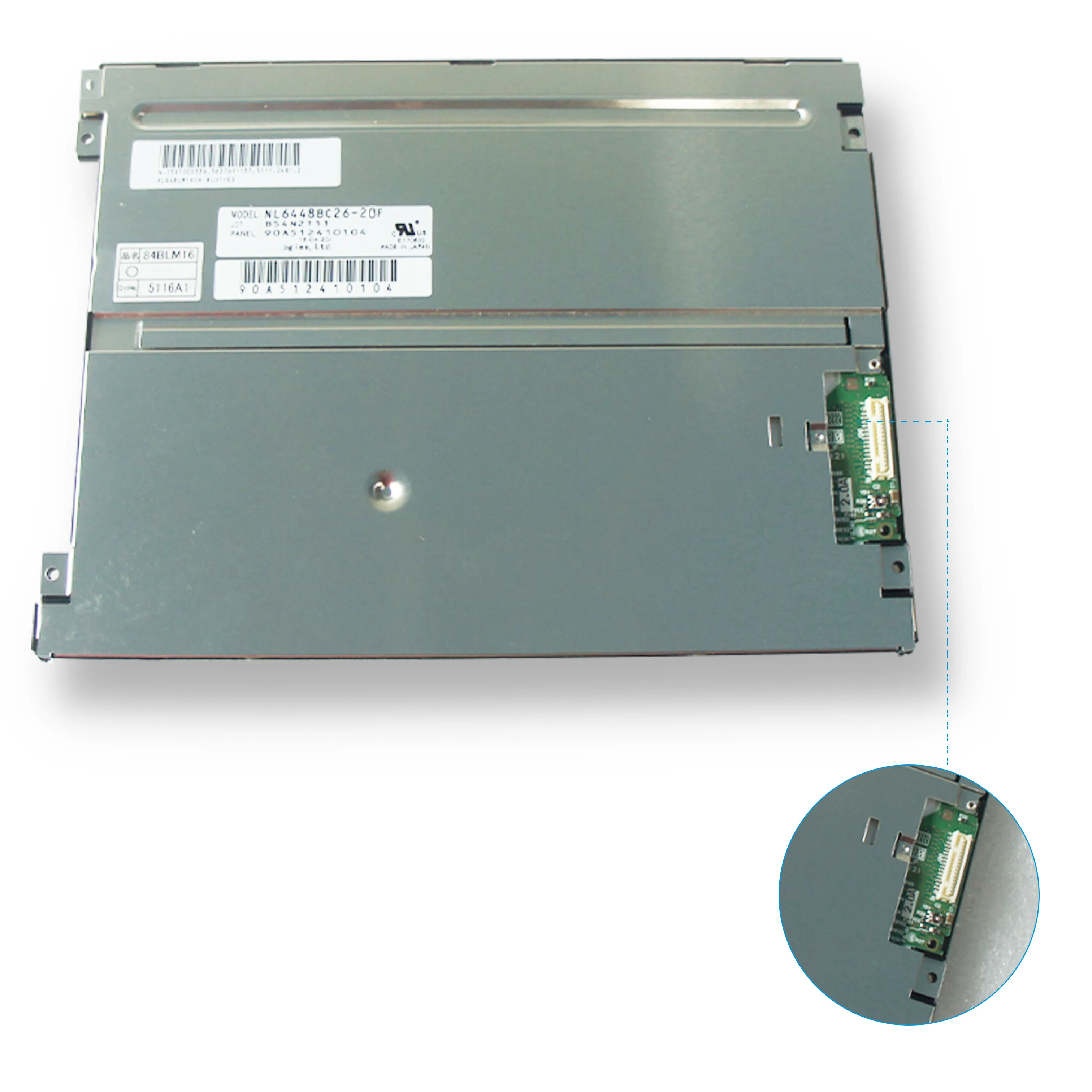


G150XG03 V3 AUO 15 inch 1024*768 TFT LCD PANEL
In the intricate ecosystem of electronic components, certain parts become unsung heroes, powering devices we rely on daily. Among these, the G150XG03 V3, a 15-inch TFT LCD panel manufactured by AU Optronics (AUO), stands out as a pivotal component in a specific technological niche. This article delves deep into the world of this particular display module, moving beyond basic specifications to explore its technical DNA, inherent strengths, and the precise applications where it excels.
While the march of technology relentlessly pushes towards higher resolutions like 4K and 8K, there remains a critical and enduring demand for robust, reliable, and cost-effective display solutions in industrial, commercial, and specialized contexts. The G150XG03 V3, with its 1024x768 (XGA) resolution, represents a mature yet far-from-obsolete standard. We will dissect its interface technology, durability features, and optical performance to understand not just what it is, but why it continues to be a relevant and sought-after component in an era of dazzling consumer displays.
Decoding the Model: The Identity of the G150XG03 V3
The model name G150XG03 V3 is a concise technical descriptor. "G" often denotes a TFT LCD product series from AUO, while "150" indicates a 15.0-inch diagonal screen size. "XG" typically references an XGA (1024 x 768 pixels) resolution panel. The "03" signifies a specific revision or design within that family, and "V3" marks the third version of that design, implying iterative improvements in reliability, backlighting, or compatibility over earlier versions.
As a product from AU Optronics, one of the world's leading display manufacturers, the panel carries an assurance of standardized manufacturing quality and consistency. This naming convention is crucial for engineers and procurement specialists, as it ensures they source the exact component with the correct electrical, mechanical, and optical characteristics required for their design, preventing compatibility issues in integration.
Core Specifications and Technical Architecture
At its heart, the G150XG03 V3 is an a-Si (amorphous Silicon) TFT LCD module. Its native resolution of 1024 x 768 pixels in a 4:3 aspect ratio is its defining characteristic. This format, once ubiquitous, now offers distinct advantages in vertical screen real estate and compatibility with legacy systems and software designed for such ratios.
The module typically integrates a CCFL (Cold Cathode Fluorescent Lamp) backlight system, providing uniform brightness essential for readability in various lighting conditions. It features an LVDS (Low-Voltage Differential Signaling) interface, a robust and widely adopted standard for transmitting high-speed video data with minimal noise interference. Key parameters like its luminance (often around 250-300 nits), contrast ratio, and color gamut are engineered for clarity and longevity rather than the vibrant media consumption targeted by consumer-grade panels.


The Strategic Advantages of XGA in a High-Definition World
In a market obsessed with pixel density, the 1024x768 resolution of the G150XG03 V3 offers several counterintuitive yet powerful benefits. First is system compatibility and lower processing overhead. Many industrial PCs, embedded systems, and control units are designed to drive XGA natively, ensuring stable and straightforward integration without the need for complex scaling or powerful graphics processors.
Second is cost-effectiveness and reliability. The mature manufacturing process for XGA panels translates to lower cost and proven high yield rates. Furthermore, the larger pixel size compared to high-PPI displays can enhance durability and reduce the visual impact of a single pixel failure. Finally, for applications displaying primarily text, numerical data, or schematic interfaces, the 4:3 XGA format provides ample, well-proportioned space without the "letterboxing" or wasted space that can occur when displaying legacy content on widescreens.
Primary Application Environments and Use Cases
The G150XG03 V3 finds its true home in environments where reliability trumps ultra-high resolution. Its primary domain is industrial automation and Human-Machine Interfaces (HMIs). On factory floors, it serves as the visual interface for PLCs, controlling machinery, monitoring production lines, and displaying real-time system diagnostics.
Beyond the factory, it is a staple in point-of-sale (POS) systems, kiosks, and medical monitoring equipment (for non-diagnostic displays). Its consistent performance under continuous operation and ability to remain readable in various ambient light conditions make it ideal. Additionally, it is used in transportation (e.g., vehicle information displays), test and measurement equipment, and specialized commercial displays where long-term availability and a stable supply chain are critical factors.
Critical Integration Considerations and Compatibility
Successfully integrating the G150XG03 V3 requires careful attention to its physical and electrical requirements. Mechanically, designers must adhere to its precise outline dimensions, mounting hole positions, and bezel clearances. The CCFL backlight necessitates an inverter circuit to provide the high-voltage AC power required for operation, adding a component to the bill of materials.
Electrically, the LVDS interface must be matched with a compatible controller board or graphics source. The pin assignment, voltage levels (typically 3.3V or 5V for power), and signal timing must be correctly implemented. Furthermore, considerations around operating temperature range (often industrial-grade, e.g., -20°C to 70°C), electromagnetic compatibility (EMC), and long-term backlight lifespan are paramount for ensuring the end product's reliability in its target environment.
The Ecosystem: Sourcing, Alternatives, and Long-Term Support
As a mature product, the G150XG03 V3 is often available through specialized electronic component distributors and panel integrators rather than mainstream consumer channels. Sourcing requires verification of the exact version (V3) to ensure compatibility. The ecosystem also includes suppliers of compatible controller boards, inverters, and cabling.
While direct drop-in alternatives from other manufacturers may exist, they require meticulous cross-referencing of all specifications. The long-term support strategy is a key advantage of such standardized panels; AUO and its distribution network typically provide extended lifecycle support crucial for industrial products that may be in service for a decade or more. This contrasts with the rapid obsolescence cycle of consumer laptop or TV panels.
FAQs: G150XG03 V3 AUO 15-inch LCD Panel
Conclusion
The AUO G150XG03 V3 15-inch LCD panel exemplifies how technological relevance is defined not solely by the highest specifications, but by fitness for purpose. In the demanding realms of industrial control, transactional systems, and specialized equipment, its XGA resolution, robust LVDS interface, and CCFL backlight represent a gold standard of reliability, compatibility, and long-term viability.
This analysis underscores that component selection, especially for critical infrastructure, involves a deep understanding of the operational environment and total system architecture. The enduring presence of panels like the G150XG03 V3 reminds us that in the backbone of technology—the machines that build, transact, and monitor our world—clarity, durability, and trustworthiness are the most valuable pixels of all.